




- Nutraceuticals & Functional Foods
- Cranberry Extract Market
Cranberry Extract Market Size, Share, and Growth Forecast, 2025 - 2032
Cranberry extract market by Form (Liquid, Powder, Capsules, Tablets), Source (Cranberry Juice, Others), Application (Dietary Supplements, Others), Distribution Channel (Online Retail, Supermarkets, Health Stores, Pharmacies), and Regional Analysis for 2025 - 2032

Cranberry Extract Market Size and Trends Analysis
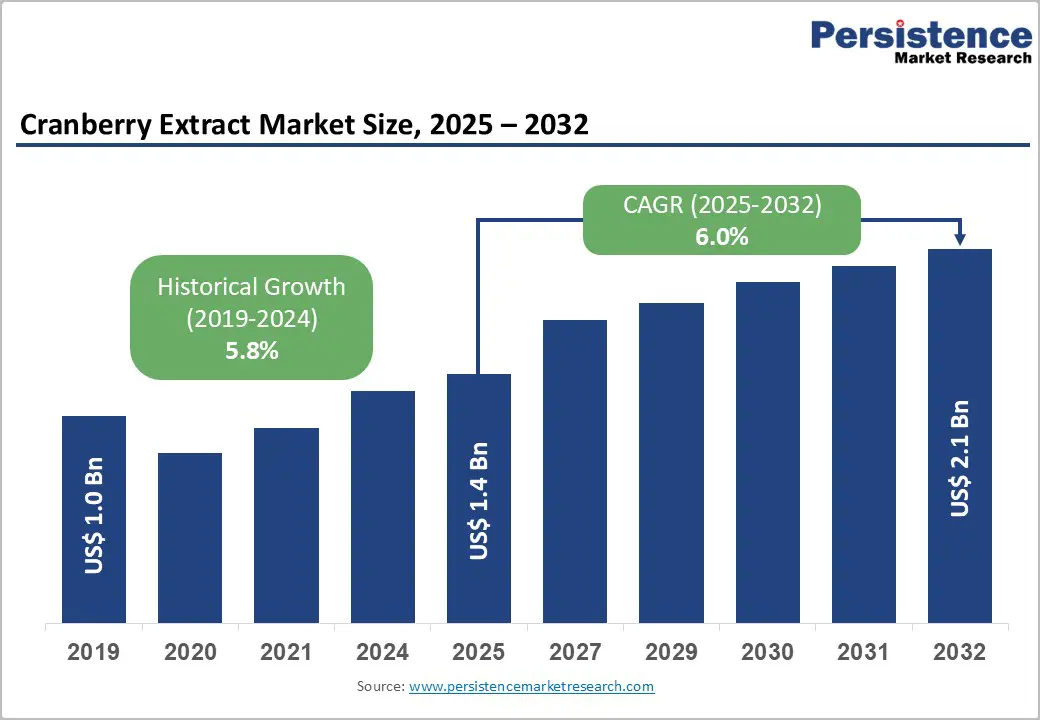
The global cranberry extract market size is likely to be valued at US$1.4 billion in 2025, projected to reach US$2.1 billion by 2032, growing at a CAGR of 6.0% during the forecast period from 2025 to 2032.
The cranberry extract market is experiencing robust growth driven by the increasing prevalence of urinary tract health concerns, rising consumer preference for natural antioxidants in dietary supplements, and advancements in extraction technologies. The rising demand for proanthocyanidin-rich cranberry extract, especially in functional foods, is driving market growth. Innovations in powder and capsule forms, along with their use in immune and digestive wellness products, are further boosting adoption across food and pharmaceutical sectors.
Key Industry Highlights:
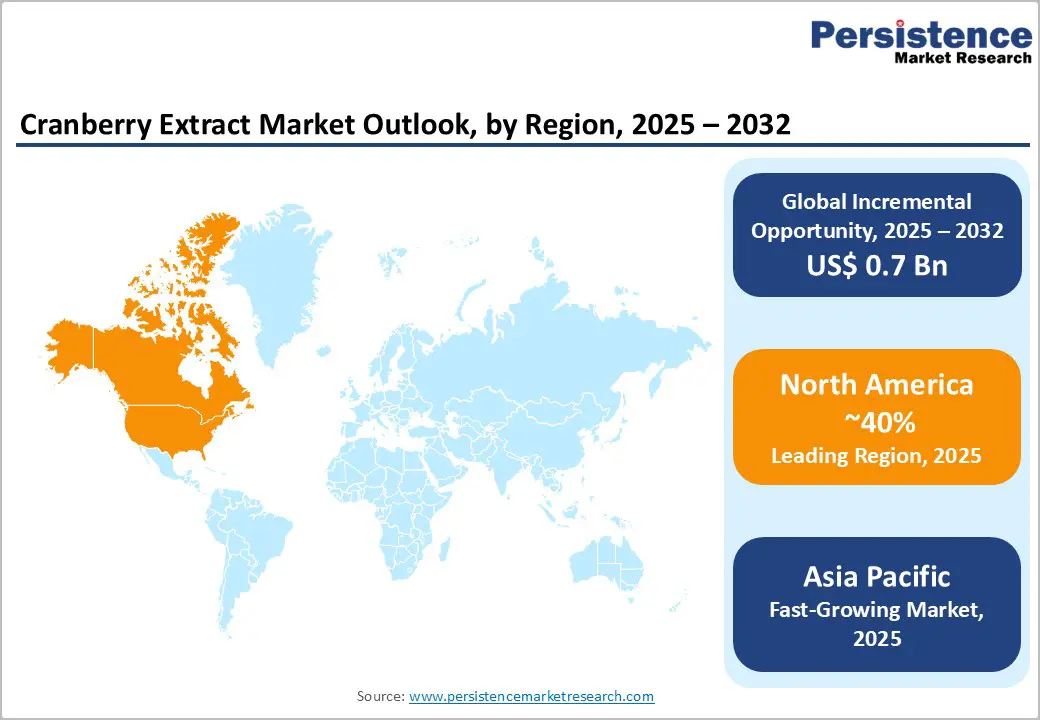
- Leading Region: North America, commanding a 40% market share in 2025, driven by the high prevalence of UTI supplements, strong R&D activities in the U.S., and robust distribution networks.
- Fastest-growing Region: Asia Pacific, fueled by increasing health awareness, rising demand for natural ingredients, and growing investments in nutraceuticals in China and India.
- Dominant Form: Powder, holding 45% of the market share, due to ease of formulation in supplements.
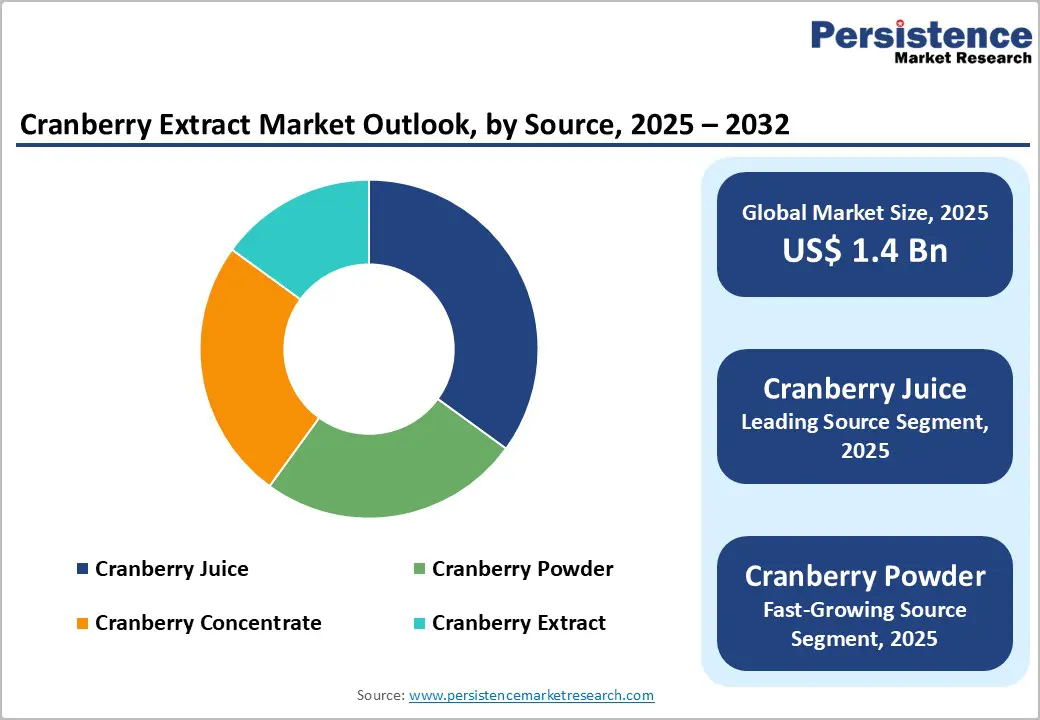
- Leading Source: Cranberry juice leads the market, holding 35% share, due to its long-established consumer acceptance and widespread use in both retail beverages and functional health drinks.
- Leading Application: Dietary supplements, accounting for over 50% of market revenue, driven by urinary tract health benefits.
- Leading Distribution Channel: Online retail, contributing nearly 35% of market revenue, due to e-commerce growth.
| Key Insights | Details |
|---|---|
| Cranberry Extract Market Size (2025E) | US$1.4 Bn |
| Market Value Forecast (2032F) | US$2.1 Bn |
| Projected Growth (CAGR 2025 to 2032) | 6.0% |
| Historical Market Growth (CAGR 2019 to 2024) | 5.8% |
Market Factors - Growth, Barriers, and Opportunity Analysis
Rising Prevalence of Urinary Tract Health Concerns and Demand for Natural Antioxidants
The increasing prevalence of urinary tract health concerns globally is a primary driver of the cranberry extract market. Urinary tract infections are becoming more common due to lifestyle changes, higher stress levels, and dietary habits, prompting individuals to look for safe, long-term solutions. Cranberry extract is well recognized for its ability to help reduce bacterial adhesion in the urinary tract, making it a preferred choice for ongoing urinary wellness. This awareness is growing across all age groups, especially among women, who are most affected by recurrent UTIs.
Demand for natural antioxidants is expanding rapidly as consumers shift toward plant-based ingredients that support immunity, cellular protection, and overall vitality. Cranberry extract, rich in proanthocyanidins and polyphenols, aligns perfectly with this trend, offering strong antioxidant activity without synthetic additives. Its benefits extend beyond urinary health, supporting heart wellness, skin health, and inflammation management. The broader movement toward clean-label, chemical-free products further accelerates interest in cranberry extract. As people prioritize natural solutions backed by scientific evidence, cranberry extract continues to gain traction in supplements, functional foods, beverages, and personal care products across global markets.
High Development and Raw Material Costs
The high costs associated with the development and sourcing of cranberry extract pose a significant restraint on market growth. Cranberries require specific growing conditions, careful harvesting, and processing methods that contribute to higher agricultural expenses compared to many other botanical ingredients. Seasonal variations, climate risks, and limited cultivation regions further impact raw material supply, leading to cost fluctuations and periods of scarcity. These factors increase procurement costs for manufacturers who rely on high-quality berries to produce standardized extracts.
Producing premium cranberry extracts, especially those with defined PAC concentrations, requires advanced extraction technologies, rigorous testing, and compliance with strict quality standards. Investments in research, equipment, safety certifications, and analytical methods significantly raise production costs. Formulating extracts with consistent potency and stability also demands specialized expertise and additional processing steps. As consumers increasingly demand clean-label, organic, and clinically supported cranberry products, companies must invest even more in sustainable sourcing and product validation. These efforts, while necessary for market competitiveness, further elevate operational expenses.
Advancements in Standardized PAC Extracts and Expanded Wellness Applications
Advancements in standardized PAC extracts and expanded wellness applications present significant growth opportunities for the cranberry extract market. Standardization ensures consistent PAC levels, which are critical for effectiveness in urinary tract health, antioxidant protection, and inflammation management. As research continues to highlight the role of PACs in preventing bacterial adhesion and supporting immune function, demand for high-quality, evidence-based cranberry products is rising across nutraceutical, pharmaceutical, and functional food sectors.
These advancements also open the door to expanded wellness applications beyond traditional UTI prevention. Standardized PAC extracts are increasingly used in cardiovascular support, gut health formulations, and metabolic wellness blends due to their strong antioxidant and anti-inflammatory properties. The beauty and personal care industry is adopting PAC-rich cranberry extracts for skin-brightening, anti-aging, and barrier-protective formulations. Consumers are showing strong interest in natural, clean-label, and plant-based ingredients, encouraging companies to develop organic, high-potency PAC variants with improved bioavailability. Innovation in encapsulation and liquid delivery systems is also expanding the use of cranberry extract in gummies, beverages, and ready-to-drink shots.
Category-wise Analysis
Form Insights
Powdered cranberry extract leads the market with a 45% revenue share in 2025, owing to its shelf stability, precise dosing, and versatility, making it the preferred choice for supplements. Products such as Phytologix Lifesciences’ powdered extracts deliver concentrated PACs for maximum efficacy, while the FOLIUS LABS Cranberry Extract 25% Trial Pack demonstrates how standardized powders provide consistent potency and targeted urinary tract and antioxidant benefits for both manufacturers and consumers.
Liquid cranberry extract is the fastest-growing segment, fueled by rising demand for beverages, syrups, and wellness shots. Its quick absorption and easy mixing make it ideal for ready-to-drink functional products. Innovation in RTD formulations across North America and Asia Pacific is driving adoption among consumers seeking convenient, fast-acting health drinks. Ocean Spray’s cranberry juices, including high-PAC variants such as Cranberry +health™, illustrate how liquid formats combine natural flavor with clinically studied functional benefits for urinary tract support and antioxidant health.
Source Insights
Cranberry juice dominates the market with a 35% revenue share, driven by widespread consumer acceptance and use in both retail beverages and functional health drinks. Its natural flavor, easy accessibility, and strong association with urinary tract health maintain steady demand. Manufacturers favor cranberry juice as a primary ingredient as it supports large-scale production and versatile applications across beverages and wellness products. Products such as Tropicana’s Cranberry Delight demonstrate mainstream adoption, while PepsiCo’s inclusion of cranberry juice in its portfolio highlights its broad market acceptance.
Cranberry powder is the fastest-growing segment, offering concentrated proanthocyanidins (PACs) in a shelf-stable, versatile format suitable for supplements, functional foods, and beverages. Its long shelf life, lower transportation costs, and clean-label appeal make it highly attractive to manufacturers targeting wellness-focused products. Freeze-dried cranberry powders, such as Urban Platter’s, provide natural cranberry phytonutrients, including antioxidants and PACs, in a convenient, transportable form that can be used across multiple applications by both manufacturers and consumers.
Application Insights
Dietary supplements dominate the market, accounting for 50% of revenue in 2025, driven by strong consumer reliance on cranberry extract for urinary tract health and overall wellness. Availability in convenient formats such as capsules, tablets, and gummies enhances adoption across all age groups. Rising interest in natural, preventive healthcare further reinforces the popularity of cranberry-based supplements. For example, Healthyhey Nutrition’s Cranberry Extract Urinary Tract Health capsules use standardized cranberry extract to provide natural support for UTI prevention and general wellness.
Cosmetics represent the fastest-growing segment, fueled by demand for antioxidant-rich ingredients in skincare. Cranberry extract is increasingly incorporated into serums, creams, and masks for its brightening, anti-aging, and protective benefits. Its plant-based, clean-beauty appeal drives adoption among brands seeking effective natural actives. Products such as ARCONA Cranberry Mist, a hydrating, antioxidant-rich toner spray, showcase how cranberry extract’s protective and revitalizing properties are leveraged in skincare routines.
Regional Insights
North America Cranberry Extract Market Trends
North America leads the market, capturing 40% of revenue in 2025, driven by high consumer awareness of natural health products and widespread familiarity with cranberry as a functional ingredient. The region benefits from a well-established nutraceutical and functional food industry, with cranberry extract commonly used in supplements, fortified beverages, and women’s health products. Rising demand for preventive healthcare, particularly for urinary tract health, immunity, and inflammation management, has boosted the adoption of high-quality cranberry extracts standardized for clinically supported PAC levels.
Consumers in the U.S. and Canada increasingly favor clean-label, plant-based, and minimally processed products, prompting manufacturers to focus on purity, advanced extraction techniques, and organic sourcing. Expanded retail access through pharmacies, health stores, and e-commerce channels enhances availability, while growing interest in personalized nutrition and antioxidant-rich ingredients further supports market growth.
Europe Cranberry Extract Market Trends
Europe’s cranberry extract market is driven by strong consumer interest in natural, scientifically validated health ingredients. High emphasis on preventive healthcare fuels demand for cranberry extract in urinary tract health, immune support, and antioxidant applications. Consumers increasingly favor plant-based, clean-label, and organic products, encouraging manufacturers to provide extracts with verified PAC levels, transparent sourcing, and minimal additives. The region benefits from established dietary supplement, functional food, and herbal medicine industries, which continue to incorporate cranberry extract into capsules, tablets, beverages, and fortified foods.
The EU regulatory clarity ensures standardized quality and safety, supporting market stability and prompting innovation in high-purity, clinically backed formulations. Rising focus on women’s health, particularly natural UTI prevention, further boosts demand. Key distribution channels, including e-commerce and pharmacies, expand accessibility across both Western and Eastern Europe.
Asia Pacific Cranberry Extract Market Trends
Asia Pacific is the fastest-growing market, fueled by increasing consumer awareness of natural health ingredients and rising demand for women’s wellness products. Countries such as China, India, Japan, and South Korea are seeing greater adoption of cranberry-based supplements due to growing interest in urinary tract health, immunity, and antioxidant benefits. The region’s expanding nutraceutical and functional food industries are creating opportunities for cranberry extracts in capsules, gummies, beverages, and fortified foods.
Local manufacturers are investing in advanced extraction technologies to enhance purity and PAC (proanthocyanidin) content, meeting global quality standards. Rising e-commerce penetration is improving product accessibility and enabling international brands to enter the market more easily. The growing clean-label and plant-based trend is encouraging producers to offer organic, non-GMO, and sustainably sourced cranberry extracts. Increasing disposable incomes, urbanization, and a focus on preventive healthcare are further driving market growth, while regional brands are diversifying products with herbal blends to align with culturally rooted wellness preferences.
Competitive Landscape
The global cranberry extract market is highly competitive, shaped by a blend of established nutraceutical leaders and emerging regional specialists. In mature markets such as North America and Europe, companies such as Ocean Spray (implied) and Ethical Naturals Inc. maintain strong positions through advanced R&D capabilities, standardized high-PAC (proanthocyanidin) formulations, and extensive distribution networks. Their focus on clinically validated ingredients and clean-label certifications supports dominance in dietary supplements, functional foods, and women’s health products.
In Asia Pacific, companies such as Green Heaven India strengthen their presence by offering competitively priced, locally sourced extracts tailored to regional consumer preferences and growing herbal wellness trends. The market is witnessing a strong shift toward innovations in extraction technologies that enhance bioavailability and purity, especially high-PAC variants used in urinary tract health and antioxidant applications.
Strategic moves, including partnerships with supplement brands, capacity expansions, and sustainable sourcing initiatives, are intensifying the competitive landscape. Manufacturers are also leveraging organic certifications, traceability systems, and eco-friendly production methods to meet global demand for natural, high-quality cranberry extracts.
Key Industry Developments
- In September 2024, Ocean Spray Cranberries announced a US$50 million investment in advanced extraction technology at its Wisconsin processing facility, increasing cranberry extract production capacity by 40% to meet growing global demand for standardized proanthocyanidin extracts.
- In June 2024, Givaudan's Naturex division launched a new supercritical CO2-extracted cranberry powder containing 50% proanthocyanidins, targeting pharmaceutical and nutraceutical applications requiring high-potency standardized extracts with enhanced stability profiles.
Companies Covered in Cranberry Extract Market
- Artemis International
- Kshipra Biotech
- Phytologix Life Sciences
- Panacea Phytoextracts Pvt. Ltd.
- Herbo Nutra Extract Pvt. Ltd.
- Akshay Enterprises
- Navchetana Kendra
- Kbb Nuts Pvt. Ltd.
- Greenwell Lifesciences
- Ocean Spray
- Ethical Naturals Inc.
- Green Heaven India
Frequently Asked Questions
The global cranberry extract market is projected to reach US$1.4 billion in 2025.
The rising prevalence of urinary tract health concerns and demand for natural antioxidants are key drivers.
The cranberry extract market is poised to witness a CAGR of 6.0% from 2025 to 2032.
Expansion in cosmetics and pet nutrition creates strong opportunities for high-purity cranberry extract variants.
The key players include Ocean Spray, Phytologix Lifesciences, Givaudan/Naturex, and Green Heaven India.


