




- Food Ingredients & Additives
- Rock Candy Market
Rock Candy Market Size, Trends, Share, Growth, and Regional Forecast, 2025 to 2032
Rock Candy Market by Product Type (Rock Candy on Sticks, Rock Candy as Free Crystals, Others), Flavor (Regular, Flavored), Sales Channel (Hypermarkets/Supermarkets, Convenience Stores, Specialty Health Stores, Online Retail Stores, Others), and Regional Analysis from 2025 to 2032

Rock Candy Market Share and Trends Analysis
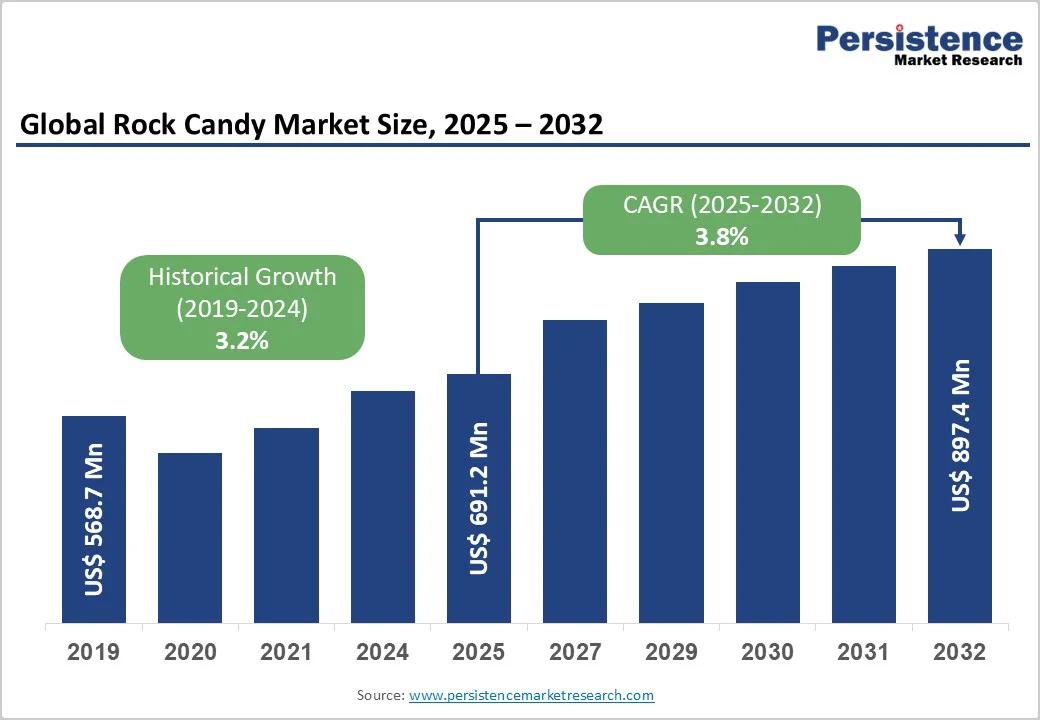
The global rock candy market size is valued at US$ 691.2 million in 2025 and projected to reach US$ 897.4 million at a CAGR of 3.8% during the forecast period from 2025 to 2032.
The global rock candy market is evolving from a nostalgic indulgence into a premium, artistic confection segment. With rising interest in artisanal sweets, wellness-infused sugar crystals, and experiential gifting, both legacy confectioners and emerging brands are redefining rock candy’s role in modern snacking and celebration culture.
Key Industry Highlights:
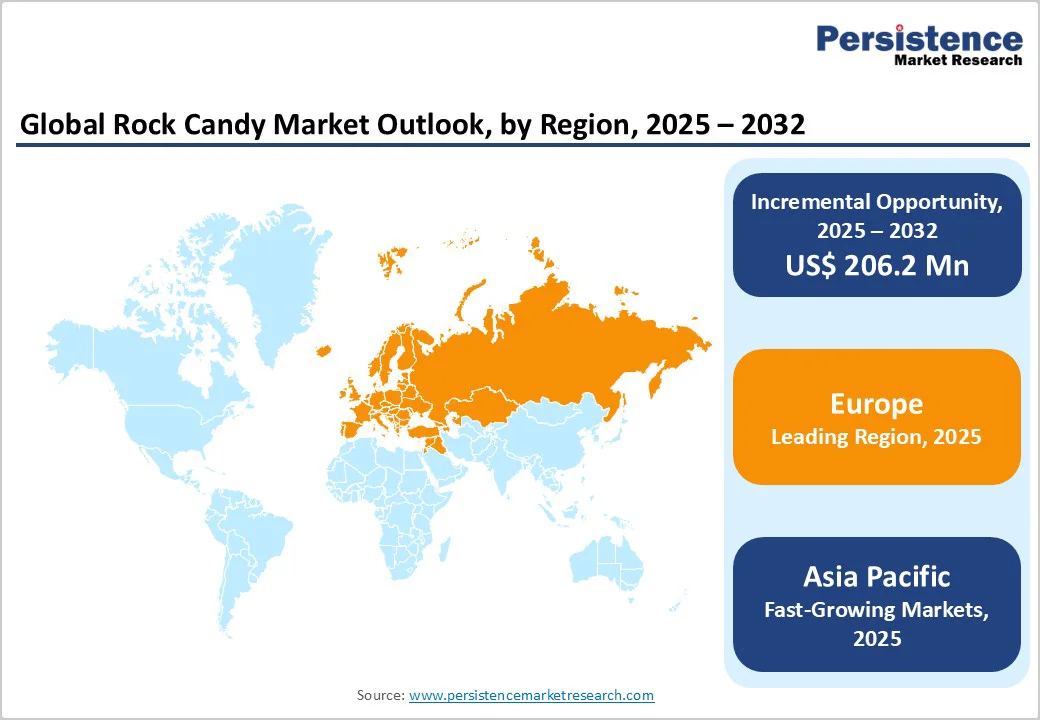
- Leading Region: Europe, driven by artisanal confectionery traditions, sustainable packaging, and growing consumer preference for visually appealing, premium sweets.
- Fastest-Growing Region: Asia Pacific, supported by fusion desserts, premium gifting culture, and innovation in natural flavors and low-calorie formulations.
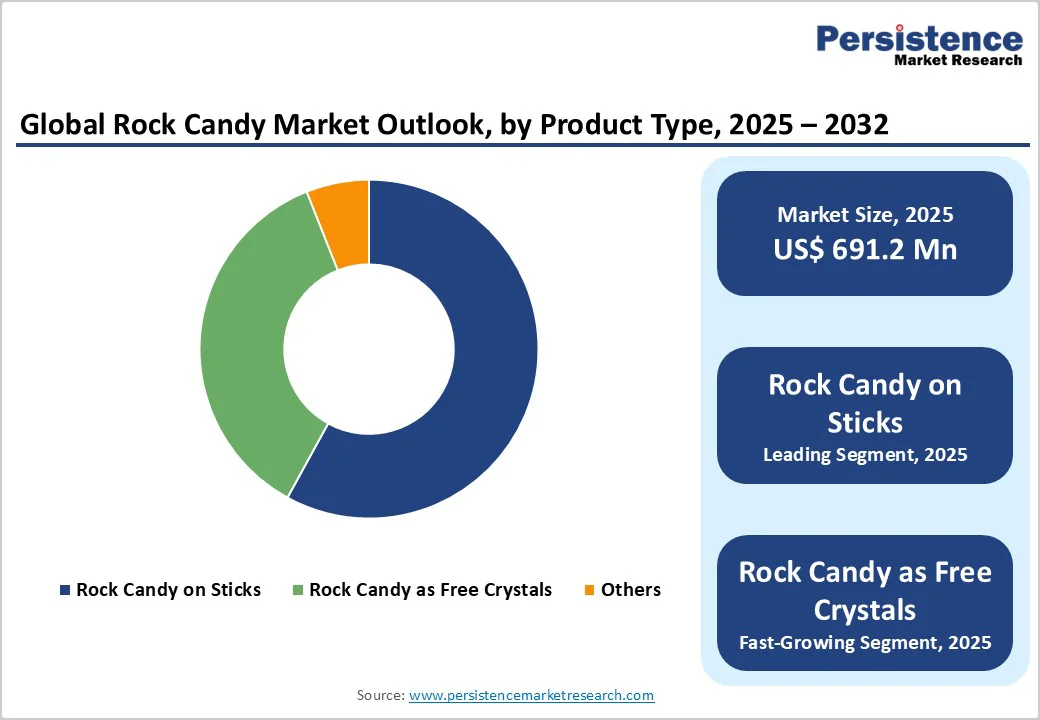
- Dominant Product Type Segment: Rock Candy on Sticks, owing to strong demand for hygienic, decorative, and customizable formats suited for gifting and events.
- Growth Indicator: Rising demand for decorative and luxury confectionery gifts is accelerating artisanal rock candy sales globally, as brands fuse craftsmanship with indulgence.
- Opportunities: Infusing herbs, mint, and vitamin blends to reposition rock candy as a wellness or digestive-friendly treat that appeals to health-aware consumers.
- Key Developments: In November 2024, Lolli & Pops acquired Hammond's Candies to strengthen its premium confectionery portfolio. In April 2024, Hilco expanded its rock candy line through collaborations with Kraft Heinz and Impact Confections.
| Key Insights | Details |
|---|---|
| Global Rock Candy Market Size (2025E) | US$ 691.2 Mn |
| Market Value Forecast (2032F) | US$ 897.4 Mn |
| Projected Growth (CAGR 2025 to 2032) | 3.8% |
| Historical Market Growth (CAGR 2019 to 2024) | 3.2% |
Market Dynamics
Driver - Rising Demand in Decorative and Luxury Confectionery Gifts Drives Artisanal Rock Candy Sales
The growing fascination with decorative and premium confectionery gifts is fueling demand for artisanal rock candy across global markets. Consumers are increasingly drawn to visually striking sweets that combine craftsmanship with indulgence, making rock candy a popular choice for gifting, celebrations, and upscale retail displays. Its customizable shapes, vibrant colors, and aesthetic appeal align with trends in personalized and experiential gifting.
Luxury confectioners are responding by introducing rock candy infused with natural flavors, botanical extracts, and metallic finishes to elevate presentation and taste. The shift toward premium packaging and limited-edition collections has further transformed rock candy from a nostalgic treat into a statement of style and sophistication, strengthening its position in the growing decorative confectionery segment.
Restraints - Strong Competition from Healthier Confectioneries, Such as Protein Bars, Nut-Based Treat
Evolving consumer preferences toward functional and guilt-free indulgence are creating headwinds for the traditional rock candy market. The rapid rise of healthier confectioneries such as protein bars, nut-based treats, and low-sugar chocolates is shifting attention away from sugar-dense sweets. These alternatives appeal to health-conscious consumers who seek energy, nutrition, and taste in a single product.
Rock candy, perceived as purely decorative or nostalgic, struggles to align with this wellness-driven snacking culture. The growing focus on clean-label ingredients, natural sweeteners, and added functional benefits further marginalizes conventional sugar-based confections.
As purchasing behavior shifts toward mindful indulgence, rock candy manufacturers face mounting pressure to reformulate, reposition, or innovate in order to remain relevant in a marketplace increasingly defined by nutrition-oriented choices.
Opportunity - Infusing Herbs, Mint, or Vitamin Blends to Position Rock Candy as a Wellness or Digestive Aid
Growing consumer interest in functional and wellness-oriented confectionery opens a new pathway for innovation within the rock candy market. Infusing traditional sugar crystals with herbs, mint, or vitamin blends can transform rock candy from a simple sweet into a refreshing wellness treat.
Ingredients such as peppermint, fennel, or ginger can appeal to consumers seeking digestive comfort, while vitamin-enriched variants cater to the rising demand for immunity and energy support. This fusion of taste and health creates a differentiated niche within the crowded confectionery space.
Startups and established brands can capitalize on this by emphasizing natural extracts, clean formulations, and attractive packaging, redefining rock candy as both a nostalgic indulgence and a contemporary, health-aligned confection.
Category-wise Analysis
By Product Insights
Rock candy on sticks accounts. 60% share as of 2025, driven by its visual appeal, convenience, and suitability for gifting and events. The stick format enhances hygiene and portability, making it preferred for retail displays, weddings, and confectionery décor. Its clear crystalline structure and slow crystallization process give it a premium handcrafted aesthetic that attracts both children and adults.
In comparison, rock candy as free crystals is often used in baking, tea sweetening, or industrial flavoring, but lacks the same novelty and presentation value. Manufacturers continue to innovate with colorful sticks, natural flavors, and customizable packaging, keeping this segment a dominant force in the global rock candy market amid changing consumer indulgence patterns.
Flavored rock candies are expected to show promising growth during the forecast period
Flavored rock candies is projected to grow at a CAGR of 4.8% during the forecast period, driven by the rising preference for experiential confectionery and evolving taste profiles among younger consumers. Vibrant flavors such as Citrus, Berries, and Tropical Fruits are increasingly replacing the traditional plain sugar variant, offering sensory appeal and variety.
The infusion of natural fruit extracts and botanical flavors aligns with the clean-label movement, broadening the consumer base. Premium gifting trends and the popularity of thematic candies for celebrations further enhance demand.
Manufacturers are exploring regionally inspired flavors and reduced-sugar options to attract health-conscious buyers, positioning flavored rock candies as a modern indulgence with nostalgic charm and renewed market potential across global retail and e-commerce channels.
Regional Insights
Europe Rock Candy Market Trends
Europe holds approximately 37% share in the global rock candy market, supported by a strong confectionery tradition and growing consumer demand for artisanal sweets. In Germany and Italy, rock candies infused with natural fruit essences and herbal extracts are gaining traction as cleaner indulgence options.
France is witnessing a revival of premium, handcrafted sugar crystals positioned as nostalgic gourmet treats, while Spain’s market leans toward colorful, festive varieties tied to local celebrations. Brands such as Cavendish & Harvey, Zain, and Papabubble are leading innovation through customized flavors, sustainable packaging, and experiential in-store candy-making concepts.
The European market’s direction reflects a blend of heritage craftsmanship with evolving consumer preferences for authenticity, visual appeal, and regional flavor storytelling.
Asia Pacific Rock Candy Market Trends
Asia Pacific rock candy market is expected to achieve a CAGR of 5.7%, driven by evolving consumer tastes, cultural integration of traditional sweets, and premium gifting trends. In India, demand is rising through its growing use in fusion desserts, artisanal confectionery boutiques, and festive packaging rather than just as a traditional sweetener.
China’s market is expanding through the use in teas, desserts, and luxury gift boxes, while Thailand’s tourism-driven confectionery sector is promoting exotic tropical flavors. Japan’s rock candy producers are leveraging minimalist design and natural coloring to appeal to the country’s strong aesthetic culture.
Regional players are also experimenting with healthier formulations using organic cane sugar and low-calorie variants, reflecting a shift from pure indulgence toward modern, culturally inspired, and health-aware confections.
Competitive Landscape
The global rock candy market remains moderately fragmented, with a mix of established confectionery brands and niche artisanal makers competing for attention. Key players are focusing on flavor innovation, experimenting with fruit, spice, and herbal infusions to attract younger consumers. Startups are rebranding rock candy as a stylish indulgence, using minimalistic packaging, customizable shapes, and vibrant color palettes to appeal to millennial aesthetics.
The use of alternative sweeteners such as coconut or beet sugar is emerging to cater to health-conscious buyers. Online retail and personalized gifting trends have further expanded market reach, while social media platforms are amplifying visibility through visually engaging confectionery art and influencer-led campaigns that link rock candy with creativity, nostalgia, and premium craftsmanship.
Key Industry Developments:
- In November 2024, Lolli & Pops, a leading specialty retailer of premium confections backed by TerraMar Capital, announced the acquisition of Hammond's Candies, one of America's oldest and most beloved candy brands.
- In April 2024, Hilco announced a major expansion of its licensed candy portfolio, unveiling new rock candy sticks developed through strategic co-branding partnerships with Kraft Heinz and Impact Confections.
Companies Covered in Rock Candy Market
- ESPEEZ Candy
- Richardson Brands Company
- Candy Nation
- Lolli & Pops
- Zubi Candy
- Promotional Candy Company Ltd
- Designer Candy Pty Ltd
- The Sugar Crystal Company
- Walkers Candy Co.
- Boone's Mill
- Candy Envy
- Hilco
- Others
Frequently Asked Questions
The global Rock Candy market is projected to be valued at US$ 691.2 Mn in 2025.
Rising demand in decorative and luxury confectionery gifts is fueling the demand for Rock Candy in the global market.
The global Rock Candy market is poised to witness a CAGR of 3.8% between 2025 and 2032.
Infusing herbs, mint, or vitamin blends to position rock candy as a wellness or digestive aid represents a major market opportunity.


