




- Processed Food
- Pasta & Couscous Market
Pasta & Couscous Market Size, Share, Growth, and Regional Forecast, 2025 - 2032
Pasta & Couscous Market by Product Type (Pasta, Couscous), Ingredient Source (Wheat-based, Rice-based, Maize/Corn-based, Others), Sales Channel (Hypermarkets/Supermarkets, Convenience Stores, Specialty Stores, Others), and Regional Analysis from 2025 - 2032

Pasta & Couscous Market Share and Trends Analysis
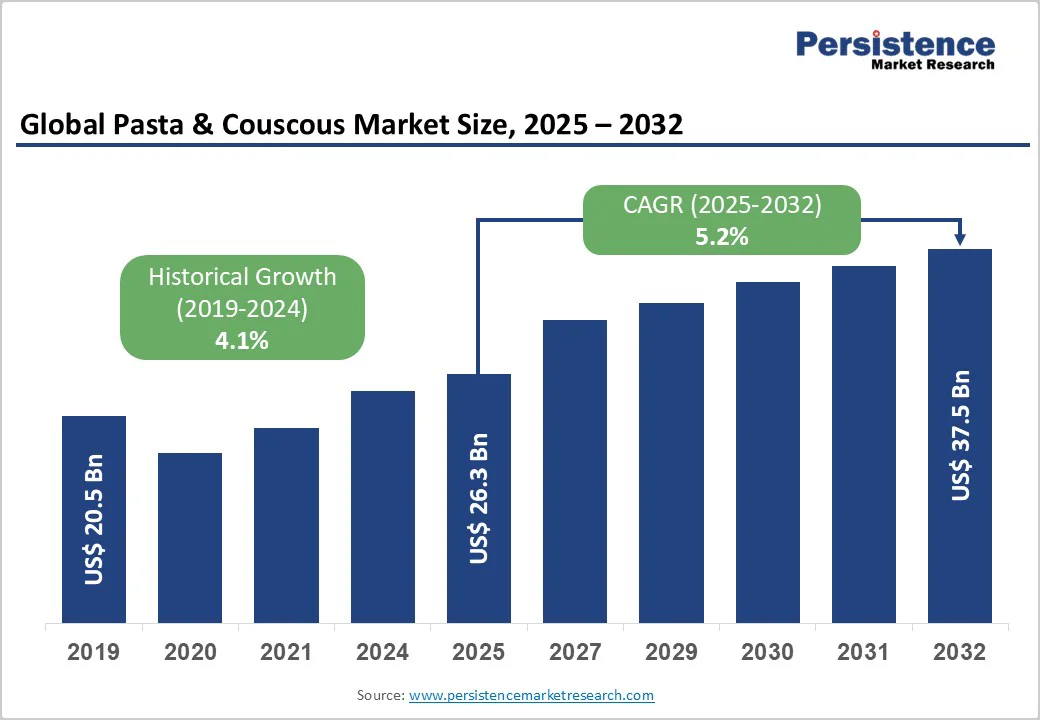
The global pasta & couscous market size is likely to value US$ 26.3 billion in 2025 and is projected to reach US$ 37.5 billion by 2032 at a CAGR of 5.2% during the forecast period from 2025 to 2032.
Key Industry Highlights
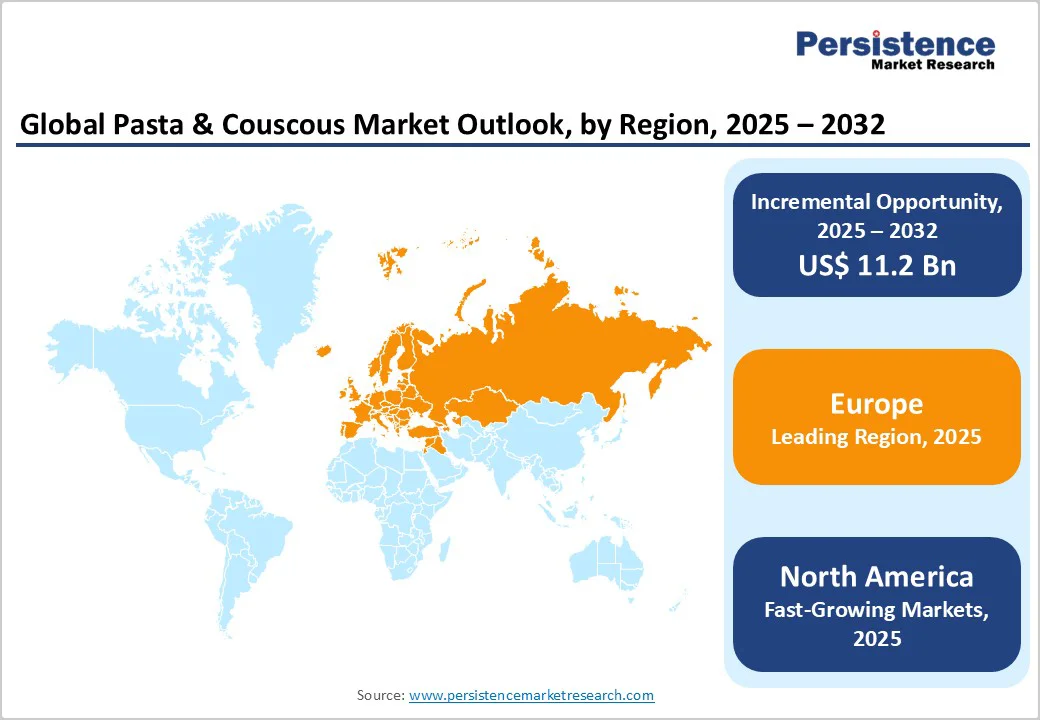
- Leading Region: Europe, holding approx 41% market share, driven by deep-rooted culinary culture, high per capita consumption, and premium pasta and couscous offerings.
- Fastest-Growing Region: North America, fueled by rising demand for gluten-free, legume-based, and ready-to-cook pasta products, along with convenient couscous blends and online grocery adoption.
- Fastest-Growing Product Type Segment: Legume-based pasta and couscous, driven by high-protein, fiber-rich, plant-based, and health-conscious consumer preferences across multiple demographics.
- Market Drivers: Premiumization, artisanal varieties, flavor innovation, and convenience-focused formats are attracting health-aware, experience-driven consumers and expanding market appeal globally.
- Opportunities: Developing instant-cook, microwaveable, and fortified pasta products, leveraging clean-label positioning, sustainable sourcing, and digital engagement strategies to meet evolving lifestyles.
- Key Developments: In August 2025, the UK pasta chain “Carbonara of Dreams” planned expansion to 300 restaurants. In July 2025, Pastificio De Cecco launched its U.S. gluten-free line. In May 2025, Martino Couscous earned second place in the Better Future Awards 2025.
| Key Insights | Details |
|---|---|
|
Global Pasta & Couscous Market Size (2025E) |
US$ 26.3 Bn |
|
Market Value Forecast (2032F) |
US$ 37.5 Bn |
|
Projected Growth (CAGR 2025 to 2032) |
5.2% |
|
Historical Market Growth (CAGR 2019 to 2024) |
4.1% |
Market Dynamics
Driver - Gourmet and Artisanal Pasta Varieties are Capturing Attention of Health-conscious, Experience-driven Consumers
Gourmet and artisanal pasta varieties are redefining modern meal experiences for consumers seeking authenticity, flavor depth, and health balance. Handmade, small-batch pastas made from heirloom grains, ancient wheat, or organic semolina are appealing to those valuing craft, provenance, and clean-label simplicity. Flavored and infused variants such as spinach, squid ink, saffron, or truffle are bringing restaurant-level experiences into home kitchens.
Across Europe and North America, premium pasta makers emphasize bronze-cut textures and slow-drying methods that preserve taste and nutrition. Parallelly, in Asia and Latin America, emerging brands are merging local grains with Mediterranean traditions, enhancing the market’s cultural diversity. This shift toward sensory pleasure, quality craftsmanship, and natural ingredients is fueling the premiumization of the global pasta segment, driving sustained demand growth among discerning, health-conscious consumers.
Restraints - Logistic Delays and Import Dependencies Hinder Consistent Product Availability
Global supply chains for pasta and couscous are increasingly strained by logistic delays and heavy import dependencies, disrupting consistent product availability across markets. Delays in shipping schedules, container shortages, and customs bottlenecks impact the steady flow of raw materials such as durum wheat and semolina. Regions reliant on imports particularly in Asia, Africa, and Latin America face price fluctuations and intermittent stockouts, undermining retailer reliability and consumer confidence.
In Europe, energy cost volatility and transportation constraints further intensify the challenge of timely distribution. These logistical inefficiencies raise production and storage costs, forcing brands to reassess sourcing strategies and invest in localized manufacturing. Without resilient supply networks, market players struggle to maintain product stability, pricing uniformity, and sustained consumer trust.
Opportunity - Developing instant-cook and microwaveable pasta products for busy lifestyles
Logistic delays and import dependencies are unlocking opportunities for key players and new entrants to localize production and build resilient supply ecosystems in the global pasta and couscous market. Establishing regional milling and processing facilities closer to raw material sources can reduce reliance on imported semolina and durum wheat, ensuring a consistent supply and lower transport costs. Startups are increasingly exploring hybrid supply models, combining local sourcing with strategic import diversification to manage risk. Investing in smart logistics platforms, AI-driven demand forecasting, and decentralized storage hubs can enhance delivery accuracy and shelf availability. Companies that integrate regional partnerships, adaptive sourcing, and sustainable transport networks are positioned to gain a competitive edge, turning market instability into an advantage for long-term growth.
Category-wise Analysis
By Product Type, Pastas lead the market, reflecting their widespread consumer preference.
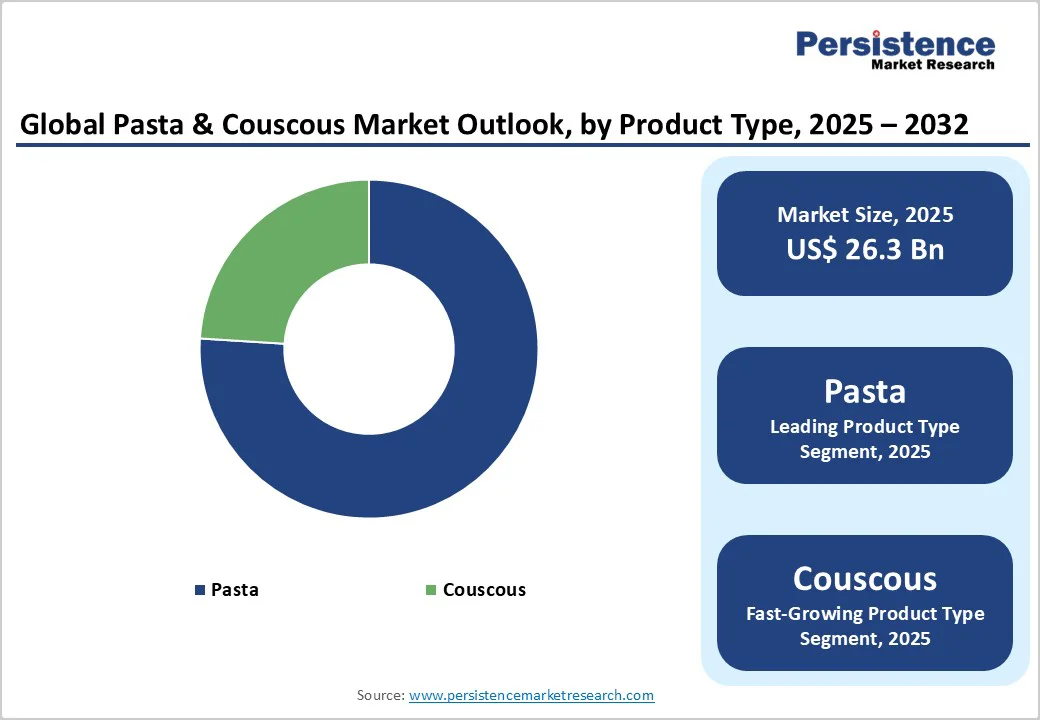
Pastas hold approx 78% market share as of 2024, making them the leading product type in the global pasta and couscous market. Their dominance is driven by widespread consumer preference, convenience, versatility, and familiarity across households and restaurants worldwide. Pasta varieties such as spaghetti, penne, and fusilli cater to diverse culinary tastes, while innovations like protein-enriched, gluten-free, and ready-to-cook options appeal to health-conscious and busy consumers.
Couscous, though smaller in share, is gaining traction due to its quick preparation, nutritional profile, and global cuisine appeal. Key couscous variants include Instant Couscous for fast meals, Whole Wheat Couscous for health-oriented diets, and Flavored or Pre-Seasoned Couscous for convenient gourmet experiences. The combined focus on taste, nutrition, and convenience reinforces the market’s sustained growth trajectory.
By Ingredient Source, Legume-based Pasta & Couscous is expected to show promising growth during the forecast period
Legume-based is projected to grow at a CAGR of 8.6% during the forecast period, driven by increasing consumer focus on high-protein, fiber-rich, and plant-based diets. Pasta and couscous made from lentils, chickpeas, and black beans provide enhanced nutritional benefits compared to traditional wheat-based products, appealing to health-conscious and diet-focused consumers. These products cater to vegan, gluten-free, and low-carb preferences, expanding their reach across multiple consumer segments.
Rising awareness of sustainable and environmentally friendly food production further supports the adoption of legume-based ingredients. Additionally, innovations in texture, taste, and ready-to-cook formats are enhancing acceptability among mainstream consumers. Retailers and manufacturers investing in marketing, packaging, and product variety can capitalize on this growing trend to capture a significant share of the evolving global pasta and couscous market.
Region-wise Insights
North America Pasta & Couscous Market Trends
Promising market growth in North America is being fueled by evolving consumer preferences toward convenient, nutritious, and plant-based meal options in the pasta and couscous segment. In the U.S., demand is rising for high-protein, gluten-free, and legume-based pasta, reflecting growing health-consciousness and interest in alternative diets. Ready-to-cook and microwavable pasta kits are gaining traction among urban consumers, while premium and flavored couscous blends are augmenting the gourmet appeal.
Canada’s market, though mature, shows steady growth driven by organic and whole-grain products, catering to sustainability-minded and health-focused shoppers. Retailers and brands are increasingly leveraging online grocery channels and subscription meal services to enhance accessibility. Innovations in packaging, portion-controlled offerings, and fortified ingredients are further driving adoption, positioning North America as a dynamic and evolving hub in the global pasta and couscous market.
Europe Pasta & Couscous Market Trends
Europe holds approx 41% market share in the Global Pasta & Couscous Market, reflecting the region’s deep-rooted culinary culture and high per capita consumption. Italy remains the epicenter, with leading brands such as Barilla, De Cecco, and Garofalo driving product innovation, premiumization, and fortified pasta offerings. Spain is witnessing growth in convenience-driven formats, including ready-to-cook and microwaveable pasta, catering to busy urban lifestyles.
In the UK, health-conscious trends are pushing demand for gluten-free, whole-grain, and high-protein pasta variants, while Germany emphasizes organic and sustainably sourced couscous products. Across Europe, premium flavored and pre-seasoned couscous blends are gaining popularity for quick gourmet meals. Retailers are increasingly integrating online platforms with traditional stores, enabling omnichannel accessibility. Sustainability, nutrition-focused innovation, and convenience are shaping market trends and expanding consumption across diverse European demographics.
Competitive Landscape
The global pasta and couscous market exhibits a moderately consolidated nature, with a mix of established multinational brands and agile regional players shaping competition. Leading companies focus on premiumization, clean-label offerings, and fortified products, while enhancing distribution through omnichannel retail and e-commerce platforms. Startups are innovating with legume-based, gluten-free, and high-protein variants, catering to health-conscious and plant-based consumers.
Flavor innovation, including pre-seasoned couscous and exotic pasta blends, is gaining traction, providing convenience and gourmet experiences. Easy-to-cook formats, microwaveable meals, and ready-to-heat kits are increasingly popular, addressing time-sensitive lifestyles. Marketing strategies emphasize digital engagement, influencer collaborations, and sustainability messaging. Companies integrating innovation, convenience, and nutrition are strengthening brand loyalty and positioning for long-term growth in this evolving global market.
Key Industry Developments:
- In August 2025, the UK pasta chain known for its “Carbonara of Dreams” announced plans to expand to 300 restaurants. The expansion underscores the brand’s growing popularity and ambition to strengthen its presence across the UK and select international markets.
- In July 2025, Pastificio De Cecco entered the U.S. gluten-free market for the first time, launching its new product line at the Summer Fancy Food Show in New York. The move highlights the brand’s strategic focus on catering to health-conscious American consumers and expanding its international footprint.
- In May 2025, Martino Couscous was recognized at the Better Future Awards 2025, securing second place in the “Product Innovation” category. The accolade highlights the company’s leadership in couscous and ready-meal innovations, reinforcing its commitment to quality and creativity in the market.
- In July 2024, Pasta Zara participated in the Summer Fancy Food Show in New York, highlighting its focus on expanding presence in the U.S. market. The Italian company showcased products under its own brand and Pastificio Bragagnolo, signaling strategic efforts to strengthen American distribution and consumer reach.
Companies Covered in Pasta & Couscous Market
- The Hain Celestial Group, Inc.
- Valeo Foods Group Limited
- Pastificio Antonio Pallante S.R.L.
- Pasta Foods Ltd.
- US Durum Products Ltd.
- Regina Pasta & Food Industries
- Nestle S.A.
- Ebro Foods S.A
- Weikfield Foods Pvt. Ltd.
- ITC Foods Limited
- Others
Frequently Asked Questions
The global pasta & couscous market size is projected to value at US$ 26.3 Bn in 2025.
Gourmet and artisanal pasta varieties are attracting health-conscious, experience-seeking consumers, fueling demand in the global Pasta & Couscous market.
The global pasta & couscous market is poised to witness a CAGR of 5.2% between 2025 and 2032.
Developing instant-cook and microwaveable pasta products for busy lifestyles is the key market opportunity.
Major players in the Global Pasta & Couscous market include Barilla, De Cecco, Rummo S.p.A., Ebro Foods, S.A., US Durum, The Hain Celestial Group, Inc., and others.


