




- Biotechnology
- Mucosal Melanoma Treatment Market
Mucosal Melanoma Treatment Market Size, Share, and Growth Forecast 2026 - 2033
Mucosal Melanoma Treatment Market by Treatment Type (Surgery, Chemotherapy, Immunotherapy, Radiation Therapy), Application (Hospitals, Clinics, Research Institutions), and Regional Analysis, 2026 - 2033

Mucosal Melanoma Treatment Market Size and Trends Analysis
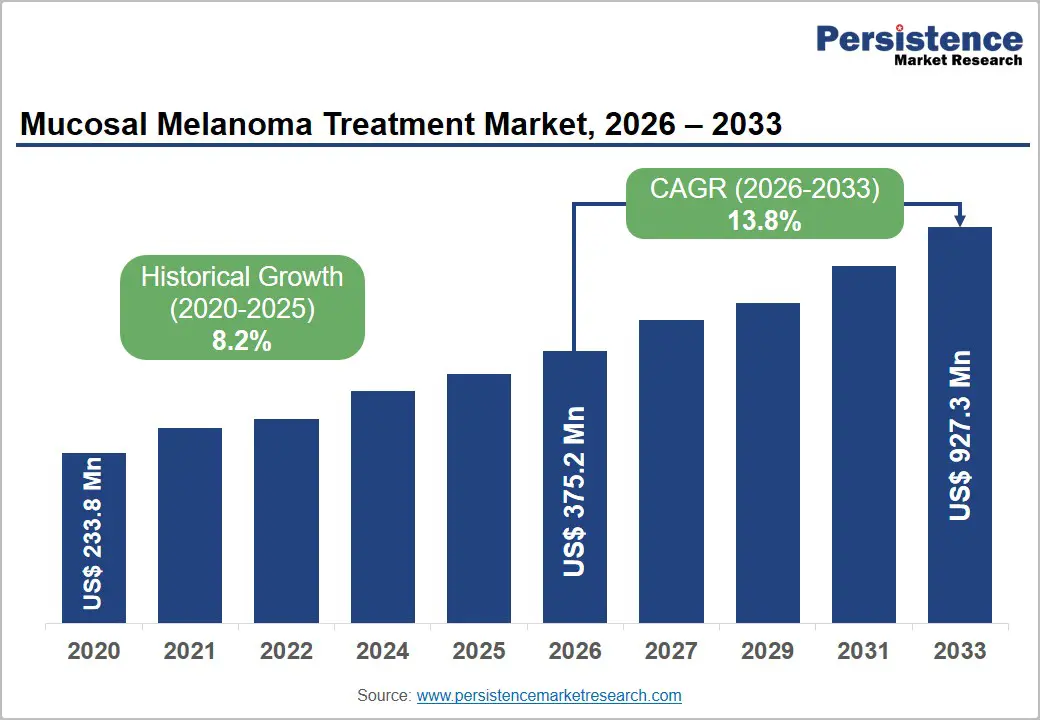
The global mucosal melanoma treatment market size is likely to be valued at US$375.2 million in 2026 and is estimated to reach US$927.3 million by 2033, growing at a CAGR of 13.8% during the forecast period from 2026 to 2033, driven by the rising use of immune checkpoint inhibitors and combination immunotherapy regimens that are improving survival in rare melanoma subtypes.
Increasing clinical trial activity focused specifically on mucosal melanoma is also supporting speedy treatment development and adoption.
Key Industry Highlights:
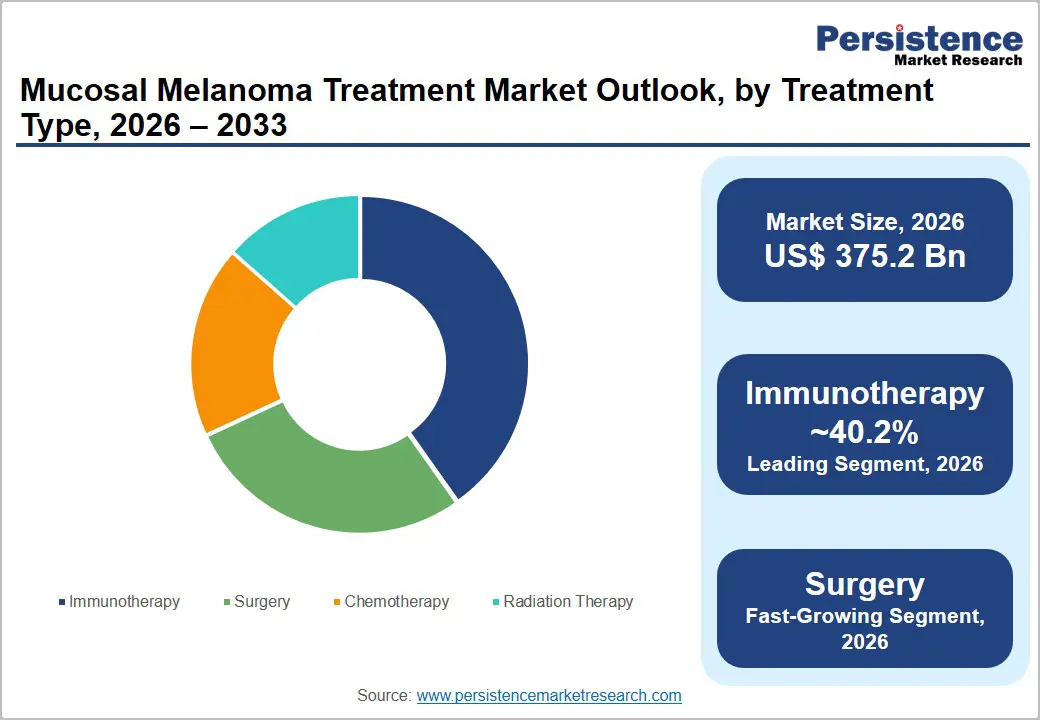
- Leading Treatment Type: Immunotherapy, approximately 40.2% share in 2026, as checkpoint inhibitors have shown better survival outcomes compared to chemotherapy in advanced mucosal melanoma.
- Dominant Application: Hospitals, with a nearly 54.7% share in 2026, as they provide multidisciplinary care, advanced imaging, and safe administration of complex immunotherapy regimens.
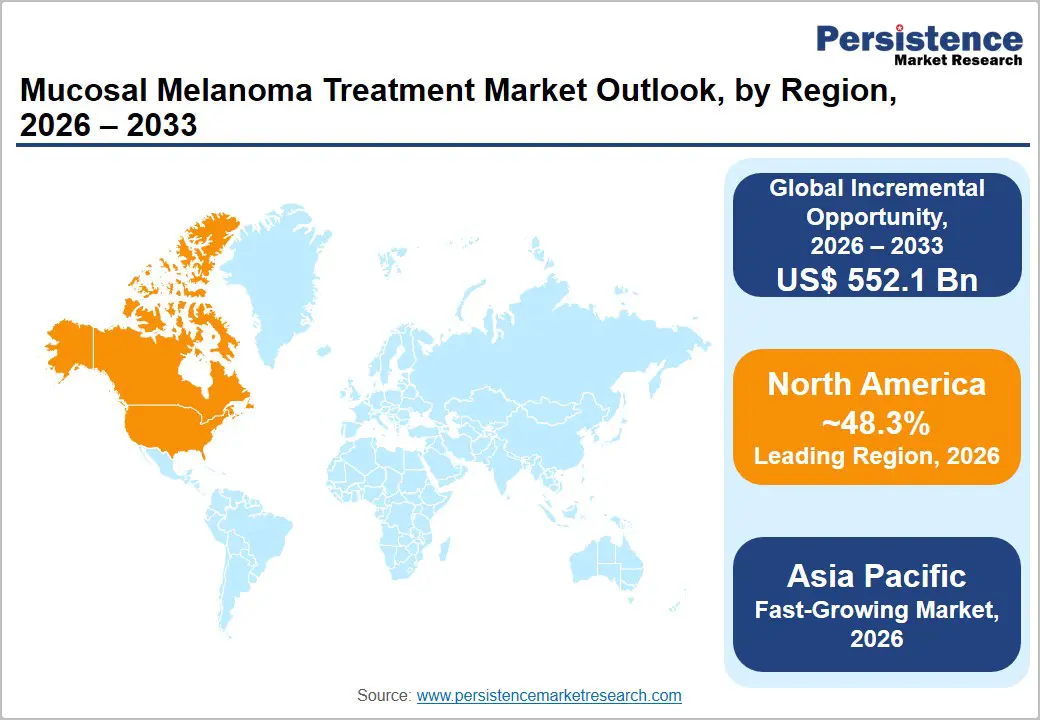
- Leading Region: North America, with about a 48.3% share in 2026, owing to rising adoption of immunotherapy and high clinical trial activity.
- Fast-growing Region: Asia Pacific, fueled by ongoing investments in cancer care infrastructure across various countries.
- Recent Clinical Trial: In May 2025, Innovent Biologics announced at the ASCO Annual Meeting the initiation of a pivotal Phase II registrational trial of IBI363, its PD-1/IL-2α-bias bispecific antibody fusion protein, for patients with unresectable or metastatic mucosal and acral melanoma. The study compares IBI363 with pembrolizumab and marks one of the first late-stage trials specifically targeting these melanoma subtypes.
DRO Analysis
Driver - Increasing Incidence of Mucosal Melanoma Globally
Mucosal Melanoma (MM) accounts for approximately 1.3% of all melanoma cases globally, but its incidence is not declining, finds a 2025 review article published in Cureus. In some regions, it is the dominant melanoma subtype. A 2024 study published in Melanoma Research confirmed that melanoma incidence has continued to rise across multiple countries, with non-cutaneous forms such as mucosal melanoma carrying a significantly worse prognosis than cutaneous subtypes.
Mucosal and uveal melanoma each account for 4% of total melanoma cases worldwide. Unlike cutaneous melanoma, they are not linked to ultraviolet (UV) radiation exposure, meaning sun protection campaigns have no preventive impact on this subgroup.
Mucosal melanoma further carries a disproportionately heavy burden in Asian populations. In a PubMed Central (PMC) study of 522 consecutive Asian patients with malignant melanoma, the two most commonly diagnosed subtypes were Acral Lentiginous Melanoma (ALM) and Mucosal Melanoma (MCM), which together accounted for close to 65% of all cases. It is a distribution that differs substantially from Western populations, where superficial spreading melanoma predominates. This growing epidemiological burden is directly expanding the patient population requiring treatment.
Surging Emphasis on Personalized Medicine
Mucosal melanoma carries a genetic profile that is fundamentally different from cutaneous melanoma. It rarely harbors Rapidly Accelerated Fibrosarcoma B-Type (BRAF) mutations, which are the basis of most approved targeted therapies in skin melanoma. Instead, it shows a high frequency of Kirsten Rat Sarcoma (KIT) gene mutations and amplifications. A November 2025 review published in Cancers (PubMed Central) by researchers from Massachusetts General Hospital and Harvard Medical School confirmed that KIT mutations are most frequently observed in acral, mucosal, and chronically sun-damaged melanomas and are rarely found in other subtypes.
This makes mutation screening a necessary starting point for any personalized treatment plan. Small trials reported imatinib response rates of 38% in KIT-mutated mucosal melanoma. New KIT inhibitors such as nilotinib and dasatinib have also been explored. This distinct mutation landscape is motivating the development of molecularly matched treatment strategies specific to mucosal melanoma.
Restraint - Anatomical Complexity to Make Surgical Cure Difficult to Achieve
Mucosal melanoma develops in sites that are inherently difficult to operate on, including nasal cavities, sinuses, oral mucosa, anorectal tracts, and the female genital tract. Achieving clear surgical margins in these locations requires removing tissue from areas close to critical structures, often resulting in significant functional loss and morbidity. Even when surgery is radical, it frequently fails to prevent recurrence. According to a widely cited review published in Pigment Cell & Melanoma Research, complete resection achieving melanoma-free margins is often difficult in mucosal melanoma of the head and neck owing to the proximity of critical anatomic structures.
It contributes to a local recurrence rate reported to be between 50% and 90%. A 2025 case series published in Cureus further confirmed that nasal mucosal melanomas carry a local recurrence risk of 31% to 85%. Local recurrence is commonly within a year of primary surgery and, although re-excision can be considered, it is generally quickly followed by disseminated disease. The high recurrence rate, even after technically successful surgery, remains the central unresolved clinical problem in mucosal melanoma management.
Opportunity - Anti-Vascular Combinations to Unlock Novel Responses
Mucosal melanoma is characterized by high vascular density, which appears to suppress immune cell infiltration into the tumor. This biological feature has made anti-angiogenic agents, i.e., drugs that cut off a tumor's blood supply, a rational partner for Immune Checkpoint Inhibitors (ICIs). The combination of an anti-Programmed Death-1 (PD-1) antibody with a Vascular Endothelial Growth Factor Receptor (VEGFR) inhibitor such as axitinib has shown particularly superior results.
A Phase Ib trial of toripalimab plus axitinib in treatment-naïve patients with metastatic mucosal melanoma reported an Objective Response Rate (ORR) of 48.3% and a Disease Control Rate (DCR) of 86.2%. It also reported a median duration of response of 13.7 months and a median Overall Survival (OS) of 20.7 months, which is substantially higher than what PD-1 monotherapy achieves in this subtype. A Phase II study presented at the 2025 American Society of Clinical Oncology (ASCO) Annual Meeting confirmed that the frontline combination of nivolumab and axitinib was effective in patients outside of China and warranted a prospective global randomized trial.
Pre-Surgical Systemic Treatment to Shrink Tumors Before Resection
Administering systemic therapy before surgery is being actively investigated as a way to improve resection outcomes in mucosal melanoma and establish early systemic control. A Phase II trial published in the Annals of Oncology (2024) by researchers at Peking University Cancer Hospital evaluated neoadjuvant toripalimab plus axitinib in patients with resectable mucosal melanoma. The trial enrolled patients to receive toripalimab 3 mg/kg once every two weeks plus axitinib 5 mg twice daily for eight weeks as neoadjuvant therapy.
These were followed by surgery and adjuvant toripalimab for 44 weeks. The published data showed a pathological response rate of 27.6%, including four patients with a complete pathological response. Neoadjuvant immunotherapy delivers the advantage of immunological priming with tumor cells in situ. Early initiation of systemic therapy may delay or prevent the distant spread of disease. These findings are prompting further trials to define the optimal neoadjuvant regimen for this disease.
Category-wise Analysis
Treatment Type Insights
Immunotherapy is predicted to lead with a share of approximately 40.2% in 2026, as mucosal melanoma shows a high risk of systemic spread at diagnosis, making localized treatments alone insufficient. Anti-PD-1-based therapies are now routinely used as first-line or adjuvant options, even though response rates remain lower than in cutaneous melanoma (often nearly 20 to 30% vs. >40% in cutaneous cases). Combination regimens such as nivolumab + ipilimumab have further strengthened this segment’s dominance despite higher toxicity, as they provide relatively better survival outcomes.
Surgery is estimated to be the fastest-growing segment over the forecast period, as it is still the primary approach for early-stage, localized disease, especially in head and neck as well as anorectal mucosal melanoma. Its role is limited by late diagnosis and high recurrence rates, with studies reporting local recurrence rates exceeding 40 to 60% in some subtypes.
This has prevented surgery from leading the market despite being a foundational treatment. Chemotherapy and radiation therapy follow behind due to limited efficacy. Chemotherapy has response rates typically below 15%, while radiation is mostly used as an adjuvant or palliative option rather than a standalone curative approach.
Application Insights
Hospitals are anticipated to dominate with a share of nearly 54.7% in 2026, as mucosal melanoma treatment often requires multidisciplinary management, including complex surgery, immunotherapy infusions, and access to oncology specialists and advanced imaging. Most immunotherapies and combination regimens are administered in hospital-based oncology settings, owing to monitoring requirements for immune-related adverse events.
Clinics are expected to remain in the second position in 2026, as they handle follow-ups, outpatient immunotherapy administration in select cases, and supportive care. Their role is rising gradually with the expansion of ambulatory cancer care models. However, they remain secondary because advanced interventions, clinical trial access, and high-risk patient management are still concentrated in hospital settings. Research institutions hold a smaller share but play a key role in influencing the competitive landscape through early-stage trials and rare cancer studies.
Regional Insights
North America Mucosal Melanoma Treatment Market Trends
North America is predicted to dominate with a share of approximately 48.3% in 2026, as it has early access to advanced immunotherapies and a well-established clinical research infrastructure. The U.S. Food and Drug Administration (FDA) has approved multiple checkpoint inhibitors that are widely used off-label for mucosal melanoma, which fuels adoption. The region also runs a high number of rare cancer trials. According to the National Cancer Institute, the U.S. accounts for a large share of global oncology clinical trials, including studies on rare melanoma subtypes. Also, leading cancer centers such as MD Anderson and Memorial Sloan Kettering regularly publish mucosal melanoma-specific findings, which help improve treatment protocols faster than in other regions.
U.S. Mucosal Melanoma Treatment Market Trends
A regional share of nearly 62.1% is expected to be held by the U.S. in 2026, owing to the increasing use of combination immunotherapy and rising pipeline activity. A 2024 study in the Journal of Clinical Oncology reported improved survival with nivolumab-ipilimumab combinations in mucosal melanoma compared to monotherapy. The country is also a hub for next-generation therapies. For example, Iovance Biotherapeutics received FDA approval in 2024 for a tumor-infiltrating lymphocyte (TIL) therapy (lifileucel) for melanoma. Ongoing trials are also expanding its use into mucosal melanoma cohorts.
Asia Pacific Mucosal Melanoma Treatment Market Trends
Asia Pacific is anticipated to be the fastest-growing region in 2026 with a share of nearly 28.7%, as mucosal melanoma is more common in Asian populations. Studies published on PubMed show that mucosal and acral melanoma together account for a much higher proportion of melanoma cases in Asia compared to Western countries. This creates a large target patient pool. Governments are further investing in oncology care. China, Japan, and South Korea are extending immunotherapy access and funding rare cancer research, which is fostering market growth.
China Mucosal Melanoma Treatment Market Trends
China will likely lead in Asia Pacific in 2026 with a share of around 34.8%, backed by rising clinical innovation and domestic drug development. Companies such as Innovent Biologics are actively running trials for mucosal melanoma-specific therapies. For instance, a 2025 abstract presented at the American Society of Clinical Oncology showed the development of PD-1/IL-2 bispecific antibodies targeting difficult melanoma subtypes. China also has a higher incidence of mucosal melanoma compared to Western countries, which propels local demand.
India Mucosal Melanoma Treatment Market Trends
In 2026, India is projected to account for a share of approximately 20.9%, spurred by improving cancer diagnosis and access to immunotherapy in urban centers. According to data from the Indian Council of Medical Research, cancer incidence is rising, and awareness of rare cancers is gradually improving. Leading hospitals such as Tata Memorial Center have started incorporating checkpoint inhibitors for advanced melanoma cases. However, growth is moderate rather than speedy because high treatment costs and limited insurance coverage still restrict access.
Europe Mucosal Melanoma Treatment Market Trends
Europe will likely see decent growth in the forecast period, with a share of nearly 14.6% in 2026, backed by structured treatment guidelines and consistent access to approved therapies. The European Medicines Agency has approved several immunotherapies that are used across member states. Organizations such as the European Society for Medical Oncology (ESMO) regularly update melanoma treatment guidelines, including recommendations for rare subtypes. A 2023 ESMO guideline update emphasized the use of anti-PD-1 therapies in mucosal melanoma despite lower response rates, ensuring standardized care across countries.
Germany Mucosal Melanoma Treatment Market Trends
Germany will likely register a substantial share of approximately 30.5% in 2026, fostered by its well-established oncology infrastructure and early drug adoption. The country has a high number of certified cancer centers under the German Cancer Society, which ensures access to multidisciplinary care. Real-world data studies published in local oncology journals have shown that various domestic centers are actively using combination immunotherapy for rare melanoma subtypes. The presence of favorable reimbursement policies also supports patient access to expensive biologics, helping the country maintain a stable growth trajectory.
U.K. Mucosal Melanoma Treatment Market Trends
A share of around 16.2% is predicted to be held by the U.K. in 2026, augmented by centralized healthcare and clinical research. The National Health Service (NHS) provides access to immunotherapies through specialized cancer centers, but adoption depends on cost-effectiveness reviews by the National Institute for Health and Care Excellence (NICE). The U.K. is also active in research. For example, Cancer Research U.K. has supported trials exploring immunotherapy combinations for rare melanomas.
Competitive Landscape
The global mucosal melanoma treatment market is moderately consolidated at the commercial level but highly fragmented at the innovation level. Competition is currently centered around immune checkpoint inhibitors. Companies such as Merck & Co. and Bristol Myers Squibb hold a dominant position because pembrolizumab (Keytruda), nivolumab (Opdivo), and ipilimumab (Yervoy) are widely used despite being originally developed for cutaneous melanoma. The competitive landscape is shifting from established checkpoint inhibitors toward next-generation immunotherapies.
Several companies are pursuing LAG-3, IL-2, and bispecific antibody platforms to overcome the relatively poor response rates seen in mucosal melanoma. Cell therapy has emerged as another competitive battleground. Tumor-infiltrating lymphocyte (TIL) therapies are attracting attention because mucosal melanoma patients often exhibit lower response rates to conventional checkpoint inhibitors. The next wave of competition is predicted to be fueled more by clinical differentiation and rare-cancer specialization than by traditional expansion advantages.
Key Industry Developments:
- In November 2025, researchers from Hôpital Bichat AP-HP in France reported clinical findings on neoadjuvant nivolumab plus ipilimumab for resectable stage II mucosal melanoma. The study added to rising evidence supporting the use of immunotherapy before surgery to improve disease control in high-risk patients.
- In May 2025, researchers from Memorial Sloan Kettering Cancer Center presented findings from a Phase II study evaluating axitinib in combination with nivolumab for mucosal melanoma at the ASCO Annual Meeting. The study also explored the addition of stereotactic body radiotherapy or ipilimumab in selected patients, reflecting surging interest in multimodal treatment strategies for this rare cancer.
- In May 2025, Innovent Biologics presented updated Phase I/II clinical data for IBI363 in immunotherapy-pretreated mucosal and acral melanoma patients at ASCO 2025. The company reported durable responses and encouraging survival outcomes, supporting the continued development of novel bispecific immunotherapies for treatment-resistant melanoma subtypes.
Companies Covered in Mucosal Melanoma Treatment Market
- Hoffmann-La Roche Ltd.
- Novartis AG
- Merck & Co Inc.
- Bristol-Myers Squibb
- Amgen Inc.
- Takeda Pharmaceutical Company
- Polynoma LLC
- Reliance Life Sciences
- Avax Technologies
- AstraZeneca
- Biogen Idec
- GSK
- Pfizer Inc.
- Eisai Co Ltd
- Sanofi
- Genentech Inc.
- Others
Frequently Asked Questions
The global mucosal melanoma treatment market is projected to be valued at US$375.2 million in 2026.
The mucosal melanoma treatment market is expected to reach US$927.3 million by 2033.
Key market trends include the rising use of combination immunotherapy and the development of bispecific antibodies.
Immunotherapy is expected to be the leading treatment type with a share of nearly 40.2% in 2026, as it is widely used across stages, including adjuvant and metastatic settings.
The mucosal melanoma treatment market is expected to grow at a CAGR of 13.8% from 2026 to 2033.
Hoffmann-La Roche Ltd., Novartis AG, and Merck & Co Inc. are a few key market players.


