Report Background

Biopharmaceutical Market Size, Share, Trends, Growth, and Regional Forecast, 2025 - 2032

Biopharmaceutical Market by Product (Monoclonal Antibodies, Recombinant Proteins, Granulocyte-Colony Stimulating Factor (G-CSF), Interferons, Recombinant Human Insulin, Erythropoietin, Vaccines, Growth Hormones, Others), Therapeutic Application, Distribution Channel, and Regional Analysis from 2025 - 2032

ID: PMRREP2827
Calendar

December 2025

201 Pages

Author : Abhijeet Surwase

Key Industry Highlights:

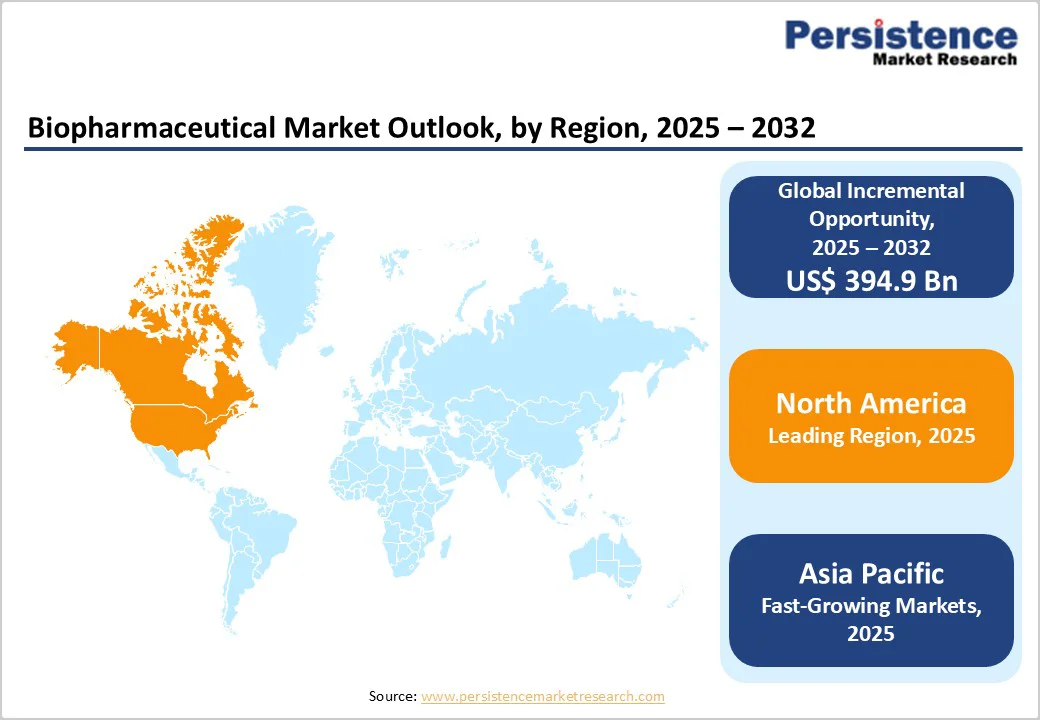
  • Leading Region: North America dominates the global market with 44.8%, driven by advanced healthcare infrastructure, high R&D investment, strong adoption of biologics, and robust reimbursement frameworks supporting widespread biopharmaceutical utilization.
  • Fastest-Growing Region: Asia Pacific market is expected to grow rapidly with a CAGR of 10.6% in forecast period, fueled by rising healthcare expenditure, increasing prevalence of chronic diseases, expanding hospital networks, and growing awareness of advanced targeted therapies.
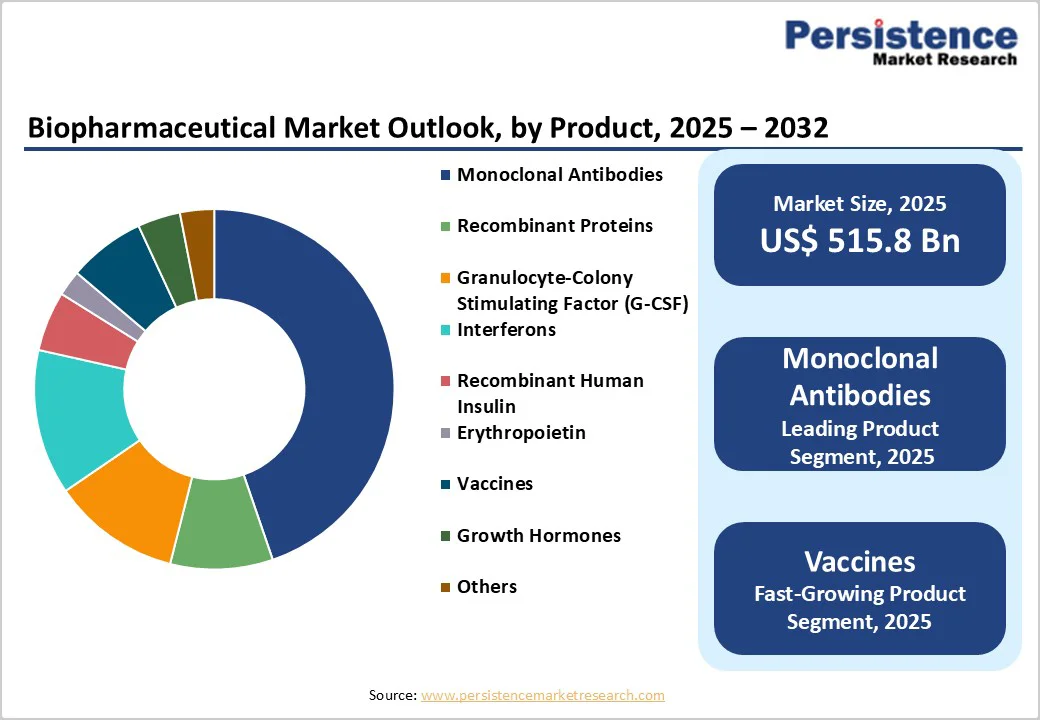
  • Leading Product: Monoclonal Antibodies lead with a 63.4% share, supported by high efficacy in oncology and autoimmune diseases, precision targeting, pipeline innovations, and increasing approvals worldwide, thereby enhancing therapeutic adoption.
  • Leading Therapeutic Application: Oncology to remain dominant, driven by increasing cancer incidence, demand for personalized therapies, regulatory approvals, immunotherapy innovations, and improved survival outcomes, boosting market preference globally.
  • Rising focus on CAR-T, checkpoint inhibitors, and monoclonal antibodies is improving patient outcomes, attracting investment and fueling market expansion.
  • Nearly half of all global research deals involve biologics, reflecting strategic emphasis on high-value protein therapeutics and advanced modalities.
  • AI modeling, bioinformatics, and predictive analytics accelerate development timelines, optimize pipelines, and improve precision therapy outcomes.
  • Expanded distribution infrastructure ensures timely access, proper storage, and administration of complex biologics, enhancing patient adherence and market reach.
Key Insights Details

Biopharmaceutical Market Size (2025E) 

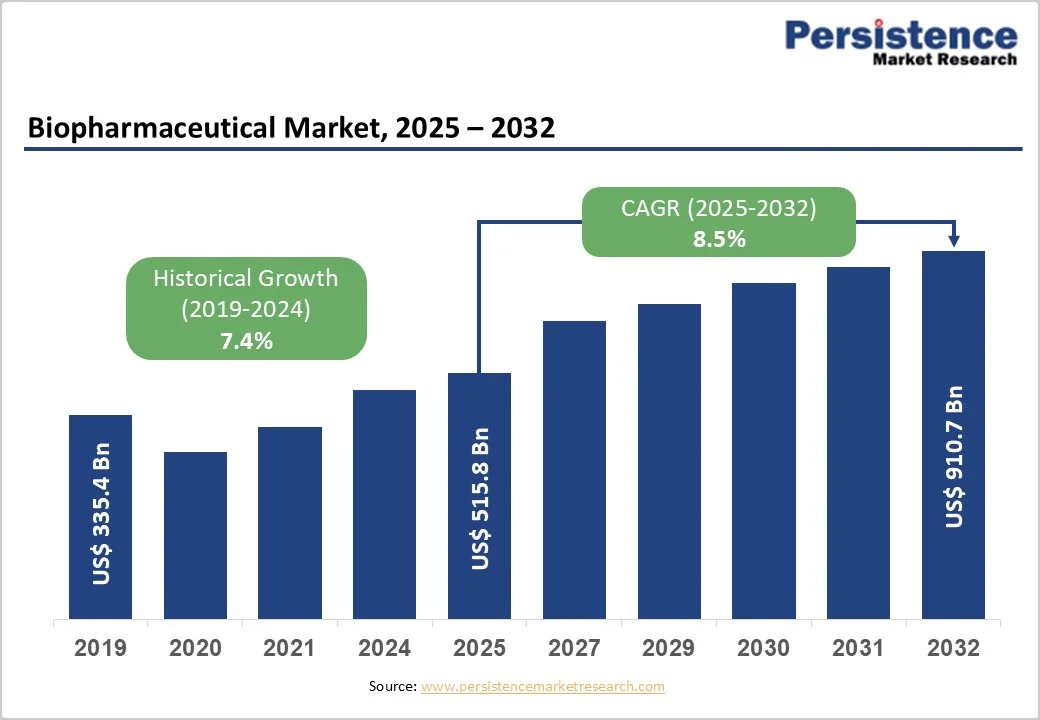
US$515.8 Billion

Market Value Forecast (2032F) 

US$910.7 Billion

Projected Growth (CAGR 2025 to 2032) 

8.5% 

Historical Market Growth (CAGR 2019 to 2024) 

7.4% 

biopharmaceutical-market-2025–2032

Market Dynamics

Driver - Rising Demand for Targeted and Biologic Therapies Fueled by High R&D Investments in Oncology, Neurology, and Rare Diseases

The global biopharmaceutical market is driven by the growing inclination towards targeted therapies and substantial research and development investments, particularly in oncology, neurology, and rare diseases. Protein therapeutics, monoclonal antibodies, erythropoietin, growth hormones, recombinant proteins, recombinant human insulin, interferons, vaccines, and other biopharmaceuticals are witnessing rapid adoption due to their high specificity and improved patient outcomes.

Biopharmaceuticals improve healthcare quality and life expectancy for patients with chronic conditions, including cardiovascular, metabolic, neurological, cancer, and rare diseases. A recent study highlighted that from 2024 to 2025, biologics and small-molecule modalities dominated biopharma research and development dealmaking, with biologics accounting for nearly half of all alliances.

High-value partnerships included RNA, antibody, and immunotherapy deals. At the same time, mergers and acquisitions focused on oncology, neurology, and specialty pharmaceuticals, reflecting a strategic emphasis on both established and emerging therapeutic areas, further underscoring market expansion.

Restraints - High Production Costs, Regulatory Burdens, and Biosimilar Competition Limit Biopharmaceutical Market Expansion Globally

Despite growth, the global biopharmaceutical market faces significant restraints, including high production costs, stringent regulatory requirements, and risks of adverse side effects. Biopharmaceutical manufacturing requires sophisticated infrastructure and adherence to global compliance standards, including U.S. Food and Drug Administration (FDA) regulations and European Medicines Agency (EMA) guidelines, which drive up operational expenditure. The entry of lower-cost biosimilars increases competition, pressuring pricing structures.

Additionally, complex clinical trial protocols and long development timelines pose challenges for small- to mid-sized companies, limiting market access. Fluctuating raw material supply, particularly post-pandemic, adds to production uncertainties. These factors collectively constrain the pace at which biopharmaceutical companies can scale operations and launch new therapeutics globally, while maintaining profitability and regulatory compliance.

Opportunity - Strategic Collaborations, AI Integration, and Novel Therapeutics Drive Faster Development and Market Diversification in Biopharmaceuticals

The global biopharmaceutical market offers significant opportunities driven by mergers, collaborations, and AI-enabled innovation. In January 2024, the University of Oxford, Barinthus Biotherapeutics, and Coalition for Epidemic Preparedness Innovations (CEPI) partnered to advance a Middle East Respiratory Syndrome (MERS) coronavirus vaccine candidate, VTP-500, with CEPI funding $34.8 million for stockpiling and Phase II trials.

In December 2024, Ikena Oncology and Inmagene Biopharmaceuticals merged to form ImageneBio, which is developing IMG-007, a non-depleting anti-OX40 monoclonal antibody for inflammatory diseases. Further, in September 2024, Sanofi collaborated with OpenAI and Formation Bio to accelerate AI-driven drug discovery, integrating modeling, engineering, and biopharma data expertise.

These strategic collaborations, AI integration, and focus on novel therapeutics enable faster development cycles, enhanced precision, and expanded pipelines, creating lucrative avenues for growth and diversification in the biopharmaceutical industry.

Category-wise Analysis

By Product Insights

Monoclonal antibodies are projected to capture a dominant 58.3% share of the global biopharmaceutical market by 2025. Their precision targeting, efficacy in oncology and autoimmune disorders, and strong pipeline innovations are driving robust adoption. Increasing approvals, improved safety profiles, and rising prevalence of chronic diseases further boost their preference over other biopharmaceutical products. Market growth is also supported by ongoing research in next-generation antibody therapies, including bispecifics and antibody-drug conjugates, which enhance therapeutic effectiveness and expand clinical applications.

By Therapeutic Application Insights

Oncology is expected to dominate the global biopharmaceutical market in 2025 with a 34.3% share. High cancer prevalence, rising awareness, and demand for personalized therapies are key drivers. Innovations in immunotherapies, monoclonal antibodies, and gene-targeted drugs are accelerating adoption. Regulatory approvals increased clinical trials, and improved survival rates contribute to oncology’s leading position. Chronic disease burden and an aging population further enhance market demand, positioning oncology as the primary growth segment. Emerging therapies in hematologic and solid tumors also support sustained market leadership.

By Distribution Channel Insights

Hospital pharmacies are projected to lead the global biopharmaceutical distribution market in 2025 with a 42.6% share. Their advantage stems from direct access to high-value therapies, integration with inpatient treatment protocols, and centralized inventory management. Hospitals handle complex biologics requiring specialized storage and administration, supporting patient adherence and safety. Rising hospital infrastructure, expanded healthcare services, and preference for in-hospital treatment of chronic and critical diseases reinforce this channel. Collaboration with specialty pharmacies and streamlined procurement processes further strengthen hospital pharmacies’ dominance in the global biopharmaceutical distribution network.
biopharmaceutical-market-outlook-by-product-2025–2032

Regional Insights

North America Biopharmaceutical Market Trends

North America is projected to capture nearly 44.8% of the global biopharmaceutical market by 2025, led by technological advancement, oncology-focused therapeutics, and robust outsourcing to contract manufacturing organizations (CMOs).

Demand for monoclonal antibodies is rapidly growing, with wide adoption across chronic and rare diseases. The BIO International Convention, held in San Diego from 3–6 June 2024, brought together over 18,500 industry leaders, underscoring the region’s innovation ecosystem.

In January 2024, the U.S. Food and Drug Administration (FDA) approved CASGEVY™ (exagamglogene autotemcel), the first CRISPR/Cas9-based cell therapy for transfusion-dependent β-thalassemia. In July 2024, Amneal Pharmaceuticals expanded its biosimilar portfolio with an omalizumab (XOLAIR®) candidate.

Accord BioPharma launched Imuldosa® PFS in August 2025, a biosimilar to Stelara® (ustekinumab), following FDA approval in October 2024. In January 2025, Teva Pharmaceutical Industries and Samsung Bioepis entered a U.S. license agreement for EPYSQLI® (eculizumab-aagh), a Soliris® biosimilar, made available at a 30% discount in April 2025. These advancements in approvals, biosimilars, and strategic collaborations reinforce North America’s leadership in biopharmaceuticals.

Europe Biopharmaceutical Market Trends

Europe is projected to hold approximately 27.5% of the global biopharmaceutical market by 2025, driven by regulatory approvals, manufacturing expansion, and strategic licensing. In February 2024, CRISPR Therapeutics’ CASGEVY™ received conditional European Commission approval for the treatment of severe sickle cell disease and transfusion-dependent β-thalassemia, marking the first CRISPR/Cas9 therapy in the EU.

In October 2024, Lonza expanded its biologics manufacturing footprint in Visp, Switzerland, and acquired a large-scale site in Vacaville, USA, to enhance contract development and manufacturing organization (CDMO) capabilities.

In February 2025, Celltrion’s Avtozma® (CT-P47), a biosimilar to RoActemra® (tocilizumab), received European Commission approval for multiple indications. In October 2025, Teva Pharmaceutical Industries signed a license and supply agreement with Prestige Biopharma for Tuznue® (trastuzumab biosimilar), and Eli Lilly’s anti-amyloid therapy donanemab (Kisunla) gained EU approval for early Alzheimer’s disease. These developments in approvals, manufacturing, and strategic partnerships strengthen Europe’s biopharmaceutical growth trajectory.

Asia Pacific Biopharmaceutical Market Trends

The Asia Pacific biopharmaceutical market is expected to grow at a CAGR of 10.6%, driven by strategic collaborations, local manufacturing, and regional expansion. The Biopharmaceuticals Alliance, involving India, the United States, South Korea, Japan, and the European Union, was launched during the Bio International Convention 2024 in San Diego to enhance supply chain resilience.

In January 2025, a report highlighted China’s pivot toward Southeast Asia, leveraging real-world data and regional investment to expand influence. In February 2025, Zydus Lifesciences launched VaxiFlu-4, a quadrivalent influenza vaccine, in India.

In June 2025, AstraZeneca partnered with CSPC Pharmaceuticals (China) for AI-enabled preclinical drug discovery targeting immunological diseases. In October 2025, Takara Bio Inc. acquired ViSpot, Inc., integrating viral-safety testing with its CDMO services. These initiatives underscore cross-border collaboration, AI adoption, and enhanced regional manufacturing as key growth drivers for the Asia Pacific market.
biopharmaceutical-market-outlook-by-region-2025–2032

Competitive Landscape

The global biopharmaceutical market is highly competitive, driven by innovation-heavy pipelines, strong biosimilar expansion, and aggressive strategic collaborations. Leading players focus on monoclonal antibodies, cell and gene therapies, and next-generation biologics while strengthening manufacturing capacity and global supply chains. Companies increasingly pursue regional partnerships, licensing deals, and acquisitions to expand therapeutic portfolios, accelerate commercialization, and maintain market leadership amid rising pricing pressure and regulatory complexity.

Key Industry Developments:

  • In April 2025, Boehringer Ingelheim revealed it reached 66 million patients in 2024 (an 8% increase) and raised its R&D investment to €6.2 billion, or 23.2% of net sales. The company is preparing key 2025 launches targeting idiopathic or progressive pulmonary fibrosis and a first-in-class, orally administered therapy for HER2-mutated lung cancer.
  • In August 2025, Accord BioPharma launched Imuldosa® PFS in the US, a biosimilar to J&J’s Stelara® (ustekinumab), offering the lowest WAC price among branded biosimilars. FDA-approved in October 2024, it is commercialized under an exclusive global licensing agreement with Intas Pharmaceuticals.
  • In November 2025, GSK plc and LTZ Therapeutics formed a strategic collaboration to develop up to four first-in-class myeloid cell engager (MCE) therapies for hematologic and solid tumors. LTZ’s immune-engaging platform, combined with GSK’s oncology capabilities, aims to deliver safe, effective treatments with community-use potential.

Companies Covered in Biopharmaceutical Market

  • Pfizer Inc.
  • AstraZeneca
  • Sanofi
  • Bristol-Myers Squibb Company
  • Biocon
  • GSK plc
  • AbbVie Inc.
  • Grifols, S.A.
  • Merck & Co., Inc.
  • UCB S.A.
  • Alkermes
  • Sarepta Therapeutics, Inc.
  • Takeda Pharmaceutical Company Limited
  • Ipsen Pharma
  • Gennova Biopharmaceuticals Limited
  • Incyte
  • Teva Pharmaceutical Industries Ltd.
  • Parexel International (MA) Corporation
  • Catalyst Pharmaceuticals, Inc.
  • Gilead Sciences, Inc.
Frequently Asked Questions

The global biopharmaceutical market is projected to be valued at US$ 515.8 billion in 2025.

Rising demand for targeted biologics, robust R&D investment, and expanding chronic disease burden drive the global market.

The global market is poised to witness a CAGR of 8.5% between 2025 and 2032.

Emerging markets, biosimilars expansion, and advanced platforms such as cell and gene therapies offer major biopharmaceutical growth opportunities.

Major players in the global are Pfizer Inc., AstraZeneca, Sanofi, Bristol-Myers Squibb Company, Biocon, GSK plc, AbbVie Inc., and others.

Global Biopharmaceutical Market Report Scope
Report Attribute Details

Historical Data/Actuals

2019 - 2024

Forecast Period

2025 - 2032

Market Analysis

Value: US$ Mn

Geographical Coverage

  • North America
  • Europe
  • East Asia
  • South Asia & Oceania
  • Latin America
  • Middle East and Africa

Segmental Coverage

  • Product
  • Therapeutic Application
  • Distribution Channel
  • Region 

Competitive Analysis

  • Pfizer Inc.
  • AstraZeneca
  • Sanofi
  • Bristol-Myers Squibb Company
  • Biocon
  • GSK plc
  • AbbVie Inc.
  • Grifols, S.A.
  • Merck & Co., Inc.
  • UCB S.A.
  • Alkermes
  • Sarepta Therapeutics, Inc.
  • Takeda Pharmaceutical Company Limited
  • Ipsen Pharma
  • Gennova Biopharmaceuticals Limited
  • Incyte
  • Teva Pharmaceutical Industries Ltd.
  • Parexel International (MA) Corporation
  • Catalyst Pharmaceuticals, Inc.
  • Gilead Sciences, Inc.

Report Highlights

  • Market Forecast and Trends 
  • Competitive Intelligence & Share Analysis  
  • Growth Factors and Challenges 
  • Strategic Growth Initiatives 
  • Pricing Analysis
  • Future Opportunities and Revenue Pockets
  • Market Analysis Tools
Market Segmentation

By Product

  • Monoclonal Antibodies
  • Recombinant Proteins
  • Granulocyte-Colony Stimulating Factor (G-CSF)
  • Interferons
  • Recombinant Human Insulin
  • Erythropoietin
  • Vaccines
  • Growth Hormones
  • Others

By Therapeutic Application

  • Metabolic Disorders
  • Oncology
  • Neurological Disorders
  • Cardiovascular Diseases
  • Inflammatory and Infectious Diseases
  • Others

By Distribution Channel

  • Hospital Pharmacies
  • Retail Pharmacies
  • Online Pharmacies

By Region

  • North America 
  • Europe 
  • East Asia 
  • South Asia & Oceania 
  • Latin America
  • Middle East and Africa 

Related Reports

  1. Executive Summary
    1. Global Biopharmaceutical Market Snapshot, 2025 and 2032
    2. Market Opportunity Assessment, 2025 - 2032, US$ Mn
    3. Key Market Trends
    4. Future Market Projections
    5. Premium Market Insights
    6. Industry Developments and Key Market Events
    7. PMR Analysis and Recommendations
  2. Market Overview
    1. Market Scope and Definition
    2. Market Dynamics
      1. Drivers
      2. Restraints
      3. Opportunity
      4. Key Trends
    3. Macro-Economic Factors
      1. Global Sectorial Outlook
      2. Global GDP Growth Outlook
    4. COVID-19 Impact Analysis
    5. Forecast Factors - Relevance and Impact
  3. Value Added Insights
    1. Product Adoption Analysis
    2. Regulatory Landscape
    3. Value Chain Analysis
    4. Key Deals and Mergers
    5. PESTLE Analysis
    6. Porter’s Five Force Analysis
  4. Global Biopharmaceutical Market Outlook:
    1. Key Highlights
      1. Market Size (US$ Mn) and Y-o-Y Growth
      2. Absolute $ Opportunity
    2. Market Size (US$ Mn) Analysis and Forecast
      1. Historical Market Size (US$ Mn) Analysis, 2019-2024
      2. Market Size (US$ Mn) Analysis and Forecast, 2025-2032
    3. Global Biopharmaceutical Market Outlook: Product
      1. Introduction / Key Findings
      2. Historical Market Size (US$ Mn) Analysis, By Product, 2019-2024
      3. Market Size (US$ Mn) Analysis and Forecast, By Product, 2025-2032
        1. Monoclonal Antibodies
        2. Recombinant Proteins
        3. Granulocyte-Colony Stimulating Factor (G-CSF)
        4. Interferons
        5. Recombinant Human Insulin
        6. Erythropoietin
        7. Vaccines
        8. Growth Hormones
        9. Others
      4. Market Attractiveness Analysis: Product
    4. Global Biopharmaceutical Market Outlook: Therapeutic Application
      1. Introduction / Key Findings
      2. Historical Market Size (US$ Mn) Analysis, By Therapeutic Application, 2019-2024
      3. Market Size (US$ Mn) Analysis and Forecast, By Therapeutic Application, 2025-2032
        1. Metabolic Disorders
        2. Oncology
        3. Neurological Disorders
        4. Cardiovascular Diseases
        5. Inflammatory and Infectious Diseases
        6. Others
      4. Market Attractiveness Analysis: Therapeutic Application
    5. Global Biopharmaceutical Market Outlook: Distribution Channel
      1. Introduction / Key Findings
      2. Historical Market Size (US$ Mn) Analysis, By Distribution Channel, 2019-2024
      3. Market Size (US$ Mn) Analysis and Forecast, By Distribution Channel, 2025-2032
        1. Hospital Pharmacies
        2. Retail Pharmacies
        3. Online Pharmacies
      4. Market Attractiveness Analysis: Distribution Channel
  5. Global Biopharmaceutical Market Outlook: Region
    1. Key Highlights
    2. Historical Market Size (US$ Mn) Analysis, By Region, 2019-2024
    3. Market Size (US$ Mn) Analysis and Forecast, By Region, 2025-2032
      1. North America
      2. Europe
      3. East Asia
      4. South Asia and Oceania
      5. Latin America
      6. Middle East & Africa
    4. Market Attractiveness Analysis: Region
  6. North America Biopharmaceutical Market Outlook:
    1. Key Highlights
    2. Historical Market Size (US$ Mn) Analysis, By Market, 2019-2024
      1. By Country
      2. By Product
      3. By Therapeutic Application
      4. By Distribution Channel
    3. Market Size (US$ Mn) Analysis and Forecast, By Country, 2025-2032
      1. U.S.
      2. Canada
    4. Market Size (US$ Mn) Analysis and Forecast, By Product, 2025-2032
      1. Monoclonal Antibodies
      2. Recombinant Proteins
      3. Granulocyte-Colony Stimulating Factor (G-CSF)
      4. Interferons
      5. Recombinant Human Insulin
      6. Erythropoietin
      7. Vaccines
      8. Growth Hormones
      9. Others
    5. Market Size (US$ Mn) Analysis and Forecast, By Therapeutic Application, 2025-2032
      1. Metabolic Disorders
      2. Oncology
      3. Neurological Disorders
      4. Cardiovascular Diseases
      5. Inflammatory and Infectious Diseases
      6. Others
    6. Market Size (US$ Mn) Analysis and Forecast, By Distribution Channel, 2025-2032
      1. Hospital Pharmacies
      2. Retail Pharmacies
      3. Online Pharmacies
    7. Market Attractiveness Analysis
  7. Europe Biopharmaceutical Market Outlook:
    1. Key Highlights
    2. Historical Market Size (US$ Mn) Analysis, By Market, 2019-2024
      1. By Country
      2. By Product
      3. By Therapeutic Application
      4. By Distribution Channel
    3. Market Size (US$ Mn) Analysis and Forecast, By Country, 2025-2032
      1. Germany
      2. France
      3. U.K.
      4. Italy
      5. Spain
      6. Russia
      7. Türkiye
      8. Rest of Europe
    4. Market Size (US$ Mn) Analysis and Forecast, By Product, 2025-2032
      1. Monoclonal Antibodies
      2. Recombinant Proteins
      3. Granulocyte-Colony Stimulating Factor (G-CSF)
      4. Interferons
      5. Recombinant Human Insulin
      6. Erythropoietin
      7. Vaccines
      8. Growth Hormones
      9. Others
    5. Market Size (US$ Mn) Analysis and Forecast, By Therapeutic Application, 2025-2032
      1. Metabolic Disorders
      2. Oncology
      3. Neurological Disorders
      4. Cardiovascular Diseases
      5. Inflammatory and Infectious Diseases
      6. Others
    6. Market Size (US$ Mn) Analysis and Forecast, By Distribution Channel, 2025-2032
      1. Hospital Pharmacies
      2. Retail Pharmacies
      3. Online Pharmacies
    7. Market Attractiveness Analysis
  8. East Asia Biopharmaceutical Market Outlook:
    1. Key Highlights
    2. Historical Market Size (US$ Mn) Analysis, By Market, 2019-2024
      1. By Country
      2. By Product
      3. By Therapeutic Application
      4. By Distribution Channel
    3. Market Size (US$ Mn) Analysis and Forecast, By Country, 2025-2032
      1. China
      2. Japan
      3. South Korea
    4. Market Size (US$ Mn) Analysis and Forecast, By Product, 2025-2032
      1. Monoclonal Antibodies
      2. Recombinant Proteins
      3. Granulocyte-Colony Stimulating Factor (G-CSF)
      4. Interferons
      5. Recombinant Human Insulin
      6. Erythropoietin
      7. Vaccines
      8. Growth Hormones
      9. Others
    5. Market Size (US$ Mn) Analysis and Forecast, By Therapeutic Application, 2025-2032
      1. Metabolic Disorders
      2. Oncology
      3. Neurological Disorders
      4. Cardiovascular Diseases
      5. Inflammatory and Infectious Diseases
      6. Others
    6. Market Size (US$ Mn) Analysis and Forecast, By Distribution Channel, 2025-2032
      1. Hospital Pharmacies
      2. Retail Pharmacies
      3. Online Pharmacies
    7. Market Attractiveness Analysis
  9. South Asia & Oceania Biopharmaceutical Market Outlook:
    1. Key Highlights
    2. Historical Market Size (US$ Mn) Analysis, By Market, 2019-2024
      1. By Country
      2. By Product
      3. By Therapeutic Application
      4. By Distribution Channel
    3. Market Size (US$ Mn) Analysis and Forecast, By Country, 2025-2032
      1. India
      2. Southeast Asia
      3. ANZ
      4. Rest of South Asia & Oceania
    4. Market Size (US$ Mn) Analysis and Forecast, By Product, 2025-2032
      1. Monoclonal Antibodies
      2. Recombinant Proteins
      3. Granulocyte-Colony Stimulating Factor (G-CSF)
      4. Interferons
      5. Recombinant Human Insulin
      6. Erythropoietin
      7. Vaccines
      8. Growth Hormones
      9. Others
    5. Market Size (US$ Mn) Analysis and Forecast, By Therapeutic Application, 2025-2032
      1. Metabolic Disorders
      2. Oncology
      3. Neurological Disorders
      4. Cardiovascular Diseases
      5. Inflammatory and Infectious Diseases
      6. Others
    6. Market Size (US$ Mn) Analysis and Forecast, By Distribution Channel, 2025-2032
      1. Hospital Pharmacies
      2. Retail Pharmacies
      3. Online Pharmacies
    7. Market Attractiveness Analysis
  10. Latin America Biopharmaceutical Market Outlook:
    1. Key Highlights
    2. Historical Market Size (US$ Mn) Analysis, By Market, 2019-2024
      1. By Country
      2. By Product
      3. By Therapeutic Application
      4. By Distribution Channel
    3. Market Size (US$ Mn) Analysis and Forecast, By Country, 2025-2032
      1. Brazil
      2. Mexico
      3. Rest of Latin America
    4. Market Size (US$ Mn) Analysis and Forecast, By Product, 2025-2032
      1. Monoclonal Antibodies
      2. Recombinant Proteins
      3. Granulocyte-Colony Stimulating Factor (G-CSF)
      4. Interferons
      5. Recombinant Human Insulin
      6. Erythropoietin
      7. Vaccines
      8. Growth Hormones
      9. Others
    5. Market Size (US$ Mn) Analysis and Forecast, By Therapeutic Application, 2025-2032
      1. Metabolic Disorders
      2. Oncology
      3. Neurological Disorders
      4. Cardiovascular Diseases
      5. Inflammatory and Infectious Diseases
      6. Others
    6. Market Size (US$ Mn) Analysis and Forecast, By Distribution Channel, 2025-2032
      1. Hospital Pharmacies
      2. Retail Pharmacies
      3. Online Pharmacies
    7. Market Attractiveness Analysis
  11. Middle East & Africa Biopharmaceutical Market Outlook:
    1. Key Highlights
    2. Historical Market Size (US$ Mn) Analysis, By Market, 2019-2024
      1. By Country
      2. By Product
      3. By Therapeutic Application
      4. By Distribution Channel
    3. Market Size (US$ Mn) Analysis and Forecast, By Country, 2025-2032
      1. GCC Countries
      2. Egypt
      3. South Africa
      4. Northern Africa
      5. Rest of Middle East & Africa
    4. Market Size (US$ Mn) Analysis and Forecast, By Product, 2025-2032
      1. Monoclonal Antibodies
      2. Recombinant Proteins
      3. Granulocyte-Colony Stimulating Factor (G-CSF)
      4. Interferons
      5. Recombinant Human Insulin
      6. Erythropoietin
      7. Vaccines
      8. Growth Hormones
      9. Others
    5. Market Size (US$ Mn) Analysis and Forecast, By Therapeutic Application, 2025-2032
      1. Metabolic Disorders
      2. Oncology
      3. Neurological Disorders
      4. Cardiovascular Diseases
      5. Inflammatory and Infectious Diseases
      6. Others
    6. Market Size (US$ Mn) Analysis and Forecast, By Distribution Channel, 2025-2032
      1. Hospital Pharmacies
      2. Retail Pharmacies
      3. Online Pharmacies
    7. Market Attractiveness Analysis
  12. Competition Landscape
    1. Market Share Analysis, 2024
    2. Market Structure
      1. Competition Intensity Mapping By Market
      2. Competition Dashboard
    3. Company Profiles (Details - Overview, Financials, Strategy, Recent Developments)
      1. Pfizer Inc.
        1. Overview
        2. Segments and Product
        3. Key Financials
        4. Market Developments
        5. Market Strategy
      2. AstraZeneca
      3. Sanofi
      4. Bristol-Myers Squibb Company
      5. Biocon
      6. GSK plc
      7. AbbVie Inc.
      8. Grifols, S.A.
      9. Merck & Co., Inc.
      10. UCB S.A.
      11. Alkermes
      12. Sarepta Therapeutics, Inc.
      13. Takeda Pharmaceutical Company Limited
      14. Ipsen Pharma
      15. Gennova Biopharmaceuticals Limited
      16. Incyte
      17. Teva Pharmaceutical Industries Ltd.
      18. Parexel International (MA) Corporation
      19. Catalyst Pharmaceuticals, Inc.
      20. Gilead Sciences, Inc.
  13. Appendix
    1. Research Methodology
    2. Research Assumptions
    3. Acronyms and Abbreviations

Research Methodology Framework for Market Research Excellence

At Persistence Market Research, we implement a comprehensive, validated, and multi-dimensional approachto market analysis that delivers actionable insights across complex market landscapes. Our methodology combines the analytical rigor of leading consulting firms with innovative research techniques, ensuring robust market assessments that guide strategic decision-making with confidence.

Core Research Philosophy

Our methodology is built on four foundational pillars:

Research Philosophy Image

At Persistence Market Research, our methodology is designed to transcend conventional market studies by combining analytical rigor, multi-source validation, and future-focused insights.

We integrate advanced research frameworks, robust data collection strategies, cutting-edge analytics, and innovative technologies to deliver a 360-degree view of complex markets.

We integrate advanced research frameworks, robust data collection strategies, cutting-edge analytics, and innovative technologies to deliver a 360-degree view of complex markets.

Each stage spanning from strategic scoping and hypothesis-building to competitive intelligence, quality validation, and actionable recommendations is engineered to provide clients with unmatched clarity, precision, and confidence in decision-making.

By embedding innovation and technology at the core, our approach ensures that insights are not only comprehensive but also predictive, empowering businesses to seize opportunities, mitigate risks, and achieve sustainable growth

Research Philosophy Image

Capturing Key Information and Events

During this phase, key research objectives focus on essential information and data points for assessing the market, including:

Research Philosophy Image

TAM-SAM-SOM Framework Implementation

We employ both top-down and bottom-up approaches to ensure accurate market sizing.

Top-Down Market SizingBottom-Up Market Sizing
Universe Definition: Total global/regional market identificationUnit Economics: Average transaction values, purchase frequencies, customer lifecycle
Segmentation Filters: Geographic, demographic, and behavioral constraintsCustomer Segmentation: Detailed buyer persona development and sizing
Market Share Analysis: Competitive landscape assessment and share allocationPenetration Analysis: Market penetration rates by segment and geography
Growth Rate Application: Historical trends and forward-looking growth assumptionsScaling Methodology: Extrapolation techniques with confidence intervals

Validation & Cross-Verification

  • Triangulation: Comparing top-down and bottom-up results for consistency
  • Sensitivity Analysis: Testing key assumptions and parameter variations
  • Peer Benchmarking: Comparison with analogous markets and industry benchmarks
  • Expert Review: External validation through industry specialist consultation

Research Philosophy Image

Forecasting & Projection Modeling

Our proprietary forecasting models incorporate multiple variables and scenarios.

Forecasting Components

  • Historical Trend Analysis: 10-year historical growth patterns and cyclical variations
  • Driver-Based Modeling: Economic indicators, demographic shifts, technology adoption
  • Scenario Planning: Base case, optimistic, and conservative projections
  • Monte Carlo Simulations: Probability-weighted outcomes and risk assessments

Model Validation

  • Back-Testing: Historical accuracy assessment over 3–5-year periods
  • Cross-Validation: Multiple modeling approaches for result comparison
  • External Benchmarking: Comparison with established market forecasts
  • Continuous Calibration: Quarterly model updates based on new data

Comprehensive Data Collection Strategy

Our secondary research phase establishes a robust knowledge base utilizing diverse, credible sources.

Secondary Data Sourcess

  • Industry Publications & Reports
  • Government & Regulatory Data
  • Financial Intelligence (filings & reports)
  • Academic Research & Digital Intelligence

Quality Assurance Protocol

  • Source credibility assessment and publication date validation
  • Data consistency checks across multiple sources
  • Bias identification and neutralization techniques
  • Information gap tracking for primary research prioritization

Research Philosophy Image

Primary Research Excellence

Our primary research methodology employs best-in-class techniques to capture unique market insights.

Quantitative Research Methods

  • Large-Scale Surveys: Statistically representative samples with 95% confidence intervals
  • Survey Methodology: Multi-channel deployment (online, telephone, in-person)
  • Question Architecture and Response Optimization

Qualitative Research Methods

  • Executive Interviews
  • Focus Groups
  • Expert Consultations

Quality Assurance & Validation Framework

Multi-Stage Validation Process

  • Source Verification and Consistency Testing
  • Outlier Detection and Bias Assessment
  • Peer Review Process and External Validation
  • Sensitivity Analysis and Confidence Intervals

Research Philosophy Image

Methodology Validation & Credibility

Our research methodology has been extensively validated through:

  • Academic Partnerships: Collaborations with top-tier business schools and research institutions
  • Client Success Stories: Documented case studies demonstrating research impact and ROI
  • Continuous Benchmarking: Performance comparison with leading global research firms

This comprehensive methodology framework positions Persistence Market Research at the forefront of market intelligence, combining the analytical sophistication of top-tier consulting firms with innovative research techniques. Our approach ensures that every market assessment delivers precise, actionable, and strategically valuable insights that drive business success in competitive market environments.

Ready to unlock your market potential? Contact our research experts to discuss how our validated methodology can transform your strategic decision-making with data-driven market intelligence.

Copyright © 2026 Persistence Market Research. All Rights Reserved

Connect With Us -
Biopharmaceutical Market Demand & Forecast to 2032