




- Biotechnology
- Metabolic Genetic Testing Market
Metabolic Genetic Testing Market Size, Share, Growth, and Regional Forecast, 2026 to 2033
Metabolic Genetic Testing Market by Test Type (Single Gene Testing, Panel Testing, Whole Exome Sequencing (WES), and Whole Genome Sequencing (WGS)), by Technology (Next-Generation Sequencing (NGS), Polymerase Chain Reaction (PCR), Chromosomal Microarray Analysis (CMA), and Other), by Application (Ker Newborn Screening, Diagnostic Testing, Carrier Testing, Prenatal Testing, and Others) by End User (Hospitals, Diagnostic Laboratories, Specialty Clinics, Academic and Research Institutes, and Others), and Regional Analysis from 2026 to 2033

Metabolic Genetic Testing Market Size and Trend Analysis
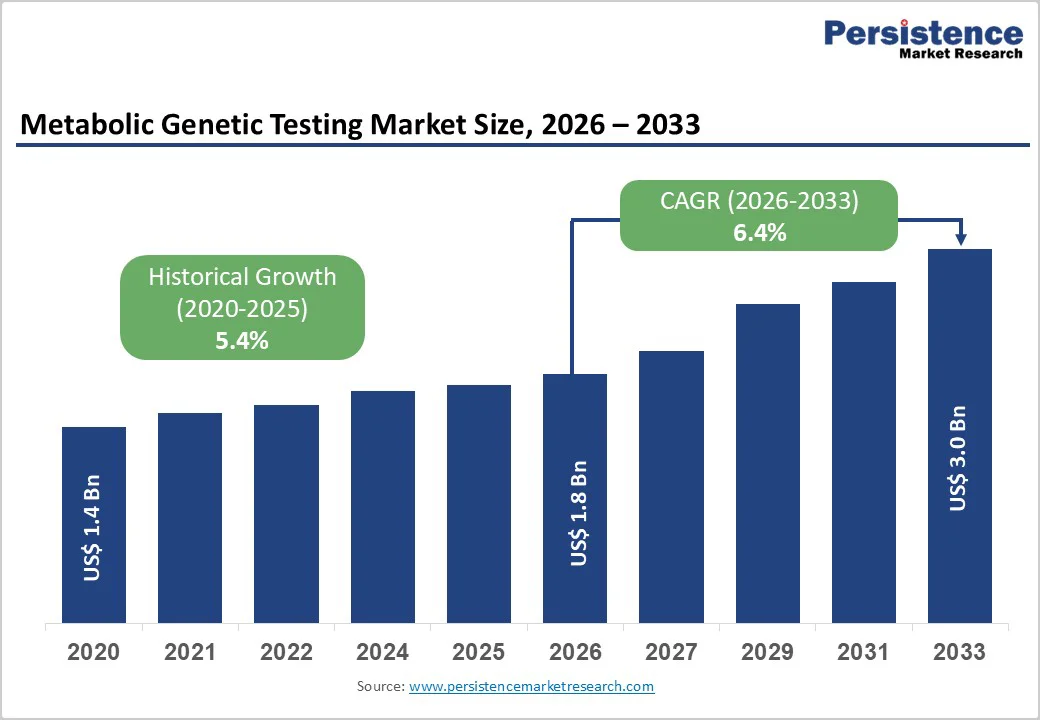
The global metabolic genetic testing market size is estimated to grow from US$ 1.8 Bn in 2026 to US$ 3.0 Bn by 2033. The market is projected to record a CAGR of 6.4% during the forecast period from 2026 to 2033.
Global demand for metabolic genetic testing is rising steadily, driven by the increasing prevalence of inherited metabolic disorders, including inborn errors of metabolism, lysosomal storage diseases, mitochondrial disorders, and amino acid metabolism disorders. The growing burden of rare genetic diseases, combined with rising survival rates among pediatric patients, is increasing long-term diagnostic and monitoring needs.
Expanding newborn screening programs, improving access to molecular diagnostics, and greater clinical awareness among physicians are contributing to sustained testing volumes. Rapid advancements in genomic technologies, particularly next-generation sequencing (NGS), whole-exome sequencing (WES), and whole-genome sequencing (WGS), are improving diagnostic accuracy, reducing turnaround times, and enabling early disease identification. Increasing integration of genetic testing into precision medicine workflows, coupled with rising healthcare investments in specialized laboratories and tertiary care hospitals, is accelerating global adoption. In parallel, growing research into novel metabolic pathways and gene–disease associations is reinforcing long-term market expansion across both developed and emerging regions.
Key Industry Highlights
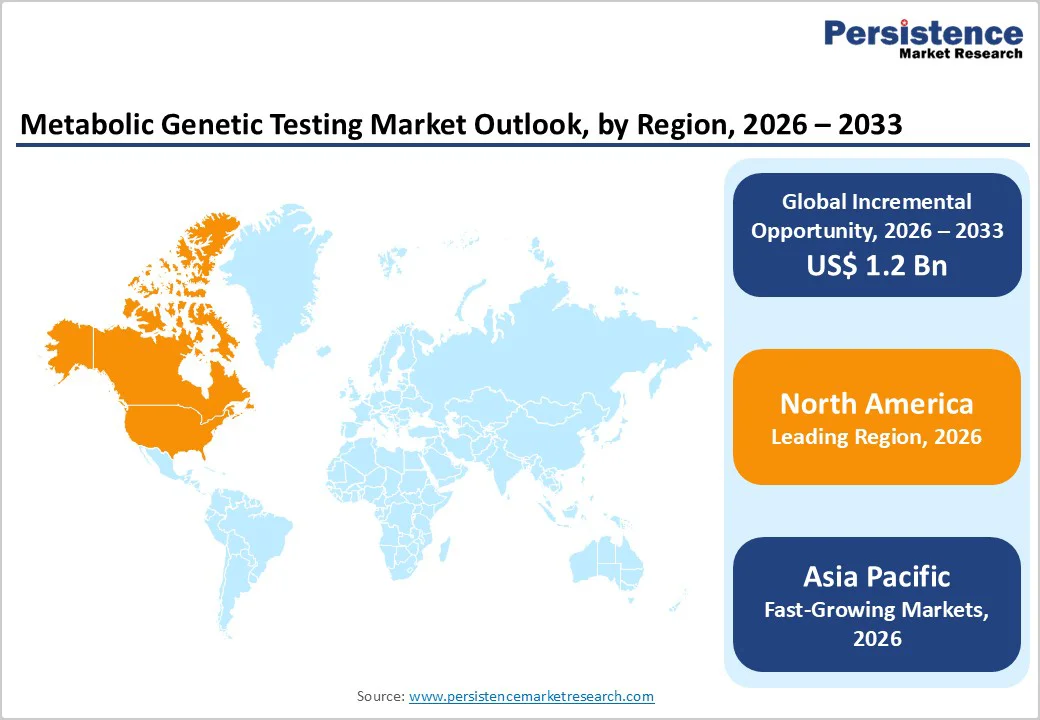
- Leading Region: North America holds the largest market share at 47.7%, supported by advanced molecular diagnostics infrastructure, high testing volumes for rare genetic and metabolic disorders, strong reimbursement coverage, and widespread adoption of precision medicine.
- Fastest-Growing Region: Asia Pacific is expanding at the fastest pace due to a large patient pool, rising awareness of inherited metabolic disorders, rapid expansion of diagnostic laboratories, and increasing government support for newborn screening.
- Leading Test Type Segment: Panel testing dominates the market due to its cost-effectiveness, high diagnostic yield, and suitability for detecting multiple metabolic disorders simultaneously.
- Fastest-Growing Test Type Segment: Whole-genome sequencing (WGS) is experiencing rapid growth as its clinical utility expands for complex, undiagnosed, and ultra-rare metabolic conditions.
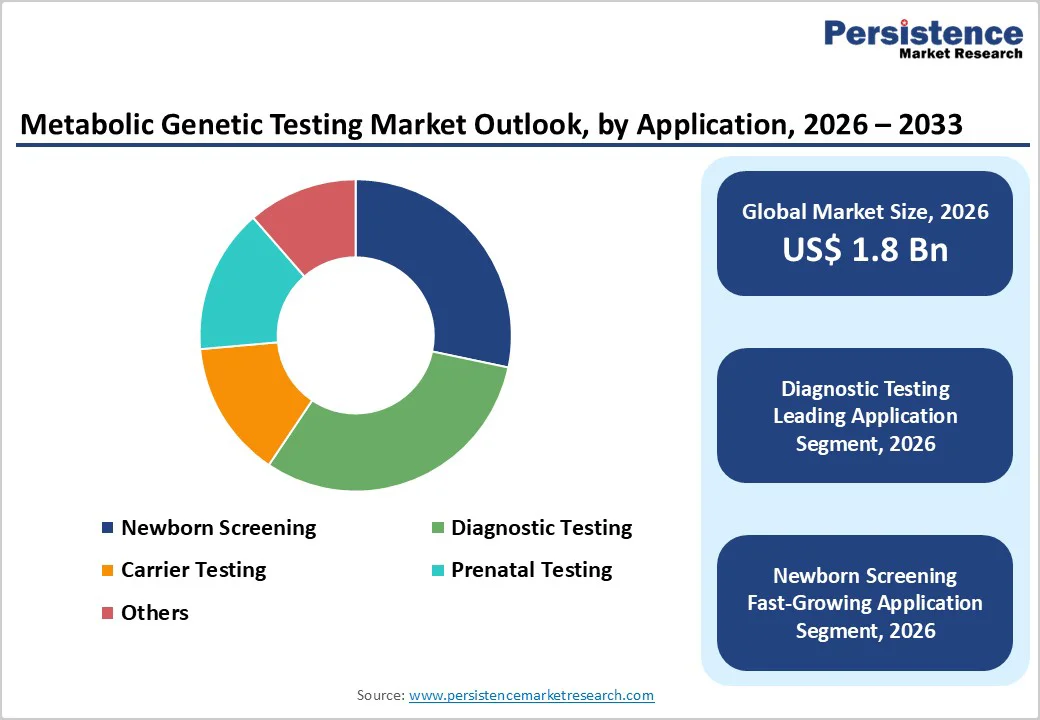
- Leading Application Segment: Diagnostic testing remains the largest application segment, driven by high utilization among symptomatic patients and confirmatory testing following abnormal screening results.
- Fastest-Growing Application Segment: Newborn screening is expanding rapidly, driven by early diagnosis initiatives and public health mandates worldwide.
| Global Market Attributes | Key Insights |
|---|---|
| Metabolic Genetic Testing Market Size (2026E) | US$ 1.8 Bn |
| Market Value Forecast (2033F) | US$ 3.0 Bn |
| Projected Growth (CAGR 2026 to 2033) | 6.4% |
| Historical Market Growth (CAGR 2020 to 2025) | 5.4% |
Market Dynamics
Driver – Rising Prevalence of Inherited Metabolic Disorders and Advancements in Genomic Technologies Driving Market Growth
The increasing global burden of inherited metabolic disorders, including inborn errors of metabolism, lysosomal storage diseases, mitochondrial disorders, and amino acid metabolism abnormalities, is a primary driver of sustained demand for metabolic genetic testing. Improved survival rates among pediatric patients, coupled with better disease recognition among clinicians, are expanding the pool of patients diagnosed. In parallel, aging populations in developed markets are contributing to higher detection rates of late-onset metabolic and mitochondrial conditions, further supporting testing volumes. As many metabolic disorders present with nonspecific clinical symptoms, genetic confirmation has become essential for accurate diagnosis, treatment planning, and long-term disease management.
Technological advancements are further accelerating adoption. The rapid evolution of next-generation sequencing (NGS), whole-exome sequencing (WES), and whole-genome sequencing (WGS) has significantly improved diagnostic yield, reduced turnaround times, and lowered per-sample costs. Integration of multi-gene panels into routine diagnostic workflows is enhancing early detection and enabling precision medicine approaches. Together, rising disease prevalence and ongoing innovation in genomic testing technologies are driving steady growth in the global metabolic genetic testing market.
Restraints – High Testing Costs and Limited Access to Specialized Genetic Services Limiting Market Adoption
High costs associated with advanced genetic testing platforms and data interpretation remain a key restraint, particularly in low- and middle-income countries. While sequencing costs have declined, expenses related to infrastructure, skilled personnel, bioinformatics analysis, and confirmatory testing continue to limit widespread adoption. In many regions, lack of reimbursement coverage for metabolic genetic testing further restricts patient access, especially for comprehensive sequencing approaches such as WES and WGS.
Additionally, the limited availability of trained clinical geneticists, metabolic specialists, and genetic counselors poses challenges to effective test utilization and interpretation of results. Inadequate diagnostic infrastructure and fragmented referral pathways in emerging markets contribute to delayed or missed diagnoses. Variability in testing standards, data interpretation practices, and follow-up care can also impact clinical confidence. These structural and economic barriers constrain broader market penetration despite growing clinical need.
Opportunity – Expansion of Newborn Screening Programs and Precision Medicine, Creating New Growth Opportunities
Expansion of newborn screening programs represents a major growth opportunity for the global metabolic genetic testing market. Governments and public health agencies are increasingly incorporating expanded genetic panels to enable early detection of treatable metabolic disorders, reducing long-term disease burden and healthcare costs. Advances in high-throughput sequencing and automation are making large-scale screening programs more feasible and cost-effective, particularly in the Asia Pacific, the Middle East, and parts of Latin America.
Furthermore, growing adoption of precision medicine is creating new demand across both clinical and research settings. Increasing use of genetic data to guide dietary interventions, enzyme replacement therapies, and emerging gene-based treatments is reinforcing the role of metabolic genetic testing in personalized care pathways. Expansion of specialized diagnostic laboratories, integration of genomics into tertiary hospitals, and rising investment in rare disease research are further strengthening long-term market growth opportunities.
Category-wise Analysis
By Test Type, Panel Testing Leads Owing to Comprehensive Coverage and Cost Efficiency
The panel testing segment is projected to dominate the global metabolic genetic testing market in 2026, accounting for a revenue share of 32.7%. Dominance is driven by the ability of targeted panels to simultaneously screen multiple genes associated with metabolic disorders, delivering high diagnostic efficiency at a relatively lower cost compared to comprehensive sequencing. Panel testing is widely adopted in both newborn screening and diagnostic workflows, offering faster turnaround times and actionable clinical insights. Established clinical guidelines, physician familiarity, and compatibility with routine laboratory workflows further support widespread use. While comprehensive sequencing methods are gaining traction, panel testing remains the preferred first-line diagnostic tool across most metabolic disease indications.
By Application, Diagnostic Testing Emerges as the Dominant Segment Driven by Clinical Necessity
The diagnostic testing segment is projected to dominate the global metabolic genetic testing market in 2026, accounting for 31.1% of revenue. Segment leadership is attributed to the critical role of genetic confirmation in managing inherited metabolic disorders, many of which present with nonspecific or overlapping symptoms. Accurate molecular diagnosis is essential for treatment selection, dietary management, enzyme replacement therapy decisions, and long-term disease monitoring. The increasing number of referrals from pediatricians, neurologists, and metabolic specialists, combined with the rising availability of confirmatory genetic testing, continues to support strong demand in this segment.
By End User, Diagnostic Laboratories Hold the Largest Share Due to High Testing Volumes and Specialized Capabilities
The diagnostic laboratories segment is projected to dominate the global metabolic genetic testing market in 2026, accounting for 38.5% of revenue. Diagnostic laboratories serve as centralized hubs for high-complexity genetic testing, offering advanced sequencing platforms, bioinformatics capabilities, and specialized expertise for interpreting metabolic disorders. High test volumes, hospital outsourcing trends, and growing partnerships with public health agencies support segment dominance. Laboratories also play a key role in newborn screening confirmation, rare disease diagnostics, and research collaborations, reinforcing their leading position.
Region-wise Insights
North America Metabolic Genetic Testing Market Trends
The North America metabolic genetic testing market is expected to dominate globally with a value share of 47.7% in 2026, led primarily by the U.S. The region benefits from a highly developed healthcare ecosystem, widespread access to advanced molecular diagnostics, and strong integration of genetic testing into routine clinical practice. High awareness of rare and inherited metabolic disorders among clinicians, combined with established newborn screening programs across states, supports early diagnosis and sustained testing volumes.
Favorable reimbursement frameworks, strong presence of reference laboratories, and early adoption of NGS-based platforms continue to drive market leadership. Additionally, the region has a robust research environment, with academic institutions and biotech companies actively engaged in metabolic disease discovery and clinical trials. Regulatory clarity, standardized testing protocols, and strong payer support further reinforce North America’s dominant position in the global market.
Europe Metabolic Genetic Testing Market Trends
The European metabolic genetic testing market is expected to grow steadily, supported by an aging population, increasing recognition of rare metabolic diseases, and strong emphasis on evidence-based diagnostics. Countries such as Germany, the U.K., France, Italy, and the Nordic region are key contributors due to well-established public healthcare systems and broad access to genetic testing services. Expansion of national newborn screening programs and growing use of molecular diagnostics in pediatric and neurology care are driving consistent demand.
European healthcare systems prioritize early diagnosis and long-term disease management, encouraging adoption of panel testing and advanced sequencing technologies. Harmonized regulatory frameworks, cross-border research initiatives, and increasing funding for rare disease programs further support market expansion. Integration of genomic data into clinical decision-making is strengthening the role of metabolic genetic testing across the region.
Asia Pacific Metabolic Genetic Testing Market Trends
The Asia Pacific metabolic genetic testing market is expected to register a relatively higher CAGR of around 8.6% between 2026 and 2033, driven by expanding healthcare infrastructure, a large undiagnosed patient population, and rising awareness of inherited metabolic disorders. Countries including China, India, Japan, South Korea, and Southeast Asian nations are seeing rising diagnostic rates due to improved access to molecular diagnostics and specialist care.
Rapid expansion of diagnostic laboratories, growing availability of trained geneticists, and rising healthcare expenditure are improving access to testing. Government-led newborn screening initiatives and rare disease policies are accelerating adoption, while collaborations with global diagnostic companies are enhancing technology transfer. Increasing emphasis on early intervention and precision medicine is expected to sustain strong regional growth.
Market Competitive Landscape
The global metabolic genetic testing market is highly competitive, with strong participation from companies such as CENTOGENE GmbH, MedGenome, Blueprint Genetics Oy, Labcorp, and Quest Diagnostics. These players benefit from advanced sequencing capabilities, extensive test menus, and strong global laboratory networks. Competitive strategies focus on expanding coverage of metabolic disorders, improving diagnostic accuracy, enhancing bioinformatics interpretation, and reducing turnaround times.
Companies are also investing in research collaborations, test portfolio expansion, and geographic outreach to emerging markets. Ongoing innovation in sequencing technologies, data analytics, and rare-disease diagnostics continues to intensify competition, driving sustained market evolution.
Key Industry Developments:
- In July 2025, the U.S. Food and Drug Administration approved PTC Therapeutics’ oral therapy Sephience (sepiapterin) for the treatment of the rare inherited metabolic disorder phenylketonuria (PKU) in both children and adults. The approval includes broad labeling to treat hyperphenylalaninemia in patients aged one month and older with sepiapterin-responsive PKU and follows significant reductions in blood phenylalanine levels observed in clinical studies.
- In May 2025, scientists and clinicians from Children’s Hospital of Philadelphia (CHOP) and the Perelman School of Medicine at the University of Pennsylvania (Penn Medicine) developed and administered what is believed to be the world’s first patient-specific, mRNA-based CRISPR therapy for an infant with a lethal metabolic disorder; the customized treatment targeting carbamoyl phosphate synthetase 1 (CPS1) deficiency was delivered under a single-patient emergency protocol.
Companies Covered in Metabolic Genetic Testing Market
- CENTOGENE GmbH
- MedGenome
- Blueprint Genetics Oy.
- Labcorp
- Quest Diagnostics
- PreventionGenetics
- Bionano Genomics, Inc.
- Devyser
- PerkinElmer
- Medicover Genetics
- Revvity
- Dante Labs Global
- ARCHIMEDlife GmbH
- Others
Frequently Asked Questions
The global metabolic genetic testing market is projected to be valued at US$ 1.8 Bn in 2026.
The global metabolic genetic testing market is driven by the rising prevalence of inherited and metabolic disorders globally, rapid advancements and cost reductions in genomic sequencing technologies expanding newborn screening programs, and increasing adoption of personalized medicine approaches in clinical care.
The global metabolic genetic testing market is poised to witness a CAGR of 6.4% between 2026 and 2033.
Key opportunities include expansion into emerging healthcare markets with growing testing awareness and infrastructure.
CENTOGENE GmbH, MedGenome, Blueprint Genetics Oy., Labcorp, and Quest Diagnostics. are some of the key players in the metabolic genetic testing market.


