




- Food Ingredients & Additives
- Fermented Proteins Market
Fermented Proteins Market Size, Share, Growth, and Regional Forecast, 2026 - 2033
Fermented Proteins Market is segmented by Product Type (Dairy Proteins, Egg Proteins, Meat Analog Proteins, and Other), Technique (Precision Fermentation and Traditional/Biomass Fermentation), End-user (Dairy Alternatives, Meat & Seafood Alternatives, Processed Food & Beverages, Infant Formula & Early Life Nutrition, Medical Nutrition, Cosmetics & Personal Care, and Others), and Regional Analysis, 2026 - 2033

Fermented Proteins Market Share and Trends Analysis
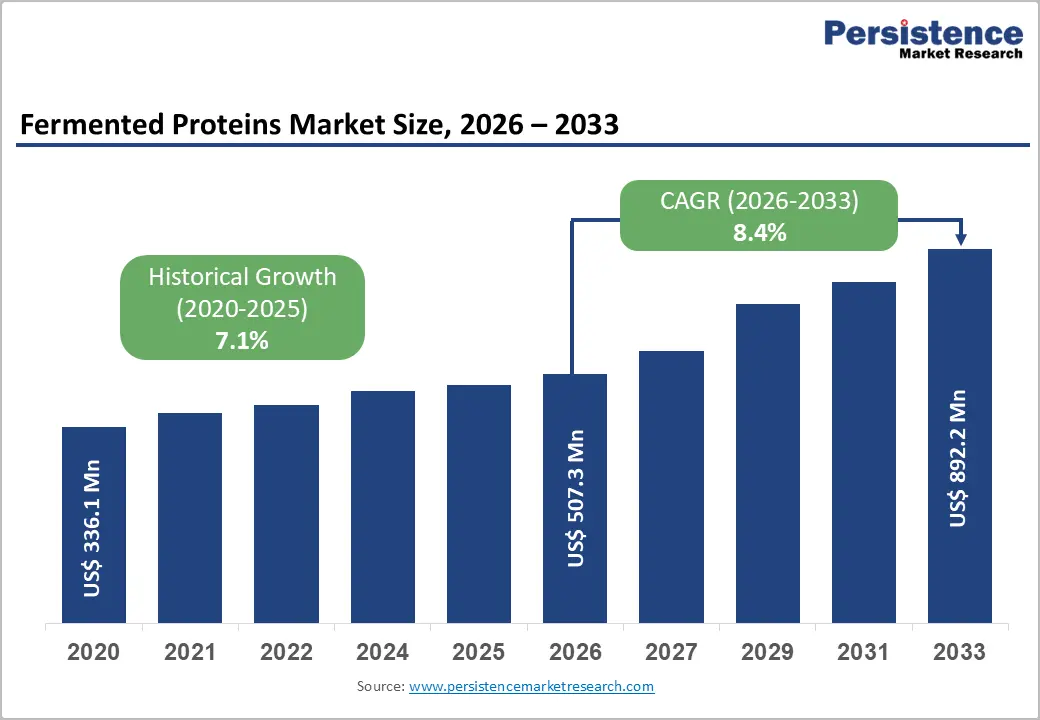
The global fermented proteins market size is expected to be valued at US$ 507.3 million in 2026 and projected to reach US$ 892.2 million by 2033, growing at a CAGR of 8.4% between 2026 and 2033. The market is driven by the surging global demand for sustainable, animal-free protein sources and the rapid technological evolution of precision fermentation. As food security becomes a central pillar of national policies, fermented proteins offer a resource-efficient alternative to traditional livestock farming, requiring significantly less land and water. Furthermore, the rising prevalence of lactose intolerance and egg allergies has accelerated the adoption of bio-identical dairy and egg proteins produced through microbial hosts.
Key industry players, including Cargill and Nestlé S.A., are increasingly investing in fermentation infrastructure to achieve price parity with animal-derived proteins, while regulatory milestones in regions like North America and Singapore have provided the necessary legal framework for widespread commercialization.
Key Industry Highlights:
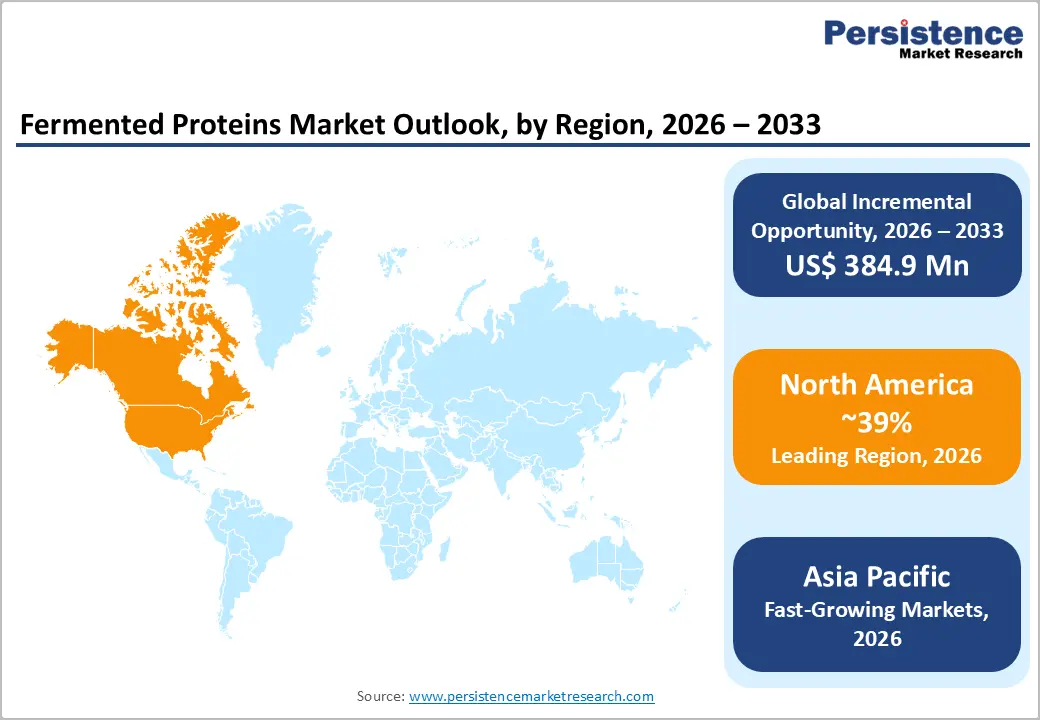
- Leading Region: North America dominated the market in 2025 with a 39% share, supported by a supportive regulatory environment and a high concentration of food-tech startups in the United States.
- Fastest Growing Region: Asia Pacific is the fastest-growing region through 2033, driven by massive urban populations, rising disposable incomes, and government initiatives for food security in China and India.
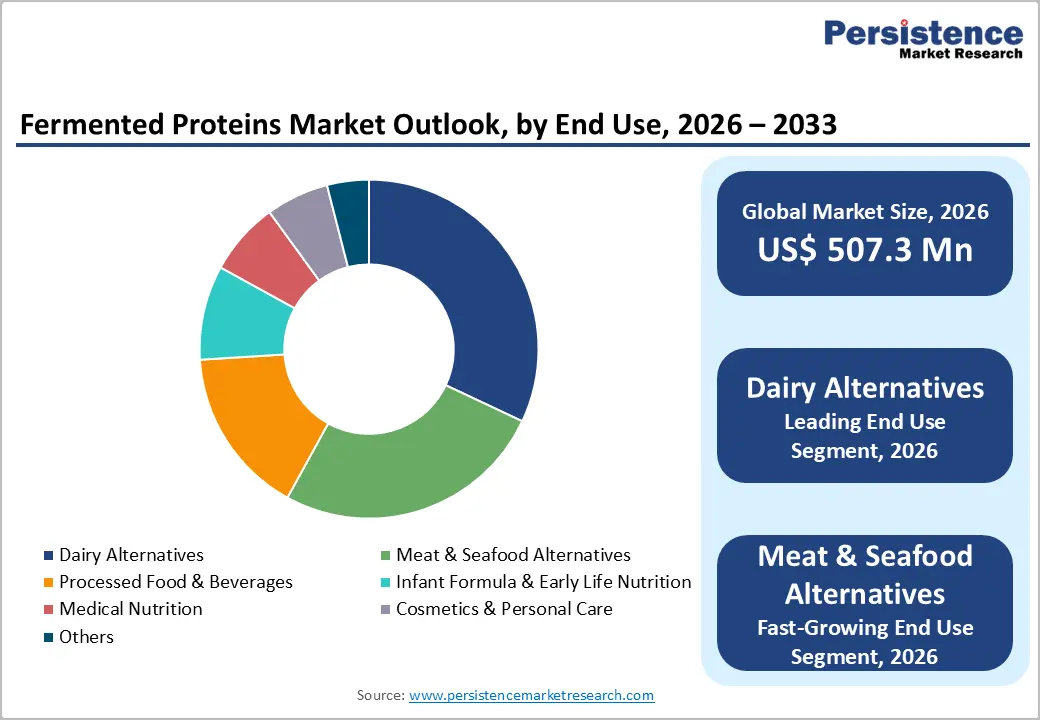
- Dominant Segment: Dairy Alternatives held a 36% market share in 2025, as bio-identical whey and casein proteins successfully disrupted the ice cream and fluid milk sectors.
- Fastest Growing Segment: Meat & Seafood Alternatives is the fastest-growing end-use category, as fermented analog proteins provide the necessary texture and flavor to compete with traditional animal products.
- Key Market Opportunity: The use of precision fermentation for infant formula & early fife nutrition represents a significant, high-margin revenue pocket.
| Key Insights | Details |
|---|---|
|
Global Fermented Proteins Market Size (2026E) |
US$ 507.3 Mn |
|
Market Value Forecast (2033F) |
US$ 892.2 Mn |
|
Projected Growth (CAGR 2026 to 2033) |
8.4% |
|
Historical Market Growth (CAGR 2020 to 2025) |
7.1% |
Market Dynamics
Driver - Growing Awareness of Environmental Sustainability and Resource Efficiency
The primary catalyst for the Fermented Proteins Market is the urgent need for a more sustainable global food system. Traditional animal agriculture is a major contributor to greenhouse gas emissions and deforestation. In contrast, fermentation-based protein production can reduce carbon emissions by up to 90% and land use by over 95% compared to beef production. Key Organizations have highlighted that precision fermentation allows for the localized production of high-quality proteins, reducing the carbon footprint associated with global logistics. This environmental value proposition resonates strongly with Gen Z and Millennial consumers, who prioritize ecological impact in their purchasing decisions. Consequently, major food conglomerates are integrating fermented ingredients into their supply chains to meet ambitious Net Zero targets.
Restraints - High Initial Capital Expenditure and Scalability Challenges
A significant barrier to the Fermented Proteins Market is the massive capital investment required to build and maintain commercial-scale bioreactors. While pilot-scale production has proven successful for many startups, transitioning to industrial-scale facilities involves complex engineering and high operational costs. The need for precise control over temperature, pH, and oxygen levels makes the fermentation process energy intensive. Also, the scarcity of contract manufacturing organizations (CMOs) with large-scale fermentation capacity has created a bottleneck in the supply chain. These infrastructure limitations can lead to higher unit costs for the end-consumer, making it difficult for fermented proteins to compete directly with heavily subsidized traditional dairy and meat products in price-sensitive markets.
Opportunity - Integrating Personalized Nutrition and Functional Food Fortification
The flexibility of fermentation technology offers a unique opportunity to create customized protein profiles tailored to specific health needs. Unlike traditional plant proteins, fermented proteins can be engineered to lack specific allergens or to contain optimized amino acid profiles for muscle recovery and geriatric health. The Infant Formula & Early Life Nutrition segment is expected to benefit significantly from the production of human-like milk proteins, such as Lactoferrin, through precision fermentation. In 2025, the rising trend of biohacking and performance-based dieting has created a lucrative niche for hyper-functional fermented protein powders. Brands that can provide data-backed health benefits, such as improved digestibility or hypoallergenic properties, are well-positioned to capture premium market segments.
Category-wise Analysis
Product Type Insights
Dairy proteins represent the leading segment, commanding a significant market share. This dominance is driven by the early success of animal-free dairy products in the United States, where brands like Perfect Day, Inc. have established a robust presence in ice creams and milk alternatives. Meat analog proteins are identified as the fastest-growing segment in the forecast period. The rise of Mycoprotein and other biomass-derived proteins provides a superior, fibrous texture that plant-based proteins often lack. As consumer fatigue with first-generation plant-based burgers increases, fermented meat analogs offer a more convincing sensory experience, propelling their rapid adoption in the Meat & Seafood Alternatives sector.
End-user Insights
The dairy alternatives segment is the leading end-use application in 2025, accounting for approximately 36% share in the coming years. The ability to produce lactose-free, animal-free dairy that matches the nutritional and functional profile of traditional milk has revolutionized the beverage and dessert sectors. Meanwhile, the Meat & Seafood Alternatives segment is the fastest-growing area. Innovation in fermented seafood analog proteins such as tuna and salmon alternatives is gaining traction as concerns over overfishing and heavy metal contamination in wild-caught fish grow. Additionally, the Cosmetics & Personal Care sector is emerging as a significant revenue pocket, where fermented Collagen and silk proteins are marketed for their high purity and sustainable credentials.
Regional Insights
North America Fermented Proteins Market Trends and Insights
North America is the dominant regional market, holding a 39% share in 2025. This leadership is sustained by a mature venture capital ecosystem and a supportive regulatory environment in the United States. The FDA's GRAS pathway has been pivotal in allowing startups like The EVERY Company and Impossible Foods to bring their fermentation-derived ingredients to market relatively quickly. The region is home to a high density of food-tech innovators and has a well-established consumer base for alternative proteins.
Innovation in the U.S. is largely focused on hybrid products, where fermented proteins are blended with plant-based ingredients to enhance flavor and texture. Furthermore, the recovery of the Foodservice sector has seen a surge in fermented proteins appearing on the menus of national restaurant chains. In 2025, the focus on sustainable animal-free labeling has become a key marketing differentiator, with major retailers like Whole Foods Market expanding their shelf space for precision-fermented dairy. The region's leadership is expected to continue, supported by substantial public and private investment in biomanufacturing infrastructure.
Asia Pacific Fermented Proteins Market Trends and Insights
Asia Pacific is the fastest-growing region, projected to witness the highest CAGR through 2033. This growth is underpinned by the massive urban populations of China and India and a rising government focus on food self-sufficiency. Singapore has established itself as a global regulatory leader, being the first country to approve the sale of cultivated and fermented proteins. In 2025, the Asia Pacific region benefited from significant manufacturing advantages, with countries such a sIndia and Thailand becoming hubs for large-scale fermentation contract manufacturing.
The westernization of dietary habits among the younger generation in China and South Korea has led to a boom in demand for dairy and meat alternatives. In December 2025, Perfect Day, Inc. announced the construction of a major precision fermentation plant in Gujarat, India, to produce recombinant whey protein, signaling a major shift toward regionalized production. As the middle-class population continues to grow and health awareness regarding probiotics and gut health increases, the Asia Pacific region is expected to become the primary engine of volume growth for the global fermented proteins industry.
Competitive Landscape
The Fermented Proteins Market is currently in a state of high fragmentation, characterized by a mix of specialized startups and multi-national food conglomerates. While startups drive the majority of early-stage innovation and patent filings, established giants like Nestlé S.A., Danone S.A., and Cargill provide the distribution and marketing muscle required for mass-market adoption. Market concentration is expected to increase as larger firms acquire successful niche players to bolster their animal-free portfolios.
Key differentiators include proprietary strain libraries, high-efficiency downstream processing techniques, and strategic partnerships with CPG brands. Emerging business model trends show a pivot toward Ingredient-as-a-Service, where companies like dsm-firmenich and Ajinomoto Co., Inc. provide specialized fermented protein inputs to other food manufacturers. Research and development are currently focused on achieving price parity with animal proteins and improving the sensory profiles of fermented meat and seafood analogs to ensure repeat purchase loyalty.
Key Developments:
- In December 2025, Perfect Day announced that initial operations at its new precision fermentation facility in Gujarat, India, are expected to commence in the second half of 2026, expanding its global capacity for animal-free whey protein production.
- In September 2025, Finnish biotech startup Onego Bio received a no questions letter from the U.S. Food and Drug Administration, reinforcing the regulatory clearance of its precision-fermented egg protein and supporting its pathway toward commercial scale-up in the U.S. market.
- In May 2025, Nestlé revealed plans to strengthen its biotechnology R&D capabilities and establish a new deep tech center to accelerate innovation, enhance research efficiency, and reinforce its long-term product development pipeline.
Companies Covered in Fermented Proteins Market
- Cargill
- Nestlé S.A.
- Danone S.A.
- dsm-firmenich
- FrieslandCampina
- Ajinomoto Co., Inc.
- General Mills, Inc.
- Perfect Day, Inc.
- Remilk
- The Protein Brewery
- Onego Bio
- Others
Frequently Asked Questions
The global fermented proteins market is projected to be valued at US$ 507.3 Mn in 2026.
Growing Awareness of Environmental Sustainability and Resource Efficiency is a major factor driving global Fermented Proteins market.
The global fermented proteins market is poised to witness a CAGR of 8.4% between 2026 and 2033.
Integrating Personalized Nutrition and Functional Food Fortification represents a significant market opportunity for companies in the Fermented Proteins market.
Major players in the Global Fermented Proteins market include Cargill, Nestlé S.A., Danone S.A., dsm-firmenich, FrieslandCampina, Ajinomoto Co., Inc., Perfect Day, Inc., and others.


