




- Food Ingredients & Additives
- Fermented Ingredients Market
Fermented Ingredients Market Size, Share, and Growth Forecast 2026 - 2033
Fermented Ingredients Market by Product Type (Amino acids, Organic acids, Biogas, Polymer, Vitamins, Antibiotics, Industrial enzymes), by Form (Liquid, Dry), Process (Batch Fermentation, Continuous Fermentation, Aerobic Fermentation, Anaerobic Fermentation), Application (Food & Beverages, Pharmaceuticals, Animal Feed, Personal Care, Others), and Regional Analysis, 2026 - 2033

Fermented Ingredients Market Share and Trends Analysis
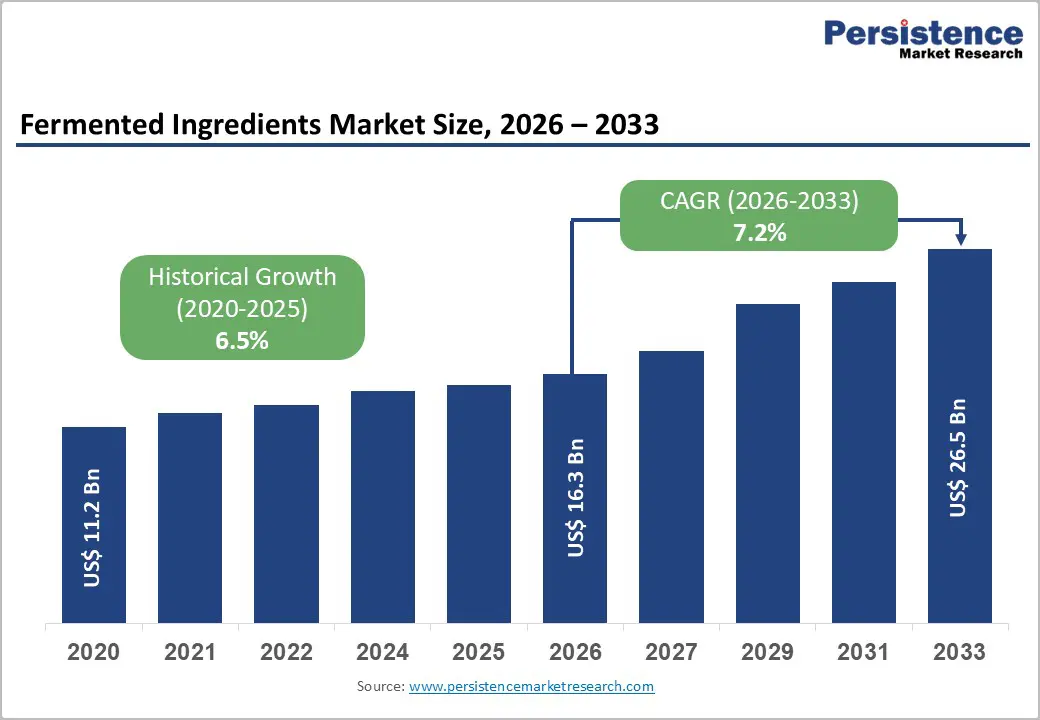
The global fermented ingredients market size is expected to be valued at US$ 16.3 billion in 2026 and projected to reach US$ 26.5 billion by 2033, growing at a CAGR of 7.2% between 2026 and 2033.
Rising consumer demand for natural and functional foods drives this growth, supported by health benefits like improved gut health from probiotics and amino acids. Advancements in biotechnology enhance production efficiency, while expanding applications in pharmaceuticals and animal feed boost demand. The shift toward clean-label products further accelerates market expansion, as evidenced by increasing adoption in food processing.
Key Industry Highlights:
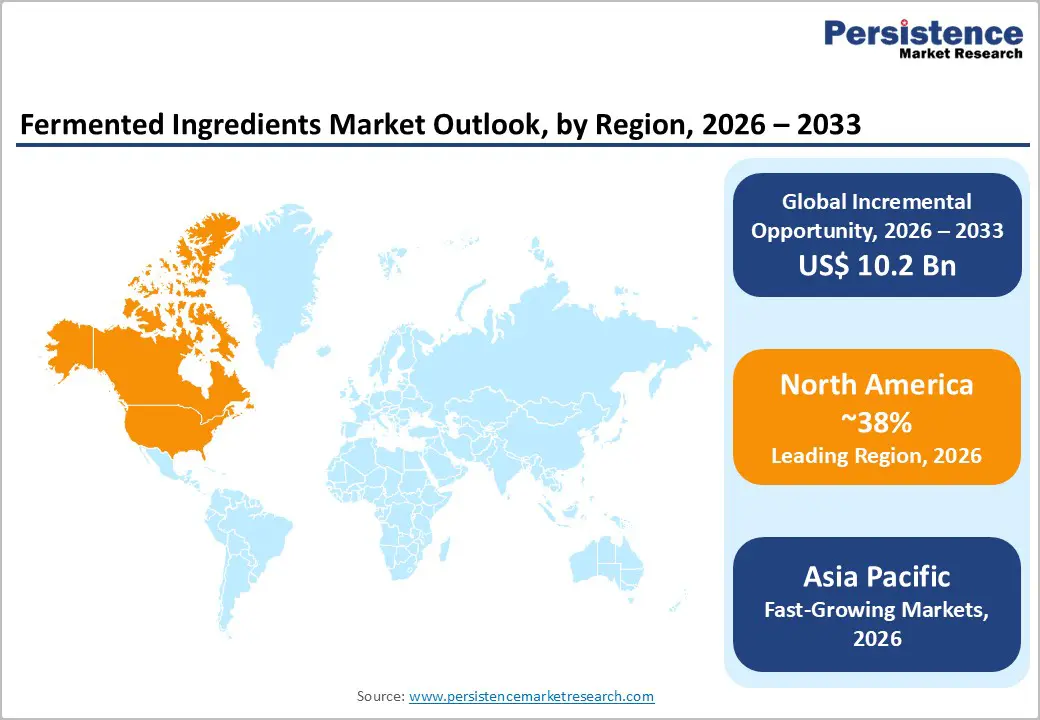
- North America dominates the fermented ingredients market with an estimated 38% share in 2025, supported by strong innovation in biotechnology and large-scale industrial fermentation facilities. The presence of advanced R&D centers and regulatory support from the FDA has accelerated adoption in food, nutraceutical, and pharmaceutical applications, ensuring consistent product quality and safety.
- Asia Pacific is the fastest-growing region, projected to grow at 8.5% CAGR between 2025 and 2032, driven by rapid urbanization, rising disposable incomes, and increasing consumer awareness of functional and natural foods. Major manufacturing hubs in China and India are expanding production capacities, supporting both domestic consumption and export opportunities.
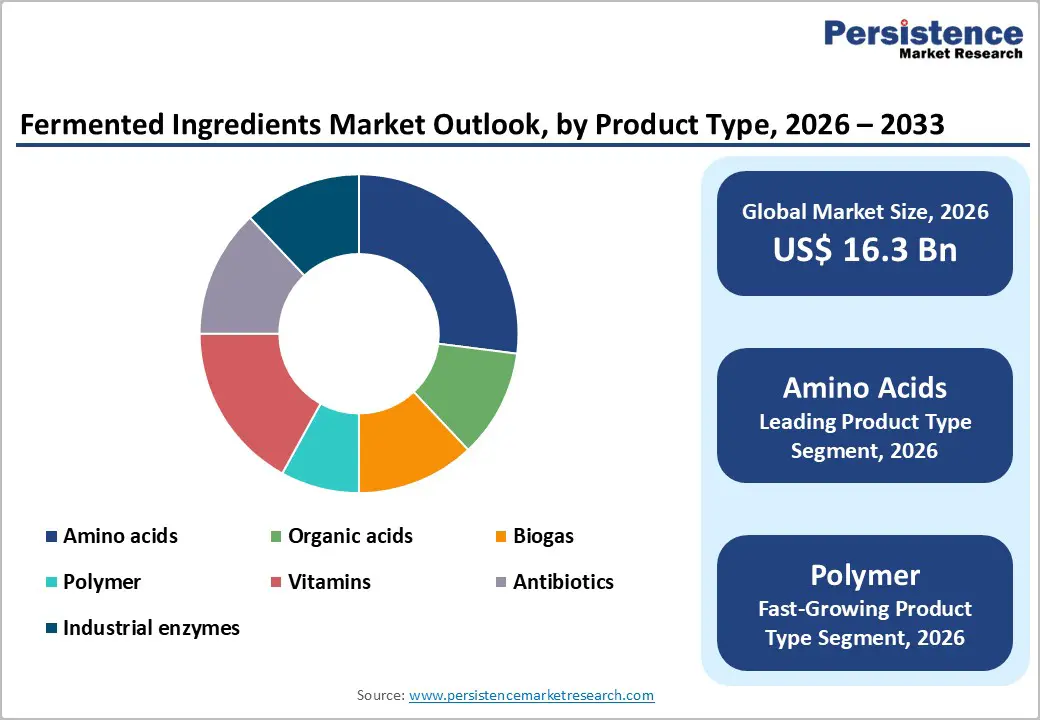
- Amino acids remain the leading product type, capturing 27% market share due to their essential role in human nutrition, dietary supplements, and pharmaceutical formulations. High bioavailability and microbial fermentation-based production have further reinforced their dominance in functional foods and therapeutic applications.
| Key Insights | Details |
|---|---|
|
Fermented Ingredients Size (2026E) |
US$ 16.3 billion |
|
Market Value Forecast (2033F) |
US$ 26.5 billion |
|
Projected Growth CAGR(2026-2033) |
7.2% |
|
Historical Market Growth (2020-2025) |
6.5% |
Market Dynamics
Driver - Rising Demand for Natural and Functional Ingredients
The global shift toward health-conscious and preventive diets is driving significant growth in the fermented ingredients market. Consumers increasingly prefer foods that support gut health, immunity, and overall wellness, creating high demand for probiotics, amino acids, and other fermentation-derived components. Functional food sales are rising worldwide as awareness grows about the benefits of natural ingredients over synthetic additives. Fermented ingredients not only enhance nutritional value but also improve shelf life and flavor, making them attractive to food and beverage manufacturers. FAO and other nutrition reports highlight fermented products as key contributors to digestive health and immunity. Consequently, brands are integrating these ingredients into dairy, beverages, snacks, and nutraceuticals to meet consumer expectations, differentiate products, and capitalize on the expanding functional foods and beverages segment.
Advancements in Biotechnology and Fermentation Technology
Technological innovations in biotechnology and fermentation processes are accelerating growth in the fermented ingredients market. Advances in microbial strain engineering, process optimization, and bioreactor design have improved yield, efficiency, and scalability of industrial enzymes, organic acids, vitamins, and biopolymers. These developments have reduced production costs by up to 20%, making high-quality bio-based ingredients more accessible. Regulatory support from authorities such as the FDA and EFSA has further encouraged adoption of fermentation-derived components in food, pharmaceuticals, and animal feed. Sustainable and eco-friendly production methods also align with growing environmental concerns. As a result, manufacturers can produce ingredients at higher volumes with consistent quality, enabling wider integration into processed foods, supplements, and functional products. This combination of innovation, cost-efficiency, and regulatory endorsement is a major driver for market expansion.
Restrains - Stringent Regulatory Standards
Strict regulations from global authorities such as the FDA and EFSA act as a significant restraint on the fermented ingredients market. Producers must comply with rigorous safety, labeling, and quality standards, often increasing compliance costs by 15–20%. Approval processes for new strains, enzymes, or bioactive compounds are time-consuming, delaying product launches and limiting innovation, especially for small and medium-sized enterprises. These regulatory barriers restrict market entry, reducing competition and slowing expansion in key sectors such as pharmaceuticals, nutraceuticals, and functional foods. Companies must invest in extensive testing, documentation, and monitoring to meet compliance requirements, which can also increase product costs. While ensuring consumer safety, these stringent standards create operational and financial challenges for manufacturers, making it difficult for emerging players to introduce novel fermented ingredients efficiently in both domestic and international markets.
High Production Costs and Scalability Issues
The production of fermented ingredients is inherently resource- and energy-intensive, presenting a major restraint to market growth. Fermentation processes require controlled conditions, specialized equipment, and continuous monitoring, resulting in operational costs 10–15% higher than traditional chemical synthesis. Additionally, fluctuations in raw material supply, such as sugars, grains, or microbial substrates, can disrupt production schedules and negatively impact profit margins. Scaling up production to meet growing global demand is often challenging due to the complexity of maintaining consistent yield and quality at large volumes. These high costs and scalability issues particularly affect price-sensitive applications like animal feed, where margins are narrow. As a result, smaller manufacturers struggle to compete with large, established players, limiting overall market expansion and adoption of fermented ingredients in broader industrial and consumer applications.
Opportunity - Expansion in Probiotics and Bioactive Compounds for Pharma
The pharmaceutical and nutraceutical sectors present significant growth opportunities for fermented ingredients, driven by rising demand for probiotics, vitamins, amino acids, and antibiotics. Advances in biotechnology have enabled the large-scale production of bioactive compounds with improved efficacy, quality, and stability. Therapeutic areas such as GLP-1 therapies for metabolic disorders, gut health supplements, and functional nutraceuticals are experiencing double-digit growth globally. Health authorities and research reports emphasize the preventive and wellness benefits of fermentation-derived compounds, encouraging adoption in dietary supplements and natural therapies. Moreover, government policies and initiatives in regions like Asia Pacific promote natural and bio-based pharmaceuticals, creating favorable conditions for market entry. Companies investing in R&D for novel strains and bioactives can capitalize on rising consumer awareness and a growing preference for natural, plant- or microbe-derived medicinal ingredients.
Growth in Sustainable Polymers and Biogas
Fermentation-based production of polymers and biogas offers high-growth potential, especially amid the global push toward sustainability. Bio-based polymers, including bioplastics and polysaccharides, align with circular economy principles and reduce reliance on petroleum-based materials. Regulatory initiatives, such as the European Union’s bioeconomy strategies targeting 30% renewable content in materials by 2030, create strong incentives for adoption. Similarly, biogas production through anaerobic fermentation provides renewable energy solutions while reducing environmental waste. Companies investing in sustainable polymers and bioenergy can capture premium niches, supported by government subsidies, tax benefits, and rising demand for eco-friendly packaging in food, personal care, and industrial applications. These trends encourage long-term investments in fermentation technology and position manufacturers to benefit from both environmental compliance and growing consumer preference for green products.
Category-wise Analysis
Product Type Insights
Amino acids are the leading product segment in the fermented ingredients market, capturing an estimated 27% share in 2025. Their dominance is fueled by extensive applications in nutrition, pharmaceuticals, and functional foods. Essential amino acids like lysine, glutamic acid, and tryptophan are produced efficiently through microbial fermentation, offering high bioavailability and consistent quality. These ingredients are widely incorporated into protein supplements, infant formulas, and therapeutic diets, meeting global nutritional needs. FAO reports highlight the critical role of amino acids in addressing protein deficiencies and supporting health outcomes. Growing awareness of preventive nutrition, coupled with the expansion of functional foods and dietary supplements, ensures sustained demand. Consequently, amino acids continue to drive market growth, maintaining their leading position over other fermented product types.
Process Insights
Batch fermentation remains the dominant process in the fermented ingredients market, accounting for approximately 55% of the market in 2025. Its popularity stems from its simplicity, flexibility, and adaptability across a variety of products, including industrial enzymes, amino acids, and antibiotics. Batch processes allow manufacturers to control reaction conditions precisely, reducing contamination risks and ensuring consistent product quality. This method is particularly advantageous for small- and medium-sized enterprises (SMEs), as it enables production at manageable scales without complex automation. While continuous fermentation offers efficiency for large-scale operations, batch fermentation is preferred for its versatility and ability to accommodate multiple product lines within the same facility. Bioprocess data consistently emphasize its cost-effectiveness and operational reliability.
Application Insights
The food and beverages segment commands the largest share of the fermented ingredients market, estimated at 50% in 2025. Growth is driven by increasing consumer demand for functional and clean-label products that enhance health and wellness. Fermentation-derived probiotics, amino acids, and organic acids are widely used in yogurt, beer, kombucha, and other fermented foods to improve flavor, texture, and shelf life. EFSA approvals and other regulatory endorsements bolster consumer trust, supporting broader adoption in retail and foodservice sectors. Nutritional enhancement, such as fortification with amino acids or bioactive compounds, has become a key differentiator for manufacturers. Rising awareness of gut health, immunity support, and natural ingredients ensures the segment’s continued leadership in the fermented ingredients market.
Regional Insights
North America Fermented Ingredients Market Trends and Insights
North America leads the global fermented ingredients market, driven by strong demand across food, pharmaceutical, and nutraceutical sectors. Consumers increasingly prefer functional foods, probiotics, and natural additives, supporting widespread adoption of amino acids, organic acids, and enzymes. The region benefits from advanced biotechnology infrastructure, extensive R&D capabilities, and a mature regulatory ecosystem led by the FDA, ensuring product safety and quality. Industrial-scale fermentation facilities enable high-volume, cost-efficient production, while innovations in microbial strain engineering and process optimization improve yields. Clean-label trends and rising health consciousness have fueled growth in fermented beverages, dairy products, and dietary supplements. Additionally, collaborations between ingredient manufacturers and food companies accelerate product launches, enhancing market penetration. North America’s leadership is reinforced by strong awareness of preventive nutrition, favorable regulatory frameworks, and investment in sustainable and bio-based fermentation technologies.
Asia Pacific Fermented Ingredients Market Trends and Insights
Asia Pacific is the fastest-growing region in the fermented ingredients market, driven by rising consumer awareness of health, wellness, and natural foods. Rapid urbanization, increasing disposable incomes, and changing dietary patterns have fueled demand for probiotics, amino acids, and bioactive compounds in functional foods, beverages, and nutraceuticals. Countries like China, India, and Japan are witnessing strong investment in biotechnology and fermentation facilities, enabling large-scale production with improved efficiency and yield. Government initiatives promoting natural and sustainable ingredients further support market expansion. Traditional consumption of fermented foods such as yogurt, miso, and kimchi provides a culturally favorable backdrop for growth. Additionally, rising pharmaceutical and animal feed applications in the region create new opportunities. The combination of expanding industrial capacity, favorable policies, and growing consumer preference positions Asia Pacific as a key emerging hub for fermented ingredients.
Competitive Landscape
The fermented ingredients market is highly competitive and fragmented, with global and regional players focusing on product innovation, process optimization, and sustainability. Companies are investing in advanced microbial strains, biotechnology, and fermentation technologies to improve yield, quality, and cost-efficiency. Strategic collaborations, mergers, and partnerships are common to expand production capacities and regional presence. Emphasis on clean-label, natural, and functional products drives differentiation in food, beverage, pharmaceutical, and nutraceutical applications.
Key Developments:
- In March 2026, after emerging from bankruptcy restructuring, the U.S. biotech firm refocused on industrial precision fermentation and completed construction of a new production line at its flagship precision fermentation plant in Barra Bonita, Brazil.
- In March 2026, Danish ingredient producer Ferm Food acquired the former Orkla manufacturing facility in Skovlund, Denmark, to expand its production capacity for fermented plant-based ingredients for the global food industry. The site was repurposed to process plant raw materials such as legumes, oats, wheat, rapeseed press cake, and buckwheat using solid-state fermentation with selected lactic acid bacteria.
- In February 2026, Superbrewed Food partnered with Döhler to launch the first commercial-scale production of a postbiotic cultured protein ingredient, dubbed SB1™, which was beginning to ship into the U.S. market.
Companies Covered in Fermented Ingredients Market
- Ajinomoto Co., Inc.
- DSM-Firmenich
- Novozymes
- BASF SE
- Cargill, Incorporated
- Archer Daniels Midland (ADM)
- Chr. Hansen Holding A/S
- DuPont de Nemours, Inc.
- Evonik Industries AG
- Kerry Group plc
- Angel Yeast Co., Ltd.
- Lallemand Inc.
- Amano Enzyme Inc.
- Lesaffre
Frequently Asked Questions
The global fermented ingredients market is expected to reach US$ 16.3 billion in 2026.
Rising demand for natural functional foods and probiotics drives growth, supported by health benefits and clean-label trends.
North America leads with 38% share in 2025, due to U.S. innovation and regulatory support.
Expansion in pharma for probiotics and bioactives, fueled by biotech advances and preventive health.
Leading companies include Ajinomoto, DSM-Firmenich, Novozymes, BASF SE, and Cargill.


