




- Nutraceuticals & Functional Foods
- Fava Bean Protein Market
Fava Bean Protein Market Size, Share, Growth, and Regional Forecast, 2026 to 2033
Fava Bean Protein Market by Product Type (Isolate, Concentrate, Textured Protein), by Nature (Organic, Conventional), End-user (Meat Alternatives, Dairy Alternatives, Bakery & Snacks, Sports & Clinical Nutrition, Ready-to-Drink Beverages, Pet Food & Animal Nutrition, Others), by Regional Analysis, 2026 - 2033

Fava Bean Protein Market Share and Trends Analysis
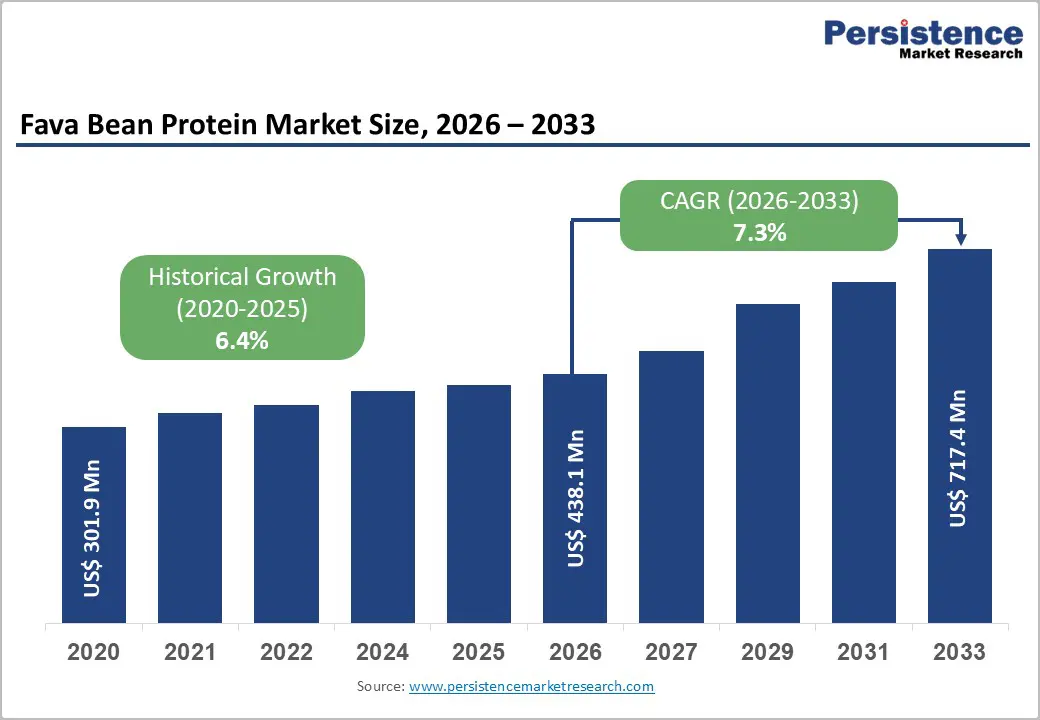
The global fava bean protein market size is expected to be valued at US$ 438.1 million in 2026 and projected to reach US$ 717.4 million by 2033, growing at a CAGR of 7.3% between 2026 and 2033.
The global transition toward allergen-friendly and sustainable plant-based nutrition is highly evident in the consumer market. As the global consumers shift from soy-based proteins due to allergen concerns and GMO prevalence, fava bean protein has emerged as a high-functionality alternative with superior emulsification and a neutral flavor profile. The crop's low environmental footprint and nitrogen-fixing capabilities have encouraged large-scale food manufacturers to integrate fava bean isolates and concentrates into mainstream meat and dairy alternatives.
Key Industry Highlights:
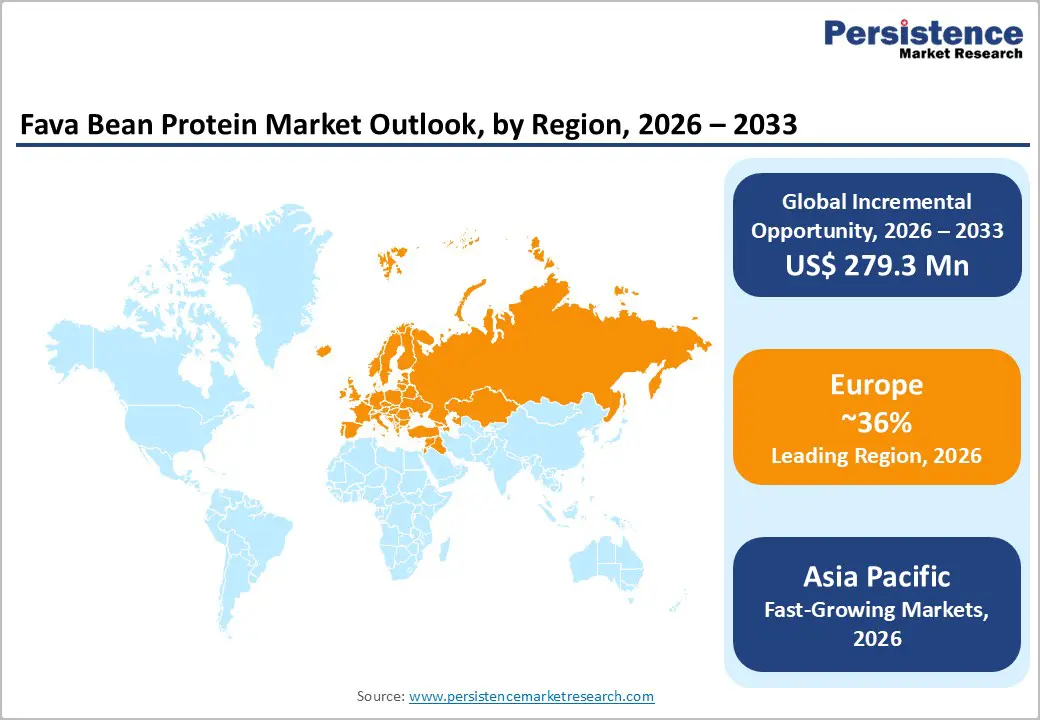
- Dominant Regional Presence: Europe holds a 36% market share, led by robust sustainability policies and a mature infrastructure for pulse processing in France and Germany.
- Fastest Growing Region: Asia Pacific is expected to witness the highest growth rate due to rapid urbanization, government food security initiatives, and a booming middle-class population.
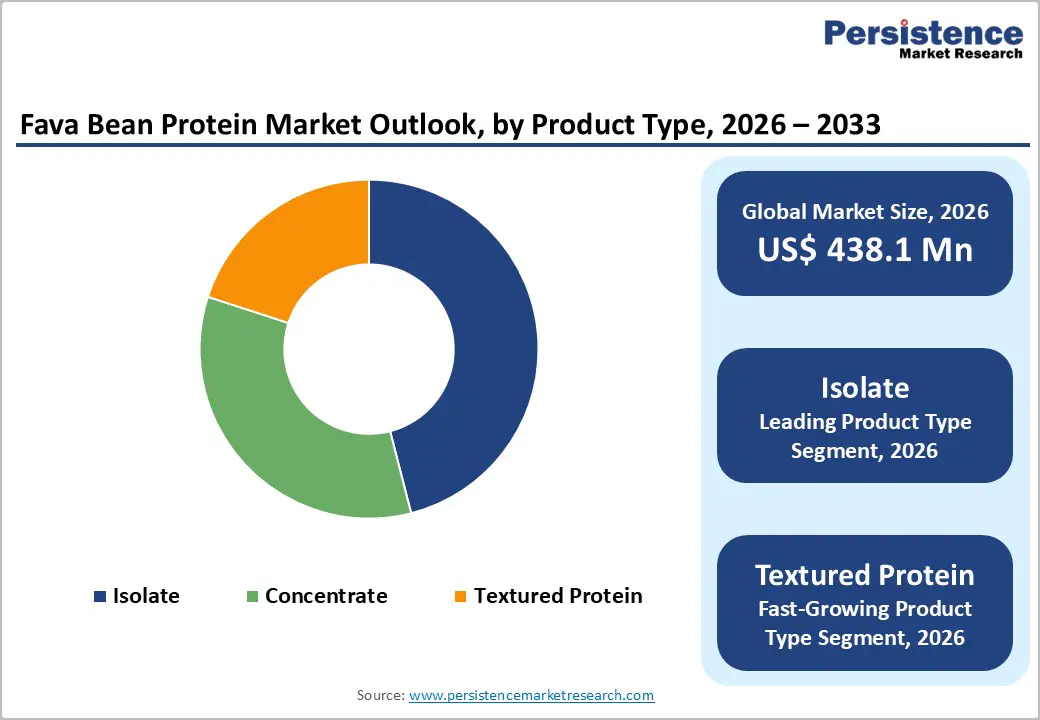
- Leading Product Segment: Isolate currently dominates the market with a 34% share, preferred for its high protein purity and versatility in premium beverage and dairy applications.
- Rapidly Expanding Format: Textured Protein is the fastest-growing segment, expanding at a 11% CAGR, driven by its essential role in creating realistic textures in meat analogs.
- High-Impact Opportunity: The Pet Food & Animal Nutrition sector offers a massive opportunity for volume growth as fava bean concentrates emerge as a superior, sustainable binder.
| Key Insights | Details |
|---|---|
| Global Fava Bean Protein Market Size (2026E) | US$ 438.1 Mn |
| Market Value Forecast (2033F) | US$ 717.4 Mn |
| Projected Growth (CAGR 2026 to 2033) | 7.3% |
| Historical Market Growth (CAGR 2020 to 2025) | 6.4% |
Market Dynamics
Driver - Rising Demand for Allergen-Free and Non-GMO Protein Sources
Allergen avoidance is emerging as a powerful force reshaping plant protein formulation strategies worldwide. As consumers scrutinize ingredient lists more closely, the appeal of naturally allergen-friendly and non-GMO protein sources has intensified. Fava bean protein benefits from not being classified among major global allergens, positioning it as a compelling alternative to soy and wheat proteins, particularly in sensitive applications such as sports nutrition, clinical formulations, and infant nutrition. Growing demand for “soy-free” and minimally processed claims across developed markets is further accelerating ingredient adoption.
Beyond its allergen advantage, fava bean protein delivers strong functional and nutritional credentials. Its favorable amino acid composition, including high lysine content, supports its use in high-performance and fortified food applications. Manufacturers are responding by scaling high-purity isolate capacity and improving flavor neutrality to broaden formulation flexibility. As clean-label scrutiny tightens and formulation diversification becomes critical, fava protein is increasingly viewed as a strategic hedge against allergen concentration risks in the global plant protein supply chain.
Restraints - High Cost of Specialized Extraction and Fractionation
The economic feasibility of fava bean protein is often hindered by the high capital expenditure required for sophisticated fractionation technologies. To produce a high-purity Isolate (above 90% protein content), manufacturers must employ energy-intensive wet-extraction processes that are significantly more expensive than the dry-fractionation used for pea or soy flours. Industry data suggests that fava bean protein isolates can carry a price premium of 25% to 40% over standard soy isolates. This cost disparity limits the use of fava bean protein in price-sensitive segments such as conventional animal feed, confining its application primarily to premium dairy alternatives and high-end sports & clinical nutrition products where consumers are willing to pay for superior organoleptic and nutritional profiles.
Opportunity - Innovation in Textured Protein for Next-Generation Meat Analogs
Texture is becoming the decisive battleground in the next wave of plant-based meat innovation, creating a high-value opening for fava bean protein. As the category shifts beyond basic patties toward whole-muscle analogs, demand is rising for proteins that can replicate the fibrous bite of conventional meat. Fava protein demonstrates strong gelling behavior and structured fiber formation under high-moisture extrusion, making it particularly suitable for chicken-style shreds and beef-like formats. This performance advantage is accelerating interest among formulators seeking soy alternatives.
Commercial momentum is building as ingredient suppliers expand advanced extrusion capabilities and scale textured fava formats. The segment is expected to outpace isolates and concentrates as flexitarian consumers prioritize authentic mouthfeel alongside clean-label positioning. Food brands leveraging these next-generation textures can access a rapidly expanding meat-alternative audience while differentiating on the basis of allergen friendliness and formulation versatility. As technology matures and costs normalize, textured fava protein is poised to capture disproportionate growth within the global fava bean protein market.
Category-wise Analysis
Product Type Insights
The isolate segment accounts for 34% of the total share in 2025, making it the dominant segment. This dominance stems from isolates' high protein concentration, often exceeding 90%, and superior functional properties compared with concentrates or flours. Manufacturers in the Dairy Alternatives and Ready-to-Drink Beverages sectors prefer isolates because they offer high solubility and a clean, neutral taste that does not interfere with delicate flavor profiles such as vanilla or almond. Demand for isolates is further bolstered by the burgeoning Sports & Clinical Nutrition market, where high-purity protein is essential for muscle recovery products. Leading players such as Roquette Frères have focused their R&D on refining isolate purity to eliminate bitter off-notes, solidifying this segment's leading position.
Nature Insights
The conventional segment currently holds the largest market share, driven by established agricultural practices and lower price points. While the organic segment is gaining traction due to health-conscious consumer behavior, the conventional grade is favored by large-scale food processors who require consistent, high-volume supply chains for mass-market products such as bakery & snacks and meat substitutes. Conventional fava beans are extensively cultivated in major producing regions like Australia, Canada, and France, benefiting from mechanized harvesting and standardized processing. This ensures a cost-competitive ingredient that can be easily integrated into existing food formulations. The dominance of this segment is expected to continue as manufacturers balance the need for sustainable plant proteins with the necessity of maintaining affordable retail prices for the end consumer.
Regional Insights
North America Fava Bean Protein Market Trends and Insights
The North America fava bean protein market is characterized by a mature innovation ecosystem and a robust regulatory framework that supports the rapid commercialization of alternative proteins. The United States leads the region, driven by high consumer awareness of plant-based benefits and a surge in investment for domestic fractionation facilities. Federal agencies such as the U.S. Department of Agriculture (USDA) have increasingly funded pulse-crop research to diversify the American diet and support sustainable farming.
Innovation in this region is centered on the integration of fava bean protein into the Sports & Clinical Nutrition sector. Companies like Ingredion Incorporated and Puris Proteins LLC are at the forefront, developing customized protein blends that combine fava beans with other pulses to optimize the Protein Digestibility Corrected Amino Acid Score (PDCAAS). The trend toward "hybrid" foods products that blend plant and animal proteins is also emerging in the U.S., providing a unique entry point for fava bean concentrates in high-protein snacks and meal replacements.
Asia Pacific Fava Bean Protein Market Trends and Insights
The Asia Pacific region is projected to be the fastest-growing market between 2026 and 2033. This rapid expansion is fueled by rising disposable incomes, urbanization, and a growing middle class in China, India, and the ASEAN countries. Governments in the region are increasingly viewing alternative proteins as a solution to food security challenges. For instance, the Ministry of Food Processing Industries (MoFPI) in India has highlighted the potential of indigenous legumes to bridge the nutritional gap in protein-deficient populations.
Manufacturing advantages in Asia Pacific, particularly in China, allow for large-scale production at lower costs, facilitating the export of fava bean ingredients to global markets. The region's food culture, which already includes various bean-based traditional dishes, provides a natural advantage for the adoption of fava bean protein in modern formats like Ready-to-Drink Beverages and fortified noodles. As health consciousness rises post-pandemic, the demand for affordable, nutrient-dense plant proteins is expected to skyrocket across the region.
Competitive Landscape
The fava bean protein market is currently characterized by a moderate level of concentration, with a few global giants coexisting alongside specialized pulse processors. Large agribusinesses such as Bunge and Ingredion Incorporated have consolidated their positions through vertical integration-controlling everything from seed sourcing to high-purity protein extraction. Conversely, the market remains fragmented at the regional level, where companies like Vestkorn and Meelunie focus on specific niches such as dry-fractionated concentrates. The primary competitive strategies involve heavy investment in R&D to improve the organoleptic properties (taste and smell) of the protein. Emerging business models are also seeing a shift toward "co-manufacturing" and "open innovation" partnerships, where ingredient suppliers work directly with CPG brands to develop bespoke formulations for meat and dairy alternatives.
Key Developments:
- In September 2025, the Government of Canada announced a $24 million investment to support the development of fava bean and mycelium-based protein ingredients, strengthening the country’s alternative protein innovation ecosystem.
- In August 2025, Burcon introduced a 90% pure fava protein isolate, expanding its plant-based ingredient portfolio and targeting high-purity applications in nutrition and functional food formulations.
- In May 2025, ATURA Proteins participated in Vitafoods Europe 2025, presenting its ATURA Fava Bean Protein 85% (FP85) to highlight performance-focused plant protein solutions for food and beverage manufacturers.
Companies Covered in Fava Bean Protein Market
- Ingredion Incorporated
- Roquette Frères
- Bunge
- Deltagen UK Ltd
- BENEO
- Ebro Ingredients
- Meelunie
- Purition Ltd
- Burcon
- Vita Actives Ltd
- Vestkorn
- Others
Frequently Asked Questions
The global Fava Bean Protein market is projected to be valued at US$ 438.1 Mn in 2026.
Rising Demand for Allergen-Free and Non-GMO Protein Sources is driving demand for Fava Bean Protein market.
The Global Fava Bean Protein market is poised to witness a CAGR of 7.3% between 2026 and 2033.
Innovation in Textured Protein for Next-Generation Meat Analogs is creating opportunities for key players in the Fava Bean Protein market.
Key industry leaders include Ingredion Incorporated, Roquette Frères, Bunge, Deltagen UK Ltd, BENEO, Ebro Ingredients, and Others


