




- Healthcare Services
- Elder Care Services Market
Elder Care Services Market Size, Trends, Share, Growth, and Regional Forecast, 2025 to 2032
Elder Care Services Market by Service (Home-based Care, Community-based Care, Institutional Care), by Financing Source, and Regional Analysis from 2025 to 2032

Elder Care Services Market Share and Trends Analysis
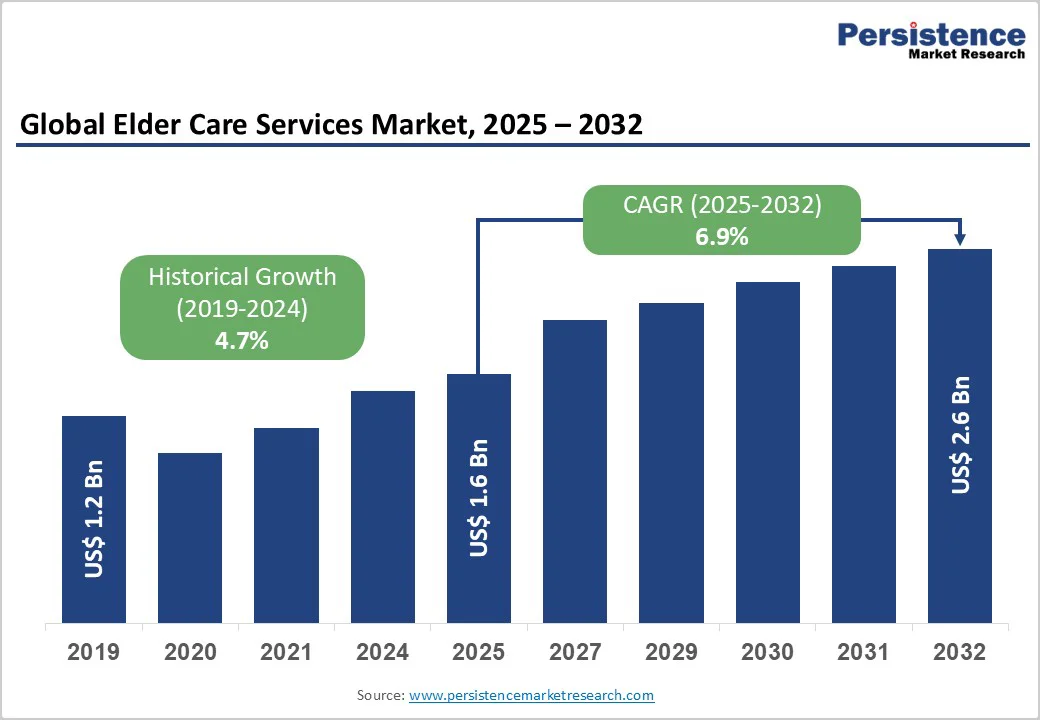
The global elder care services market size is valued at US$1.6 billion in 2025 and projected to reach US$2.6 billion growing at a CAGR of 6.9% during the forecast period from 2025 to 2032.
The global elder care services market is rapidly evolving, driven by an aging population, rising life expectancy, and increasing prevalence of chronic conditions among seniors. Home healthcare, assisted living, nursing facilities, and technology-enabled remote care are reshaping how elderly care is delivered.
Urbanization, dual-income households, and a growing preference for personalized in-home support fuel demand. Innovations in telehealth, smart monitoring devices, and AI-assisted care are enhancing efficiency and patient outcomes.
Key Industry Highlights
- The elder care services market is propelled by a growing global elderly population, increased life expectancy, and a rise in chronic diseases.
- Digital health solutions, remote patient monitoring, telemedicine, and AI-driven caregiving platforms are revolutionizing elder care.
- Home healthcare dominates the market, offering medical and non-medical support at home. Nursing facilities and assisted living follow closely.
- Government regulations, quality standards, and reimbursement policies strongly shape the market.
| Key Insights | Details |
|---|---|
| Elder Care Services Market Size (2025E) | US$1.6 Bn |
| Market Value Forecast (2032F) | US$2.6 Bn |
| Projected Growth (CAGR 2025 to 2032) | 6.9% |
| Historical Market Growth (CAGR 2019 to 2024) | 4.7% |
Market Dynamics
Driver - Snowballing Global Demand for Retirement Living
The global demand for retirement living is accelerating as seniors increasingly seek independence, comfort, and community-oriented lifestyles. Traditional multi-generational households are declining due to urbanization and nuclear family structures, prompting older adults to explore dedicated retirement communities and assisted living facilities.
Affluent retirees are willing to invest in premium services offering healthcare support, recreational amenities, and social engagement opportunities. Additionally, rising life expectancy and active aging trends are driving interest in environments that combine safety with lifestyle enrichment.
Restraints - Limited Infrastructure in Rural Areas
Limited infrastructure in rural and semi-urban regions poses a significant challenge to elder care services. Many villages and small towns lack well-equipped healthcare facilities, making access to routine medical check-ups, emergency care, or specialized geriatric services difficult. Poor transportation networks further exacerbate the problem, forcing elderly patients and caregivers to travel long distances for essential care.
Additionally, the scarcity of trained healthcare professionals, including nurses, therapists, and caregivers, reduces the quality and consistency of services. These infrastructure gaps not only delay timely interventions but also limit the adoption of advanced home-based or technology-driven elder care solutions, widening the urban-rural care divide.
Opportunity - Tele-Rehabilitation Services
Tele-Rehabilitation Services are emerging as a transformative solution in elder care, enabling seniors to receive physiotherapy, occupational therapy, and other rehabilitation programs remotely. By leveraging secure video consultations, wearable sensors, and AI-guided exercise modules, elderly patients can follow personalized rehabilitation plans from the comfort of their homes.
This approach not only ensures continuity of care post-hospitalization but also improves adherence to prescribed exercises, reduces the risk of complications, and minimizes the need for frequent hospital visits. Tele-rehabilitation also empowers caregivers by providing real-time guidance and monitoring, while healthcare providers can track progress through digital dashboards.
With growing smartphone penetration, internet access, and an increasing preference for home-based care, tele-rehabilitation is poised to become a mainstream solution in elder care globally.
Category-wise Analysis
By Service Insights
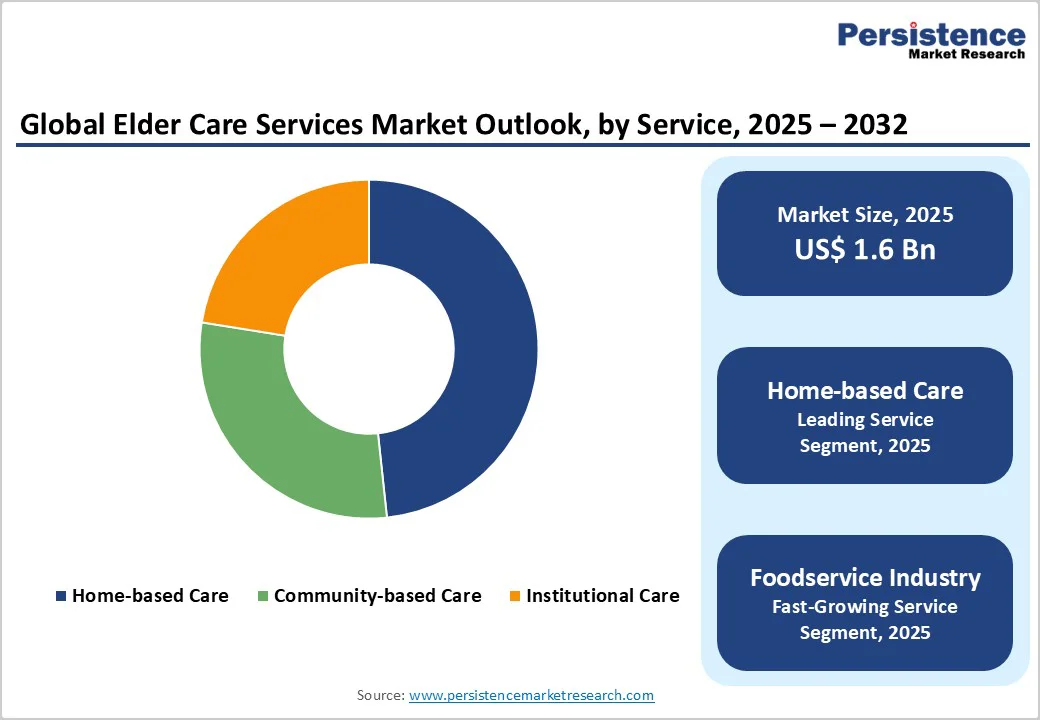
Home-based Care leads the elder care services market due to its convenience, personalization, and cost-effectiveness. Seniors increasingly prefer receiving medical and non-medical support in familiar home environments, avoiding the stress and expense of institutional care.
The rise of nuclear families, dual-income households, and urbanization has created demand for professional caregivers to assist with daily living activities, chronic disease management, and rehabilitation at home. Technological advancements such as telehealth, remote monitoring, and wearable devices further enhance service quality and patient safety.
Additionally, flexible payment options and growing awareness of aging-in-place benefits reinforce home-based care as the preferred choice globally.
By Financing Source Insights
Out-of-pocket spending dominates elder care financing globally due to limited insurance coverage and insufficient public funding, particularly in emerging markets. Families often bear the full cost of home-based care, nursing facilities, rehabilitation, and personal assistance services, driven by the preference for personalized, timely, and flexible care.
Even in regions with insurance schemes, coverage gaps for chronic conditions, long-term custodial care, and technology-enabled services force seniors and caregivers to pay directly. Rising healthcare costs, increasing longevity, and cultural expectations of family-provided support further reinforce out-of-pocket expenditure as the primary financing method in elder care worldwide.
Region-wise Insights
North America Elder Care Services Market Share Analysis
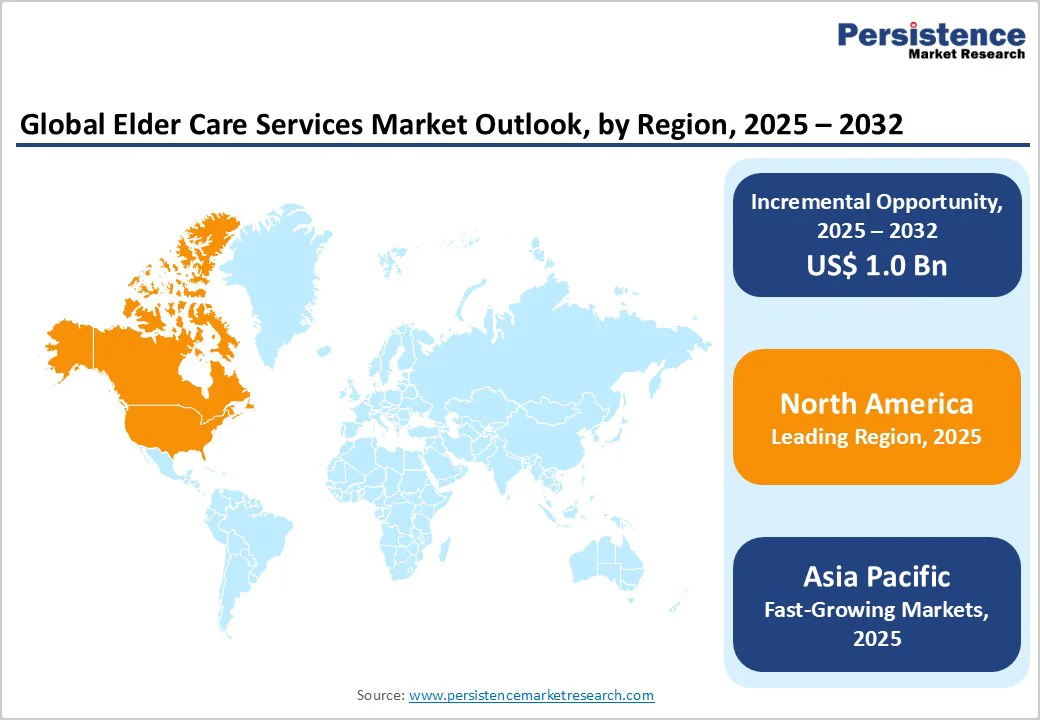
North America leads the global elder care services market, driven by an aging population, high healthcare expenditure, and advanced infrastructure. Widespread adoption of home-based care, assisted living, and skilled nursing facilities reflects a preference for quality, personalized services.
Technological integration, including telehealth, remote monitoring, and AI-assisted care, is rapidly transforming service delivery. Government support through Medicare, Medicaid, and long-term care insurance enhances accessibility, while private providers dominate with diverse offerings.
Rising chronic disease prevalence and a focus on aging-in-place models encourage innovation in rehabilitation, wellness, and lifestyle-focused care, reinforcing North America’s leadership in both revenue and service sophistication.
Asia Pacific Elder Care Services Market Analysis
Asia-Pacific is the fastest-growing elder care services market, fueled by a rapidly aging population, rising life expectancy, and increasing prevalence of chronic diseases. Urbanization, nuclear family structures, and greater disposable incomes are driving demand for professional home-based care, assisted living, and community-based services.
Governments across the region are gradually supporting elder care through subsidies, pilot programs, and regulatory reforms, while private providers are expanding infrastructure to meet unmet demand. Technological adoption, including telehealth, wearable monitoring devices, and AI-assisted care, is accelerating, improving service accessibility and quality.
Cultural shifts toward modern caregiving practices, combined with rising awareness of senior health needs, position the Asia-Pacific as a dynamic market for innovative and scalable elder care solutions.
Market Competitive Landscape
The elder care services market is highly competitive, with a mix of private providers, non-profit organizations, and public institutions vying for market share. Private operators dominate in home-based care, assisted living, and rehabilitation services, leveraging technology, personalized offerings, and premium care models to differentiate.
Non-profit and government-run facilities focus on accessibility, affordability, and regulatory compliance. Strategic collaborations, mergers, and acquisitions are common, as players expand geographically and enhance service portfolios.
Key Industry Developments:
- In August 2025, In collaboration with the Department of Community Development - Abu Dhabi (DCD), the Family Development Foundation (FDF), and PureHealth provided the Obtain Temporary Alternative Care for Senior Citizens service as part of the Barakatna initiative, which was launched by His Highness Sheikh Mohamed bin Zayed Al Nahyan, President of the UAE.
Companies Covered in Elder Care Services Market
- Korian Group
- Provita International Medical Center, LLC
- Home Instead, Inc.
- Living Assistance Services, LLC
- Bennesse Style Care Co. Ltd.
- Econ Healthcare Group
- Epoch Elder Care
- St. Luke’s ElderCare Ltd
- India Home Health Care
- Samvedna Senior Care
- ApnaCare India Pvt Ltd
- Nichiigakkan Co. Ltd
- Golden Years Hospitals
- Others
Frequently Asked Questions
The global elder care services market is valued at US$1.6 Bn in 2025.
The growing number of elderly individuals worldwide is the primary driver, with the 65+ population expanding rapidly, increasing demand for healthcare, personal care, and assisted living services.
The global market is poised to witness a CAGR of 6.9% between 2025 and 2032.
Growing preference for in-home care and remote physiotherapy/occupational therapy creates demand for personalized, technology-enabled services.


