




- Nutraceuticals & Functional Foods
- Elderberry Extract Market
Elderberry Extract Market Size, Share, and Growth Forecast 2026 - 2033
Elderberry Extract Market by Nature (Organic, Conventional), by Form (Liquid, Powder), by End Use (Dietary Supplements, Functional Foods & Beverages, Pharmaceuticals, Cosmetics & Personal Care, Natural Food Colorants, Others), and by Regional Analysis, 2026-2033

Elderberry Extract Market Size and Trend Analysis
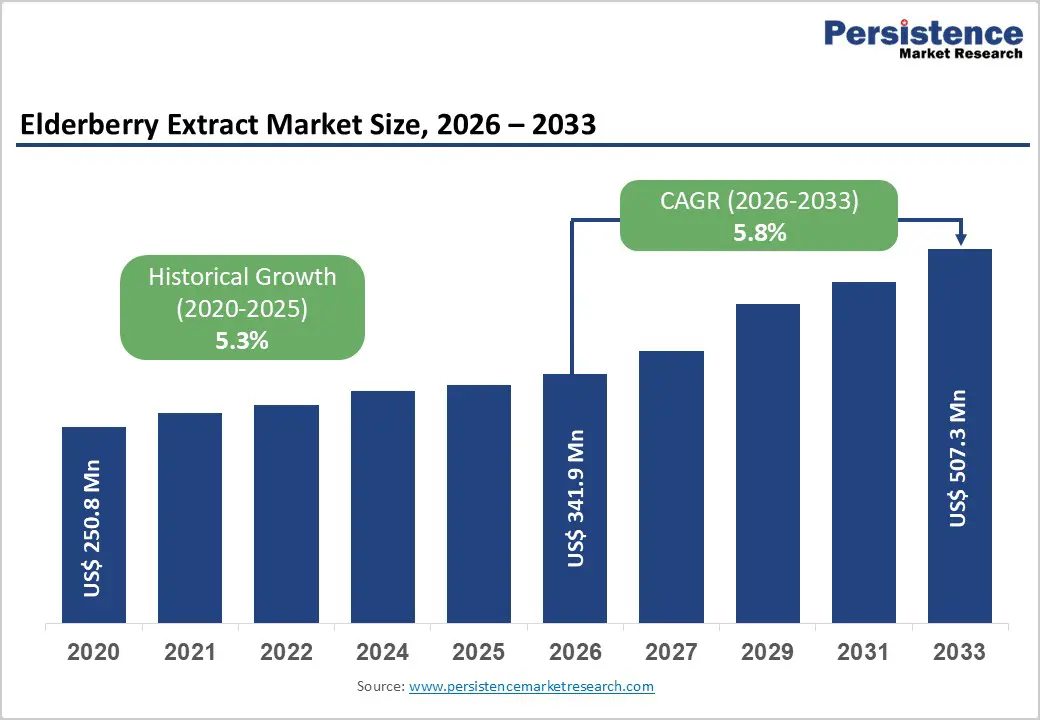
The robust expansion of the Elderberry Extract Market is driven by escalating global demand for botanical-based immune support and the shift from reactive to proactive healthcare management. As consumers increasingly prioritize preventive wellness, elderberry has transitioned from a traditional home remedy to a clinically validated pharmaceutical and nutraceutical staple. This growth is further driven by the rising prevalence of respiratory infections and growing demand for clean-label, plant-derived ingredients in the functional food sector. Technological advancements in standardized extraction, which achieve higher concentrations of bioactive anthocyanins, have allowed manufacturers to broaden application scope into specialized categories like geriatric nutrition and pediatric supplements, ensuring a sustained upward trajectory across both developed and emerging economies.
Key Industry Highlights
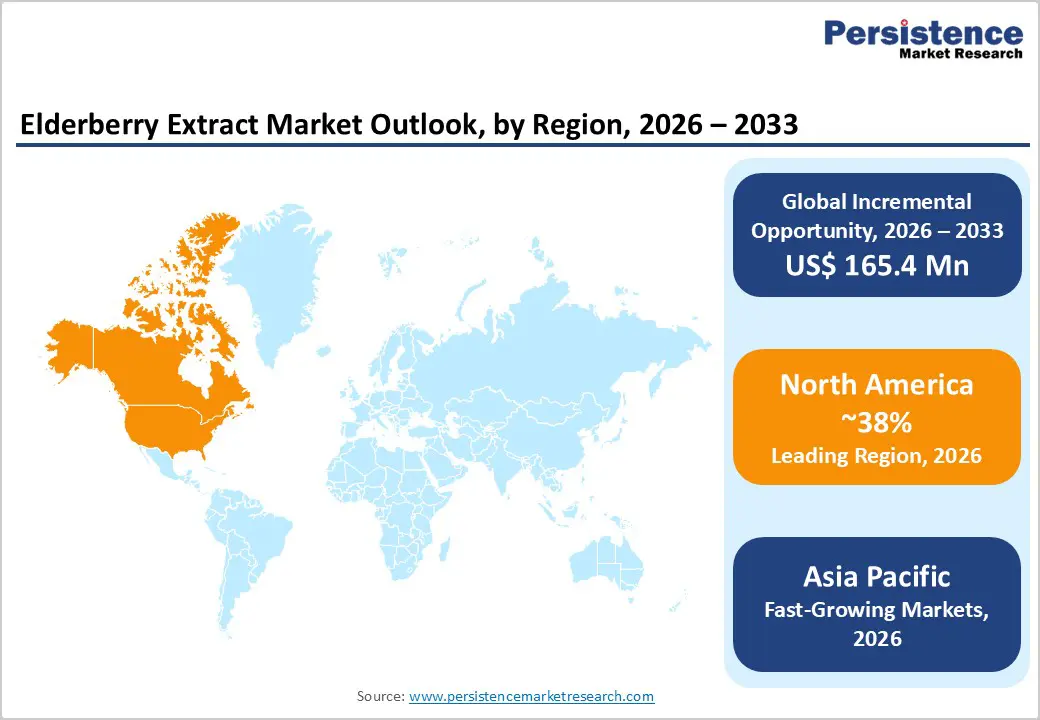
- Leading Region: North America, accounting for around 38% market share, supported by strong dietary supplement penetration, mature herbal regulatory frameworks, and widespread consumer trust in clinically positioned botanical ingredients.
- Fastest-Growing Region: Asia Pacific, driven by rising middle-class health spending, demand for Western botanicals in functional beverages and gummies, and rapid expansion of e-commerce-led nutraceutical distribution.
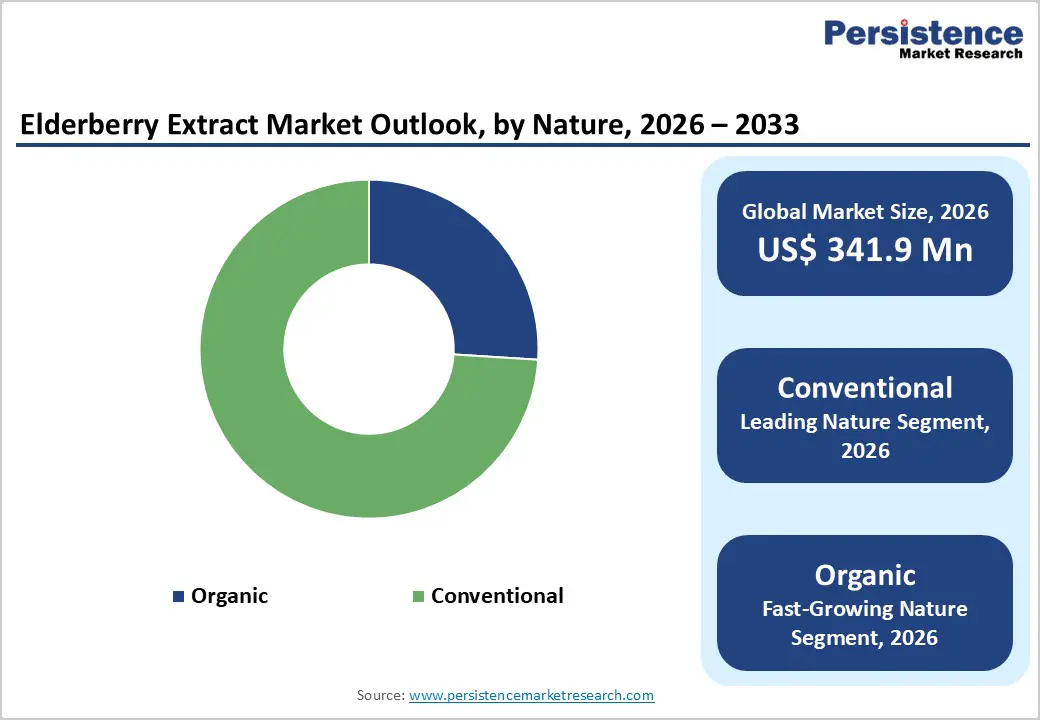
- Fastest-Growing Segment by Nature: Organic elderberry extract, propelled by clean-label preferences, pesticide-residue concerns, and premium positioning in pediatric, immune, and wellness-focused formulations.
- Market Drivers: Accelerating adoption of clean-label food colors and natural antioxidants, as manufacturers replace synthetic additives with multifunctional botanical extracts offering both visual appeal and health benefits.
- Opportunities: Advanced extraction, micro-encapsulation, and personalized nutrition platforms enabling standardized, high-bioactivity elderberry ingredients tailored to specific health outcomes.
- Key Developments: In August 2025, Artemis International expanded its berry antioxidant portfolio with new elderberry solutions; in July 2025, Cyvex Nutrition partnered with Eevia Health to launch extra-strength elderberry extracts in North America; in March 2025, Eevia Health secured a repeat order for its FENO-SAMBUCUS™ 7 ORGANIC extract, underscoring strong commercial traction.
| Key Insights | Details |
|---|---|
| Global Elderberry Extract Market Size (2026E) | US$ 341.9 Mn |
| Market Value Forecast (2033F) | US$ 507.3 Mn |
| Projected Growth (CAGR 2026 to 2033) | 5.3% |
| Historical Market Growth (CAGR 2020 to 2025) | 5.8% |
Market Dynamics
Driver – Proliferation of Clean-Label and Natural Food Ingredients
The rapid ascent of the clean-label movement is significantly bolstering the demand for elderberry as a high-functionality natural additive. Manufacturers are increasingly replacing synthetic dyes and chemical antioxidants with plant-derived alternatives to meet stringent consumer and regulatory expectations. Data from the Organic Trade Association (OTA) suggests that nearly 75% of global consumers are willing to pay a premium for products free from artificial colors. Elderberry extract serves a dual purpose in the Food & Beverage industry: providing a vibrant, heat-stable dark purple hue and acting as a potent natural antioxidant. This versatility allows brands to enhance both the aesthetic and nutritional profile of products such as functional juices, yogurts, and confectionery. Organizations like the European Food Safety Authority (EFSA) have provided favorable guidelines for botanical additives, further encouraging major food conglomerates to integrate elderberry into mainstream product lines.
Restraints – Seasonal Supply Chain Vulnerabilities and Raw Material Shortages
A significant barrier to the consistent expansion of the market is the inherent volatility in the supply of high-quality elderberries. Elderberries are predominantly harvested during a specific short window, and their availability is highly susceptible to climatic disruptions and erratic weather patterns in major producing regions like Europe and North America. For instance, according to reports from the Food and Agriculture Organization (FAO), severe frost or drought can reduce annual yields by as much as 20%, leading to sharp price spikes and supply bottlenecks. This seasonality creates logistical challenges for large-scale manufacturers who require a consistent volume of standardized extract for year-round production. These fluctuations often force smaller players out of the market and necessitate heavy investment in inventory management and advanced preservation techniques, such as freeze-drying and cold storage, to maintain supply chain resilience.
Opportunity – Advancements in Extraction Technology for Personalized Nutrition
Significant growth potential lies in the integration of elderberry into the rapidly evolving field of personalized nutrition. Technological breakthroughs in spray-drying and micro-encapsulation allow for the production of highly stable, taste-masked extracts with precise phytochemical profiles. Companies like DSM-Firmenich and Kerry Group plc are investing in digital health platforms that utilize AI to tailor supplement dosages based on individual biomarker data. This creates a niche for "high-performance" elderberry ingredients that are optimized for specific health outcomes, such as cognitive focus or post-exercise recovery. Furthermore, the emergence of the circular economy offers an opportunity to valorize elderberry by-products like pomace. According to research published in MDPI, elderberry pomace is a sustainable, underutilized resource for natural antioxidants. Companies that successfully implement waste-valorization strategies can reduce environmental impact while creating new, cost-effective revenue streams in the Cosmetics & Personal Care sector.
Category-wise Analysis
Nature Analysis
The Conventional nature segment held the leading position in the Elderberry Extract Market, accounting for a dominant 74% market share in 2025. This leadership is primarily attributed to its established supply chain, cost-efficiency, and higher availability compared to organic counterparts. Conventional farming allows for high-volume production that meets the massive industrial demand from the global Dietary Supplements and Food & Beverage sectors. Manufacturers favor conventional extracts for mass-market products where price sensitivity is a critical factor for end-consumers. However, the Organic segment is recognized as the fastest-growing category, projected to witness a robust CAGR through 2032. This shift is driven by escalating consumer concerns regarding pesticide residues and the environmental impact of chemical fertilizers. Organizations like the Organic Trade Association (OTA) have noted a sharp rise in the demand for certified organic elderberry, encouraging leading brands like Nature's Way and Gaia Herbs to expand their organic-certified portfolios.
Form Analysis
In terms of form, the Powder segment held the leading market share in 2025, capturing approximately 64% of the total volume. The dominance of the powder form is underpinned by its superior shelf-life stability, ease of storage, and versatility across diverse industrial applications. Standardized powders are highly valued in the pharmaceutical industry for their consistent concentration of anthocyanins. On the other hand, the Liquid segment is identified as the fastest-growing form during the forecast period. Liquid elderberry extracts, often delivered as syrups or concentrates, are gaining significant traction due to their perceived higher bioavailability and ease of consumption for children and seniors. The rapid growth of the "shot" and functional drink market in the Asia Pacific region is further bolstering the demand for highly soluble liquid formulations that can be easily integrated into ready-to-drink (RTD) wellness beverages.
Region-wise Insights
North America Elderberry Extract Market Trends and Insights
North America remains the dominant region in the global landscape, holding a commanding 38% market share in 2025. The region's market leadership is almost entirely driven by the United States, where the herbal supplement industry has reached a high level of maturity and consumer penetration. High disposable income and a well-established regulatory framework provided by the FDA under DSHEA (Dietary Supplement Health and Education Act) have created a robust ecosystem for elderberry adoption.
Innovation in the U.S. market is currently focused on "combination supplements," where elderberry is paired with Vitamin C, Zinc, and probiotics for synergistic immune support. According to the American Botanical Council (ABC), sales of elderberry skyrocketed to over US$ 320 million following the pandemic, reflecting its status as a top-selling herbal ingredient. Furthermore, the region is seeing a surge in urban farming and localized sourcing to mitigate supply chain risks. The presence of industry giants like Artemis International and Bio-Botanica Inc. ensures that North America remains at the forefront of extraction technology and product diversification, catering to an increasingly discerning "socially conscious" consumer base that prioritizes quality certifications and sustainable sourcing.
Asia Pacific Elderberry Extract Market Trends and Insights
The Asia Pacific region is the fastest-growing market for elderberry extract globally, with a projected high CAGR between 2025 and 2032. This rapid expansion is driven by the burgeoning middle-class population and evolving social drinking habits in China, Japan, and India. As urban centers see a rise in high-end specialty health outlets, the demand for "exotic" Western botanicals has plummeted. The region also benefits from a manufacturing advantage in terms of large-scale ingredient processing and competitive logistics.
China represents a massive frontier; the government's focus on "Healthy China 2030" has significantly increased public awareness regarding nutrition. In Japan, the aging population's demand for high-antioxidant foods to support cognitive and heart health is a major driver. According to reports from the OECD, the region is witnessing a rapid "Westernization" of dietary habits, including the consumption of fortified gummies and liquid supplements. Local manufacturers, such as Nutra Green, are leveraging domestic agricultural resources to supply the growing regional demand for Natural Food Colorants. The proliferation of e-commerce platforms in Southeast Asia notably Lazada and Shopee is further making premium elderberry extracts more accessible to a geographically diverse consumer base, ensuring sustained market momentum.
Market Competitive Landscape
The Elderberry Extract Market is characterized by a "moderately fragmented" structure. At the production level, the market features a mix of global ingredient conglomerates and specialized botanical firms. Companies like Nature's Way, DSM-Firmenich, and Kerry Group plc command significant market power through their extensive global distribution networks and robust R&D budgets. These leaders focus on a strategy of "characterized ingredients," moving beyond generic extracts to provide high-performance, standardized phytochemical profiles that can withstand industrial food processing. A key differentiator employed by market leaders is the achievement of USP recognition for their extracts, which provides a critical "trust mark" for pharmaceutical clients. Emerging business model trends show a pivot toward "AI-based personalization," where companies partner with tech providers to offer customized elderberry solutions. The market also sees a rising trend of strategic acquisitions, as established firms seek to integrate vertically by acquiring regional berry farms to ensure supply chain stability and traceability.
Key Developments:
- In August 2025, Artemis International expands berry-based antioxidant portfolio They added new cranberry and elderberry ingredients, alongside blended antioxidant berry solutions, responding to rising demand for clinically positioned immune and wellness formulations.
- In July 2025, Cyvex Nutrition partners with Eevia Health to expand elderberry offerings in North America. The collaboration introduces extra-strength elderberry extract formulations targeting immune health demand across dietary supplements.
- In March 2025, Eevia Health secures repeat order for FENO-SAMBUCUS™ 7 ORGANIC. The KEUR 50 repeat order highlights strong customer confidence in the extract’s high polyphenol content and proven bioactivity.
Companies Covered in Elderberry Extract Market
- Nature's Way
- DSM-Firmenich
- Kerry Group plc
- iprona
- Artemis International
- Gaia Herbs
- Bio-Botanica Inc.
- Nutra Green
- Medikonda Nutrients
- Nektium Pharma S.L.
- Others
Frequently Asked Questions
The global Elderberry Extract Market is expected to be valued at approximately US$ 341.9 million in 2026, growing steadily from its historical base of US$ 250.8 million in 2020.
The primary driver is the rising global awareness of botanical immune support, specifically for reducing the duration and severity of respiratory illnesses, alongside a shift toward proactive preventive healthcare.
North America is the leading region, holding a 38% market share in 2025, supported by a mature supplement industry and high consumer spending in the United States.
Significant opportunities lie in the expansion into Functional Beverages (fortified with vitamins/antioxidants) and the specialized Organic Infant Nutrition segment.
Leading companies include global giants such as Nature's Way, DSM-Firmenich, Kerry Group plc, iprona, and specialized firms like Artemis International and Gaia Herbs.


