




- Pharmaceuticals
- Custom Compounded Therapy Market
Custom Compounded Therapy Market Size, Share, Growth, and Regional Forecast, 2026 to 2033
Custom Compounded Therapy Market by Sterility (Sterile and Non-sterile), by Application (Hormone Replacement Therapy, Pain Management, Dermatology, Specialty Drugs, Nutritional Supplements, and Others), by Distribution Channel (Hospitals Pharmacies, Compound Pharmacies, Retail Pharmacies, and Online Pharmacies), and Regional Analysis from 2026 to 2033.

Custom-Compounded Therapy Market Trends and Analysis
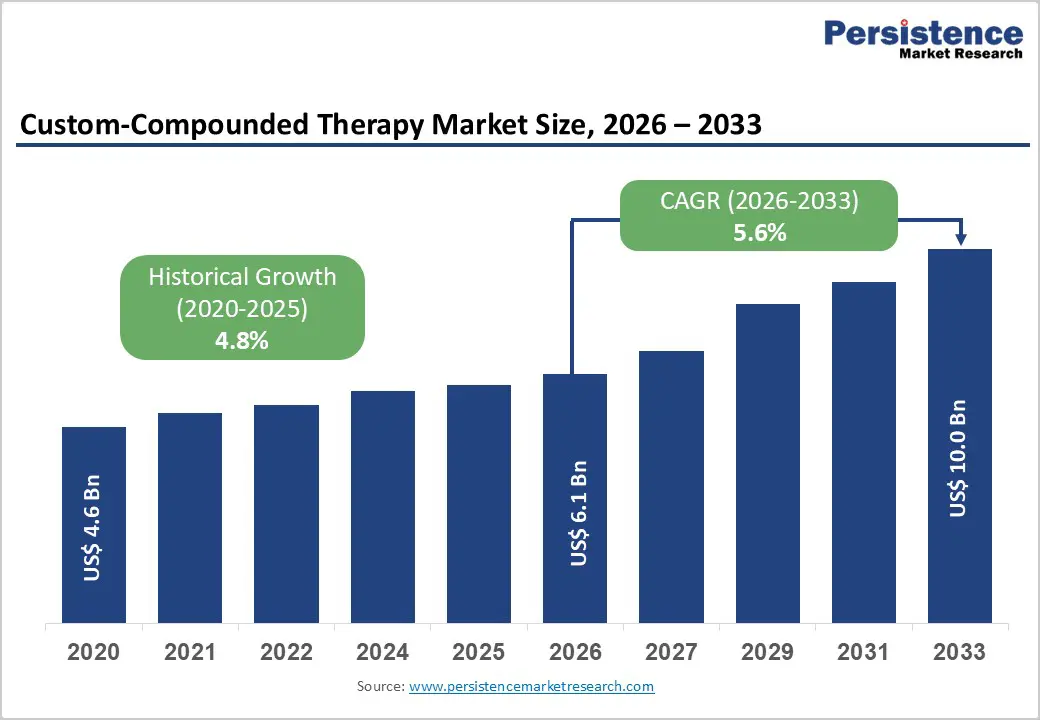
The global custom compounded therapy market size is estimated to grow from US$ 6.1 Bn in 2026 to US$ 10.0 Bn by 2033. The market is projected to record a CAGR of 5.6% during the forecast period from 2026 to 2033.
Global demand for custom compounded therapies is rising steadily, driven by the increasing prevalence of chronic conditions that require individualized, long-term therapeutic management. Disorders such as chronic pain, hormonal imbalances, dermatological diseases, autoimmune conditions, and metabolic disorders are creating sustained demand for patient-specific formulations that are not adequately addressed by commercially available drugs. Growing preference for customized dosage forms, alternative routes of administration, and preservative-free or allergen-free medications is accelerating adoption. Compounded therapies improve treatment adherence and clinical outcomes by tailoring drug strength, combinations, and delivery formats to individual patient needs. Advances in compounding technologies, including automated sterile compounding systems, improved formulation stability, and enhanced quality control processes, are further supporting market growth. Rising life expectancy and longer treatment durations for chronic diseases continue to expand the addressable patient base. In addition, increasing physician awareness, supportive regulatory frameworks in developed markets, and expanding access to specialized pharmacy services in emerging regions are reinforcing long-term global growth of the custom compounded therapy market.
Key Industry Highlights
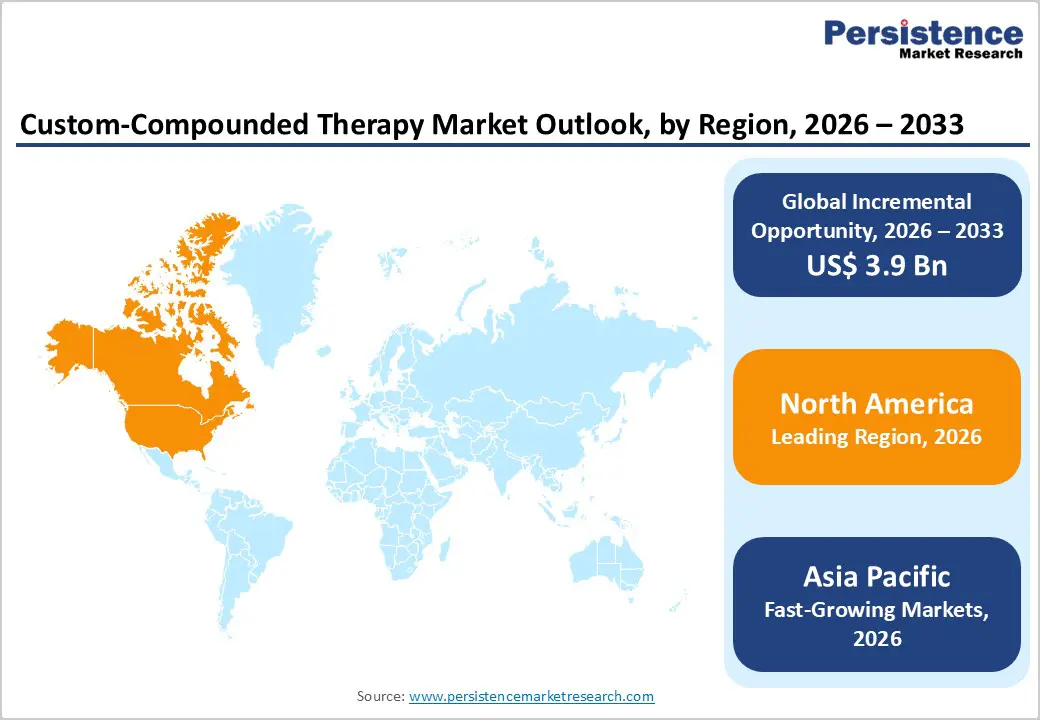
- Leading Region: North America holds the largest market share at 47.7%, supported by a mature healthcare system, strong presence of compounding pharmacies, favorable reimbursement, and high prevalence of chronic diseases.
- Fastest-Growing Region: Asia Pacific is expanding at the fastest pace due to a large patient population, improving access to compounded medications, and rising healthcare expenditure.
- Leading Sterility Segment: Sterile dominates the market due to critical hospital demand, established clinical reliability, and widespread use in injectable and acute-care therapies. Fastest-Growing Sterility Segment: Non-sterile is witnessing rapid growth as customized oral, topical, and dermatological formulations gain traction.
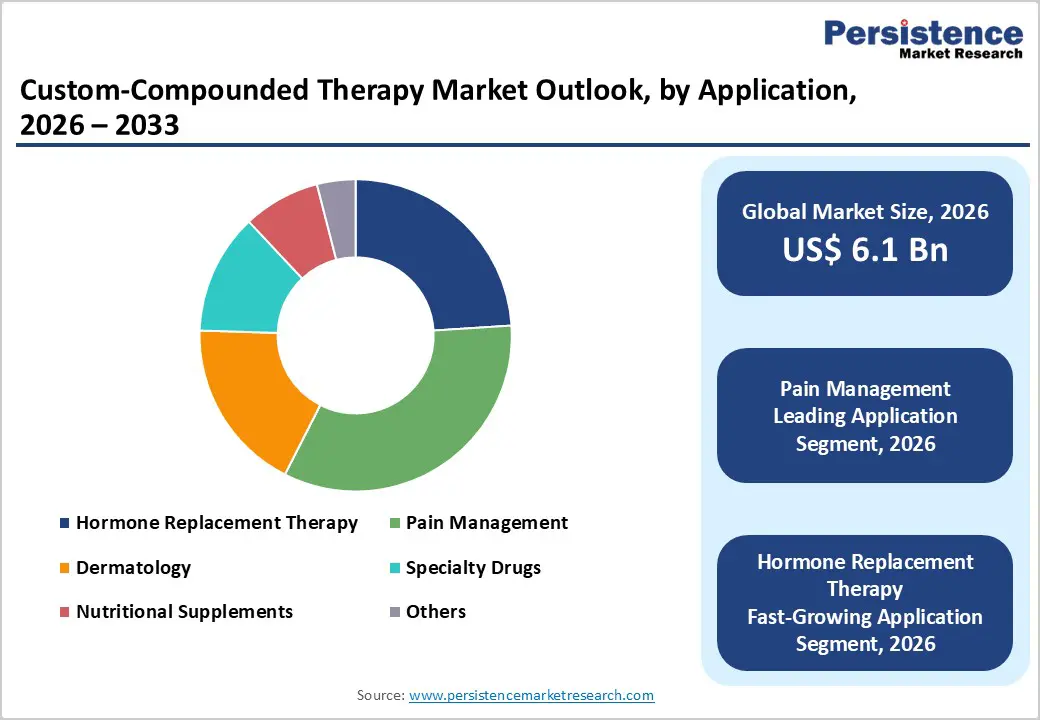
- Leading Application Segment: Pain management remains the largest application segment, driven by chronic disease burden and long-term therapy requirements.
- Fastest-Growing Application Segment: Hormone replacement therapy is expanding rapidly due to earlier diagnosis, personalized dosing needs, and increasing clinical acceptance of compounded solutions.
| Key Insights | Details |
|---|---|
| Custom Compounded Therapy Market Size (2026E) | US$6.1 Bn |
| Market Value Forecast (2033F) | US$10.0 Bn |
| Projected Growth (CAGR 2026 to 2033) | 5.6% |
| Historical Market Growth (CAGR 2020 to 2025) | 4.8% |
Market Dynamics
Driver – Rising Demand for Personalized Therapies and Increasing Burden of Chronic Diseases
The rising global prevalence of chronic diseases, including pain disorders, hormonal imbalances, dermatological conditions, autoimmune diseases, and rare disorders, is a major driver of growth in the custom compounded therapy market. Many of these conditions require individualized dosing, alternative dosage forms, or combinations of active ingredients that are not commercially available. Custom compounded therapies address these unmet clinical needs by enabling patient-specific formulations based on age, allergies, comorbidities, and treatment response. Increasing life expectancy and a growing geriatric population further contribute to long-term therapy demand, particularly for pain management, hormone replacement therapy, and supportive care.
In addition, increasing physician awareness regarding personalized medicine and flexibility in treatment approaches is driving greater adoption of compounded therapies. Healthcare providers increasingly rely on compounding pharmacies to manage drug shortages, discontinued products, and dosage modifications. Advances in compounding technologies, including automated compounding systems, improved aseptic techniques, and enhanced quality control processes, are strengthening clinical confidence. As healthcare systems emphasize individualized care and optimized therapeutic outcomes, custom compounded therapies continue to gain traction across hospitals, specialty clinics, and outpatient settings worldwide.
Restraints – Regulatory Complexity, Quality Concerns, and Cost Pressures
Despite growing demand, the custom compounded therapy market faces notable restraints related to regulatory variability, quality assurance challenges, and cost considerations. Compounding practices are subject to stringent regulatory oversight, particularly for sterile preparations, requiring compliance with complex standards and frequent inspections. Regulatory frameworks vary significantly across regions, creating operational challenges for providers seeking geographic expansion. In some markets, heightened scrutiny following safety incidents has increased compliance costs and slowed capacity expansion.
Manufacturing custom compounded therapies also involves higher operational expenses due to specialized facilities, trained personnel, and rigorous quality control requirements. Sterile compounding, in particular, requires advanced cleanroom infrastructure and continuous monitoring, increasing cost burdens. These factors can limit affordability for patients, especially in price-sensitive markets. Additionally, reimbursement for compounded medications remains inconsistent, with many payers restricting coverage or requiring extensive justification. Limited reimbursement reduces patient access and can discourage prescribers from recommending compounded solutions. Together, regulatory complexity, cost pressures, and reimbursement uncertainty continue to constrain broader adoption, despite clear clinical demand.
Opportunity – Expansion of Personalized Medicine and Growth in Emerging Healthcare Markets
The global shift toward personalized medicine presents a significant opportunity for the custom compounded therapy market. Increasing recognition that standardized treatments may not meet the needs of all patients is driving demand for tailored formulations. Compounded therapies enable precise customization of drug strength, dosage form, and ingredient combinations, supporting patient-centric care across diverse therapeutic areas. Growing adoption of precision healthcare models, particularly in pain management, hormone therapy, pediatrics, and geriatrics, is expected to accelerate market expansion.
Emerging markets in Asia Pacific, Latin America, and the Middle East offer additional growth opportunities due to expanding healthcare infrastructure, rising disease awareness, and increasing access to specialty care. Governments and private healthcare providers in these regions are investing in hospital pharmacy capabilities and advanced pharmaceutical services, improving availability of compounded therapies. Strategic collaborations between hospitals, compounding pharmacies, and pharmaceutical suppliers are further enhancing service reach. Continued innovation in compounding automation, digital prescription platforms, and quality assurance systems is expected to strengthen scalability. These trends collectively position custom compounded therapies as a key growth segment within the evolving global healthcare landscape.
Category-wise Analysis
By Sterility, Sterile Compounding Leads Due to Clinical Reliability and Hospital Demand
The sterile segment is projected to dominate the global custom compounded therapy market in 2026, accounting for a revenue share of 59.0%. Segment leadership is driven by the critical role of sterile compounded formulations in hospital settings, including injectable therapies, parenteral nutrition, ophthalmic preparations, and oncology-supportive care. Sterile compounding is essential for patients requiring precise dosing, preservative-free formulations, or alternatives during drug shortages. Strong clinical acceptance, stringent quality standards, and regulatory oversight further support adoption. In addition, rising surgical volumes, intensive care admissions, and chronic disease prevalence continue to increase demand for aseptically prepared medications. While non-sterile compounding remains important for outpatient and topical therapies, sterile compounding benefits from higher complexity, greater clinical dependency, and consistent hospital utilization, reinforcing its dominant market position.
By Application, Pain Management Remains the Largest Application Segment
The pain management segment is expected to dominate the global custom compounded therapy market in 2026, accounting for a revenue share of 33.5%. This leadership is supported by the high prevalence of chronic pain conditions, including musculoskeletal disorders, neuropathic pain, post-surgical pain, and cancer-related pain. Custom compounded therapies enable personalized combinations of analgesics, anti-inflammatories, muscle relaxants, and topical agents tailored to individual patient needs. Compounding also plays a critical role in addressing opioid-sparing strategies by offering alternative dosage forms and localized delivery options. Increasing awareness among physicians regarding personalized pain management, along with long-term treatment requirements, sustains strong demand. Additionally, growth in aging populations and expanding access to specialty pain clinics continue to reinforce the dominance of this segment globally.
By Distribution Channel, Hospital Pharmacies Hold the Largest Share
The hospital pharmacies segment is projected to dominate the global custom compounded therapy market in 2026, accounting for a revenue share of 50.0%. This dominance reflects the central role of hospital-based compounding in delivering sterile injectables, critical care medications, and patient-specific formulations for inpatient and outpatient services. Hospital pharmacies are increasingly relied upon for managing drug shortages, preparing time-sensitive therapies, and ensuring compliance with stringent safety and quality standards. High patient volumes, integration with clinical care teams, and growing reliance on centralized pharmacy services further strengthen this segment. In addition, hospitals are expanding in-house compounding capabilities or partnering with outsourcing facilities to improve efficiency and continuity of care. These factors collectively position hospital pharmacies as the leading end-user segment within the global custom compounded therapy market.
Region-wise Insights
North America Custom Compounded Therapy Market Trends
The North America custom compounded therapy market is expected to dominate globally with a value share of 48.3% in 2026, led primarily by the United States. The region benefits from a highly developed healthcare infrastructure, widespread availability of compounding pharmacies, and strong regulatory frameworks governing sterile and non-sterile compounding. High prevalence of chronic diseases, aging populations, and increasing demand for personalized therapies support consistent market growth. Hospitals and specialty clinics across North America rely heavily on compounded medications to address drug shortages, patient allergies, dosage customization, and unmet therapeutic needs.
Favorable reimbursement mechanisms, strong private insurance coverage, and higher healthcare spending enhance patient access to compounded therapies. The presence of major compounding service providers, advanced automation technologies, and continuous investment in facility upgrades further strengthen market leadership. Additionally, strong clinical awareness, established prescribing practices, and ongoing emphasis on personalized medicine reinforce North America’s dominant position in the global custom compounded therapy market.
Europe Custom Compounded Therapy Market Trends
The Europe custom compounded therapy market is expected to grow steadily, supported by increasing demand for personalized medications and long-term management of chronic conditions. Countries such as Germany, the U.K., France, Italy, and the Nordic region are key contributors due to well-established public healthcare systems and strong hospital pharmacy networks. European healthcare models emphasize patient safety, regulatory compliance, and evidence-based treatment, supporting the adoption of compounded therapies where commercial alternatives are unavailable or unsuitable. Growth is further driven by rising geriatric populations, increasing surgical procedures, and the need for customized pediatric and dermatology formulations.
Regulatory harmonization across the region, along with clear guidelines for pharmacy compounding, enhances market stability. In addition, growing collaboration between hospitals, academic institutions, and compounding service providers supports innovation and quality improvement. These factors collectively strengthen Europe’s role as a significant and stable market for custom compounded therapies.
Asia Pacific Custom Compounded Therapy Market Trends
The Asia Pacific custom compounded therapy market is expected to register a relatively higher CAGR of around 7.6% between 2026 and 2033, driven by rapid healthcare expansion and a large, underserved patient population. Countries such as China, India, Japan, South Korea, and Southeast Asian nations are witnessing increasing demand for personalized therapies due to rising chronic disease prevalence and improving diagnostic capabilities. Expanding hospital infrastructure, growing numbers of trained pharmacists, and increased investment in healthcare modernization are improving access to compounded medications.
Government initiatives aimed at strengthening hospital pharmacy services and addressing drug availability gaps further support market growth. In addition, rising healthcare expenditure and growing awareness among clinicians regarding customized dosing and formulations are accelerating adoption. Partnerships between local healthcare providers and global compounding solution providers are enhancing technical capabilities. These dynamics position Asia Pacific as the fastest-growing regional market for custom compounded therapies over the forecast period.
Market Competitive Landscape
The global custom compounded therapy market is highly competitive, with strong participation from Fagron N.V., B. Braun SE, Nova Laboratories, Athenex Pharma Solutions, and ImprimisRx. These companies leverage extensive compounding expertise, advanced sterile and non-sterile formulation capabilities, and well-established distribution and hospital networks. Competitive strategies are centered on expanding personalized therapy offerings, strengthening 503A/503B manufacturing capacities, and enhancing quality, compliance, and turnaround times.
Investments in facility expansion, regulatory compliance, automation, and geographic reach particularly across emerging markets are intensifying competition. Continuous innovation in customized formulations, dosage forms, and patient-specific therapies is expected to drive sustained market evolution over the forecast period.
Key Industry Developments:
- In October 2025, CurifyLabs, a global innovator in 3D printing technologies for compounded medications, announced the launch of its next-generation software platform. The new solution, CurifyLabs Create, is an intuitive system that enables pharmacists to customize, design, and modify medication formulations in real time, offering enhanced flexibility and on-demand formulation capabilities.
- In October 2023, FarmaKeio Custom Compounding announced the acquisition of a new facility in Conway, marking a key step in its expansion strategy. The $2.29 million investment is aimed at strengthening the company’s ability to deliver personalized compounded medications nationwide and is expected to generate 74 new jobs, reinforcing FarmaKeio’s commitment to healthcare innovation and service excellence.
Companies Covered in Custom Compounded Therapy Market
• Fagron N.V.
• B. Braun SE
• Nova Laboratories
• Athenex Pharma Solutions
• ImprimisRx
• Fresenius Kabi
• Baxter
• B. Braun
• Galenic Laboratories
• Pencol Compounding Pharmacy
• McKesson Corporation
• Clinigen Group.
• Others
Frequently Asked Questions
The global custom compounded therapy market is projected to be valued at US$ 6.1 Bn in 2026.
Increasing demand for personalized medications tailored to individual patient needs, rising prevalence of chronic diseases and geriatric population, technological advancements in compounding processes, drug shortages necessitating customized alternatives, and expansion of healthcare infrastructure globally.
The global custom compounded therapy market is poised to witness a CAGR of 5.6% between 2026 and 2033.
Expansion in personalized medicine and tailored formulations across chronic disease, pediatrics, and geriatrics, supported by technological advances in compounding processes and growing demand in emerging healthcare markets.
Fagron N.V., B. Braun SE, Nova Laboratories, Athenex Pharma Solutions, and ImprimisRx are some of the key players in the custom compounded therapy market.


