




- Processed Food
- Coffee Capsules Market
Coffee Capsules Market Size, Share, Growth, and Regional Forecast, 2026 - 2033
Coffee Capsules Market is segmented by Capsule Type (Aluminum capsules, Plastic capsules, and Biodegradable/compostable capsules), Coffee Type (Espresso, Lungo, Americano, Flavored coffee, Decaffeinated, and Others), Sales Channel (Supermarkets/hypermarkets, Convenience Stores, Specialty Coffee Stores, Online Retail, Others), and Regional Analysis, from 2026 - 2033

Coffee Capsules Market Share and Trends Analysis
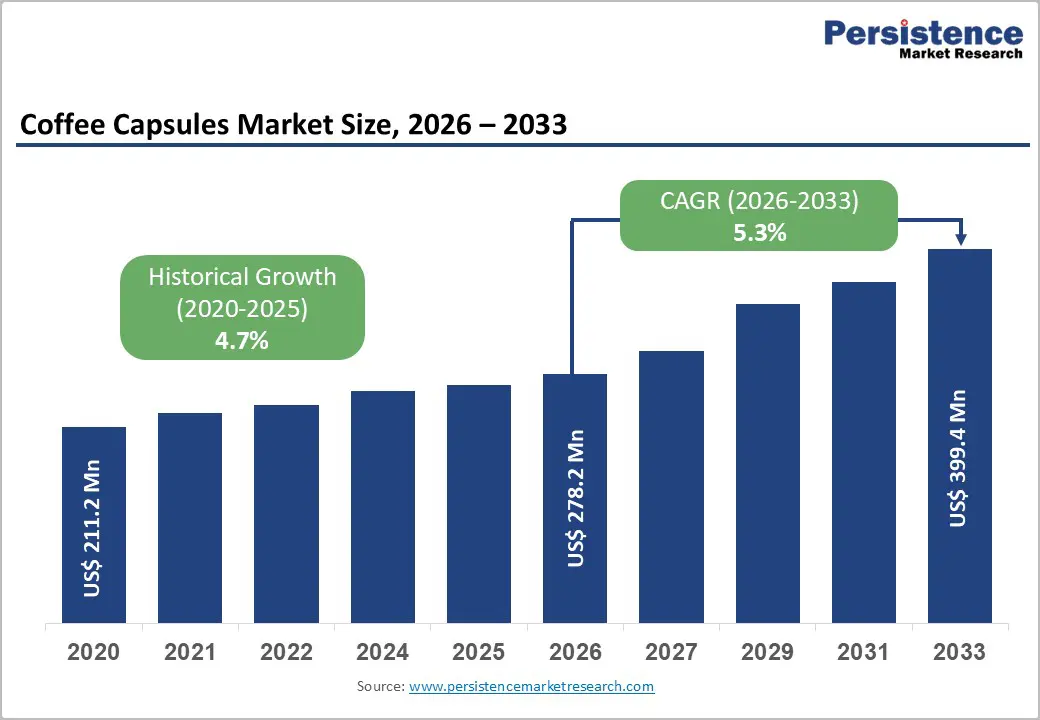
The global coffee capsules market size is expected to be valued at US$ 278.2 million in 2026 and projected to reach US$ 399.4 million by 2033, growing at a CAGR of 5.3% between 2026 and 2033. The market is predominantly driven by the accelerating demand for single-serve coffee solutions that offer a balance between cafe-quality extraction and home-based convenience.
Rising urbanization and the high-paced lifestyle of the global workforce have transformed the morning ritual, making the speed and consistency of portioned coffee capsules a necessity rather than a luxury. Furthermore, the structural shift toward premiumization has encouraged consumers to invest in sophisticated pod-based systems from brands such as Nestlé S.A. and JDE Peet's N.V., enabling them to replicate complex flavor profiles, such as Lattes and Macchiatos, without professional barista equipment.
Key Industry Highlights:
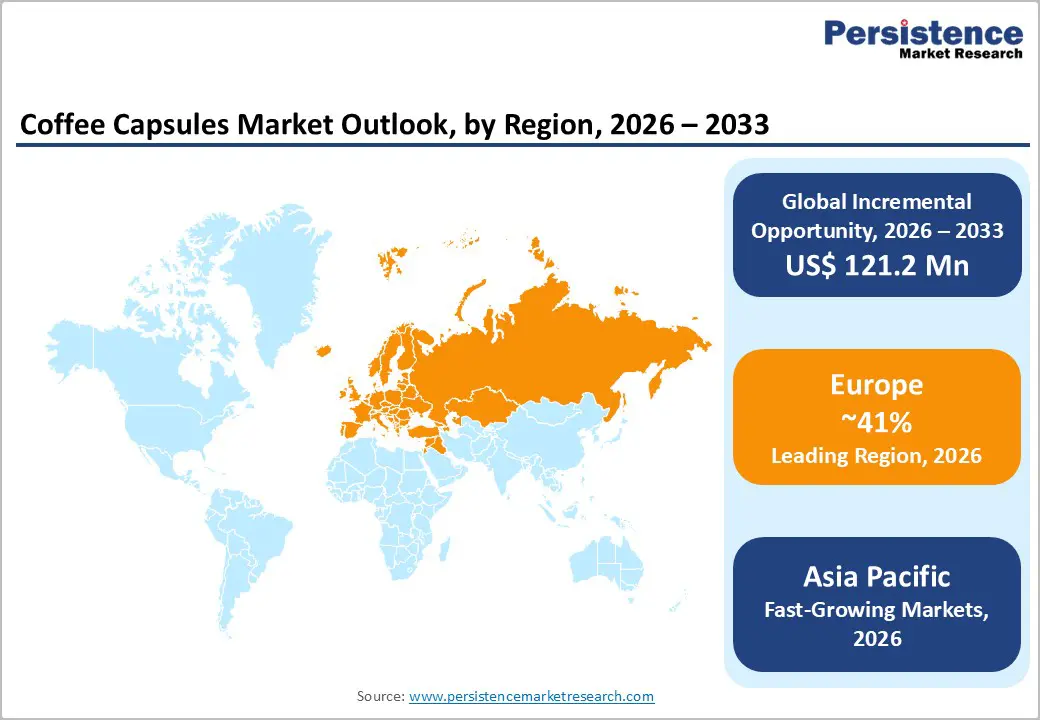
- Leading Region: Europe accounted for a 41% market share in 2025, supported by a mature coffee culture and the presence of industry giants such as Nestlé and Lavazza.
- Fastest Growing Region: Asia Pacific is the fastest-growing region through 2033, driven by rising disposable incomes and the rapid westernization of lifestyles in China and India.
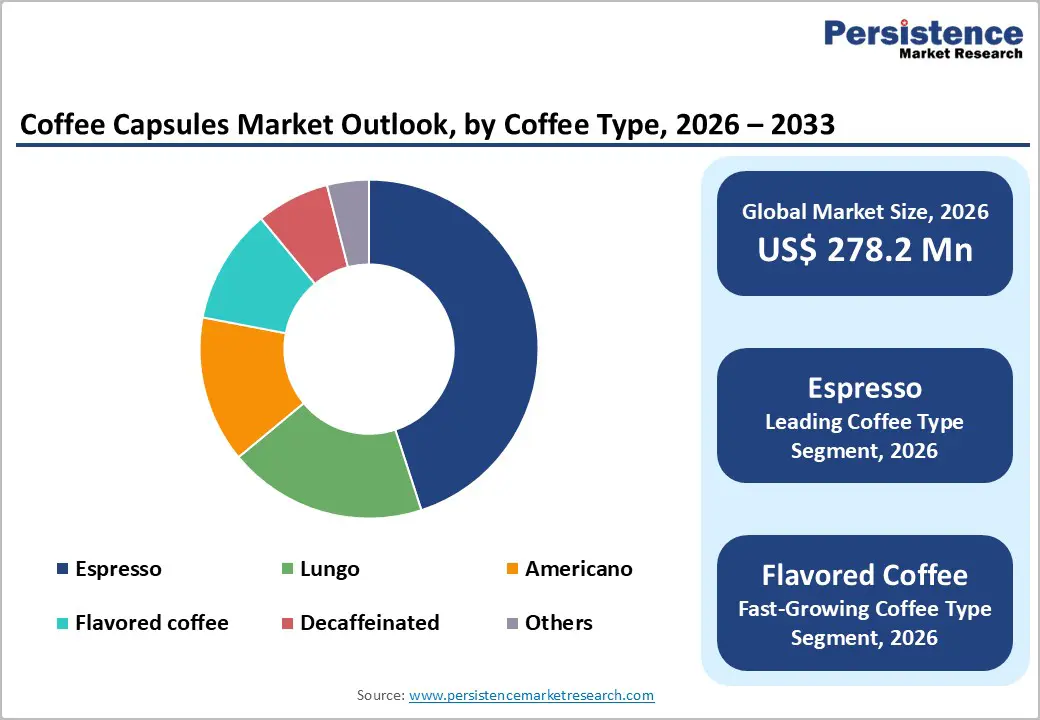
- Dominant Segment: Espresso remained the leading coffee type in 2025, with a 46% share, serving as the foundation of the global at-home cafe trend.
- Fastest Growing Segment: Flavored coffee is the fastest-growing segment, as consumer demand for variety and indulgent, dessert-like infusions continues to rise globally.
- Key Market Opportunity: The development of compostable and paper-based capsules represents a significant revenue opportunity as brands move to align with global plastic-reduction mandates.
| Key Insights | Details |
|---|---|
|
Coffee Capsules Market Size (2026E) |
US$ 278.2 Mn |
|
Market Value Forecast (2033F) |
US$ 399.4 Mn |
|
Projected Growth (CAGR 2026 to 2033) |
5.3% |
|
Historical Market Growth (CAGR 2020 to 2025) |
4.7% |
Market Dynamics
Driver - Growing consumer preference for convenient, single-serve coffee solutions
Morning routines in urban population are being quietly rewritten by the demand for speed, consistency, and café-quality coffee at home. Consumers with hybrid work lifestyles increasingly favor single-serve coffee solutions that eliminate grinding, measuring, and cleanup while delivering predictable flavor profiles. Coffee capsules address this need by combining convenience, portion control, and premium positioning in a compact format. Their long shelf life and minimal waste during preparation further strengthen appeal among apartment dwellers and time-pressed professionals who value efficiency without sacrificing taste or ritual.
This shift is reinforced by strong industry momentum across Europe, where brands are aggressively innovating around capsule ecosystems. In countries such as France, Germany, and Italy, Nespresso has expanded its boutique network and subscription models to simplify replenishment and encourage brand loyalty. Meanwhile, JDE Peet’s continues to invest in capsule-compatible innovations to serve diverse taste preferences across Tassimo and L’OR systems. As households increasingly replace café visits with in-home brewing, single-serve capsules are evolving from a convenience choice into a daily lifestyle standard, sustaining long-term demand growth.
Restraints - Environmental Concerns and Single-Use Waste Pushback
The most significant barrier to the market's growth is the mounting environmental criticism regarding the disposal of billions of non-recyclable plastic and aluminum pods. Regulatory bodies in the European Union have issued stringent waste-management directives targeting single-use packaging, putting pressure on manufacturers to overhaul their product designs. Data from environmental agencies indicates that only a small percentage of traditional plastic pods are effectively recycled, leading to a surge in consumer eco-anxiety. This sentiment has triggered pushback from Gen Z and Millennials, who are increasingly favoring traditional loose-ground coffee or reusable stainless-steel pods to reduce their carbon footprint, thereby limiting the growth potential of the conventional plastic capsule segment.
Opportunity - Surge in Demand for Biodegradable and Compostable Solutions
The shift toward Green consumerism presents a massive opportunity for innovation in sustainable packaging. Manufacturers are increasingly pivoting to Biodegradable/compostable capsules made from plant-based polymers such as PLA or sugar cane pulp. In 2024, Nestlé S.A. and Lavazza Group launched significant paper-based compostable ranges to capture the eco-conscious segment. These products allow consumers to dispose of pods in organic waste bins, effectively removing the recycling guilt associated with the format. As government mandates on plastic reduction become more widespread by 2026, companies that lead the transition to certified home-compostable formats are expected to gain a competitive edge and secure long-term brand loyalty among ethically minded shoppers.
Category-wise Analysis
Coffee Type Insights
The Espresso segment is the leading coffee type, commanding a 46% market share in 2025. This dominance is rooted in the cafe-at-home trend, where the short, intense extraction of espresso serves as the foundation for popular milk-based drinks. However, Flavored coffee is the fastest-growing segment through 2032. Consumer palates are becoming more adventurous, driving high demand for infusions such as Vanilla, Caramel, and Hazelnut. Brands like Starbucks Corporation and Nespresso have capitalized on this by launching seasonal and dessert-inspired ranges that fetch a price premium. Additionally, the Decaffeinated segment is witnessing steady growth as health-conscious consumers look to reduce caffeine intake while maintaining the ritual of coffee drinking.
Sales Channel Insights
Supermarkets/hypermarkets are the leading sales channels, providing the high-volume, in-store visibility needed for mass adoption. The presence of private-label capsules in these stores has significantly lowered the entry price point for many consumers. Conversely, Online retail is the fastest-growing distribution channel. The rise of automated re-ordering through smart machines and the convenience of bulk purchasing are primary drivers. In 2025, the E-Commerce sector benefited from the expansion of high-speed delivery networks in the Asia Pacific, allowing boutique roasters to compete with established giants by offering fresh-roasted, single-origin capsules delivered directly to the doorstep.
Regional Insights
North America Coffee Capsules Market Trends and Insights
North America is a mature market characterized by the high adoption of single-serve brewing systems, particularly in the United States. The region is a pioneer in the K-Cup format, where Keurig Dr Pepper Inc. holds a dominant position in the residential and office sectors. In 2025, the market trend shifted toward specialty-capsules, with a growing demand for organic and fair-trade certified beans. The FDA's focus on food safety and transparent labeling has encouraged brands to highlight their sourcing ethics, which is a major purchase driver for the North American flexitarian demographic.
The regional market is also seeing a surge in functional coffee capsules, enriched with vitamins or MCT oil to cater to the keto and wellness communities. The innovation ecosystem in the U.S. is heavily influenced by major tech firms, leading to early adoption of smart brewing technologies. Furthermore, the recovery of the hospitality sector in 2024 and 2025 has revitalized the B2B channel, as hotels and offices increasingly replace traditional carafes with hygienic, individually portioned capsules for staff and guests.
Asia Pacific Coffee Capsules Market Trends and Insights
Europe holds the leading global market share of 41% in 2025, anchored by a deep-rooted coffee culture in countries such as Italy, Germany, and France. The region is the birthplace of the Nespresso system, which has defined the luxury portioned coffee segment for decades. In Germany, the demand for high-quality single-serve options is so high that it has become the largest importer of green beans for capsule production. The regulatory landscape is a primary shaper of market dynamics, with the EU's Right to Repair rules potentially impacting the machine lock-in strategies of major manufacturers.
Sustainability is the defining trend in the European market. Luigi Lavazza S.p.A. and Melitta Group have made significant strides in achieving carbon neutrality across their capsule supply chains. The artisanal-capsule movement is also gaining traction, where small-scale local roasters in the U.K. and Scandinavia use compatible pods to bring their craft blends to a wider audience. This democratization of specialty coffee is ensuring that the European market remains the global benchmark for quality and innovation in the capsule sector.
Asia Pacific Coffee Capsules Market Trends and Insights
Asia-Pacific is the fastest-growing regional market, projected to grow at a high CAGR over the forecast period. This growth is driven by rapid urbanization and the westernization of lifestyle habits in China, Japan, and India. In China, coffee consumption has grown by nearly 16% annually over the last decade, with younger generations viewing capsule coffee as a status symbol of modern urban living. The high density of compact-living apartments in cities like Tokyo and Shanghai makes the small footprint of pod machines highly attractive.
The region's growth is further supported by the massive penetration of e-commerce. Mobile-first consumers in India and ASEAN countries increasingly purchase coffee supplies through platforms such as Alibaba and Amazon. Manufacturing advantages in the region enable cost-effective production of compatible pods, driving growth for local brands such as Blue Tokai Coffee Roasters and Coffeeza. As the middle-class population continues to grow, the Asia Pacific region is expected to become the primary engine of volume growth for the global coffee capsules market.
Competitive Landscape
The global coffee capsules market is a moderately consolidated landscape where a few multinational giants namely Nestlé S.A., JDE Peet's, and Keurig command the majority of the value share. However, the market has become increasingly competitive since the expiration of key patents, leading to an explosion of compatible-pod manufacturers. Market leaders are responding by focusing on system lock-in through proprietary extraction technology and exclusive brand partnerships, such as the Starbucks by Nespresso collaboration.
Key differentiators in this market have moved beyond mere convenience to sustainability credentials and flavor exclusivity. Emerging business models are focusing on the B2B sector, offering integrated coffee-service solutions for high-end offices and boutique hotels. Research and development are currently focused on improving the barrier technology of compostable materials to ensure that eco-friendly pods can match the shelf life of aluminum versions. Additionally, the rise of private-label initiatives from supermarkets like Lidl and Aldi is providing a significant challenge to premium brand pricing.
Key Developments:
- In January 2026, Nespresso launched its Summer 2026 Collection across online platforms and global boutiques, spotlighting seasonal flavors and limited-edition designs to boost warm-weather coffee occasions. The release reinforces Nespresso’s premium positioning and direct-to-consumer engagement strategy.
- In October 2025, JDE Peet’s unveiled a fully revamped modular Innovation Laboratory in Utrecht, aimed at accelerating next-generation coffee formats, brewing technologies, and sustainable solutions. The facility strengthens the company’s R&D pipeline and speed-to-market capabilities.
- In May 2025, illycaffè announced the official Korean launch of its ‘Idillyum Limited Edition’ capsule coffee, targeting premium coffee consumers with curated, high-end capsule experiences. The move underscores illy’s focus on Asia-led premium market expansion.
- In January 2025, Oatly and Nespresso team up to launch limited-edition oat coffee capsules
Companies Covered in Coffee Capsules Market
- Nestlé S.A.
- JDE Peet's N.V.
- Lavazza Group
- illycaffè S.p.A.
- Keurig Dr Pepper Inc.
- Massimo Zanetti Beverage Group
- Strauss Group
- Luigi Lavazza S.p.A.
- Tchibo GmbH
- Melitta Group
- Starbucks Corporation
- Blue Tokai Coffee Roasters
- Others
Frequently Asked Questions
The global coffee capsules market is projected to be valued at US$ 278.2 Mn in 2026.
Growing consumer preference for convenient, single-serve coffee solutions is driving demand for Coffee Capsules market.
The Global Coffee Capsules market is poised to witness a CAGR of 5.3% between 2026 and 2033.
Surge in Demand for Biodegradable and Compostable Solutions is key opportunity for key players in the market.
The market is led by global giants such as Nestlé S.A., JDE Peet's N.V., Lavazza Group, illycaffè S.p.A., Keurig Dr Pepper Inc., Massimo Zanetti Beverage Group, Strauss Group, and others.


