




- Food Ingredients & Additives
- Buttermilk Powder Market
Buttermilk Powder Market Size, Share, and Growth Forecast 2026 - 2033
Buttermilk Powder Market by Nature (Organic, Conventional), by Technology (Business to Business, Business to Consumer – Hypermarkets/Supermarkets, Convenience Stores, Online Retail, Specialty Stores), by End Use, by Regional Analysis, 2026 - 2033

Buttermilk Powder Market Size and Trend Analysis
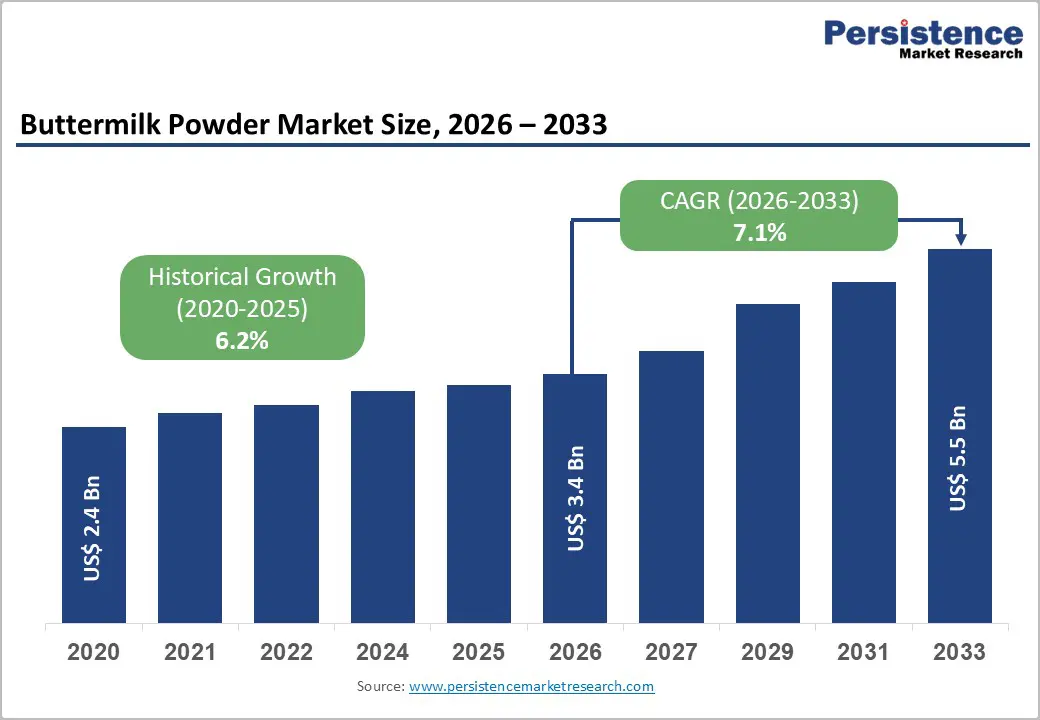
The global Buttermilk Powder Market size is expected to be valued at US$ 3.4 billion in 2026 and projected to reach US$ 5.5 billion by 2033, growing at a CAGR of 7.1% between 2026 and 2033.
Market expansion is primarily driven by rising demand for shelf-stable dairy ingredients, increasing processed food consumption, and the growing use of dairy powders in bakery, confectionery, and convenience foods. Food manufacturers increasingly prefer buttermilk powder due to its longer shelf life, ease of storage, and cost efficiency compared with liquid dairy ingredients. Additionally, expanding dairy production and international trade supported by organizations such as the Food and Agriculture Organization (FAO) and the International Dairy Federation (IDF) is encouraging the use of milk-derived ingredients in global food manufacturing supply chains.
Key Market Highlights
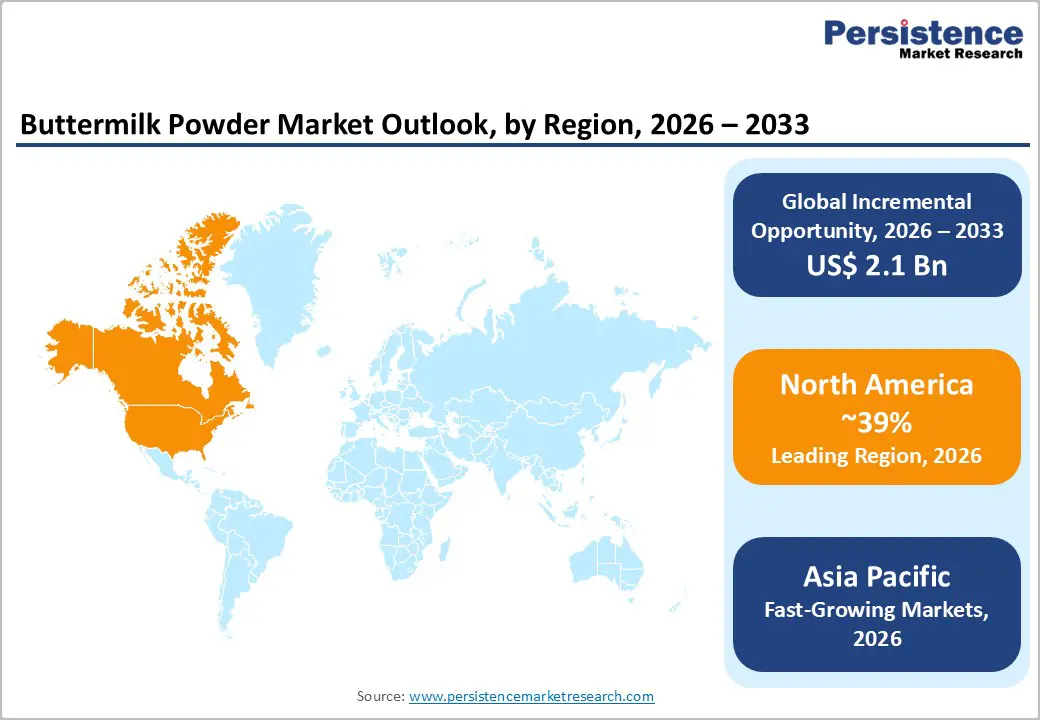
- Leading Region: North America dominates the buttermilk powder market due to its advanced dairy processing industry, strong food manufacturing ecosystem, and large-scale dairy ingredient exports supporting global food supply chains.
- Fastest Growing Region: Asia Pacific is the fastest-growing region due to rapid urbanization, expanding processed food consumption, increasing dairy production, and growing investments in food manufacturing infrastructure.
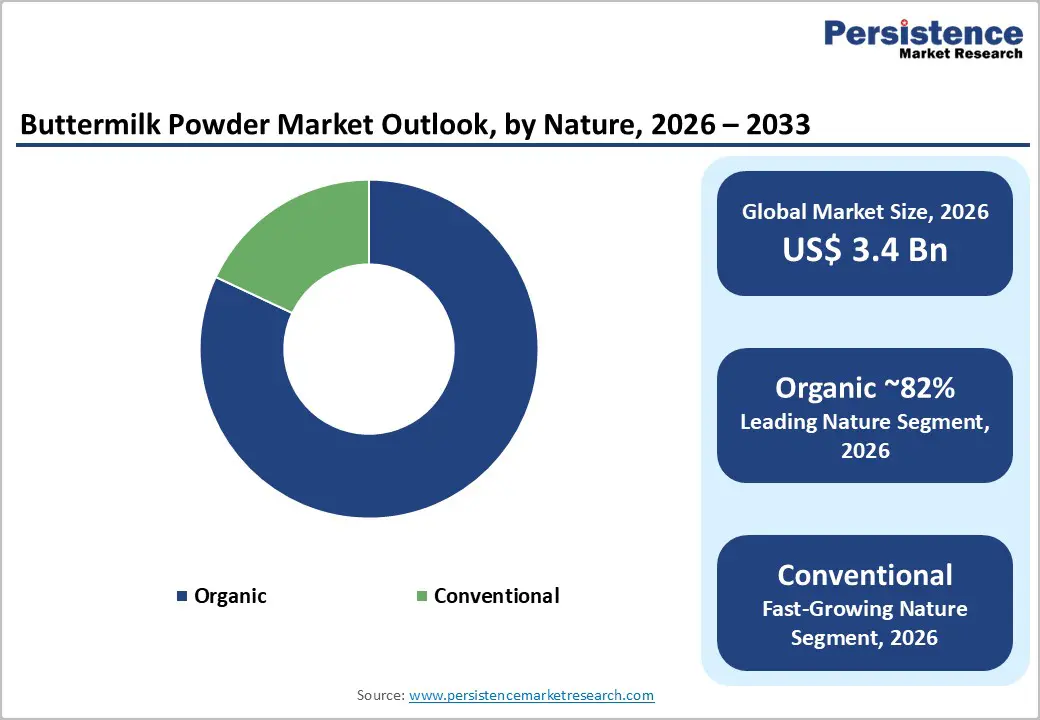
- Dominant Segment: Organic buttermilk powder leads the nature segment with about 82% market share in 2025, driven by increasing consumer demand for clean-label, sustainably sourced dairy ingredients.
- Fastest Growing Segment: The conventional segment is expected to grow rapidly as large-scale food manufacturers continue adopting cost-efficient dairy ingredients for high-volume industrial food processing.
- Key Opportunity: Expanding processed food consumption and growth of global dairy ingredient trade create significant opportunities for manufacturers supplying buttermilk powder to industrial food processing sectors.
| Key Insights | Details |
|---|---|
|
Buttermilk Powder Market Size (2026E) |
US$ 3.4 Billion |
|
Market Value Forecast (2033F) |
US$ 5.5 Billion |
|
Projected Growth CAGR (2026-2033) |
7.1% |
|
Historical Market Growth (2020-2025) |
6.2% |
Market Dynamics
Drivers - Rising Demand for Shelf-Stable Dairy Ingredients in Food Processing
The global food processing industry is expanding rapidly, creating strong demand for powdered dairy ingredients such as buttermilk powder. Powdered dairy products provide improved shelf stability, reduced transportation costs, and extended usability compared to liquid dairy products. According to the Food and Agriculture Organization (FAO), global dairy production exceeded 930 million tonnes in 2023, highlighting the scale of dairy ingredient availability for industrial processing. Buttermilk powder is widely used in bakery, confectionery, snacks, sauces, and ready-to-eat foods due to its emulsifying properties and flavor enhancement capabilities. In addition, the growth of convenience food consumption in urban populations is increasing the need for standardized ingredients that improve product consistency and shelf life. As global food manufacturers continue expanding production capacities, the adoption of dairy powders, including buttermilk powder, is expected to rise significantly across industrial food applications.
Growth of the Global Dairy Ingredient Trade
International trade of dairy ingredients is another major factor driving the buttermilk powder market. Dairy ingredient exports from major producing countries such as New Zealand, United States, and European Union members have increased significantly due to rising global demand for processed dairy components. According to the International Dairy Federation, dairy ingredient trade accounts for a substantial share of global dairy exports, driven by the food manufacturing sector. Buttermilk powder is particularly valued in bakery mixes, confectionery fillings, dairy beverages, and instant foods due to its functional protein and fat composition. Furthermore, multinational dairy cooperatives and ingredient suppliers are expanding global distribution networks to supply dairy powders to emerging markets. These trade flows improve availability of buttermilk powder across regions and support consistent demand growth across the global food manufacturing ecosystem.
Restraints - Increasing Health Concerns and Lactose Intolerance
Individuals with lactose intolerance are likely to experience digestive issues after consuming dairy products like buttermilk powder. This widespread condition makes dairy products less appealing to large segments of the global market. For example, according to the National Institutes of Health (NIH), around 68% of the global population suffers from some degree of lactose intolerance.
Consumers with lactose intolerance are opting for alternatives like lactose-free dairy products, plant-based milks, and other dairy substitutes. Rising cases of lactose intolerance have resulted in a high demand for lactose-free dairy products. This shift in consumer preference can detract from the growth of traditional dairy powders like buttermilk.
Growing Competition from Plant-Based Dairy Alternatives
The increasing popularity of plant-based dairy substitutes presents another restraint for the buttermilk powder market. Consumer awareness about lactose intolerance, vegan diets, and environmental sustainability has encouraged adoption of plant-based alternatives such as oat, almond, and soy-based dairy substitutes. Organizations such as the Good Food Institute report strong growth in plant-based food consumption globally. Although buttermilk powder remains widely used in industrial food processing, the expansion of plant-based dairy ingredients in bakery and beverage formulations may gradually reduce demand in certain consumer segments. This shift encourages dairy ingredient producers to focus on innovation and product differentiation.
Opportunities - Convenience and Versatility in Applications
Buttermilk powder is lightweight, compact, and does not require refrigeration, making it convenient for both consumers and commercial users. The powder form is also less messy and easier to measure accurately, making it ideal for foodservice applications and industrial production lines. According to a 2023 survey by the Dairy Foods Association, 67% of food manufacturers cited storage convenience as a key reason for shifting to powdered dairy products.
Buttermilk powder can be easily reconstituted with water to serve as a substitute for liquid buttermilk in recipes for baked goods, pancakes, waffles, and marinades. Its tangy flavor profile makes it a valuable ingredient in seasoning blends, sauces, and dairy-based snacks.
Buttermilk powder is often marketed as a natural and minimally processed ingredient, aligning with clean-label and health-conscious consumer preferences. It is also used in protein-enriched snack formulations, appealing to the high demand for functional foods. For example, A 2022 report revealed that 73% of consumers globally prefer food products with fewer and recognizable ingredients, driving demand for clean-label dairy ingredients.
Technological Innovations in Processing and Packaging
Spray drying is the most used method for converting liquid buttermilk into powder. Advances in spray drying technology have led to energy-efficient systems, decreasing production costs and improving product consistency. New spray drying equipment allows better control over temperature and humidity, leading to a product with finer texture, improved solubility, and superior flavor retention. For example, according to the Dairy Industry Trends Report 2023, 65% of dairy manufacturers reported investing in unique spray drying systems to improve product quality and processing efficiency.
Microencapsulation techniques are being used to protect sensitive ingredients like vitamins, probiotics, and bioactive compounds in buttermilk powder. By coating buttermilk powder with a protective layer, manufacturers can improve its stability, shelf life, and functionality. This is particularly useful in the production of health supplements and fortified foods.
Innovations in packaging materials, like vacuum-sealed bags and moisture-resistant pouches, have improved the shelf life of buttermilk powder. This further helps manufacturers to maintain product freshness for longer periods. For example, according to the Packaging Industry Report 2023, automated packaging technologies are set to reduce costs by 10% to 15% and enhance packaging efficiency by 20% to 25%.
Category-wise Insights
Nature Analysis
The Organic segment dominates the buttermilk powder market, accounting for approximately 82% market share in 2025. Organic dairy products have gained strong consumer acceptance due to increasing awareness regarding food safety, sustainability, and clean-label ingredients. Certification standards established by organizations such as the United States Department of Agriculture (USDA Organic Program) and the European Commission Organic Farming Regulations have strengthened consumer confidence in organic dairy ingredients. Food manufacturers are increasingly incorporating organic dairy powders into premium bakery, infant nutrition, and functional food products to meet consumer demand for natural and minimally processed ingredients. In addition, organic dairy farming practices emphasize animal welfare and environmentally responsible production, further encouraging food companies to source organic buttermilk powder as part of their sustainable supply chain initiatives.
Technology Analysis
The Business-to-Business (B2B) segment leads the buttermilk powder market distribution structure, representing an estimated 70% market share in 2026. The majority of buttermilk powder production is supplied directly to food manufacturers, bakeries, dairy processors, and ingredient formulators rather than retail consumers. Industrial food processing companies rely on consistent supplies of dairy powders for large-scale manufacturing operations. According to the International Dairy Federation, industrial food applications account for a significant proportion of global dairy ingredient consumption. B2B distribution channels enable dairy processors to deliver bulk quantities to manufacturers producing bakery goods, snacks, dairy beverages, and confectionery products. Additionally, long-term supply contracts between dairy cooperatives and food manufacturers ensure stable ingredient sourcing, reinforcing the dominance of the B2B segment within the buttermilk powder market.
End Use Analysis
The Food and Beverage Industry represent the leading end-use segment, accounting for approximately 65% market share in 2025. Buttermilk powder is widely used across food categories such as bakery products, sauces, dressings, confectionery, dairy beverages, and ready-to-eat meals. Its emulsifying properties, flavor enhancement characteristics, and nutritional value make it a preferred ingredient for food manufacturers. According to the Food and Agriculture Organization, processed food consumption continues to rise globally due to urbanization and changing consumer lifestyles. Industrial food producers increasingly rely on dairy powders to ensure consistent taste, texture, and shelf stability across packaged food products. Consequently, the food and beverage sector remains the largest consumer of buttermilk powder globally.
Regional Insights
North America Buttermilk Powder Market Trends and Insights
North America represents the leading regional market for buttermilk powder, accounting for approximately 39% market share in 2025. The United States dominates regional consumption due to its large dairy processing industry and well-established food manufacturing sector. According to the United States Department of Agriculture (USDA), the U.S. remains one of the largest global producers of dairy ingredients, supplying both domestic and export markets.
The region benefits from strong technological capabilities in dairy processing, advanced cold-chain infrastructure, and extensive product innovation in bakery and convenience foods. Large dairy cooperatives and ingredient suppliers actively invest in processing facilities and ingredient innovation to meet growing demand from food manufacturers. Furthermore, the expanding market for packaged foods and ready-to-eat meals continues to drive consumption of dairy powders such as buttermilk powder across North America.
Europe Buttermilk Powder Market Trends and Insights
Europe represents another significant market for buttermilk powder, supported by its strong dairy production ecosystem and well-regulated food processing sector. Countries such as Germany, France, Netherlands, and Ireland are major producers and exporters of dairy ingredients. The European Commission maintains strict dairy quality standards and traceability regulations, which enhance consumer trust in dairy products and ingredients.
The region also benefits from a mature bakery and confectionery industry that widely uses dairy powders in product formulations. Additionally, European dairy cooperatives actively export dairy ingredients to international markets, including Asia and the Middle East. Continuous investments in dairy processing technologies and sustainable dairy farming practices are further strengthening Europe’s position as a major supplier of buttermilk powder to global food manufacturers.
Asia Pacific Buttermilk Powder Market Trends and Insights
Asia Pacific is projected to be the fastest-growing regional market for buttermilk powder during the forecast period. Rapid economic development, urbanization, and rising disposable incomes are significantly increasing demand for processed foods across countries such as China, India, Japan, and Indonesia. According to the Food and Agriculture Organization, Asia accounts for a large share of global dairy consumption growth.
The region also benefits from expanding food manufacturing industries and increasing investments in dairy processing infrastructure. Governments across Asia are encouraging domestic dairy production to improve food security and reduce import dependence. As packaged food consumption rises and multinational food companies expand operations in Asia Pacific, the demand for dairy ingredients such as buttermilk powder is expected to grow rapidly.
Competitive Landscape
Companies in the buttermilk powder market are offering lactose-free buttermilk powder or low-fat variants to cater to the high demand for lactose-free products. They are also adopting eco-friendly practices in their production processes to meet the demand for sustainability.
Manufacturers are diversifying their product offerings by introducing Flavored or fortified buttermilk powder with added nutrients to appeal to health-conscious customers. This can help companies to attract specific consumer segments seeking functional dairy products. Businesses are partnering with food and beverage manufacturers to incorporate buttermilk powder into a wide range of products. By broadening their reach in food applications, they can access new markets and diversify their revenue sources.
Key Market Developments
- In November 2025, Ahead of National Milk Day on November 26, Milma expanded its product portfolio by launching five new products: Samridhi ghee, Milma Plus flavoured milk in cans, ghee halwa, kanthari buttermilk, and banana burfi.
- In September 2024, Agri-Mark, Maryland & Virginia Milk producers Cooperative Association, and Upstate Niagara Cooperative launched Integrated Dairy Ingredients (IDI). The company’s initial dairy lineup is likely to include non-fat dry milk, skim milk powder, and buttermilk powder.
Companies Covered in Buttermilk Powder Market
- Hoogwegt Group
- Continental Dairy Facilities, LLC
- All American Foods
- Agropur
- DFA Ingredients Solutions
- Fonterra Co-operative Group Limited
- IPS-Ingredis
- Lactalis Ingredients
- North Cork Creameries
- NOW Health Group
- California Dairies, Inc.
- Dairygold Deutschland Handels GmbH
- Westland Milk Products
- Uelzena Group
- Others
Frequently Asked Questions
The global buttermilk powder market is expected to reach US$ 3.4 billion in 2026 driven by rising demand for dairy ingredients in food processing industries.
Growing consumption of processed foods, expansion of dairy ingredient trade, and increasing demand for shelf-stable dairy ingredients in bakery and convenience foods drive market growth.
North America leads the global market due to strong dairy processing infrastructure, high processed food consumption, and extensive use of dairy powders by food manufacturers.
Rising demand for dairy ingredients in emerging markets such as Asia Pacific creates strong opportunities for buttermilk powder suppliers.
Major companies include Fonterra Co-operative Group Limited, Agropur, Hoogwegt Group, California Dairies Inc., Lactalis Ingredients, Uelzena Group, and All American Foods.


