




- Medical Devices
- Bowel Irrigation Systems Market
Bowel Irrigation Systems Market Size, Share, Growth, and Regional Forecast, 2025 to 2032
Bowel Irrigation Systems Market by Product (Mini Devices, Cone Devices, Balloon Catheter Devices, Bed Systems), by Age Group (Children, Adults), by End User, and Regional Analysis from 2025 to 2032

Bowel Irrigation Systems Market Share and Trends Analysis
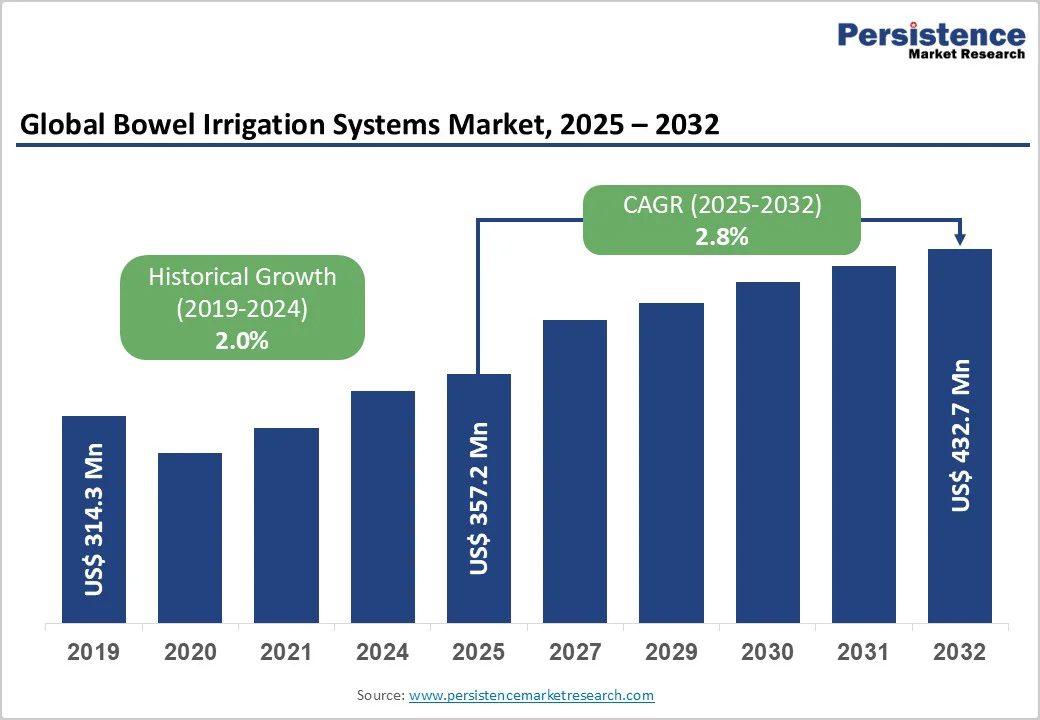
The global bowel irrigation systems market size is valued at US$357.2 million in 2025 and projected to reach US$432.7 million, growing at a CAGR of 2.8% during the forecast period from 2025 to 2032.
The bowel irrigation systems industry is witnessing steady growth driven by the rising prevalence of bowel dysfunction, spinal cord injuries, and fecal incontinence among aging populations. These systems enable effective bowel management, improving patient comfort and reducing hospital visits.
Technological advancements, such as electric or automated irrigation devices and user-friendly home-based systems, are expanding adoption globally. Increased awareness of neurogenic bowel conditions and emphasis on personalized care are further fueling demand.
Key Industry Highlights
- Increasing incidences of chronic constipation, neurogenic bowel dysfunction, and fecal incontinence are major growth drivers.
- Modern bowel irrigation systems are increasingly integrating electric pumps, automated controls, and digital monitoring features.
- Hospitals remain key users of bowel irrigation systems for post-operative bowel cleansing, colorectal surgery preparation, and acute care management.
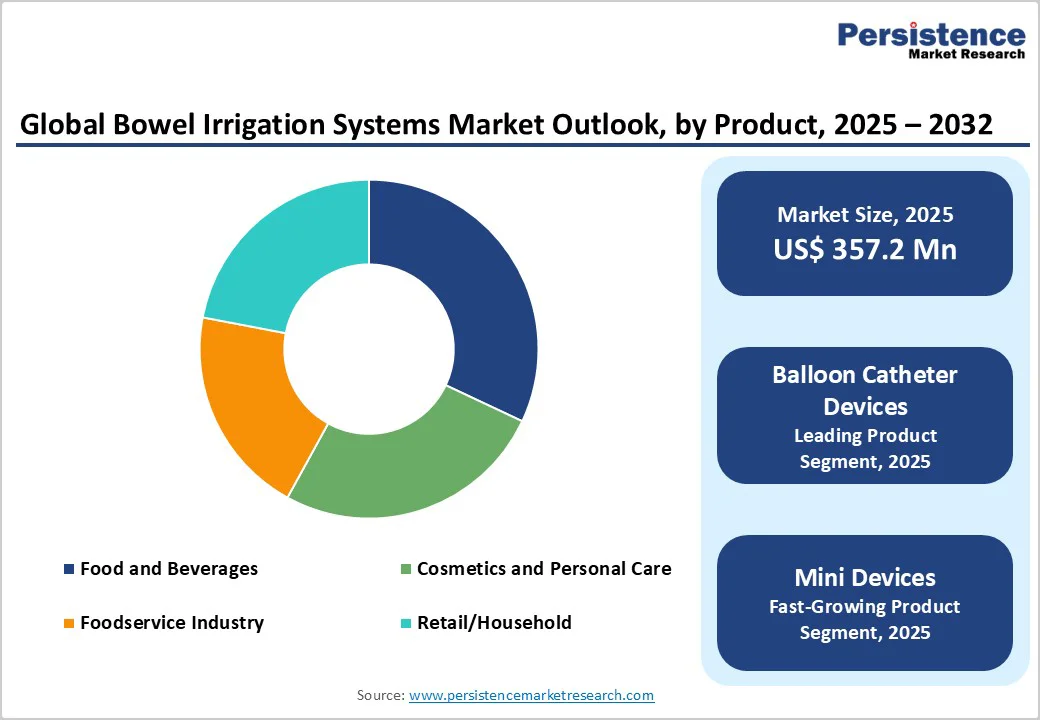
- The balloon catheter devices segment holds the largest market share due to its superior efficiency, safety, and ease of use in bowel irrigation procedures.
| Key Insights | Details |
|---|---|
| Bowel Irrigation Systems Market Size (2025E) | US$357.2 Mn |
| Market Value Forecast (2032F) | US$432.7 Mn |
| Projected Growth (CAGR 2025 to 2032) | 2.8% |
| Historical Market Growth (CAGR 2019 to 2024) | 2.0% |
Market Dynamics
Driver - Rising Prevalence of Fecal Incontinence in Children
The rising prevalence of fecal incontinence among children is a significant driver for the bowel irrigation systems market. Pediatric cases linked to conditions such as spina bifida, Hirschsprung’s disease, anorectal malformations, and chronic constipation are increasing globally, necessitating effective bowel management solutions. Conventional treatments like laxatives or enemas often fail to provide consistent results or comfort.
Bowel irrigation systems, particularly mini and balloon-based devices, offer controlled, non-invasive, and hygienic methods for regular bowel emptying, improving the child’s independence and quality of life. Pediatric hospitals and rehabilitation centers are increasingly adopting customized irrigation kits with gentler materials and smaller sizes to ensure safety and compliance.
This growing clinical need and parental awareness are driving the demand for specialized pediatric bowel irrigation systems worldwide.
Restraints - Fecal Incontinence and Societal Stigma
Taboo surrounding fecal incontinence persists in many nations worldwide. People with bowel issues already experience a sense of deviation or differentness from the ideal norm; hence, many are reluctant to approach a healthcare professional since this can accentuate their sense of insecurity and also aggravate the symptoms of the underlying condition.
The stigma associated with bowel management issues is very considerable, which makes many affected patients unwilling to admit that they have fecal incontinence, and reluctance from the physicians can also be seen when it comes to inquiring about it.
Fecal incontinence will affect what the person wears and the activities they engage in. Difficulty with defecation affects the patient's overall quality of life and may lead them to isolate themselves from recreational and social activities.
Further, this can affect the forms and lines of treatment provided to the patient. Ultimately, this will lead to less adoption of bowel irrigation devices, restraining market growth to some extent.
Opportunity - AI-Integrated Irrigation Monitoring Systems
AI-integrated irrigation monitoring systems represent a breakthrough in personalized bowel care. These next-generation devices use artificial intelligence and machine learning algorithms to analyze patient-specific data, such as bowel patterns, muscle tone, and past irrigation outcomes, to regulate water flow, temperature, and pressure automatically.
By continuously adapting to individual physiological responses, they minimize discomfort, prevent over-irrigation, and enhance therapeutic effectiveness. Integrated sensors and mobile connectivity allow real-time tracking, remote clinician oversight, and predictive maintenance alerts. This technology-driven approach transforms bowel management into a safer, smarter, and more user-centric experience, significantly improving long-term adherence and patient quality of life.
Category-wise Analysis
By Product, the Balloon Catheter Devices Segment is Leading in the Market
The balloon catheter devices segment dominates the bowel irrigation systems market owing to its superior functionality, precision, and patient comfort. These devices feature an inflatable balloon that securely anchors the catheter inside the rectum, preventing leakage and ensuring controlled water infusion.
This design enables complete bowel emptying, making it highly effective for patients with neurogenic bowel dysfunction, spinal injuries, or chronic constipation. Their ease of use, consistent clinical outcomes, and adaptability across hospital and home care settings have made them the preferred choice among healthcare professionals. Moreover, continuous design innovations and material improvements further reinforce their widespread clinical acceptance and usage.
By End User, Hospitals Segment Leads the Market
Hospitals account for the highest share in the bowel irrigation systems market due to their advanced clinical infrastructure, skilled medical staff, and ability to manage complex gastrointestinal and neurogenic bowel cases. These facilities frequently use irrigation systems for pre- and post-operative bowel preparation, fecal incontinence management, and critical care procedures.
Hospitals also maintain strong purchasing power, enabling bulk procurement of high-quality, automated systems. The availability of trained professionals ensures proper device use, reducing complications and enhancing therapeutic outcomes. Furthermore, growing hospital admissions for colorectal and spinal disorders continue to drive consistent demand for bowel irrigation systems in this setting.
Region-wise Insights
North America Bowel Irrigation Systems Trends
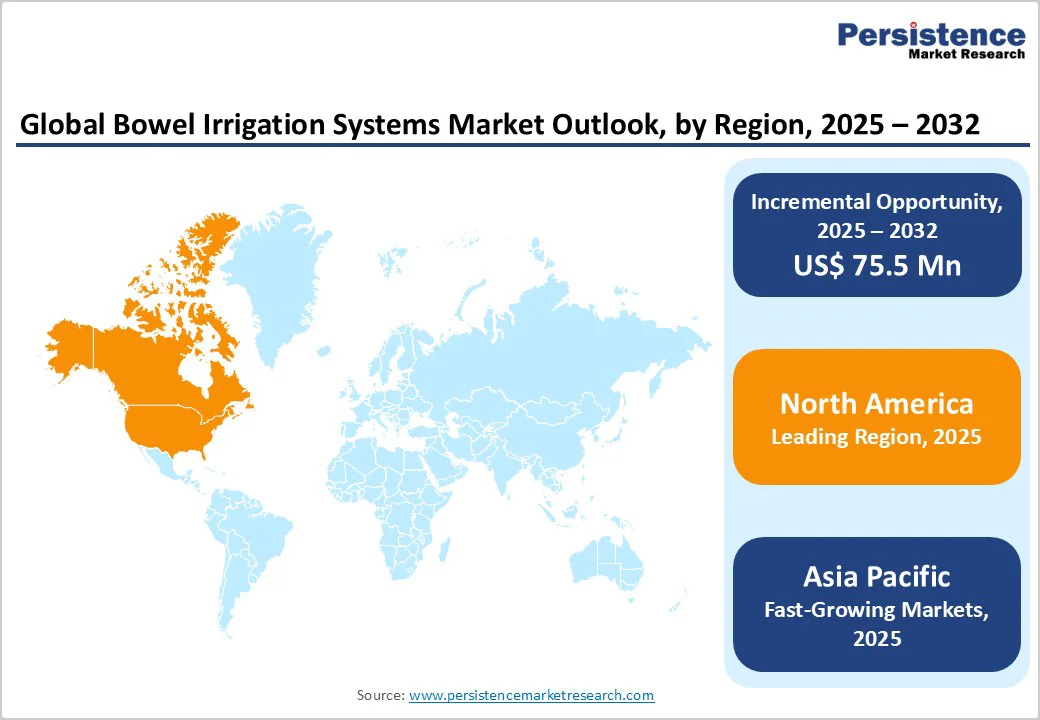
North America leads the bowel irrigation systems market, driven by high awareness of bowel management therapies, strong reimbursement policies, and widespread adoption of advanced medical technologies. The region benefits from a large patient base with spinal cord injuries, multiple sclerosis, and chronic constipation, supported by well-established clinical protocols.
Continuous innovations in automated and smart irrigation devices, coupled with growing home care usage, further strengthen market dominance. Major manufacturers and healthcare institutions in the U.S. and Canada actively invest in product development and patient education, ensuring consistent demand and positioning North America as the global hub for advanced bowel care solutions.
Asia Pacific Bowel Irrigation Systems Market Trends
Asia-Pacific is emerging as a high-growth region in the bowel irrigation systems market, driven by improving healthcare infrastructure, increasing awareness of bowel management solutions, and a rising prevalence of gastrointestinal and neurogenic disorders. Countries such as India, China, and Japan are witnessing increasing adoption of cost-effective, portable irrigation devices, particularly for home care use.
Growing government initiatives to enhance chronic disease management and rising disposable incomes are further boosting accessibility. Local manufacturers are entering the market with affordable alternatives, while international players are strengthening partnerships to expand regional reach, making Asia-Pacific a key growth engine for future bowel care innovations.
Market Competitive Landscape
The bowel irrigation systems market is moderately competitive, with both global manufacturers and regional innovators focusing on patient-centric solutions. Companies are emphasizing product differentiation through advanced features such as automated systems, leakproof balloon catheters, and ergonomic designs.
Continuous R&D investment and regulatory approvals are driving innovation, particularly in smart and portable systems. Strategic partnerships with healthcare institutions and distributors are expanding product reach in developed and emerging markets alike.
Key Industry Developments:
- In February 2024, Coloplast launched Peristeen® Light, a transanal irrigation device developed to assist individuals with bowel disorders. The device was designed to support people experiencing defecation difficulties or stool leakage, offering an effective and user-friendly solution for improved bowel management and control.
- In April 2022, Becton Dickinson and Company announced the completion of its spinoff with Embecta Corporation. BD now handles the company's diabetes care business.
Companies Covered in Bowel Irrigation Systems Market
- Coloplast
- Becton, Dickinson and Company
- ConvaTec Group plc
- Qufora A/S
- Runfold Plastics Ltd
- Renew Medical Inc (Aquaflush Medical Limited)
- Consure Medical
- ProSys International Ltd
- B Braun Melsungen AG
- Plasti-Med
- Wellspect HealthCare (Dentsply Sirona)
- Hollister Incorporated
- Other
Frequently Asked Questions
The global bowel irrigation systems market is valued at US$357.2 Mn in 2025.
The Global Bowel Irrigation Systems Market is driven by the rising prevalence of chronic constipation, fecal incontinence, and neurogenic bowel dysfunction among aging and immobile populations.
The global market is poised to witness a CAGR of 2.8% between 2025 and 2032.
Key market opportunities in the Global Bowel Irrigation Systems Market include the development of AI-enabled smart irrigation devices that personalize water flow and pressure for safer bowel care.
Coloplast, Becton, Dickinson and Company, ConvaTec Group plc, Qufora A/S, and others.


