




- Beverages
- Yerba Mate Market
Yerba Mate Market Size, Share, and Growth Forecast, 2026 - 2033
Yerba Mate Market by Form (Powder, Loose Leaf, Liquid Concentrate), Application (Food & Beverages, Dietary Supplements, Cosmetics & Personal Care), Nature (Organic, Conventional), and Regional Analysis for 2026-2033

Yerba Mate Market Share and Trends Analysis
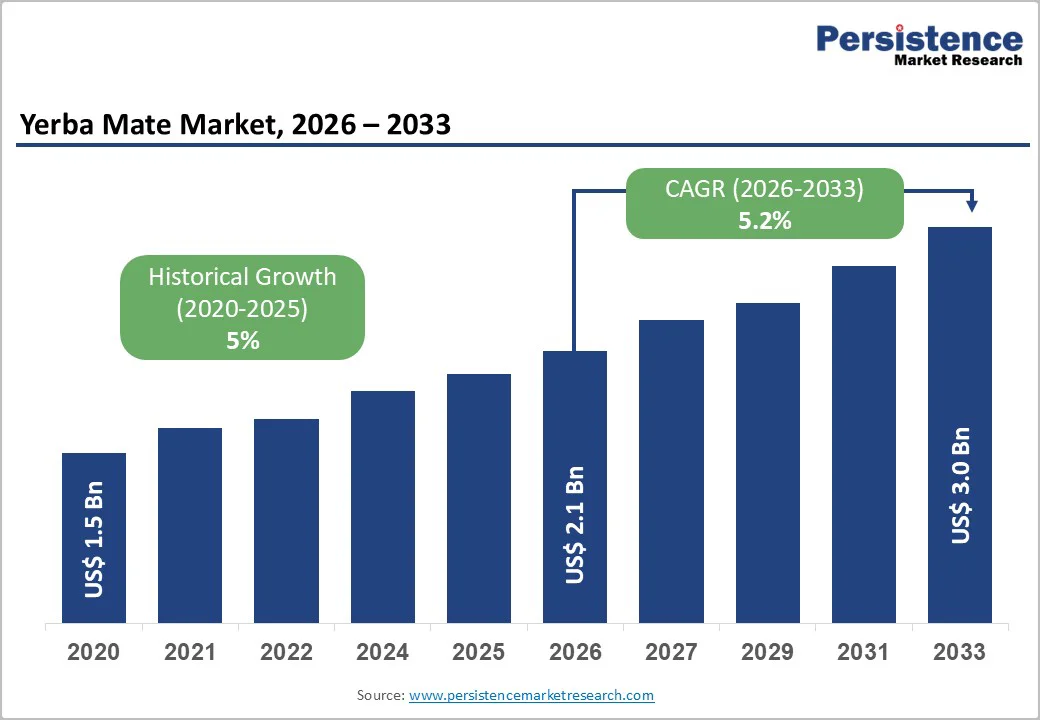
The global yerba mate market size is likely to be valued at US$ 2.1 billion in 2026, and is projected to reach US$ 3.0 billion by 2033, growing at a CAGR of 5.2% during the forecast period 2026−2033. This expansion reflects the accelerating consumer shift toward natural, functional beverages that deliver sustained energy without the adverse effects associated with synthetic stimulants. The market's momentum is driven by three primary catalysts: the rising global health consciousness movement, increasing demand for organic and clean-label products, and the successful expansion of yerba mate beyond its traditional South American base into North American and European markets, where consumers actively seek healthier alternatives to coffee and conventional energy drinks.
Key Industry Highlights
- Dominant Region: North America is expected to command about 30% market share in 2026, supported by rising health consciousness and growing interest in natural energy alternatives.
- Fastest-growing Regional Market: Asia Pacific is slated to be the fastest-growing market through 2033, boosted by the rapid adoption of herbal and functional beverages across China, India, and ASEAN nations.
- Dominant Form: Powder is likely to lead with an approximate revenue share of 48.3% in 2026, driven by its convenience, versatility, and rapid-absorption characteristics.
- Fastest-growing Form: Loose leaf is poised to be the fastest-growing segment during the 2026-2033 forecast period, powered by premium product positioning.
- August 2025: Yerba Madre launched its first seasonal RTD flavor, Watermelody, blending organic watermelon, yerba mate, and hibiscus to target summer and back-to-school energy occasions.
| Key Insights | Details |
|---|---|
| Yerba Mate Market Size (2026E) | US$ 2.1 Bn |
| Market Value Forecast (2033F) | US$ 3.0 Bn |
| Projected Growth (CAGR 2026 to 2033) | 5.2% |
| Historical Market Growth (CAGR 2020 to 2025) | 5% |
Market Factors – Growth, Barriers, and Opportunity Analysis
Rising Health Consciousness and Natural Product Preference
Consumer awareness of the health benefits of yerba mate is a primary accelerator of market growth, particularly among consumers seeking natural, plant-based alternatives to conventional energy drinks. As understanding of its antioxidant, metabolic, and cardiovascular-supporting properties expands, yerba mate is increasingly viewed as a premium functional beverage that aligns with broader wellness, clean-label, and preventive health trends. This evolving perception is helping the product transition from a niche traditional drink to a globally relevant option within the health and wellness beverage category.
Scientific evidence also indicates that yerba mate provides antioxidant, anti-inflammatory, and metabolic benefits across areas such as weight management, cholesterol balance, and blood sugar control, largely due to bioactive compounds such as chlorogenic acid. According to a new study by researchers at the University of Illinois Urbana-Champaign, yerba mate significantly boosts GLP-1 hormone activity, promoting satiety and potentially aiding weight loss by enhancing gut microbiota effects. This natural alternative supports metabolic health without direct cellular GLP-1 secretion, positioning it as a promising beverage for glucose regulation and obesity management. These findings resonate strongly with consumers focused on weight management, heart health, and long-term vitality, encouraging repeat purchases and fostering brand loyalty.
Supply Chain Vulnerability and Climate Sensitivity
Yerba mate cultivation is concentrated in specific subtropical regions of South America, primarily Argentina, Paraguay, and Brazil, which creates inherent supply chain concentration risk. The Ilex paraguariensis plant depends on particular climatic conditions, including sustained humidity, reliable rainfall, and relatively narrow temperature ranges that occur naturally only in limited geographic zones. As a result, any disruption to these conditions can significantly affect both the volume and the quality of harvested leaves. Climate change intensifies this exposure by altering precipitation patterns, increasing temperature volatility, and driving more frequent extreme weather events that undermine production stability over time.
This geographic concentration also heightens vulnerability to regional political instability, labor disputes, and natural disasters, as few alternative growing regions can quickly compensate for local disruptions. The traditional shade-grown cultivation method, while beneficial for biodiversity and product quality, naturally constrains scalability because it is less intensive and more land-dependent than industrial agricultural models. Recent global disruptions have further underscored these weaknesses, as international logistics bottlenecks, border restrictions, and labor shortages have made it more difficult to move raw materials and finished products from origin countries to major consumer markets. Collectively, these factors increase sourcing risk, reduce supply reliability, and put upward pressure on costs for brands and distributors that depend on South American exports.
New Possibilities in Functional Beverages
The infusion of yerba mate into functional food and beverage formulations presents substantial growth opportunities as consumers increasingly seek products that provide multiple health benefits in a single serving. Yerba mate’s natural caffeine content, rich antioxidant profile, and metabolic-supporting properties position it as a highly attractive ingredient for wellness and performance nutrition. It can enhance perceived energy, focus, and recovery, making it appealing to formulators aiming to differentiate their offerings in crowded categories. For example, in March 2025, Brainista expanded its nootropic drink lineup with viral Yerba Magic, an instant yerba mate beverage boosting focus and energy and prioritizing taste, cognitive benefits, and wellness for professionals and students without energy crashes.
This alignment with clean-label, plant-based, and functionally driven trends strengthens its relevance for brands targeting health-conscious and active consumers.
Yerba mate can be incorporated into protein shakes, pre-workout blends, nootropic beverages, and metabolic support products targeted at fitness enthusiasts, students, and professionals seeking sustained mental and physical performance. Beyond ingestible formats, cosmetics and personal care applications are emerging as a niche yet strategically important segment, with yerba mate used in skincare and haircare formulations that leverage its antioxidant potential for anti-aging and skin vitality benefits. This diversification across beverages, supplements, and personal care reduces reliance on traditional drink formats and helps position yerba mate as a versatile functional ingredient across multiple consumer categories, supporting long-term demand resilience and enabling brands to build broader product portfolios around a single hero ingredient.
Category-wise Analysis
Form Insights
Powder is likely to be the leading segment with an approximate 48.3% of the yerba mate market revenue share in 2026, driven by convenience, versatility, and rapid-absorption characteristics that strongly appeal to modern consumers. Powdered yerba mate can be seamlessly integrated into hot or cold beverages without the need for traditional brewing equipment, making it well-suited for on-the-go consumption, workplace use, and travel scenarios. The fine texture enables faster dissolution and supports quicker nutrient uptake, delivering immediate energy effects that align with contemporary fast-paced lifestyles. This format has proven particularly effective in fitness and wellness applications, as it can be easily incorporated into smoothies, protein shakes, and pre-workout beverages. Leading brands such as Guayaki offer powdered products that preserve the full nutritional profile of yerba mate while maximizing convenience for end users.
Loose leaf is set to be the fastest-growing segment during the 2026-2033 forecast period. This growth reflects rising consumer interest in authentic, traditional consumption experiences and premium product positioning. Loose leaf yerba mate appeals to purists and cultural enthusiasts who value the ceremonial aspects of preparation, including the use of traditional gourds and bombillas. The format also allows consumers to control brew strength, flavor intensity, and steeping time, offering a level of customization that is not available with more processed formats.
Application Insights
Food & beverages are slated to be dominant with an estimated 60% of the market share in 2026. This dominance is rooted in centuries of traditional consumption across South America, where the preparation and sharing of yerba mate are core cultural practices. The beverage segment encompasses traditional hot mate, cold tereré, and modern ready-to-drink formats that together cover a wide range of consumption occasions, from morning energy to afternoon refreshment. Brands such as Guayaki and Canarias have developed beverage offerings that preserve traditional taste profiles while adding contemporary functional benefits that appeal to younger consumers. The continued strength of the beverage segment reflects effective category expansion from cultural tradition into mainstream wellness positioning, supported by product innovation, flavor diversification, and strategic retail placement.
Dietary supplement is expected to be the fastest-growing segment during the 2026-2033 forecast period. Yerba mate supplements are marketed for a range of health-related benefits, including metabolic support, appetite control, antioxidant protection, and improved cognitive function. Brands such as Meta Mate have built strong positions in the premium organic supplement segment by emphasizing purity, potency, and sustainably sourced ingredients. The category also benefits from expanding distribution through health food stores, specialist vitamin retailers, and online supplement platforms. Capsules, tablets, and liquid extract formats offer precise dosing and convenient consumption without the need for preparation, making them well-suited to busy, health-conscious consumers.
Nature Insights
The organic segment is poised to lead with an approximate revenue share of 55% in 2026, reinforced by a fundamental shift in consumer preferences toward sustainably sourced, chemical-free products. Its rise is closely tied to increasing health consciousness, stronger environmental values, and a growing willingness among buyers to pay a premium for certified organic offerings. Consumer research consistently shows that many yerba mate users now actively seek organic or naturally sourced options, viewing certification as a key indicator of quality, safety, and ethical production rather than a discretionary upgrade. Demand is particularly strong in regions with mature organic food movements and robust regulatory support for certification, where organic brands also tend to lead in eco-friendly packaging adoption, including biodegradable and recyclable formats.
Conventional is anticipated to be the fastest-growing segment during 2026-2033 forecast period, due to its price competitiveness, wide availability, and deeply established supply chains. It continues to be the preferred choice in many traditional Latin American markets, where yerba mate is consumed daily and affordability is critical to household purchasing decisions. In developed regions, conventional products still appeal to mainstream and price-sensitive consumers who prioritize taste familiarity and cost over organic certification. Although the segment faces increasing pressure from shifting preferences toward organic and sustainably produced options, it is expected to retain its relevance, particularly in traditional, value-driven, and bulk institutional channels.

Regional Insights
North America Yerba Mate Market Trends
North America is set to command a considerable portion of the yerba mate market share at approximately 30% in 2026, driven by rising health consciousness, growing interest in natural energy alternatives, and successful integration into mainstream retail channels. The United States anchors regional demand, with uptake concentrated among young professionals, and wellness-focused consumers who view yerba mate as a cleaner, plant-based alternative to coffee and conventional energy drinks. Growth is further supported by the rapid expansion of ready-to-drink formats, including carbonated and cold-brewed variants, which align with on-the-go consumption habits and appeal to younger demographics seeking convenient, natural caffeine sources. Strong e-commerce adoption and the popularity of subscription models also reinforce recurring demand and build brand loyalty within this segment.
The regulatory environment in North America is broadly supportive of herbal beverage innovation, with clear safety recognition and labeling standards that provide a structured framework for category development while maintaining quality expectations. Competitive dynamics are shaped by a pioneering market leader with significant category influence, alongside a growing number of regional brands and large beverage multinationals that are testing or expanding yerba mate-based offerings. Investment activity is increasingly focused on sustainable sourcing, expanded retail and foodservice distribution, and targeted marketing to millennials and Generation Z. The emergence of yerba mate cafés and specialty bars creates experiential spaces that showcase traditional preparation methods, helping to bridge cultural heritage with contemporary wellness positioning and reinforcing North America’s role as a long-term growth platform for the category.
Europe Yerba Mate Market Trends
The Europe yerba mate market supported by strong health and wellness trends, a mature organic food movement, and rising curiosity about global beverage traditions. Germany leads regional development as functional beverages gain traction with health-conscious consumers, and yerba mate is increasingly viewed as a more balanced caffeine source. The United Kingdom offers significant potential, with specialty tea and coffee chains introducing yerba mate to urban consumers who are already familiar with herbal infusions. France is seeing steady adoption through cafés and organic retailers, while Spain benefits from cultural and historical ties to Latin America, particularly in cities with sizeable South American communities.
The European regulatory environment strongly shapes market entry and brand strategy, as strict health-claim and labeling requirements increase compliance burdens but also help reinforce product quality and consumer trust. Organic certification is particularly influential, aligning with regional sustainability priorities and favoring brands that can meet rigorous standards. Growth opportunities are concentrated in partnerships with health food retailers, premium placement in specialty tea outlets, and the development of organic or fusion products tailored to local tastes, such as blends incorporating Mediterranean herbs. The expansion is constrained by the region’s deeply rooted coffee culture and the ongoing need to educate consumers about yerba mate’s preparation methods and distinct consumption rituals.
Asia Pacific Yerba Mate Market Trends
Asia Pacific is anticipated to be the fastest-growing yerba mate market globally through 2033, reflecting rapid adoption of herbal and functional beverages across major economies such as China, India, and Southeast Asian countries. Rising awareness of natural caffeine sources and growing demand for antioxidant-rich products have positioned yerba mate as an appealing alternative to both traditional teas and conventional energy drinks. In China, global wellness trends are increasingly influencing consumer choices, and yerba mate is gaining traction as a natural substitute for tea and coffee, supported by beverage companies launching yerba mate–infused teas and energy drinks.
The competitive landscape of the region features international brands expanding beyond Western markets alongside local players that tailor flavor profiles to regional tastes. Advanced e-commerce ecosystems support direct-to-consumer distribution, although limited familiarity with South American beverage traditions remains a barrier, requiring sustained consumer education, taste adaptation, and positioning that emphasizes health benefits rather than cultural heritage. Taken together, these dynamics combined with favorable demographics and rising disposable incomes position Asia Pacific as the most critical long-term growth hub for the yerba mate market expansion.

Competitive Landscape
The global yerba mate market structure demonstrates moderate fragmentation, dominated by leading players such as Guayaki Sustainable Rainforest Products, Inc., Establecimiento Las Marías, Rosamonte and Amanda. These players collectively hold 45-50% of market share. In terms of business tactics, companies are localizing manufacturing and optimizing supply chains to enhance efficiency and reduce costs. Several key players vying for market share while also collaborating on sustainability initiatives. This structure allows for a diverse range of products and price points, catering to various consumer segments. The influence of major players is significant, as they set trends that smaller companies often follow, thereby shaping the overall market dynamics.
Key Industry Developments
- In October 2025, Uncle Matt's Organic launched its first-ever Organic Yerba Mate Energy Tea, a USDA-certified organic functional beverage brewed with yerba mate leaves, lemon juice, green tea caffeine, and sweetened with organic wildflower honey for a smooth, natural energy boost.
- In August 2025, NutraTea, a U.K. B-Corp tea brand, introduced two functional herbal blends – Moringa Leaf & Ashwagandha and Yerba Mate & Gotu Kola, targeting stress relief, cognitive support, clean energy, and overall wellness in line with growing demand for herbal and functional teas.
- In May 2025, Guayakí Yerba Mate rebranded as Yerba Madre, a new name that honors its nearly 30-year partnerships with indigenous communities and deepens its commitment to regenerative, organic, shade-grown yerba mate across Argentina, Brazil, and Paraguay.
Companies Covered in Yerba Mate Market
- Yerba Madre
- Establecimiento Las Marías
- Amanda
- La Hoja
- Cruz de Malta
- Canarias
- Taragüi
- Playadito
- Rosamonte
- pajarito powder, llc
- Aguantadora
- Kraus Herbal Teas
- Rosamonte
Frequently Asked Questions
The global yerba mate market is projected to reach US$ 2.1 billion in 2026.
Rising health consciousness and growing consumer preference for natural, functional energy beverages with clean-label, plant-based ingredients are driving the market.
The market is poised to witness a CAGR of 5.2% from 2026 to 2033.
Key market opportunities lie in ready-to-drink formats, organic and sustainably sourced products, and expansion into emerging regions such as Asia Pacific where interest in herbal and functional beverages is rapidly increasing.
Guayaki Sustainable Rainforest Products, Inc., Establecimiento Las Marías, and Rosamonte and Amanda are some of the key players in this market.


