




- Food Ingredients & Additives
- Soluble Corn Fiber Market
Soluble Corn Fiber Market Size, Share, Growth, and Regional Forecast, 2026 to 2033
Soluble Corn Fiber Market by Form (Dry, Liquid), End-user (Food & Beverages, Nutraceuticals & Dietary Supplements, Animal Feed, Others), and Regional Analysis from 2026 to 2033

Soluble Corn Fiber Market Share and Trends Analysis
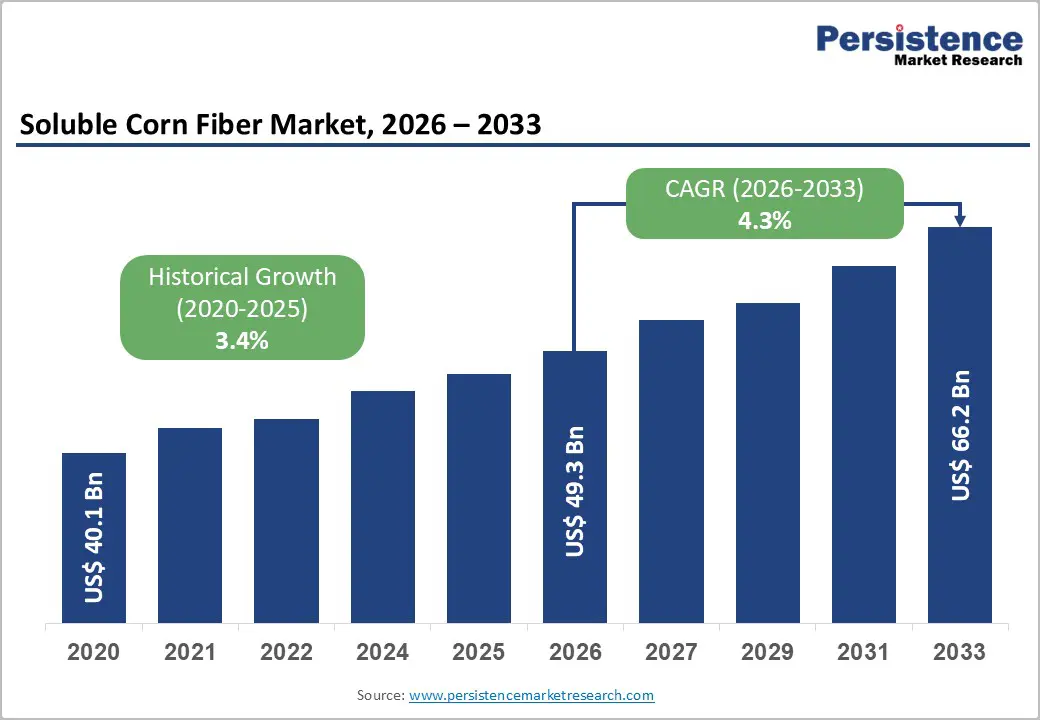
The global soluble corn fiber market size is likely to be valued at US$ 49.3 billion in 2026 and projected to reach US$ 66.2 billion by 2033, growing at a CAGR of 4.3% during the forecast period from 2026 to 2033.
The global soluble corn fiber market is accelerating as food, beverage, and nutraceutical manufacturers turn to formulation-friendly fibers that support sugar reduction and digestive-health positioning. Rising innovation, sustainability commitments, and regulatory tightening are reshaping competition, driving scale-backed leaders and agile startups toward more advanced, transparent, and purpose-built SCF solutions.
Key Industry Highlights:
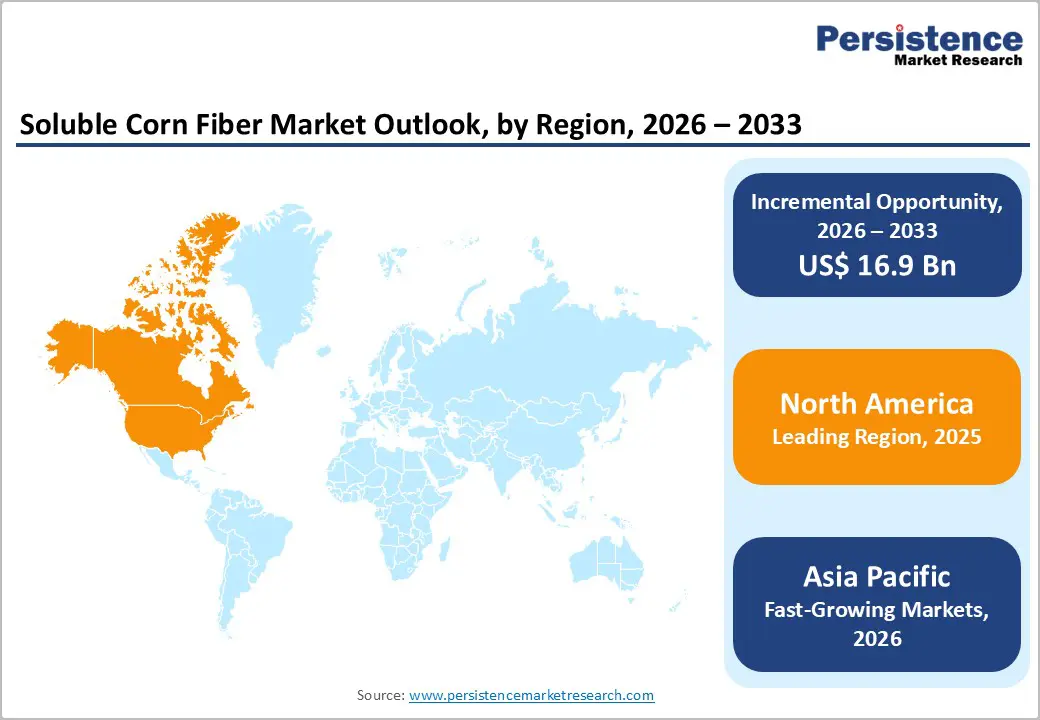
- Leading Region: North America commands 39% of the market, propelled by demand for clean-label, high-fiber ingredients across bakery, snacks, beverages, and supplements, reinforced by strong digestive-wellness awareness.
- Fastest-Growing Region: Asia Pacific is advancing at 6.9% CAGR, supported by rapid adoption of fiber-fortified foods, growing interest in gut-health ingredients, and widespread reformulation across bakery, beverages, dairy alternatives, and functional nutrition.
- Fastest-Growing Form Segment: Dry soluble corn fiber leads due to superior shelf stability, easy handling, compatibility with dry mixes, and strong acceptance in bakery, cereals, powdered beverages, and nutritional blends.
- Market Drivers: Rising prioritization of formulation-ready, thermally stable, and pH-resilient ingredients is accelerating SCF uptake as manufacturers aim for cleaner labels, better mouthfeel, and dependable fiber enrichment across processed foods.
- Opportunities: Innovation in bakery, snacks, and confectionery is opening space for tailored SCF grades targeted at texture enhancement, stability improvement, and fiber-forward claims, enabling strong differentiation for both large suppliers and niche entrants.
- Key Developments: In November 2025, Tereos launched Actifiber®, expanding its functional fiber portfolio with an option designed for balanced taste and nutrition. In May 2024, Tate & Lyle amplified global capacity by upgrading its Slovakia plant for Non-GMO PROMITOR® Soluble Fibres, strengthening supply for Europe and beyond.
| Key Insights | Details |
|---|---|
| Global Soluble Corn Fiber Market Size (2026E) | US$ 49.3 Bn |
| Market Value Forecast (2033F) | US$ 66.2 Bn |
| Projected Growth (CAGR 2026 to 2033) | 4.3% |
| Historical Market Growth (CAGR 2020 to 2025) | 3.4% |
Market Dynamics
Driver - Increased Adoption in Processed Foods Due to Soluble Corn Fiber’s Compatibility with Varied pH, Heating, and Processing Conditions
Growing shift toward formulation-friendly ingredients is reshaping how manufacturers approach product development, placing soluble corn fiber in a favorable position. Its ability to remain stable across wide pH ranges, withstand high-temperature processing, and maintain integrity during extrusion or spray-drying makes it a dependable choice for large-scale food production. This resilience enables seamless integration into categories such as baked goods, cereals, confectionery, sauces, and dairy alternatives, where consistent texture and sweetness levels are crucial for brand performance.
As processed food companies seek ingredients that simplify manufacturing while supporting nutrition claims, soluble corn fiber delivers strong functional and labeling advantages. It helps maintain mouthfeel, improve fiber content, and support sugar reduction goals without compromising flavor. These benefits drive greater adoption across both mainstream and better-for-you product lines, strengthening its role in modern food innovation.
Restraints - Price Volatility of Corn as a Raw Material
Unpredictable shifts in global grain economics are placing pressure on the soluble corn fiber supply chain, with corn price fluctuations emerging as a major constraint. Weather disruptions, changing planting patterns, and fluctuating export demands directly influence corn availability, creating swings in raw material costs for manufacturers. These price movements make long-term production planning difficult and can push processors to reassess formulation budgets, especially in high-volume food and beverage applications where ingredient cost stability is essential.
As volatility persists, manufacturers face tighter margins and increased pressure to adjust pricing strategies or explore partial substitutions. Smaller producers feel the impact more sharply, as they lack large-scale hedging capabilities. This unpredictability also slows innovation cycles and can delay product launches when cost models rapidly shift, restricting overall market expansion.
Opportunity - Innovation in Bakery, Snacks, and Confectionery Allows Companies to Supply Customized SCF Types for Texture, Stability, and Fiber Claims
A rising wave of creativity in bakery, snacks, and confectionery development is unlocking new opportunities for soluble corn fiber (SCF) suppliers to tailor fiber solutions for specific functional and nutritional goals. As product developers demand fibers that deliver soft crumb texture in bread, stable mouthfeel in snacks, and smooth sweetness balance in confectionery, SCF producers are positioned to offer customized formulations that meet these varied requirements. This specialization adds value through improved end-product quality while supporting clean-label and fiber-enrichment claims.
This trend benefits both established ingredient houses and agile startups. Large suppliers can leverage their production scale to deliver consistency and a range of SCF grades, while newer players can compete by focusing on niche segments such as high-fiber bakery mixes or reduced-sugar confectionery. The push for texture, stability, and nutritional enhancement opens doors for innovation-driven growth in the SCF market.
Category-wise Analysis
By Form Insights
Dry soluble corn fibers nearly accounts for. 82% market share as of 2025, reflecting their strong suitability for large-scale food manufacturing and widespread formulation needs. Their long shelf stability, easy handling, and compatibility with dry mixes make them the preferred choice in bakery, cereals, powdered beverages, and nutritional blends. Food processors value the ability to incorporate dry SCF without altering moisture ratios or production steps, giving brands greater consistency across fiber-fortified and reduced-sugar products.
Beyond operational convenience, dry SCF supports clean-label positioning and simplifies transportation and storage, lowering overall supply-chain complexity. Manufacturers developing high-fiber snacks, confectionery coatings, or instant mixes benefit from its predictable performance and neutral flavor. These advantages keep dry formats ahead of liquid variants, reinforcing dominant adoption across mainstream and specialty food categories worldwide.
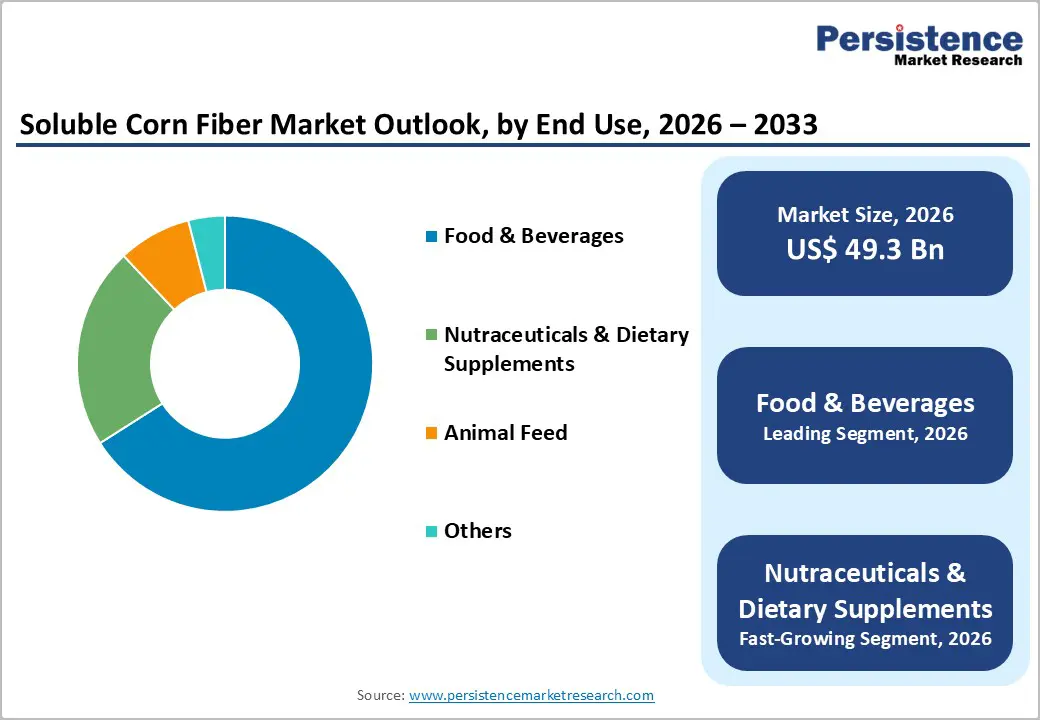
By End Use, the Nutraceuticals & Dietary Supplements segment is forecast to show accelerated progress across the projected timeframe
Food & Beverages are projected to grow at a CAGR of 6.8% during the forecast period in the global Soluble Corn Fiber market, yet the momentum building within nutraceuticals and dietary supplements is advancing even faster. Rising interest in digestive wellness, gut-friendly ingredients, and low-glycemic fibers is steering consumers toward supplements that offer targeted benefits. Brands in this space rely on soluble corn fiber for its tolerability, neutral taste, and strong clinical alignment with fiber-enhancing claims, making it a natural fit for capsules, gummies, powders, and functional shots.
The segment gains further traction as formulators embrace SCF to support satiety, metabolic balance, and microbiome health areas, showing intense consumer pull. Supplement developers are also expanding into personalized fiber blends and hybrid functional products, giving SCF a central role in next-generation wellness solutions. This steady rise in specialized applications positions nutraceuticals and dietary supplements as one of the most accelerated growth avenues in the market.
Region-wise Insights
North America Soluble Corn Fiber Market Trends
North America holds approximately 39% share in the global market, driven by strong interest in high-fiber, clean-label ingredients across food, beverage, and supplement categories. In the United States, manufacturers are incorporating soluble corn fiber into bakery products, protein bars, and reduced-sugar beverages to enhance fiber content while maintaining texture and flavor. Consumer emphasis on digestive health and functional nutrition is pushing formulators to leverage SCF in meal replacements, fiber-fortified snacks, and drink mixes that appeal to wellness-focused buyers.
In Canada, food brands are exploring SCF’s versatility in dairy alternatives, confectionery, and frozen desserts to balance nutritional claims with taste. Growth in direct-to-consumer supplement brands has expanded demand for fiber-rich capsules, gummies, and powder blends. Across both countries, sustainability messaging and transparent sourcing are increasingly influencing ingredient selection and product positioning.
Asia Pacific Soluble Corn Fiber Market Trends
Asia Pacific soluble corn fiber market is expected to grow at a CAGR of 6.9%, supported by rising consumer interest in healthier food alternatives and fiber-fortified products. In India, soluble corn fiber is gaining traction among bakery and snack manufacturers aiming to boost fiber content while preserving taste and texture. Urban consumers are increasingly seeking digestive health benefits, prompting food and beverage brands to reformulate products such as breakfast cereals, ready-to-drink teas, and functional snack bars with added fiber.
In China, manufacturers are integrating soluble corn fiber into dairy alternatives, confectionery, and beverages to appeal to wellness-oriented buyers. Japan’s health-focused market is driving demand for fiber-enriched supplements and fortified foods, while South Korea is seeing growth in on-the-go nutrition formats with soluble corn fiber for gut health. Across the region, ingredient transparency and product innovation are shaping adoption trends.
Competitive Landscape
The global soluble corn fiber market reflects a moderately consolidated structure where major ingredient manufacturers and emerging innovators compete through scale, technology, and differentiated formulations. Leading companies are expanding global production footprints, investing in vertical integration to secure a reliable corn supply, and rolling out advanced SCF grades tailored for bakery, beverages, and nutritional products.
Startups are entering with clean-label positioning, natural ingredient blends, and eco-efficient processing aimed at reducing energy use and waste. Sustainability commitments are accelerating as producers focus on lower-emission manufacturing and responsibly sourced raw materials. Growing regulatory scrutiny around fiber definitions and allowable claims is prompting firms to strengthen compliance, enhance transparency, and advance product innovation that aligns with evolving global standards.
Key Developments:
- In November 2025, Tereos introduced Actifiber®, a corn-based fiber aimed at delivering both taste and nutritional balance for daily diets. The launch underscores Tereos’ focus on functional ingredients that blend health benefits with consumer appeal.
- In May 2024, Tate & Lyle PLC inaugurated expanded production at its Boleráz, Slovakia facility for its Non-GMO PROMITOR® Soluble Fibres, marking a €25 million investment. The expansion aims to boost fibre capacity to meet growing demand across Europe and global markets.
Companies Covered in Soluble Corn Fiber Market
- ADM
- Cargill, Incorporated
- Tate & Lyle PLC
- Ingredion Incorporated
- Roquette Frères
- Shandong Bailong Chuangyuan Bio-Tech Co., Ltd.
- Tereos
- Anderson Advanced Ingredients
- Samyang Corporation
- Muby Chemicals
- Others
Frequently Asked Questions
The global soluble corn fiber market is projected to be valued at US$ 49.3 Bn in 2026.
The market is gaining momentum because manufacturers value its resilience across different pH ranges, thermal treatments, and processing methods.
The global soluble corn fiber market is poised to witness a CAGR of 4.3% between 2026 and 2033.
Expanding innovation in bakery, snacks, and confectionery creates room for tailored SCF solutions focused on texture, stability, and fiber enhancement.
Major players in the global Soluble Corn Fiber market include ADM, Cargill Incorporated, Tate & Lyle PLC, Ingredion Incorporated, Roquette Frères, Tereos, and others.


