




- Specialty & Fine Chemicals
- Microemulsion Market
Microemulsion Market Size, Share, and Growth Forecast, 2026 - 2033
Microemulsion Market by Product Type (Water-in-Oil Microemulsion, Others), Application (Personal Care, Pharmaceuticals, Food and Beverages, Agriculture, Household Products), End-use (Cosmetics, Nutraceuticals, Others), and Regional Analysis for 2026 – 2033

Microemulsion Market Size and Trends Analysis
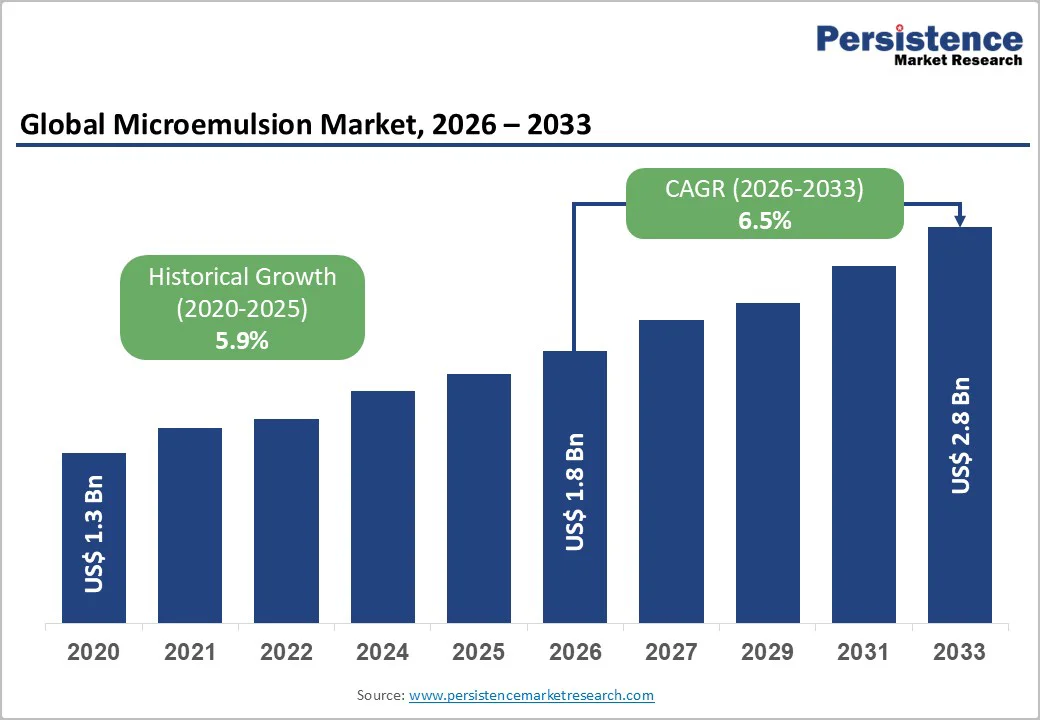
The global microemulsion market size is likely to be valued at US$1.8 billion in 2026, and is expected to reach US$2.8 billion by 2033, growing at a CAGR of 6.5% during the forecast period from 2026 to 2033, driven by the increasing prevalence of advanced drug delivery systems, rising demand for stable nano-emulsions in personal care, and advancements in formulation technologies. Demand for better bioavailability and solubility, especially in pharmaceuticals, has boosted microemulsion adoption. Growth is further driven by improved oil-in-water and mixed formulations that enhance transparency and versatility. Their increasing use to improve agrochemical penetration in agriculture is also a key market driver.
Key Industry Highlights:
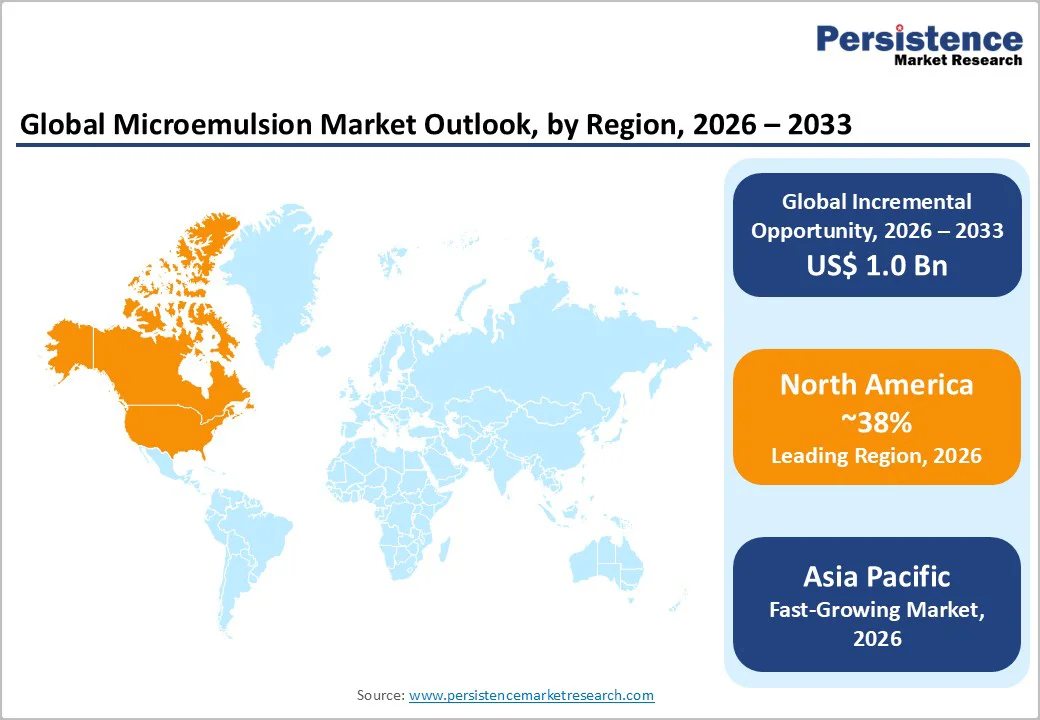
- Leading Region: North America, to command a 38% market share in 2026, driven by advanced pharma R&D, high prevalence of cosmetic formulations, and strong innovation activities in the U.S.
- Fastest-growing Region: Asia Pacific, fueled by increasing agrochemical use, rising awareness of nano-delivery, and growing investments in nutraceuticals in China and India.
- Dominant Product Type: Oil-in-water microemulsions, to hold approximately 45% of the market share, due to their superior solubilization of hydrophobic actives and enhanced bioavailability.
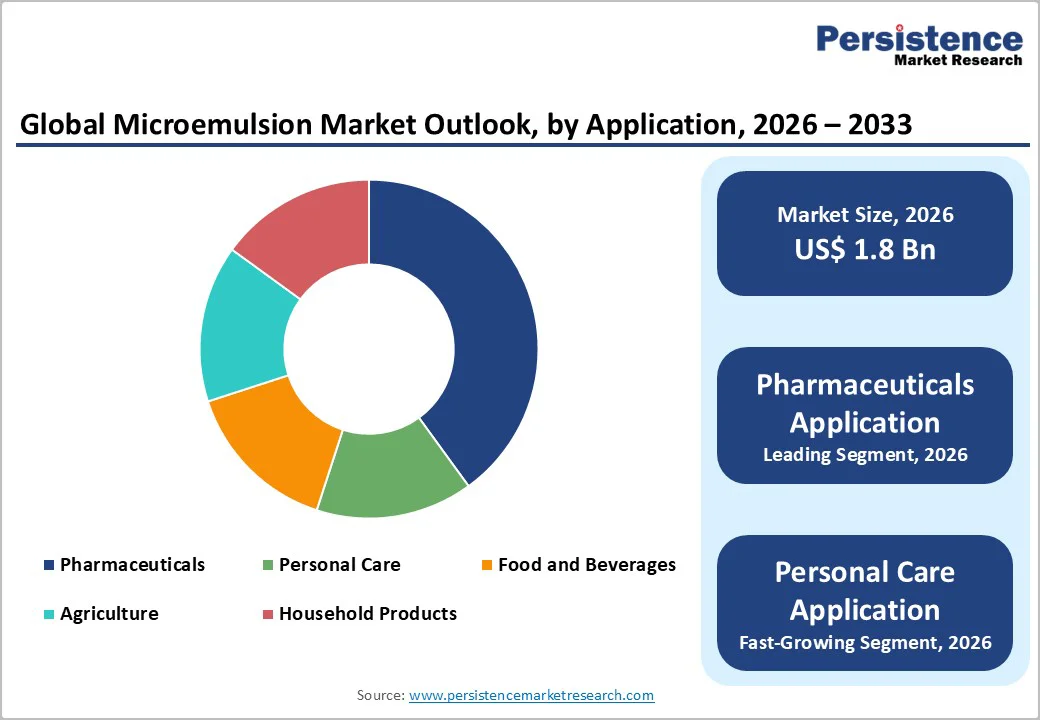
- Leading Application: Pharmaceuticals, to account for over 40% of the market revenue in 2026, due to microemulsions, which enhance the solubility and bioavailability of poorly water-soluble drugs.
- Leading End-user: Nutraceuticals, to contribute nearly 30% of the market revenue in 2026, as microemulsions improve the bioavailability and absorption of active ingredients in supplements and functional foods.
- Key Market Driver: Rising demand for targeted drug delivery and stable nano-formulations is accelerating microemulsion adoption in pharma and personal care.
- Market Opportunity: Expansion in sustainable agrochemicals and functional foods creates strong opportunities for bio-based microemulsion variants.
| Key Insights | Details |
|---|---|
| Microemulsion Market Size (2026E) | US$1.8 Bn |
| Market Value Forecast (2033F) | US$2.8 Bn |
| Projected Growth (CAGR 2026 to 2033) | 6.5% |
| Historical Market Growth (CAGR 2020 to 2025) | 5.9% |
Market Factors – Growth, Barriers, and Opportunity Analysis
Rising Prevalence of Advanced Drug Delivery Systems and Demand for Stable Nano-Emulsions
The rising prevalence of advanced drug delivery systems globally is a primary driver of the Microemulsion Market. Modern therapies increasingly rely on formulations that enhance the solubility, bioavailability, and targeted delivery of active pharmaceutical ingredients (APIs), addressing challenges associated with poorly soluble or sensitive compounds. Microemulsions, particularly nano-emulsion-based systems, provide a highly effective platform for achieving these objectives. Their small droplet size and uniform distribution enable improved absorption, controlled release, and enhanced stability of encapsulated actives, which are critical for both oral and topical applications.
The growing demand for stable nano-emulsions reflects broader industry trends toward precision medicine and patient-centric formulations. Nano-emulsions maintain physical and chemical stability over extended periods, reducing degradation of sensitive molecules and ensuring consistent therapeutic performance. This stability is particularly valued in biologics, nutraceuticals, and cosmetic-drug hybrid products, where efficacy and shelf-life are crucial. Regulatory encouragement for innovative delivery platforms, coupled with increased investment in R&D, is further accelerating adoption.
High Development and Formulation Stability Costs
The high costs associated with development and ensuring formulation stability of microemulsions pose a significant restraint on market growth. Creating a stable microemulsion requires precise optimization of surfactants, co-surfactants, oil phases, and active ingredients, which demands extensive laboratory testing, iterative formulation work, and advanced analytical tools. These processes increase R&D expenses, especially when companies aim for long-term stability, compatibility with sensitive actives, and compliance with regulatory requirements across pharmaceuticals, personal care, and agrochemicals market.
Microemulsion systems often rely on high-purity ingredients and specialized surfactants that are costlier than traditional emulsifiers. Ensuring stability across different temperatures, pH levels, and storage conditions further increases formulation complexity and overall development costs. In sectors such as pharmaceuticals and food, stability testing must meet stringent global guidelines, prolong timelines, and increase financial investment. Small and mid-size manufacturers may struggle to absorb these costs, limiting their participation in advanced formulation segments. Scale-up challenges where laboratory stability does not always translate seamlessly to industrial production can introduce additional expenses and delays.
Developments in Bio-Based Microemulsions and Expanded Agrochemical Applications
Developments in bio-based microemulsions and expanded agrochemical applications are creating significant growth opportunities for the market. Bio-based microemulsions, formulated using renewable surfactants and environmentally friendly co-solvents, are gaining traction as industries shift toward sustainable and low-toxicity solutions. These innovations align with rising regulatory pressure in major regions, encouraging manufacturers to reduce synthetic chemical usage and adopt greener alternatives. Bio-based systems also offer improved biodegradability, reduced environmental impact, and enhanced safety, making them increasingly attractive for pharmaceuticals, personal care, and food-related uses.
In the agrochemical sector, expanding applications of microemulsions are driven by the need for more efficient, stable, and targeted delivery systems. Microemulsions improve the solubility and dispersion of active ingredients, enabling better penetration, controlled release, and reduced wastage. This leads to enhanced crop protection performance while minimizing chemical runoff and environmental harm. Their compatibility with a wide range of pesticides, herbicides, and micronutrients makes them ideal for next-generation agricultural formulations. As global agriculture focuses on higher yields and sustainable farming, the demand for advanced microemulsion-based agrochemicals continues to rise.
Category-wise Analysis
Product Type Insights
Oil-in-water microemulsions are anticipated to dominate the market in 2026, accounting for approximately 45% of the market share. Their dominance is driven by excellent aqueous compatibility, high transparency, and strong drug-loading capacity, making them highly preferred in pharmaceutical formulations. These systems offer uniform nanoscale droplets that enhance the solubility, stability, and bioavailability of poorly water-soluble drugs. Products developed by companies such as Huntsman Corporation demonstrate the effectiveness of oil-in-water systems in delivering consistent performance. For example, many topical anti-inflammatory gels use oil-in-water microemulsions to improve skin penetration and ensure faster therapeutic action.
Mixed microemulsion is likely to be the fastest-growing segment, driven by its dual-phase advantages that provide superior stability, enhanced solubilization, and improved compatibility for multi-active formulations. Its ability to incorporate both hydrophilic and lipophilic ingredients makes it highly valuable for cosmetic and personal-care applications. As consumers demand multifunctional products with better texture, absorption, and performance, mixed microemulsions are increasingly preferred by manufacturers. Adoption is particularly strong in North America and Europe, where advanced formulation technologies are rapidly evolving. For example, premium anti-aging serums often use mixed microemulsion systems to simultaneously deliver antioxidants and moisturizing oils for deeper, more uniform skin absorption.
Application Insights
Pharmaceuticals are anticipated to lead the market, holding approximately 40% of the share in 2026, driven by the widespread use of microemulsions to enhance drug solubility and improve oral bioavailability. These systems help stabilize active pharmaceutical ingredients (APIs), ensuring consistent therapeutic performance while enabling easier formulation of patient-friendly dosage forms such as liquids, suspensions, and soft gels. Rising demand for efficient, fast-absorbing, and convenient medications further strengthens this segment. For example, microemulsion-based oral formulations of poorly water-soluble drugs, such as certain antifungals or cardiovascular medications, allow faster absorption and improved efficacy compared to traditional tablets or capsules.
Personal care is likely to be the fastest-growing segment, driven by increasing adoption of advanced microemulsion technologies in creams, serums, and lotions. Microemulsions provide rapid absorption, smooth skin feel, and enhanced stability, making them ideal for premium cosmetic and skincare products. Their capability to efficiently deliver active ingredients, such as vitamins, antioxidants, and moisturizers, while maintaining visual and tactile appeal, further drives their popularity. For example, high-end facial serums often use oil-in-water microemulsion systems to uniformly distribute hyaluronic acid and botanical extracts, ensuring deeper skin penetration and improved hydration without compromising product texture or clarity.
End-user Insights
Nutraceuticals are expected to dominate the market, contributing nearly 30% of revenue in 2026, driven by their extensive use in dietary supplements and functional foods. Microemulsion-based systems enhance the bioavailability of poorly water-soluble nutrients and ensure efficient delivery of vitamins, minerals, and plant extracts. As consumers increasingly prioritize preventive wellness and natural health solutions, demand for these advanced formulations continues to grow. For example, omega-3 fatty acid supplements often use oil-in-water microemulsions to improve absorption and reduce fishy aftertaste, providing a more effective and consumer-friendly delivery method in capsules or beverages.
The food industry is the fastest-growing segment, driven by the adoption of microemulsion systems to incorporate clean-label preservatives, natural additives, and functional ingredients while maintaining product stability. Microemulsions enhance flavor delivery, improve bioavailability of nutrients, and ensure uniform dispersion in beverages, sauces, and dairy products. Their ability to extend shelf life and maintain consistent texture makes them highly valued by manufacturers. Rising consumer demand for safe, natural, and high-performance food ingredients further accelerates growth. For example, citrus-flavored beverages often use microemulsion systems to evenly distribute essential oils, enhancing taste and aroma while preventing separation over time.
Regional Insights
North America Microemulsion Market Trends
North America is anticipated to dominate, accounting for nearly 38% of the global microemulsion market in 2026, supported by strong industrial maturity, advanced formulation capabilities, and rising adoption across pharmaceuticals, personal care, and specialized chemical applications. In the pharmaceutical sector, the push toward improving drug solubility and enhancing delivery efficiency is increasing the use of microemulsion systems in both oral and topical formulations. Personal care and skincare brands are also driving demand as they seek stable, lightweight, and fast-absorbing formulations that align with consumer expectations for high-performance products.
The region’s focus on sustainability and regulatory compliance is influencing manufacturers to develop cleaner, safer, and low-toxicity ingredients, accelerating the shift toward bio-based surfactants and eco-friendly co-solvents. Microemulsion technology is gaining traction in advanced cleaning agents, where improved penetration, stability, and effectiveness support demand from industrial and institutional users. In sectors such as agrochemicals, coatings, and lubricants, microemulsions are valued for their ability to enhance dispersion and efficiency. Strong R&D investments, coupled with a well-established innovation ecosystem, enable continuous product refinement and customization.
Europe Microemulsion Market Trends
Market growth in Europe is evolving steadily as industries across the region prioritize advanced, efficient, and environmentally responsible formulation technologies. The pharmaceutical sector continues to be a major driver, with growing emphasis on improving drug solubility, bioavailability, and targeted delivery areas where microemulsions offer significant advantages. In personal care and cosmetics, demand is rising for lightweight, non-greasy formulations that enhance skin absorption and stability, supporting the adoption of microemulsion-based products among premium and dermo-cosmetic brands.
The region’s strong regulatory focus on sustainability is shaping product development, pushing manufacturers to incorporate biodegradable surfactants, low-VOC ingredients, and safer chemical alternatives. This shift is particularly influencing cleaning solutions, agrochemicals, and industrial applications, where microemulsions help balance performance with environmental compliance. Europe’s advanced research infrastructure and collaborative innovation ecosystem encourage continuous improvements in formulation science, enabling greater customization for specialized applications. Growth is further supported by the expanding use of microemulsions in paints, coatings, and lubricants, where enhanced dispersion and stability are highly valued.
Asia Pacific Microemulsion Market Trends
Asia Pacific is likely to be the fastest-growing market for microemulsions, driven by rapid industrial expansion, rising consumer spending, and increasing adoption of advanced formulation technologies across key sectors. Pharmaceuticals and personal care remain the largest demand generators, as regional manufacturers shift toward high-performance delivery systems and cleaner ingredient profiles. Growing awareness of skin health, expanding cosmetic consumption, and the surge in dermatology-focused products are further accelerating microemulsion use in India, China, South Korea, and Southeast Asia.
In the agrochemical sector, the need for efficient, stable, and environmentally safer formulations is pushing producers to adopt microemulsion systems that offer better solubility and controlled release. The region’s strong manufacturing base encourages companies to invest in local production, enabling competitive pricing and faster customization for regional needs. The trend toward sustainability is also influencing product development, with increasing efforts to incorporate bio-based surfactants and low-toxicity ingredients. Rising R&D investments by regional firms, combined with supportive government initiatives for innovation and manufacturing modernization, are strengthening the market outlook.
Competitive Landscape
The global microemulsion market is highly competitive, a mix of large chemical conglomerates and niche formulation specialists. In developed regions such as North America and Europe, companies such as DowDuPont and BASF SE hold strong market positions due to their advanced R&D capabilities, extensive distribution networks, and long-standing customer relationships across pharmaceuticals, personal care, and industrial applications. Their focus on continuous innovation, high-performance surfactants, and customized formulations enables them to sustain leadership.
In the Asia Pacific region, Huntsman Corporation strengthens its market presence through localized production, cost-competitive offerings, and strong collaboration with regional manufacturers. The region’s rapid industrialization, growing consumer markets, and expanding pharmaceutical and cosmetic sectors further elevate APAC’s strategic importance for leading players. Companies are increasingly investing in bio-based surfactants and green chemistry, as sustainability becomes a key differentiator. Strategic partnerships, technology collaborations, and mergers and acquisitions are accelerating innovation pipelines and expanding market footprints.
Key Industry Developments
- In April 2025, BASF expanded its portfolio of natural-based ingredients for personal care, unveiling three new products designed to deliver sustainability without sacrificing performance. The additions included Verdessence® Maize, a natural styling polymer; Lamesoft® OP Plus, a wax-based opacifier dispersion; and Dehyton® PK45 GA/RA, a betaine derived from Rainforest Alliance Certified coconut oil.
- In September 2024, Evonik Industries AG partnered with Johnson & Johnson to develop next-generation microemulsion systems for dermatological applications, combining Evonik's surfactant expertise with J&J's pharmaceutical development capabilities to create innovative topical drug delivery platforms.
Companies Covered in Microemulsion Market
- DowDuPont
- Chem Arrow
- Wacker Chemie
- Ashland
- Schlumberger
- Innospec
- Evonik Industries
- PeroxyChem
Frequently Asked Questions
The global microemulsion market is projected to reach US$1.8 billion in 2026.
The rising prevalence of advanced drug delivery systems and demand for stable nano-emulsions are the key drivers.
The microemulsion market is poised to witness a CAGR of 6.5% from 2026 to 2033.
Advancements in bio-based microemulsions and expanded agrochemical applications are the key opportunities.
DowDuPont, Chem Arrow, Wacker Chemie, Ashland, and Huntsman Corporation are the key players.


