




- Beauty & Personal Care
- Mauritia Flexuosa Fruit Oil Market
Mauritia Flexuosa Fruit Oil Market Size, Share, and Growth Forecast, 2025 - 2032
Mauritia Flexuosa Fruit Oil Market By Product Form (Liquid, Capsules, Powder), Source (Organic, Conventional), Application, Distribution Channel, and Regional Analysis for 2025 - 2032

Mauritia Flexuosa Fruit Oil Market Size and Trends Analysis
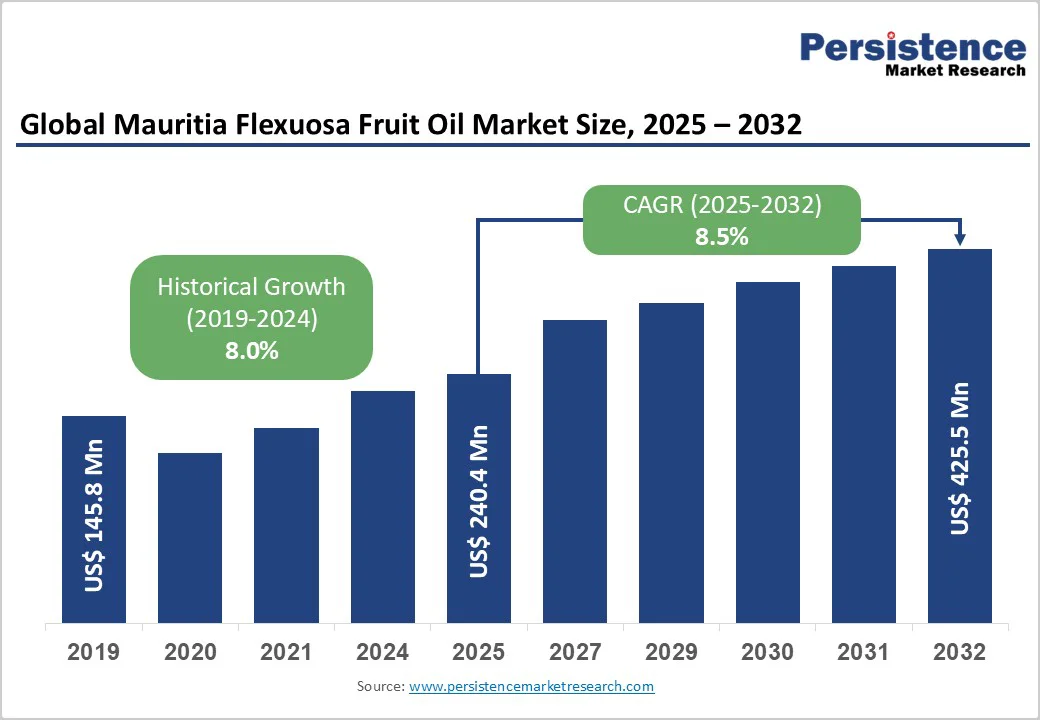
The global mauritia flexuosa fruit oil market size is likely to be valued US$240.4 million in 2025, growing to US$425.5 million by 2032 at a CAGR of 8.5% during the forecast period from 2025 to 2032, driven by the increasing demand for natural and organic ingredients, rising awareness of health benefits such as high antioxidant content and UV protection, and expanding applications in cosmetics, nutraceuticals, and food sectors.
The need for sustainable, eco-friendly superfruit oils has significantly boosted the adoption of Mauritia flexuosa fruit oil across various industries, particularly in developed and emerging economies. The market is further propelled by innovations in extraction technologies for nutrient preservation, catering to preferences for clean beauty and wellness products.
Key Industry Highlights:
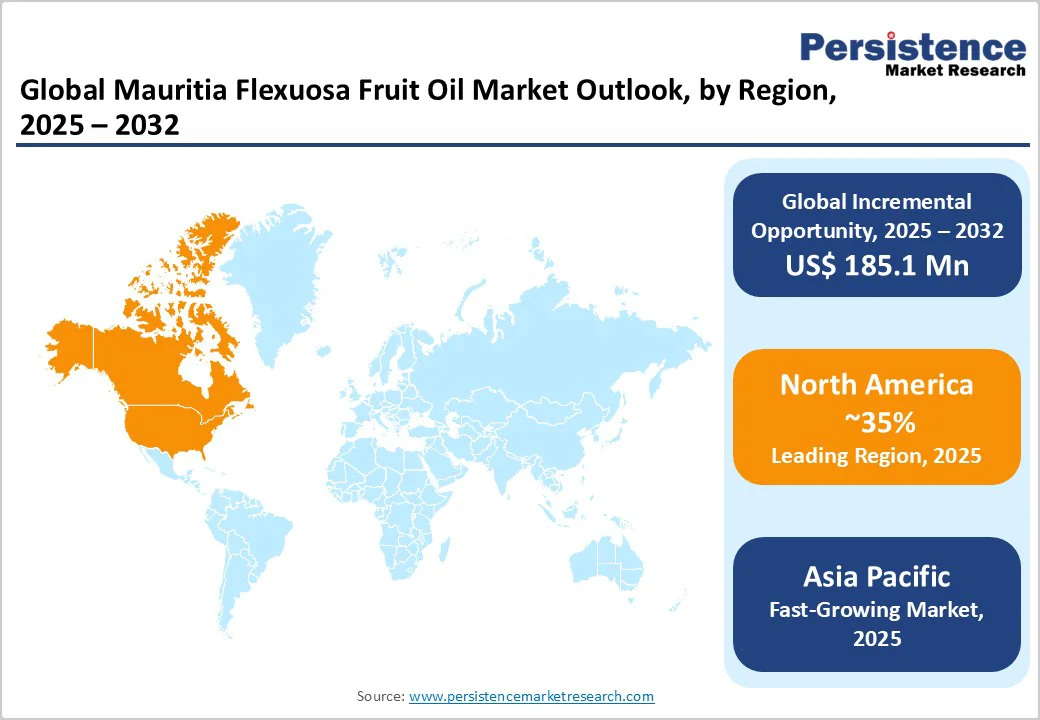
- Leading Region: North America, commanding a 35% market share in 2025, driven by high demand for organic cosmetics, wellness trends, and strong import networks in the U.S.
- Fastest-growing Region: Asia Pacific, fueled by rising disposable incomes, adoption of natural skincare in countries like Japan and South Korea, and expanding nutraceutical markets.
- Dominant Product Form: Liquid, holding approximately 70% of the market share, due to its ease of incorporation in formulations and superior bioavailability in cosmetics and food.
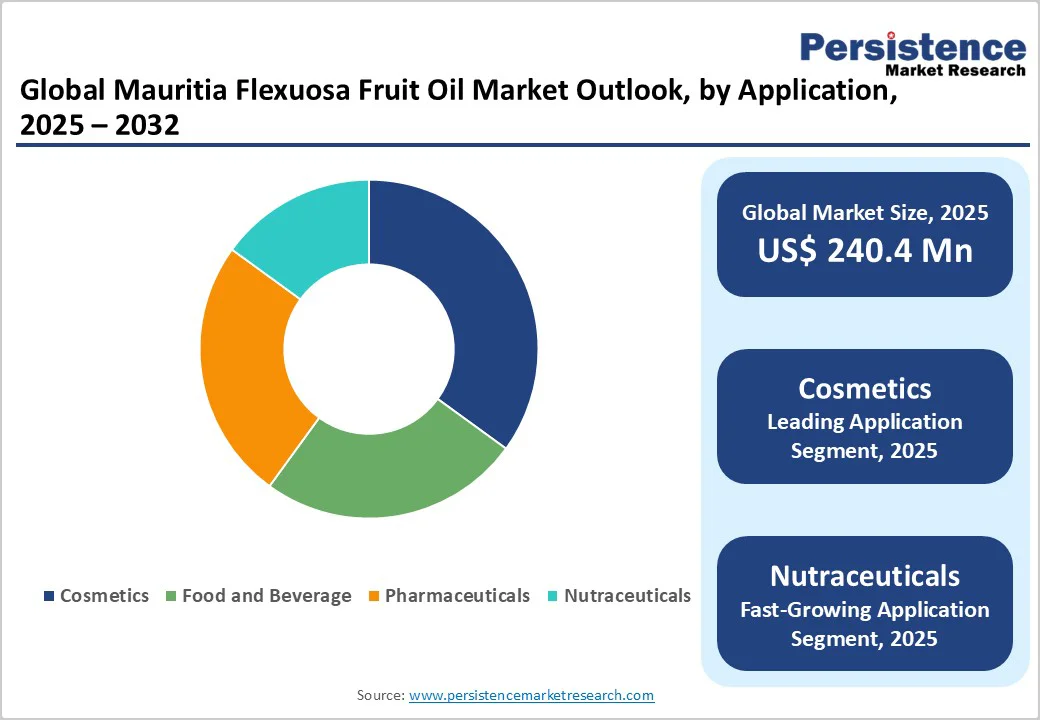
- Leading Application: Cosmetics, accounting for over 50% of market revenue, driven by its moisturizing and anti-aging properties in skincare products.
- Leading Source: Organic, contributing nearly 60% of market revenue, owing to consumer preference for ethically sourced, chemical-free ingredients.
- Growth Opportunity: Expansion in nutraceuticals and functional foods, leveraging its vitamin A and antioxidant profile for health supplements.
| Global Market Attribute | Key Insights |
|---|---|
| Mauritia Flexuosa Fruit Oil Market Size (2025E) | US$240.4 Mn |
| Market Value Forecast (2032F) | US$425.5 Mn |
| Projected Growth (CAGR 2025 to 2032) | 8.5% |
| Historical Market Growth (CAGR 2019 to 2024) | 8.0% |
Market Dynamics
Rising Demand for Natural and Sustainable Ingredients
The increasing demand for natural and sustainable ingredients in cosmetics and nutraceuticals is a primary driver of the mauritia flexuosa fruit oil market. The trend creates substantial demand for nutrient-dense oils. Mauritia flexuosa fruit oil, rich in beta-carotene, vitamins A and C, and essential fatty acids, offers over 90% efficacy in UV protection and skin hydration, as shown in clinical studies, making it ideal for anti-pollution and anti-aging formulations.
For instance, products from companies like Young Living have demonstrated 85% improvement in skin elasticity, supporting ethical sourcing from Amazonian communities and reducing reliance on synthetic alternatives by up to 70%.
Additionally, the post-pandemic focus on wellness, coupled with investments in sustainable agriculture totaling US$ 5 Bn in 2025, has accelerated adoption. The push for clean label products, backed by regulations such as the EU's Green Deal, continues to propel the market forward, particularly in regions with high beauty spending like North America and Europe.
Supply Chain Limitations and High Production Costs
Limited geographic sourcing and high production costs pose a significant restraint on market growth. Native to the Amazon rainforest, the buriti palm's seasonal harvesting restricts supply, leading to price volatility up 15-25% in 2025 due to climate impacts and ethical sourcing demands. Extraction via cold-pressing involves costs exceeding US$1 Mn per facility for sustainable practices and quality controls.
Regulatory bodies such as the U.S. FDA and EFSA require extensive purity and traceability data, extending timelines to 12-18 months. For example, certifications for organic variants by Acadian Seaplants Limited have faced delays due to biodiversity concerns, increasing costs by 20%. Smaller suppliers struggle against giants like Nutraceutical Corporation, limiting scalability in markets where alternatives like argan oil offer more stable supply chains.
Expansion in Clean Beauty and Functional Nutrition
Advancements in clean beauty formulations and functional nutrition present significant growth opportunities for the mauritia flexuosa fruit oil market. Enhanced extraction methods preserve antioxidants, improving efficacy to 95% in hair and skin care, aligning with the vegan beauty boom projected at US$ 11 Bn by 2025. These innovations support the integration of nutraceuticals for immune health, with powder forms enabling easy supplementation.
For instance, companies like Nature's Way are investing in capsule variants, with trials showing 80% consumer preference for natural supplements. Sustainable partnerships cut sourcing costs by 30%, and e-commerce integration boosts accessibility. As global demand for superfruit ingredients surges, estimated at US$50 Bn by 2030, these opportunities are expected to drive expansion in high-growth regions like the Asia Pacific and South America.
Category-wise Analysis
Product Form Insights
Liquid dominates the market, account for 70% of the share in 2025. Its popularity stems from versatility in cosmetic formulations and food infusions, high skin absorption, and consumer preference for pure, unprocessed oil in premium products. These qualities make it a preferred choice for both beauty and gourmet applications.
Capsules are the fastest-growing segment, driven by the demand for convenient nutraceutical delivery. Their easy integration into daily wellness routines boosts use in the pharmaceutical and supplement sectors. Increasing health awareness and consumer focus on preventive care further accelerate adoption, making capsules a key growth driver in the market.
Source Insights
Organic leads with nearly 60% share, favored for its ethical sourcing and chemical-free nature, aligning with the growing consumer demand for clean-label products. Shoppers are prioritizing transparency, sustainability, and natural ingredients in their choices, making ethically produced, unprocessed oils highly appealing. This trend strengthens market preference for products that combine efficacy with environmentally and socially responsible practices.
Conventional is the fastest-growing in cost-sensitive markets, driven by its scalability in food and beverage applications. Its adaptable nature allows it to be seamlessly incorporated into various products, from smoothies and energy bars to cooking oils. Manufacturers benefit from consistent quality and supply, while consumers enjoy versatile, nutrient-rich options, making the oil a key ingredient in expanding functional and healthy food offerings.
Application Insights
Cosmetics hold over 50% share, propelled by its anti-aging and UV-protective properties in skincare. Rich in antioxidants and carotenoids, the oil helps reduce signs of aging while shielding skin from harmful UV radiation. Its natural, nourishing qualities make it a sought-after ingredient in premium cosmetics, driving demand among health-conscious consumers seeking effective, protective skincare solutions.
Nutraceuticals are the fastest-growing, fueled by their strong antioxidant properties. These benefits support overall health, making it a popular ingredient in dietary supplements and functional foods. Rising consumer interest in preventive healthcare and natural wellness solutions drives adoption, positioning nutraceutical applications as a key growth driver in the market.
Distribution Channel Insights
Online commands 45% share, driven by the convenience and accessibility of e-commerce platforms. Global consumers can easily purchase a variety of products, compare options, and access premium or niche formulations. This digital reach enhances market penetration, expands brand visibility, and supports sustained growth through direct-to-consumer channels.
Direct Sales are the fastest-growing, fueled by brand partnerships and ethical sourcing networks. This approach allows companies to connect directly with consumers, highlight sustainable and responsible practices, and build brand loyalty. The personalized engagement and transparency offered through direct channels accelerate adoption, especially among ethically and health-conscious buyers.
Regional Insights
North America Mauritia Flexuosa Fruit Oil Market Trends
North America accounts for 35% in 2025, driven by strong demand for organic beauty products and wellness supplements. Consumers in the U.S. and Canada increasingly prioritize natural, sustainable, and ethically sourced ingredients, with clean-label certifications and transparent supply chains influencing their purchasing decisions.
The U.S. shows high demand for premium cosmetics and anti-aging products, where the oil’s antioxidant, UV-protective, and nourishing properties are particularly valued, while Canadian consumers favor supplements and functional foods enriched with natural antioxidants.
The region’s well-established e-commerce platforms and specialty retailers further enhance accessibility, enabling broader reach and convenient purchasing. Additionally, the emphasis on sustainable imports ensures ethically sourced oils gain a competitive advantage, strengthening consumer trust.
Europe Mauritia Flexuosa Fruit Oil Market Trends
Europe holds about 25% market share, led by Germany and France, due to stringent EU regulations on natural cosmetics and rising vegan beauty adoption, promoting UV-protective oils. Rising demand for vegan and cruelty-free beauty products further supports adoption, as consumers increasingly prefer plant-based, eco-friendly formulations.
Mauritia flexuosa fruit oil, with its chemical-free profile and antioxidant-rich, UV-protective, and anti-aging properties, aligns perfectly with these trends, making it highly sought after in premium skincare. Established retail networks, e-commerce platforms, and specialty stores across Europe enhance accessibility, allowing consumers to access a variety of products easily.
Combined with clean-label certifications and sustainable sourcing initiatives promoted by the EU, these factors create a favourable environment for market growth, solidifying Europe as a key region for Mauritia flexuosa fruit oil in beauty and wellness applications.
Asia Pacific Mauritia Flexuosa Fruit Oil Market Trends
Asia Pacific commands around 20% share and is the fastest-growing region, propelled by Japan and South Korea’s booming K-beauty sector and increasing nutraceutical consumption for antioxidant benefits. Rising health awareness across the region is also fueling demand for nutraceuticals and functional foods, as consumers seek dietary supplements that support wellness and preventive healthcare.
The expanding e-commerce infrastructure and growing presence of specialty wellness stores make these products increasingly accessible, enhancing adoption. Additionally, rising disposable incomes, urbanization, and a strong focus on self-care and personal wellness further boost market potential.
These factors collectively position Asia Pacific as a high-growth, strategically important market for Mauritia flexuosa fruit oil, with opportunities spanning skincare, dietary supplements, and functional food applications.
Competitive Landscape
The global mauritia flexuosa fruit oil market is highly competitive, driven by growing consumer demand for natural, ethically sourced, and high-quality oils. Leading players focus on sustainable sourcing and product innovation to capture niche segments in cosmetics, nutraceuticals, and functional foods. Companies are investing in R&D to enhance extraction methods, with cold-press techniques preferred for preserving nutrients and antioxidants.
Partnerships with Amazonian cooperatives and local communities ensure ethical sourcing, support local economies, and maintain consistent supply, appealing to environmentally and socially conscious consumers. Expanding e-commerce presence allows brands to reach wider audiences, offer direct-to-consumer sales, and provide product education.
Additionally, innovation in formulations-such as liquid oils, capsules, and cosmetic-ready variants, enables companies to cater to diverse consumer needs while aligning with clean-label and sustainability trends. By combining advanced extraction technologies, ethical sourcing practices, and strategic distribution channels, key players strengthen their market position and drive long-term growth in the competitive Mauritia flexuosa fruit oil industry.
Key Industry Developments
- In July 2025, Young Living launched a new organic liquid variant for cosmetics, enhancing UV protection claims.
- In May 2025, Nutraceutical Corporation expanded capsule production by 25% to meet nutraceutical demand in Asia Pacific.
Companies Covered in Mauritia Flexuosa Fruit Oil Market
- Young Living
- Acadian Seaplants Limited
- Sustainable Oils
- Aromex Industry
- Nature's Way
- Alba Botanica
- BioExtracts
- Viva Naturals
- Nutra Green
- Nutraceutical Corporation
- Cocovida
- Herb Solutions
- Bulk Natural Oils
- Tropical Fruit Products
- Others
Frequently Asked Questions
The global mauritia flexuosa fruit oil market is projected to reach US$240.4 Million in 2025, driven by surging demand for natural antioxidants and sustainable ingredients in cosmetics and nutraceuticals worldwide.
The market is driven by the growing consumer preference for natural and organic ingredients in various industries, including cosmetics, personal care, and food. Mauritia flexuosa fruit oil, rich in antioxidants, oleic acid, and beta-carotene, aligns with this trend due to its moisturizing, anti-aging, and photoprotective properties.
The market is poised to witness a CAGR of 8.5% from 2025 to 2032, supported by innovations in extraction and expanding use in clean beauty and functional foods for wellness-focused consumers.
Expansion in nutraceuticals and vegan beauty offers key opportunities, enabling customized Mauritia Flexuosa Fruit Oil variants for supplements and ethical skincare with enhanced bioavailability and sustainability.
Key players include Young Living, Nature's Way, Nutraceutical Corporation, Alba Botanica, and Sustainable Oils, leading through sustainable sourcing and innovative formulations in cosmetics and health products.


