




- Specialty & Fine Chemicals
- Diatomite Market
Diatomite Market Size, Share, and Growth Forecast 2025 - 2032
Diatomite Market by Grade (Natural, Calcined, Flux Calcined), Application (Filter Aids, Fillers, Absorbents, Construction Materials, Others), Regional Analysis, 2025 - 2032

Diatomite Market Size and Trend Analysis
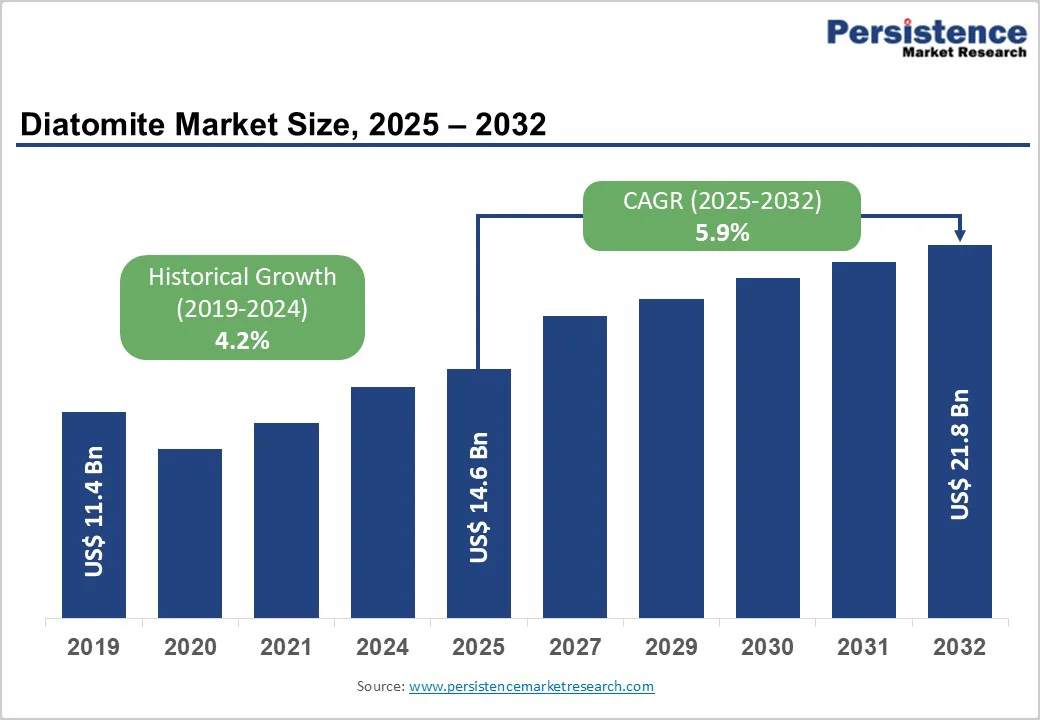
The global diatomite market size is likely to be valued at US$ 14.6 billion in 2025 and projected to reach US$ 21.8 billion, expanding at a CAGR of 5.9% between 2025 and 2032. Growth is driven by rising demand for diatomite-based filtration in beverages and water treatment, expanding use in construction materials, increasing adoption in agriculture as a natural insecticide and soil enhancer, and growing utilization in paints, plastics, and industrial absorbents.
Key Market Highlights:
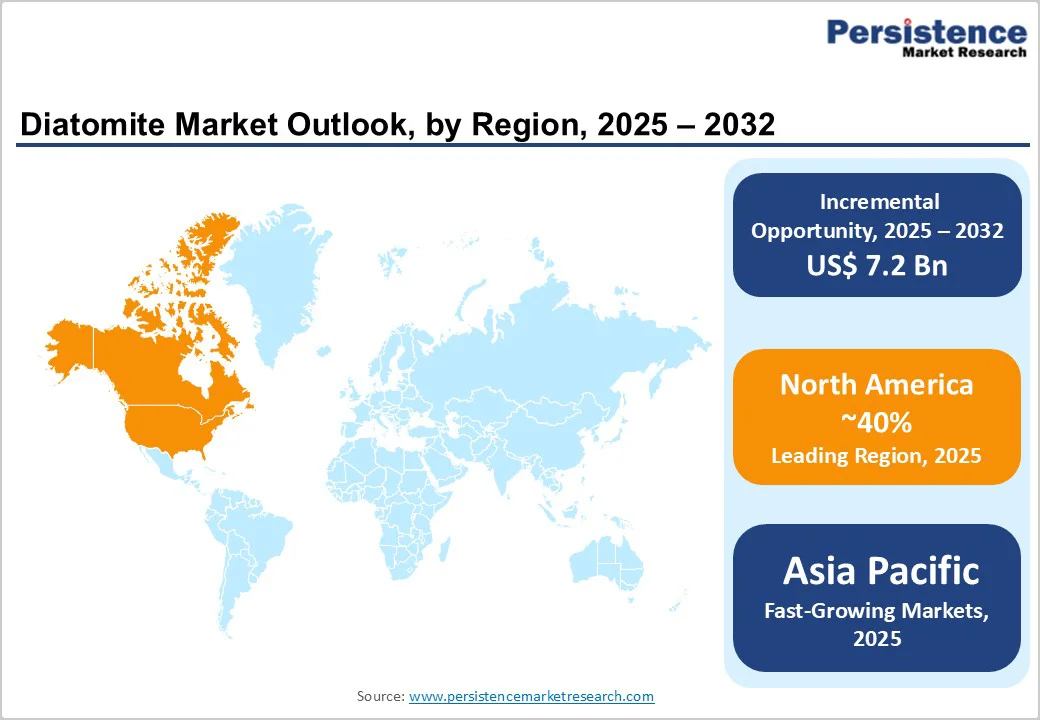
- Leading Region: North America dominates the global diatomite market with over 40% share, fueled by abundant reserves and advanced industrial applications in filtration and construction.
- Fastest-Growing Region: Asia Pacific is the fastest-growing region at a 6.5% CAGR through 2032, driven by manufacturing booms and agricultural needs in China and India.
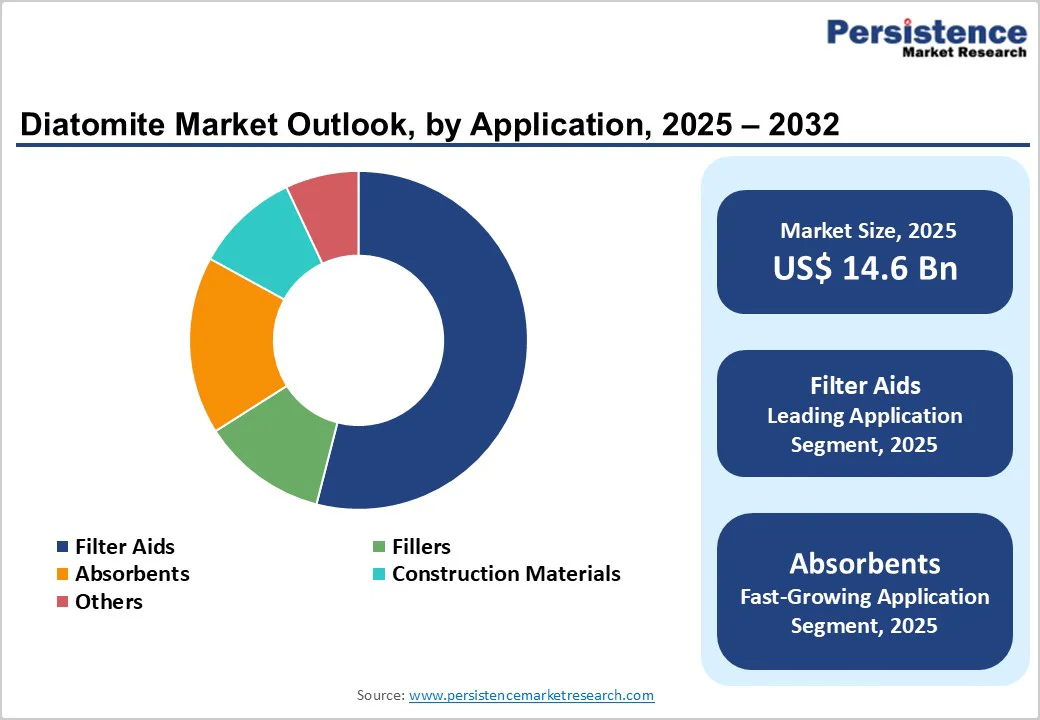
- Leading Segment: Filter Aids stands as the dominant application segment, holding 54% share due to essential use in purification processes across multiple industries.
- Fastest-Growing Segment: Absorbents emerges as the fastest-growing segment, propelled by rising environmental cleanup demands and sustainable agriculture trends.
- Key Opportunity: A key opportunity lies in developing specialty diatomite products for water treatment and green construction, capitalizing on global sustainability initiatives.
| Key Insights | Details |
|---|---|
|
Diatomite Market Size (2025E) |
US$ 14.6 Billion |
|
Market Value Forecast (2032F) |
US$ 21.8 Billion |
|
Projected Growth CAGR (2025-2032) |
5.9% |
|
Historical Market Growth (2019-2024) |
4.2% |
Market Dynamics
Drivers - Demand for Diatomite is Rising as Industries Prioritize High-Quality, Sustainable Filtration Solutions
The filtration and purification sector continues to grow steadily as industries such as food and beverage, pharmaceuticals, and municipal water treatment adopt stricter quality and safety standards. Diatomite is becoming a preferred material because its natural porosity and high surface area allow it to capture fine particles effectively, improving clarity and safety in processed liquids. With global attention on clean water access increasing, organizations promoting water safety have encouraged wider adoption of efficient filtration media like diatomite.
The beverage industry also depends heavily on diatomite to remove sediments, yeast, and unwanted impurities, helping manufacturers maintain product consistency and meet consumer expectations for purity. As governments introduce tighter environmental regulations, more industries are choosing diatomite as a sustainable and reliable filtration aid. This shift supports continued market expansion, driven by the growing need for natural, high-performance solutions in critical processing activities.
Diatomite Adoption is Growing Due to its Natural Benefits in Sustainable Farming and Eco-Friendly Construction Materials
Diatomite is gaining strong traction in agriculture and construction due to its natural, multifunctional properties that align with global sustainability trends. In agriculture, it works effectively as a soil amendment, improving aeration, moisture retention, and nutrient distribution, which is essential for high-productivity farmlands. Its ability to act as a natural pest deterrent without chemical residues supports the rising adoption of environmentally friendly and organic farming practices.
In construction, diatomite serves as a lightweight filler in plasters, coatings, paints, and insulation materials, helping improve thermal performance and energy efficiency in buildings. As urbanization accelerates worldwide, construction activities are expanding, creating consistent demand for materials that reduce environmental impact and lower production costs. Diatomite’s eco-friendly composition and performance benefits make it an attractive choice for builders and manufacturers seeking sustainable solutions, contributing to broader adoption in both traditional and modern applications.
Restraints - The Market Faces Constraints due to Limited Diatomite Deposits and Strict Mining Regulations
Diatomite supply remains constrained because deposits are limited and located in only a few countries, including the United States, China, and Denmark. This geographic concentration creates vulnerabilities in the supply chain, especially during periods of high demand. Mining operations also face strict environmental regulations that restrict expansion, increase compliance costs, and slow down production timelines. Requirements such as land rehabilitation, water management, and ecological protection frequently delay mining permits and reduce operational flexibility.
These challenges can result in temporary shortages, affecting industries like filtration and agriculture that depend heavily on consistent supply. Smaller companies, in particular, may struggle with rising prices and limited availability, which restricts their ability to scale operations. For import-reliant regions, these issues create added risks and may reduce market growth potential. Overall, supply limitations and extraction hurdles remain key restraints for the diatomite market worldwide.
Synthetic Filtration Materials are Increasingly Challenging Diatomite’s Market Share in Cost-Sensitive Sectors
Diatomite faces increasing competition from synthetic and engineered materials such as perlite, activated carbon, and polymer-based filtration media. These alternatives are becoming popular because they offer consistent quality, adaptable technical properties, and easier scalability, which appeals to industries that require cost-efficient production. In applications such as water treatment, industrial absorbents, and air purification, engineered materials can often match or exceed the performance of natural minerals.
Their customizable characteristics, driven by advancements in chemical engineering and material science, allow manufacturers to fine-tune filtration efficiency, durability, and operating costs. As more industries adopt specialized solutions, diatomite producers risk losing market share unless they invest in product differentiation and certifications that highlight purity, sustainability, and environmental benefits. Without these efforts, cost-sensitive segments may increasingly shift toward alternatives, slowing diatomite adoption in traditional and emerging markets.
Market Opportunities
Innovations in Modified Diatomite are Creating New Opportunities in High-Tech and Clean-Tech Filtration Applications
Significant opportunities exist for companies investing in advanced filtration technologies based on modified or enhanced diatomite. Emerging sectors such as biotechnology, pharmaceuticals, and renewable energy require filtration materials that offer high precision, biocompatibility, and consistent purity. Diatomite naturally meets many of these needs, and ongoing R&D is improving its performance further. Innovations such as nano-modified diatomite have demonstrated up to 30% higher filtration efficiency, enabling use in high-value applications like biofuel refinement, pharmaceutical-grade filtration, and environmental cleanup.
As global investment in clean technology and wastewater recycling continues to rise, specialized diatomite-based products can capture a premium market segment. Collaborations between manufacturers, research institutions, and end-use industries present strong avenues for developing next-generation filtration solutions. These advancements position diatomite producers to secure long-term competitive advantages and expand their presence in fast-growing, technology-driven markets.
Rising Focus on Organic Farming and Green Construction is Expanding Diatomite’s Market Potential
The shift toward sustainability is creating new opportunities for diatomite in both agriculture and green construction. In agriculture, diatomite is widely used as an organic soil conditioner and fertilizer carrier, helping improve crop productivity while supporting chemical-free farming. Growing interest in organic and regenerative agriculture, particularly in Asia Pacific and Europe, continues to boost demand for natural soil improvement solutions. In construction, diatomite contributes to eco-friendly building designs by improving insulation, reducing material weight, and enhancing thermal efficiency. These benefits align closely with global policies promoting low-carbon and energy-efficient infrastructure. Government incentives for sustainable building materials and rising consumer preference for environmentally responsible products further strengthen market potential. As sustainable construction is projected to increase significantly over the next decade, diatomite-based additives, coatings, and insulation products will offer strong growth opportunities for manufacturers adopting greener innovation strategies.
Category-wise Analysis
By Grade Insights
Natural Diatomite holds around 60% of the market because it retains its natural absorbency, purity, and chemical stability. Industries prefer it for filtration and agriculture since it is cost-effective and environmentally friendly. It requires minimal processing, reducing energy use and making it suitable for large-scale operations. Its proven ability to remove impurities without additives strengthens its demand. As companies move toward greener materials, regulatory support for natural minerals further reinforces the dominance of this segment.
By Application Insights
The filter aids segment leads with a 54% share due to its essential role in clarifying liquids in food, beverage, oil, and chemical processing. Diatomite’s fine, porous structure captures very small particles, helping manufacturers meet strict hygiene and safety standards. Its quick filtration performance and consistent results make it more reliable than alternatives. Growing activity in food production, along with rising investment in water treatment projects, continues to drive its usage, keeping filter aids the most important application area globally.
Regional Insights
North America Diatomite Market Insights & Trends
North America remains a leading region in the diatomite market, driven primarily by abundant reserves in the United States, especially in Nevada and California. The region benefits from advanced mining technology, efficient supply chains, and a well-established industrial base that supports large-scale production. Diatomite is widely used in filtration for beverages, pharmaceuticals, and water treatment due to strict quality and safety regulations set by environmental and health agencies. Continuous innovations driven by research collaborations between universities and industry players have led to the development of specialized diatomite products, such as those used for hazardous spill absorption and high-precision filtration.
Growing investments in sustainability and environmental cleanup further boost demand. With ongoing infrastructure modernization and strong regulatory support for non-toxic, eco-friendly materials, North America is positioned to maintain consistent market growth in both traditional and emerging applications.
Europe Diatomite Market Analysis
Europe demonstrates strong demand for diatomite across industrial, agricultural, and construction applications. Countries such as Germany, the United Kingdom, France, and Spain rely heavily on diatomite for high-quality filtration in chemicals, beverages, and wastewater treatment. The European Union’s strict environmental regulations promote the use of natural, eco-friendly filtration aids, benefiting diatomite’s market position. Germany, with its strong industrial and automotive sectors, uses diatomite in manufacturing coatings, fillers, and specialty paints.
The United Kingdom’s growing focus on sustainable agriculture boosts usage in soil improvement and natural pest control. France and Spain also drive demand through their wine and olive oil industries, which require high-purity filtration processes. Europe’s increasing emphasis on circular economy principles and green building materials continues to support diatomite adoption, ensuring stable market growth and expansion into advanced, eco-focused applications.
Asia Pacific Diatomite Market Analysis
Asia Pacific is emerging as one of the fastest-growing regions in the diatomite market, driven by rapid industrial expansion, agricultural development, and increasing environmental awareness. China leads regional production due to its substantial natural deposits and strong manufacturing ecosystem, supplying diatomite for filtration in electronics, textiles, and food processing. Japan utilizes diatomite in high-precision filtration systems required for semiconductors and advanced manufacturing. In India, the rise of the food processing, agriculture, and water purification sectors has significantly increased demand for natural absorbents like diatomite.
Southeast Asian countries also benefit from favorable mining conditions and cost-effective exports, supporting regional trade. As governments across the region promote sustainable farming, clean water access, and green construction materials, diatomite’s role continues to expand. The region is positioned to become a major growth hub, supported by accelerating urbanization and rising environmental regulations.
Competitive Landscape
The global diatomite market exhibits a fragmented structure, characterized by a mix of established miners and regional specialists competing on quality and innovation. Leading firms pursue expansion through capacity upgrades and strategic acquisitions to access new reserves and technologies. R&D trends focus on functionalized diatomite for niche applications, while key differentiators include sustainable sourcing certifications and customized particle sizing. Emerging business models emphasize vertical integration, from mining to end-product formulation, enabling cost control and market responsiveness in a diverse competitive arena.
Key Market Developments:
- In February 2024, Showa Chemical Industry Co., a major Japanese producer of high-purity diatomite filter aids, signed a strategic MOU with African Diatomite Industries Limited (ADIL), Kenya’s leading diatomaceous earth company, during a Kenyan state visit to Japan, with President and key ministers in attendance.
- In May 2024, Imerys S.A. began exclusive negotiations to acquire the diatomite and perlite business in Europe from Chemviron, a subsidiary of Calgon Carbon Corp. This acquisition aims to enhance Imerys’s presence in Europe and expand its portfolio in the filtration and life sciences sectors.
- In April 2024, Dicalite Minerals Corp. expanded its mining operations by acquiring diatomite claims in Nevada from Sunrise Resources Plc. This move indicates growth in Dicalite’s resource base and production capabilities.
Companies Covered in Diatomite Market
- Imerys
- EP Minerals
- Showa Chemical Industry Co., Ltd.
- Calgon Carbon Corporation
- Dicalite Management Group, LLC
- Diatomite CJSC
- Reade International Corp.
- Seema Minerals & Metals
- Eagle-Picher Industries Inc.
- Linjiang Dayuan Diatomaceous Earth New Material Ecological Environmental Protection Technology Co., Ltd.
- Matex YG
- U.S. Silica Holdings Inc.
- CECA Chemical
- Qingdao Best Diatomite Co. Ltd.
Frequently Asked Questions
The global diatomite market is anticipated to reach US$ 21.8 Billion by 2032, expanding from US$ 14.6 Billion in 2025.
Key drivers include surging needs for natural filtration in food and water treatment, alongside applications in sustainable agriculture and construction materials.
Filter Aids leads with over 54% share, essential for impurity removal in beverages, pharmaceuticals, and industrial processes.
North America leads, supported by rich reserves, regulatory backing, and strong industrial demand in the United States.


