




- Food Ingredients & Additives
- Barley Market
Barley Market Size, Share, Growth, and Regional Forecast, 2025 to 2032
Barley Market by Grade (Malting Grade, Food Grade, Feed Grade), by End-use (Whole Grain, Pearled Barley, Barley Flour, Others), by End-use (Beverage Industry, Food Manufacturing, Livestock & Aquaculture, Others), by Distribution Channel (B2B, B2C), and Regional Analysis from 2025 to 2032.

Barley Market Share and Trends Analysis
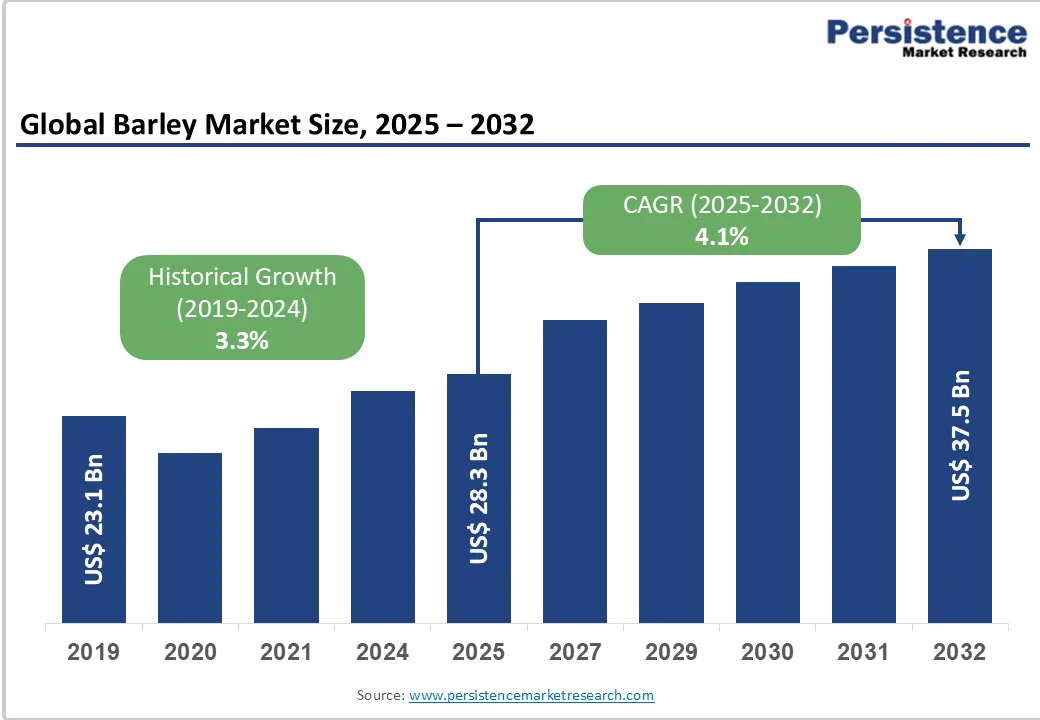
The global barley market size is likely to value US$ 28.3 billion in 2025 and projected to reach US$ 37.5 billion at a CAGR of 4.1% during the forecast period from 2025 to 2032.
Key Industry Highlights:
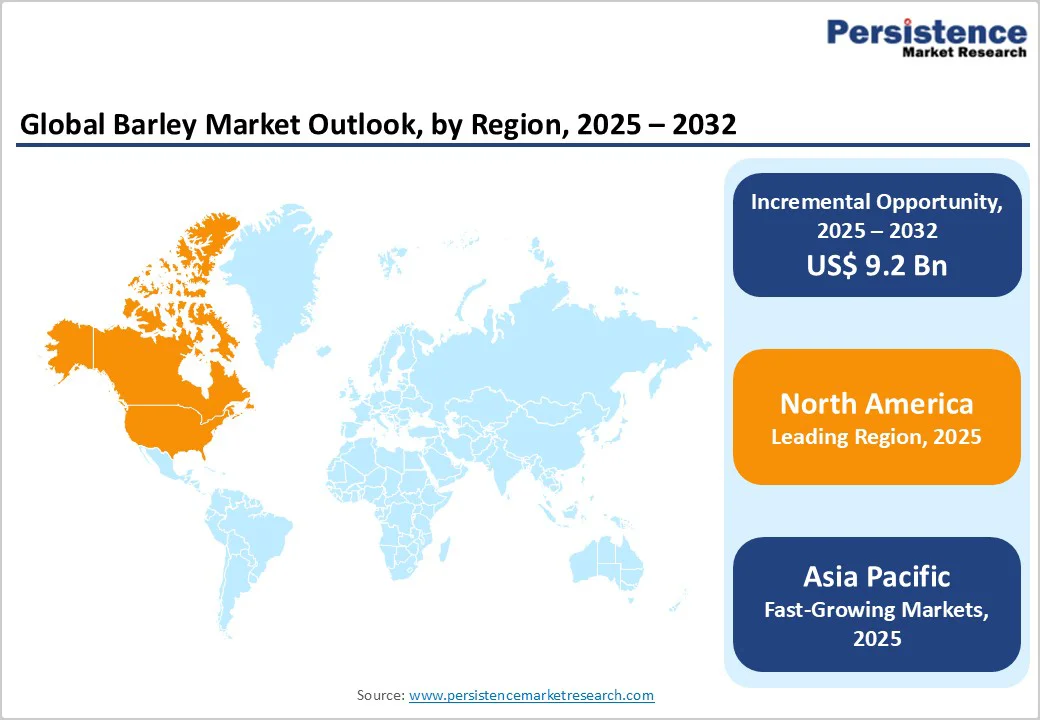
- Leading Region: North America, holding a significant share of the global barley market, driven by expanding livestock industries, craft beverage production, and adoption of organic and gluten-free barley.
- Fastest-Growing Region: Asia Pacific, fueled by rising demand for malting and feed barley in India, China, Southeast Asia, and Japan, alongside investments in climate-resilient and high-quality varieties.
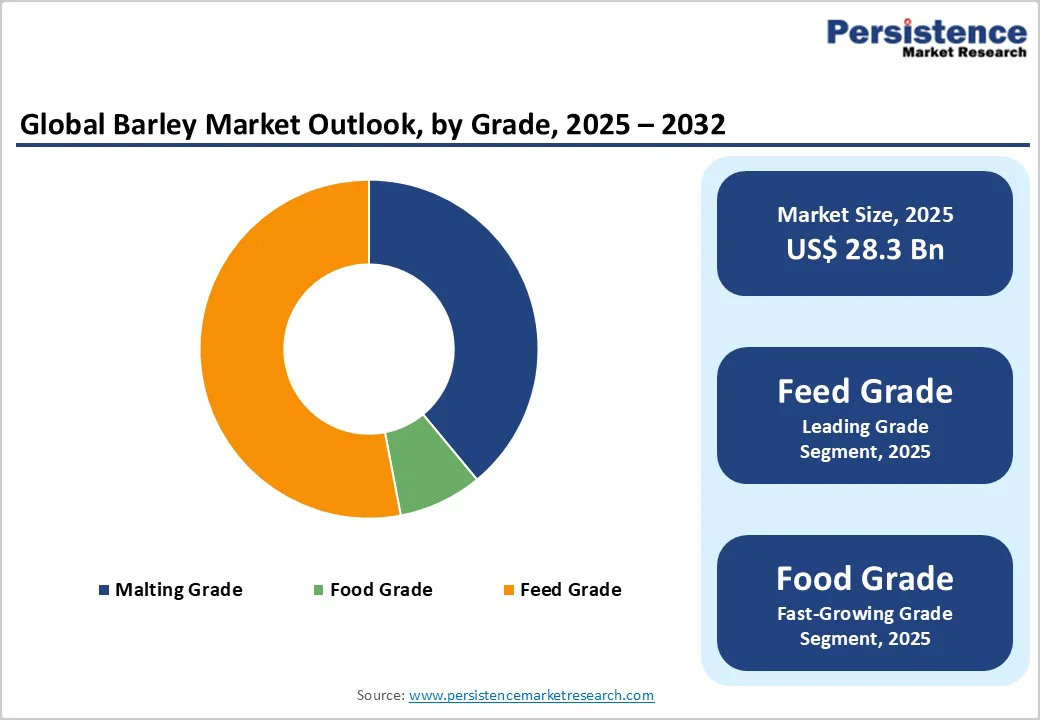
- Fastest-Growing Product Segment: Feed-grade barley, driven by rising global meat, dairy, and aquaculture production requiring cost-effective, high-nutrition feed solutions.
- Market Drivers: Expanding livestock industries and increasing beverage sector demand are boosting barley requirements across feed, malting, and food applications worldwide.
- Opportunities: Development of organic, gluten-free, and specialty barley offerings, alongside disease-resistant and climate-adapted varieties, enhances market reach and premium product positioning.
- Key Developments: In October 2025, CBRC pledged $1.8 million to USask CDC for barley breeding; in September 2025, Asahi prioritized sustainably sourced barley; in March 2025, BASF and Boortmalt generated Europe’s first Verified Impact Units for on-farm GHG reductions.
| Key Insights | Details |
|---|---|
| Global Barley Market Size (2025E) | US$ 28.3 Bn |
| Market Value Forecast (2032F) | US$ 37.5 Bn |
| Projected Growth (CAGR 2025 to 2032) | 3.3% |
| Historical Market Growth (CAGR 2019 to 2024) | 4.1% |
Market Dynamics
Driver – Expanding Livestock Industries Boost Feed-grade Barley Demand
As global livestock industries expand, demand for feed-grade barley is skyrocketing. Barley’s high fiber content, digestibility, and favorable energy profile make it a preferred feed grain in ruminant diets. This trend is particularly evident in regions emphasizing sustainable and cost-effective livestock nutrition strategies.
According to the USDA's Economic Research Service, the 2024/25 U.S. barley production forecast is relatively unchanged at 149 million bushels, with a slight reduction in harvested area offset by a near 5-bushel-per-acre increase in yield to 79.1 bushels per acre. This yield increase reflects producer-reported yield expectations and is corroborated by the USDA's National Agricultural Statistics Service. The growing livestock sector, coupled with barley's nutritional benefits, positions feed-grade barley as a key component in meeting the rising global demand for animal feed.
Restraints – Erratic Weather and Changing Rainfall Patterns Disrupt the Quality of Barley Yields
Erratic weather patterns and shifting rainfall cycles are increasingly challenging global barley production, creating a significant market restraint. Extreme events such as droughts, unseasonal rains, and heatwaves negatively affect both yield and grain quality, leading to lower protein content and inconsistent malting characteristics. Regions heavily reliant on rain-fed agriculture, particularly in Asia, Africa, and parts of Europe, are most vulnerable to these disruptions. Unpredictable weather complicates planting schedules, crop management, and harvesting, increasing operational risks for growers. Consequently, supply volatility can drive price fluctuations and impact contracts with maltsters and feed producers. Climate-adaptive strategies, resilient barley varieties, and advanced irrigation systems are essential to mitigate these risks, yet uncertainty remains, limiting consistent market growth and long-term planning in the global barley industry.
Opportunity – Expanding Organic and Gluten-Free Barley Offerings for Health-Conscious Consumers
The rising demand for healthier and specialty food options is creating significant opportunities for barley producers to expand organic and gluten-free offerings. Health-conscious consumers are increasingly seeking natural, minimally processed grains with verified quality attributes, driving interest in organic barley for both food and beverage applications. Gluten-free barley products cater to individuals with celiac disease, gluten sensitivities, or those pursuing wellness-focused diets, expanding the consumer base. Innovations in barley processing and certification enhance product appeal, enabling use in baked goods, breakfast cereals, and functional beverages. Premium branding, traceability, and sustainable cultivation practices further strengthen market positioning. By investing in organic and gluten-free barley lines, producers can capture higher margins, diversify market presence, and meet evolving global dietary trends, fostering long-term growth in the barley sector.
Category-wise Analysis
By Grade Insights
Feed grade holds approx. 43% market share as of 2025, establishing its dominance in the global barley market due to rising demand from the livestock and aquaculture industries. High nutritional content, digestibility, and cost-effectiveness make feed-grade barley a preferred choice for poultry, cattle, swine, and fish diets worldwide. Malting grade barley, while smaller in share, is highly valued for brewing and distilling applications, with quality traits such as enzyme activity, protein content, and uniform kernel size driving adoption among breweries. Food-grade barley caters to human consumption, including breakfast cereals, health foods, and functional ingredients, gaining traction with health-conscious and gluten-aware consumers. The combined focus on nutritional value, processing suitability, and versatile applications reinforces barley’s pivotal role across feed, malting, and food segments globally.
By End-use, the Beverage Industry is Poised to Achieve Substantial Growth During the Forecast Period
Beverage industry is projected to grow at a CAGR of 5.3% during the forecast period, driven by rising global demand for beer, malt-based drinks, and innovative barley-infused beverages. Breweries and craft beer producers are increasingly seeking high-quality malting barley with optimal enzyme activity, protein content, and kernel uniformity to enhance flavor, aroma, and fermentation efficiency. Rise in health-conscious and premium beverage segments is encouraging experimentation with barley-based functional drinks, low-alcohol options, and gluten-reduced formulations. Expanding microbreweries, taprooms, and artisanal beverage ventures across North America, Europe, and Asia are further boosting barley requirements. Technological advancements in malting and brewing processes are enhancing product consistency and sustainability, positioning barley as a critical raw material to meet evolving beverage industry demands globally.
Region-wise Insights
North America Barley Market Trends
Promising market growth in North America is being driven by rising demand for both feed-grade and malting barley, reflecting expanding livestock industries and craft beverage production. In the U.S., breweries are increasingly sourcing high-quality malting barley for craft and specialty beers, while feed barley supports growing poultry, cattle, and aquaculture operations. Canada’s market emphasizes sustainable and high-yield varieties, with organic and gluten-free barley gaining traction among health-conscious consumers. Innovations in disease-resistant and climate-resilient barley cultivars are enhancing crop reliability amid erratic weather patterns. Additionally, technological advancements in storage, transport, and processing are improving barley quality and reducing losses. Online and bulk distribution channels are expanding accessibility, and government programs supporting research and crop optimization are positioning North America as a dynamic and opportunity-rich region in the global barley market.
Asia Pacific Barley Market Trends
Asia Pacific barley market is expected to grow at a CAGR of 5.6%, fueled by rising demand from both the beverage and livestock sectors. In India, malting barley imports are increasing to support the growing beer industry, while feed barley demand rises alongside expanding poultry and dairy production. China continues to dominate regional consumption, with malting and feed barley imports driven by breweries and livestock operations. Southeast Asian countries such as Vietnam, Thailand, and Indonesia are showing rising interest in feed barley as meat consumption grows, creating new opportunities for imports. Japan emphasizes high-quality barley for both food and beverage applications, including sh?ch? production. Investments in disease-resistant and climate-adapted barley varieties, along with enhanced logistics and storage infrastructure, are supporting consistent supply and market expansion across the region.
Competitive Landscape
The global barley market exhibits a moderately consolidated nature, with a combination of large multinational players and agile regional players shaping competition. Leading companies are investing in high-yield, disease-resistant barley varieties, expanding malting and feed-grade portfolios, and optimizing supply chains to meet global demand.
Startups are innovating with specialty barley blends, organic and gluten-free offerings, and climate-resilient strains, targeting niche beverage and livestock segments. Feed innovations include nutrient-enhanced and customized rations for poultry, cattle, and aquaculture. In the beverage sector, companies leverage advanced brewing technologies and precision malting techniques to improve efficiency, flavor, and consistency. Digital tools, AI-based crop management, and improved logistics are enhancing operational efficiency. Firms combining innovation, quality, and sustainability are well-positioned to capture growing market opportunities worldwide.
Key Industry Developments:
- In October 2025, the Canadian Barley Research Coalition (CBRC) pledged $1.8 million over three years to the University of Saskatchewan’s Crop Development Centre. The funding will extend the core breeding agreement, supporting the development of barley varieties with enhanced agronomic traits, disease resistance, and improved end-use quality, strengthening Canada’s barley research and production capabilities.
- In September 2025, Brewer Asahi is set to transition to purchasing barley from growers who can provide sustainability data on their grain. This new procurement policy is a key part of Asahi's strategy to cut Scope 3 emissions and meet its ambitious target of sourcing 100% of raw materials sustainably.
- In March 2025, BASF and Boortmalt successfully generated Europe's first Verified Impact Units (VIUs), certifying the reduction and removal of on-farm greenhouse gas (GHG) emissions. This milestone, achieved through BASF's Global Carbon Farming Program, signifies a major step toward net-zero barley production and helps companies meet Scope 3 emissions targets.
Frequently Asked Questions
The global Barley market is projected to be valued at US$ 28.3 Bn in 2025.
Expanding livestock industries boost feed-grade barley, fueling growth in the global Barley market.
The global barley market is poised to witness a CAGR of 4.1% between 2025 and 2032
Expanding organic and gluten-free barley offerings for health-conscious consumers represents a significant market opportunity.
Major players in the Global Barley market include Cargill Inc, Boortmalt, GrainCorp, Bunge-Viterra, PMV Maltings Pvt. Ltd., ADM, and others.


