




- Medical Devices
- Asian Breast Implants Market
Asian Breast Implants Market Size, Share, and Growth Forecast, 2025 - 2032
Asian Breast Implants Market Product Type (Silicone Breast Implant, Saline Breast Implant), Shape (Round, Anatomical), Application (Cosmetic Surgery, Reconstructive Surgery), and Country Analysis for 2025 - 2032

Asian Breast Implants Market Size and Trends Analysis
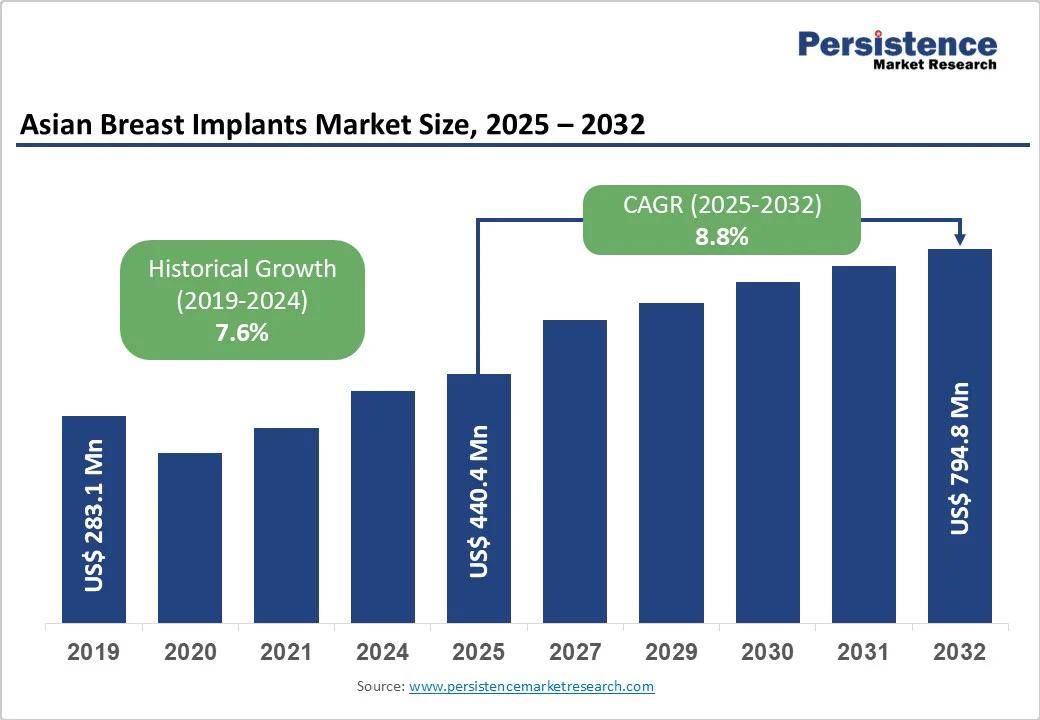
The Asian breast implants market size is likely to be valued at US$440.4 Million in 2025 and is estimated to reach US$794.8 Million in 2032, growing at a CAGR of 8.8% during the forecast period 2025-2032, driven by shifting beauty standards, booming medical tourism, and increasing social acceptance of cosmetic enhancements.
Key Industry Highlights
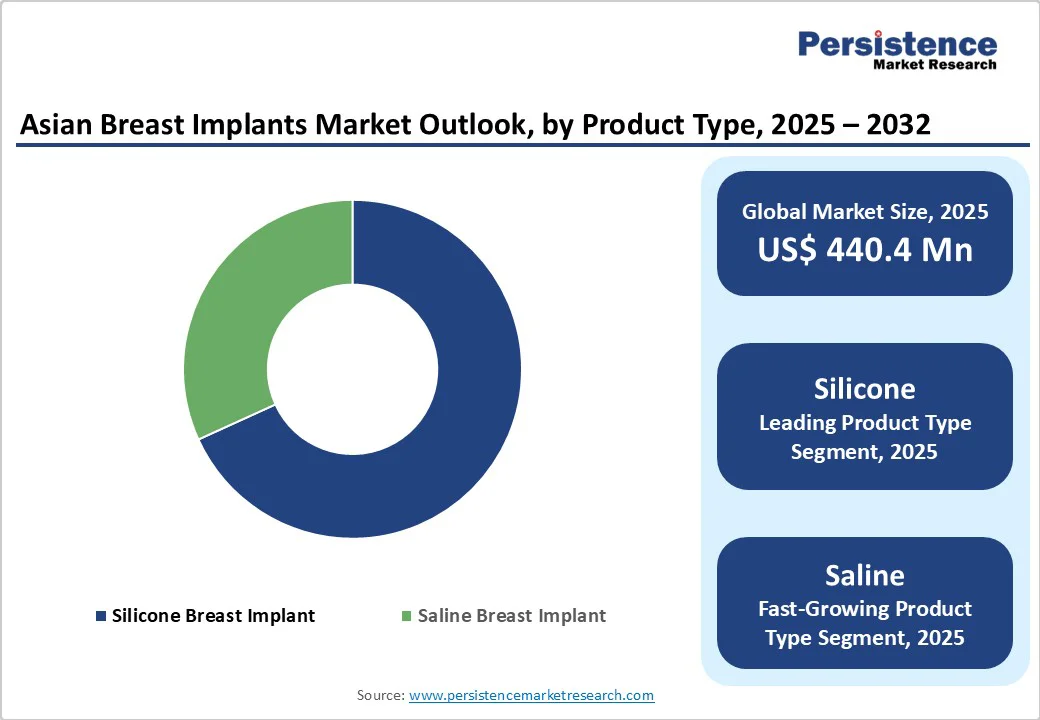
- Leading Product Type: Silicone breast implants hold nearly 68.2% share in 2025, spurred by their natural texture, realistic movement, and improved safety.
- Dominant Shape: Round breast implants, approximately 73.4% of the Asian breast implants market share in 2025, since they help create fuller, symmetrical breasts with improved upper-pole volume and lift.
- Key Application: Cosmetic surgery recorded around 70.6% share in 2025, as aesthetic awareness and social acceptance of breast augmentation surge.
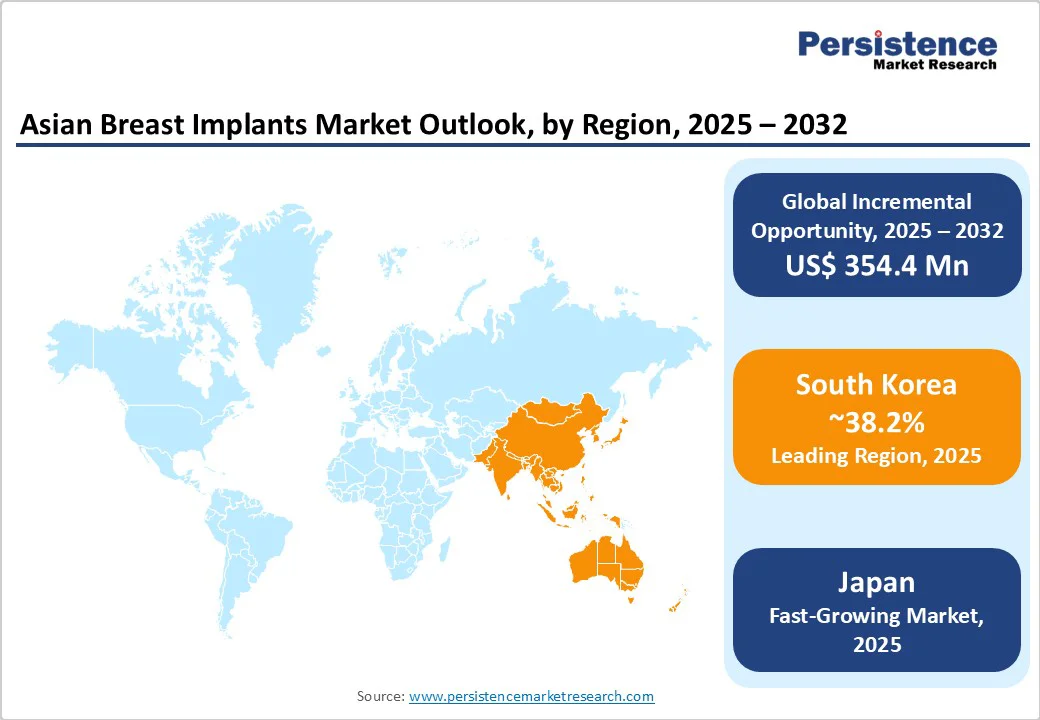
- Leading Country: South Korea, with about 38.2% share in 2025, due to world-class surgical expertise and surging medical tourism.
- Fastest-growing Country: Japan, backed by developments in unique imaging and strict quality standards.
- Expansion Strategy: In June 2025, Allergan Aesthetics expanded its Natrelle line in India, introducing a wide range of shapes and textures customized to local patient preferences and surgeon techniques.
| Key Insights | Details |
|---|---|
|
Asian Breast Implants Market Size (2025E) |
US$440.4 Mn |
|
Market Value Forecast (2032F) |
US$794.8 Mn |
|
Projected Growth (CAGR 2025 to 2032) |
8.8% |
|
Historical Market Growth (CAGR 2019 to 2024) |
7.6% |
Market Factors - Growth, Barriers, and Opportunity Analysis
Growth Analysis - Increasing Breast Cancer Surgeries and Post-reconstruction Awareness
The rising incidence of breast cancer across Asia has drastically increased the demand for reconstructive breast surgeries involving implants. China, Japan, and India have witnessed surging awareness of post-mastectomy reconstruction as part of holistic cancer recovery. National health programs and hospital initiatives now emphasize restoring body confidence through safe implant-based reconstruction.
For instance, Japan’s public health insurance covers breast reconstruction for cancer patients, encouraging more women to undergo these procedures. This rising medical acceptance and emotional emphasis on post-treatment normalcy continue to propel the adoption of breast implants in the region.
Rising Social Influence and Digital Beauty Trends
The increasing obsession with social media aesthetics has become a key growth driver for breast implants in Asia. The popularity of beauty influencers and K-pop or Bollywood celebrities has made cosmetic surgery more acceptable, especially among young women. Platforms such as Instagram, TikTok, and Xiaohongshu amplify curated beauty standards, while photo filters and editing apps further fuel body image concerns.
In countries, including South Korea and Thailand, influencers frequently document their cosmetic journeys, making procedures such as breast augmentation appear routine and aspirational. This digital openness has transformed cosmetic enhancement from a taboo into a mainstream lifestyle choice.
Barrier Analysis - Health Concerns Linked to Breast Implant Illness (BII)
Increasing awareness of Breast Implant Illness (BII) has made several women in Asia more cautious about cosmetic augmentation. Reported symptoms such as chronic fatigue, brain fog, and joint pain have led to rising conversations on social media and among patient advocacy groups. In 2024, several South Korea- and Japan-based online forums saw a rise in ‘explant’ discussions, where women shared their experiences of removing implants due to persistent discomfort and autoimmune reactions.
Cosmetic clinics across Asia have started addressing these fears through counseling and pre-surgery health screenings, but skepticism remains. The perception that implants may trigger long-term immune or connective tissue issues continues to deter a segment of health-conscious consumers, especially in urban and medically aware populations.
Surging Concerns over Breastfeeding and Maternal Health
Worries about the impact of breast implants on lactation and infant safety remain a key restraint in Asia. Several women fear implants could interfere with milk production or release silicone into breast milk, despite limited medical evidence.
The 2025 case in South Korea, where silicone gel was reportedly detected in a nursing mother’s milk, further intensified anxiety and triggered stricter product reviews. In culturally conservative countries such as India and Indonesia, these reproductive health concerns often discourage women from considering implants, as the ability to breastfeed is viewed as an essential aspect of motherhood.
Opportunity Analysis - Preference for Natural Aesthetics and Novel Implant Design
Consumers in Asia are now seeking breast augmentation options that deliver subtle, natural-looking results rather than large volume enhancement. This trend has pushed manufacturers to innovate with light, more adaptive implants that mimic natural breast movement. For instance, Motiva’s Ergonomix implants, approved in China in 2024, use progressive gel technology to adapt to body motion and create a soft contour, which caters well to Asian beauty ideals.
Similarly, Korea-based firms are developing small and anatomically shaped implants to suit petite body frames. This focus on realism and comfort is creating new avenues for companies that emphasize safety, flexibility, and a natural aesthetic outcome.
Increasing Shift toward Scar-minimizing and Less Invasive Techniques
Demand for minimally invasive cosmetic procedures is creating opportunities for unique implant placement methods that reduce scarring and recovery time. Endoscopic-assisted transaxillary techniques, where implants are inserted through the armpit, are becoming popular in Japan, South Korea, and Thailand for their ‘scarless’ appeal.
Clinics now invest in high-definition imaging and precision tools to improve surgical accuracy and minimize tissue trauma. These refined techniques cater to patients seeking discreet procedures and quick recovery, mainly medical tourists who prefer minimal downtime. As technology advances, implant manufacturers and clinics that integrate such minimally invasive approaches are gaining a competitive edge in the Asian breast implants market.
Category-wise Analysis
Product Type Insights
Silicone breast implants are expected to account for nearly 68.2% of the share in 2025, as they provide a soft and natural feel that closely mimics real breast tissue. Their cohesive gel structure helps maintain shape and reduces the risk of rippling, making them ideal for women seeking subtle enhancement. In 2024, new cohesive silicone gel implants such as Mentor’s MemoryGel BOOST gained popularity in Asia for delivering better durability and natural movement. These implants also have a lower rupture rate compared to saline variants, making them a safer and longer-lasting choice among patients and surgeons.
Saline implants are gaining traction due to their affordability, adjustability, and perceived safety. Since they are filled with sterile saltwater, any rupture is quickly noticeable and less harmful to the body. Their popularity is increasing in developing markets, including India and Vietnam, where cost-sensitive patients prefer budget-friendly procedures. Also, the U.S. FDA’s approval of the Ideal Implant has influenced Asia-based clinics to introduce similar designs, contributing to their steady adoption.
Shape Insights
Round breast implants are estimated to capture approximately 73.4% of the market share in 2025, as they provide a fuller upper breast profile, which caters to the aesthetic preferences of several women in Asia seeking a youthful, lifted appearance. These implants also deliver more predictable outcomes and are less affected by rotation after placement. Various cosmetic surgeons prefer them for their simplicity and consistent results, especially in augmentation procedures.
Anatomical or teardrop-shaped implants are seeing moderate growth as they cater to women preferring a more subtle and natural contour. These implants mimic the gentle slope of natural breasts, making them popular for reconstructive surgeries and among older women seeking proportionate enhancement. Recent developments in textured surface design and form-stable cohesive gels have improved safety and reduced rotation risks, encouraging their wide use.
Application Insights
Cosmetic surgery is predicted to lead with around 70.6% of the share in 2025, due to rising beauty consciousness, medical tourism, and social media influence across Asia. South Korea and Thailand are now global hubs for aesthetic surgery, attracting international clients for affordable yet high-quality procedures. The availability of novel implant materials, quick recovery methods, and customizable options has made augmentation surgeries more appealing to young demographics.
Breast reconstruction after mastectomy is becoming a key application area, supported by increasing cancer awareness and supportive healthcare programs. Governments in Japan and India have launched reimbursement schemes and awareness campaigns promoting post-cancer breast reconstruction. The development of lightweight anatomical implants and hybrid reconstruction techniques combining fat grafting with implants has improved both comfort and appearance.
Country Insights
South Korea Breast Implants Market Trends
In 2025, South Korea is estimated to account for approximately 38.2% of the share, backed by its well-established cosmetic surgery culture and booming medical tourism sector. Seoul’s Gangnam district is home to hundreds of specialized plastic surgery clinics that cater to both domestic and international clients. In 2023, South Korea welcomed over a million foreign patients seeking various medical procedures, with breast augmentation among the most requested surgeries.
The country’s reputation for unique surgical techniques, post-operative care, and aesthetic precision has positioned it as a global destination for cosmetic enhancement. The local manufacturing landscape is led by Hans Biomed, which produces the BellaGel line of implants. The company has faced regulatory challenges in recent years, most notably, temporary suspensions by the Ministry of Food and Drug Safety (MFDS) due to safety investigations. Despite these issues, Hans Biomed resumed sales in 2023 after additional testing and compliance measures.
Japan Breast Implants Market Trends
In Japan, the market is highly regulated and conservative, focusing mainly on safety and subtle aesthetic outcomes. Following the global recall of Allergan’s Biocell textured implants, Japan’s Pharmaceuticals and Medical Devices Agency (PMDA) tightened approval norms, allowing only smooth or micro-textured implants for both cosmetic and reconstructive procedures. Surgeons in Japan typically favor small, anatomically shaped implants to suit Japanese body proportions and cultural preferences for natural-looking results.
Reconstructive surgeries after mastectomy are partially covered by national insurance, but cosmetic augmentations remain private, limiting the market to those seeking discreet enhancement. International brands such as Mentor, Motiva, and Sientra have a presence, but only a few models are approved for use under PMDA’s strict post-market monitoring system. Japan-based clinics emphasize long-term patient safety and follow-up imaging, and many now provide implant tracking and registration programs to ensure traceability.
China Breast Implants Market Trends
In China, the market is growing steadily, supported by rising disposable income, social media influence, and expanding aesthetic awareness among young women. The market is under intense regulatory reform led by the National Medical Products Administration (NMPA) to ensure product quality and transparency. A major milestone occurred in 2024 when Motiva’s silicone implants received NMPA approval- the first foreign breast implant brand to gain approval in China in over a decade.
This development marked China’s shift toward internationally certified implant technologies. Despite progress, safety controversies still surface. In 2025, a high-profile case involving implants containing animal DNA caused public outrage and renewed debate on unlicensed products. These incidents have pushed the government to tighten oversight and encourage hospitals to use NMPA-approved brands.
Competitive Landscape
The Asian breast implants market is shaped by a mix of global brands and local players. Leading companies such as Allergan (AbbVie), Mentor (Johnson & Johnson), and GC Aesthetics dominate premium segments due to their unique silicone gel technology and clinical credibility. Asia-based manufacturers, including Hans Biomed (South Korea) and Guangzhou Wanhe Plastic Materials (China), are gaining traction with competitively priced implants personalized to regional preferences. These local firms are expanding exports across Asia, supported by rising cosmetic surgery demand and government approval for domestic brands.
Key Industry Developments
- In April 2024, Motiva organized a series of surgeon training programs in Shanghai and Seoul to promote safe and novel implant techniques under its JOY patient education initiative.
- In February 2024, Establishment Labs launched Motiva Implants commercially in China after receiving NMPA approval, marking a key step in expanding its presence in the Asian aesthetic market.
Companies Covered in Asian Breast Implants Market
- Allergan, Plc. (AbbVie Inc.)
- Mentor Worldwide LLC
- GC Aesthetics Plc
- Sientra, Inc.
- POLYTECH Health and Aesthetics GmbH
- Establishment Labs S.A.
- Laboratories Arion
- HanSBiomed Co. Ltd.
- Groupe Sebbin SAS
- GG Biotechnology Ltd.
Frequently Asked Questions
The Asian breast implants market is projected to reach US$440.4 Million in 2025.
The rising influence of K-beauty culture and increasing breast reconstruction procedures are the key market drivers.
The Asian breast implants market is poised to witness a CAGR of 8.8% from 2025 to 2032.
Surging adoption of hybrid augmentation and development of AI-assisted imaging tools are the key market opportunities.
Allergan, Plc. (AbbVie Inc.), Mentor Worldwide LLC, and GC Aesthetics Plc are a few key market players.


