

According to Persistence Market Research, the sports supplements market size is estimated to reach US$43.6 billion in 2032, with a CAGR of 8.1% between 2025 and 2032. While steady market growth remains noteworthy, the changing consumer base is emerging as one of the industry's defining trends.
The demand is no longer concentrated only among athletes or fitness enthusiasts. It is increasingly coming from everyday consumers who are trying to manage energy, nutrition, and recovery in lifestyles that are becoming more demanding and less structured. Fitness today is no longer something people temporarily “pick up.” It has become part of routine life, something that blends into work schedules, diet choices, and even social identity.
Why Consumer Lifestyles Are Supporting Market Growth
What makes the sports supplements market interesting is that its growth does not feel abrupt or trend-driven. Instead, it feels like a slow absorption into daily life. People are eating quick meals, working long hours, and spending less time on structured nutrition. That gap does not disappear; it gets quietly filled. Increasingly, supplements are becoming that filler.
This becomes easier to understand when one looks at basic human nutrition needs. According to the National Academies of Sciences, an average adult requires about 0.8 grams of protein per kilogram of body weight per day to maintain normal health and bodily function. For someone weighing around 70 kg, that is roughly 56 grams of protein daily. While this may sound manageable in theory, in real-world routines shaped by skipped meals, irregular eating patterns, and convenience-based diets, consistently meeting these needs through food alone is not always realistic.
This is why protein powders are no longer limited to post-workout use. They are used after long workdays. Hydration formulas are used after stressful routines, while recovery products are consumed after travel or irregular schedules. The category is shifting from performance support to lifestyle support.
Digital Health Content is Expanding Product Awareness
A major force behind the shift is visibility. Fitness content is everywhere, including workout routines, transformation journeys, diet breakdowns, and supplement reviews. Platforms like Instagram and YouTube have made supplementation highly visible and repeatedly normalized. Repetition changes perception. When something is seen often enough, it stops feeling specialized, and starts feeling standard.
This is not just an observation; it is supported by research published on PubMed Central in a peer-reviewed study. It explains that exposure to fitness and health-related content on social media is strongly linked to higher supplement usage, particularly among younger audiences, due to repeated visibility and informal promotion patterns.
At the same time, regulatory bodies such as the U.S. Federal Trade Commission have taken multiple enforcement actions against influencers and brands for undisclosed or misleading supplement promotions on social media, including documented cases of improper advertising disclosures. This reflects how deeply supplement marketing has become embedded in influencer-driven digital content ecosystems and how constant exposure, combined with influencer promotion, is one of the silent accelerators of the sports supplements market.
Manufacturers Are Moving Beyond Traditional Protein Products
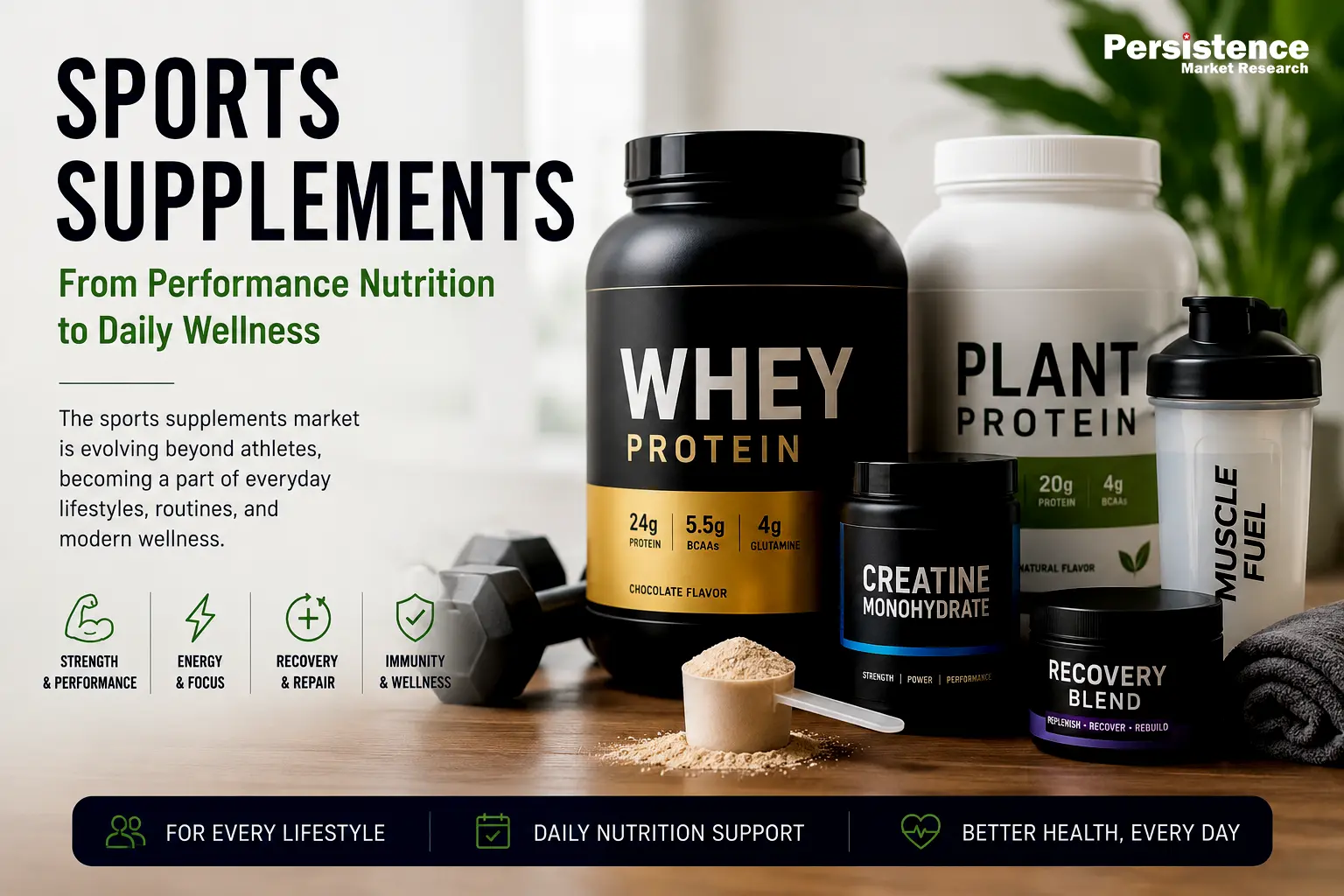
What began as whey protein powders has now expanded into a much broader segment. Plant-based proteins, ready-to-drink shakes, hydration blends, recovery formulas, and even sleep and stress support supplements are now part of the same category.
This expansion is not random. It shows a change in consumer intent. People are no longer focused only on muscle gain. They are focused on consistency, staying energetic, recovering fast, and maintaining balance in demanding routines. Naturally, the product landscape expands to match that need.
This shift is also visible in how leading nutrition companies are restructuring their portfolios. Brands like Glanbia (Optimum Nutrition) and GNC have been steadily moving beyond traditional whey protein offerings, investing more in functional nutrition lines such as ready-to-drink beverages, plant-based formulations, and recovery-focused blends. At the same time, new direct-to-consumer brands are accelerating innovation in clean-label and personalized nutrition products, pushing the category further away from pure “bodybuilding supplements” and toward everyday wellness solutions.
Innovation and Convenience to Define Future Growth
The future of the sports supplements market is not about more products but about less friction. The category is moving toward simpler ingredients, more personalized nutrition, stronger scientific backing, and formats that fit naturally into daily routines. As this happens, supplements are becoming less noticeable but more integrated into everyday life, no longer something people actively think about around workouts but something that blends into their normal diet.
The real shift is not increased usage but reduced separation, as supplements are no longer seen as something extra but as part of routine living. This is why the market continues to grow, as modern lifestyles are stretching traditional nutrition and people are quietly filling the gap instead of changing their entire way of living.


