

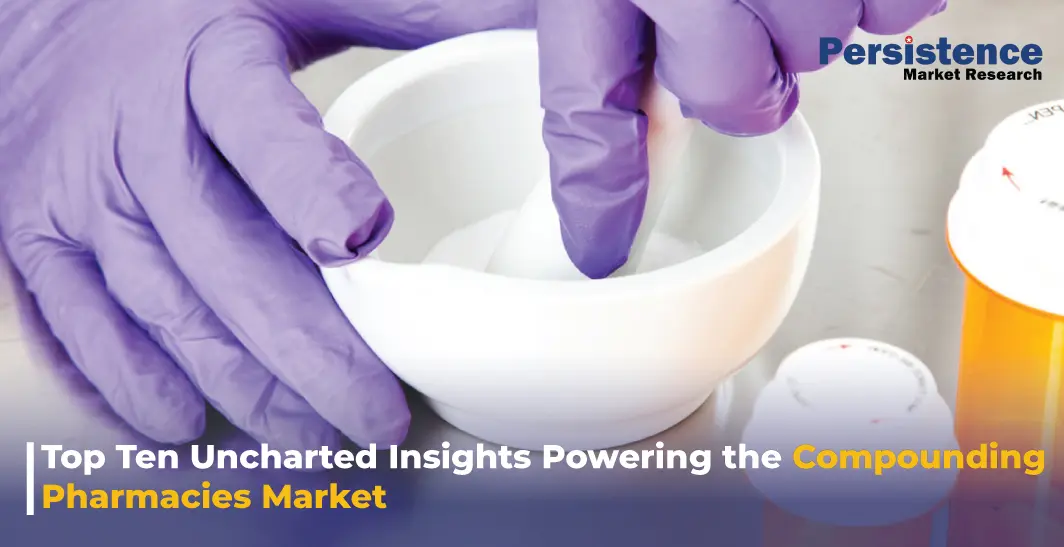
Below are ten unexpected insights shaping the future of this dynamic market.
- Precision Healthcare Is Being Facilitated by Compounding Pharmacies
Instead of dispensing specialized medications, compounding pharmacies are increasingly serving as precision healthcare partners. They assist in refining formulations depending on patient reaction, tolerance, and therapeutic objectives by working closely with doctors. This ongoing feedback loop transforms compounding into an adaptive care process, aligning it with broader precision medicine initiatives rather than one-time prescription fulfillment.
- Custom Dosage Is Meeting the Needs of an Expanding Population
Due to comorbidities, age, or genetics, an increasing percentage of patients do not react well to normal dosages. By producing dosage strengths not possible with mass-produced medications, compounding pharmacies bridge this gap. This skill is becoming more and more important in the management of chronic diseases, pediatrics, and geriatrics, where a customized dose can greatly enhance adherence and results.
- Commercial drug portfolios leave therapeutic gaps that compounding fills.
Low-volume or low-margin medications are frequently discontinued by pharmaceutical corporations, leaving patients with no other options. To ensure continuity of care, compounding pharmacies take over and replicate or reformulate these treatments. Compounding is positioned in this function as a stabilizing influence in the provision of healthcare, especially for long-term therapy and unusual illnesses.
- Market Relevance Is Being Driven by Patient-Centered Formulation
Modern healthcare is increasingly patient-centric, and compounding pharmacies are aligning perfectly with this shift. Compounding promotes adherence and pleasure by changing dosage forms and enhancing palatability and administration ease. Compounded medicine is becoming a desirable option rather than a last resort.
- The Value of Compounding Is Being Redefined by Clinical Collaboration
The pharmacy counter is no longer the only place where compounding pharmacies are valuable. Pharmacists actively advise physicians on treatment alternatives, stability, and formulation decisions. Compounding pharmacies are positioned as clinical contributors within healthcare ecosystems, and their collaborative involvement improves therapy customization.
- Strategic Alliances Are Growing the Market
Compounding pharmacies no longer operate in a vacuum. To include tailored medicine into routine treatment routes, they are establishing strategic alliances with hospitals, specialist clinics, and telehealth providers. For instance, several cancer clinics collaborate with compounders to offer supportive care medications tailored to each patient. These partnerships broaden the market and incorporate compounding into standard medical care.
- Compounding Is Turning Into a "One-Size-Fits-All" Medical Solution
Standardized dosages are the foundation of traditional medications. However, human biology varies. Some patients require non-standard dosages to prevent negative effects, while others metabolize biology isn’t uniform. Some patients metabolize drugs faster. This gap is filled by compounding, which allows for granular dose adjustment. Making medications is only one aspect of the process; another is perfecting them. This presents compounding as a remedy for the drawbacks of pharmaceuticals sold in large quantities.
- Technology Is Modernizing an Ancient Craft
Although compounding pharmacies evoke images of mortar and pestle, today’s market is powered by high-precision technology. Accuracy and safety are guaranteed via sterile laminar flow hoods, barcode verification, and automated compounding systems. AI algorithms are also used in some sophisticated facilities to optimize dose calculations and formulations. This combination of skill and cutting-edge technology boosts capacity, lowers errors, and improves patient outcomes distinguishing compounded medicine from conventional wisdom.
- Demand Is Being Boosted by Telehealth and E-Prescriptions
The demand for compounded prescriptions has increased along with telemedicine. Without an in-office visit, clinicians can diagnose, prescribe, and refer patients to tailored formulations. For example, dermatologists treating rare skin conditions can prescribe compounded topical treatments that are then shipped directly to patients. This integration with telehealth platforms means compounding pharmacies are no longer local drop-in hubs they’re national service providers.
- Market Direction Is Shaped by Both Regulatory Harmony and Divergence
In order to safeguard patients and promote innovation, regulators must tread carefully. The Drug Quality and Security Act (DQSA), which established quality requirements and authorized high-volume compounding, established a framework for outsourcing operations in the United States. Although compounding is still more decentralized in Europe, uniform regulations are being developed to guarantee efficacy and safety. This changing regulatory environment encourages investment and quality enhancements, providing larger players with an opportunity to grow responsibly.
Conclusion
Compounding pharmacies are developing as the frontier of custom medicine in healthcare. The market for compounding pharmacies is evolving from being characterized by simple customization to becoming a key part of patient-centered, resilient, and customized healthcare. Compounding is emerging into the mainstream alongside telehealth, precision medicine, and specialty treatments. It is emerging as a remedy for systemic drug shortages as well as an enabler of customized healthcare outcomes that are unmatched by conventional pharmaceutical supply chains.


