




- Medical Devices
- Urethral Dilators Market
Urethral Dilators Market Size, Share, Growth, and Regional Forecast, 2026 - 2033
Urethral Dilators Market by Product (Disposable Dilators and Reusable Dilators), by Application (Urethral Stricture, Meatal Stenosis, Kidney Stone Removal, and Others), by End User (Hospitals, Specialty Clinics, Ambulatory Surgical Center, and Home Care Settings), and Regional Analysis from 2026 - 2033

Urethral Dilators Market Share and Trend Analysis
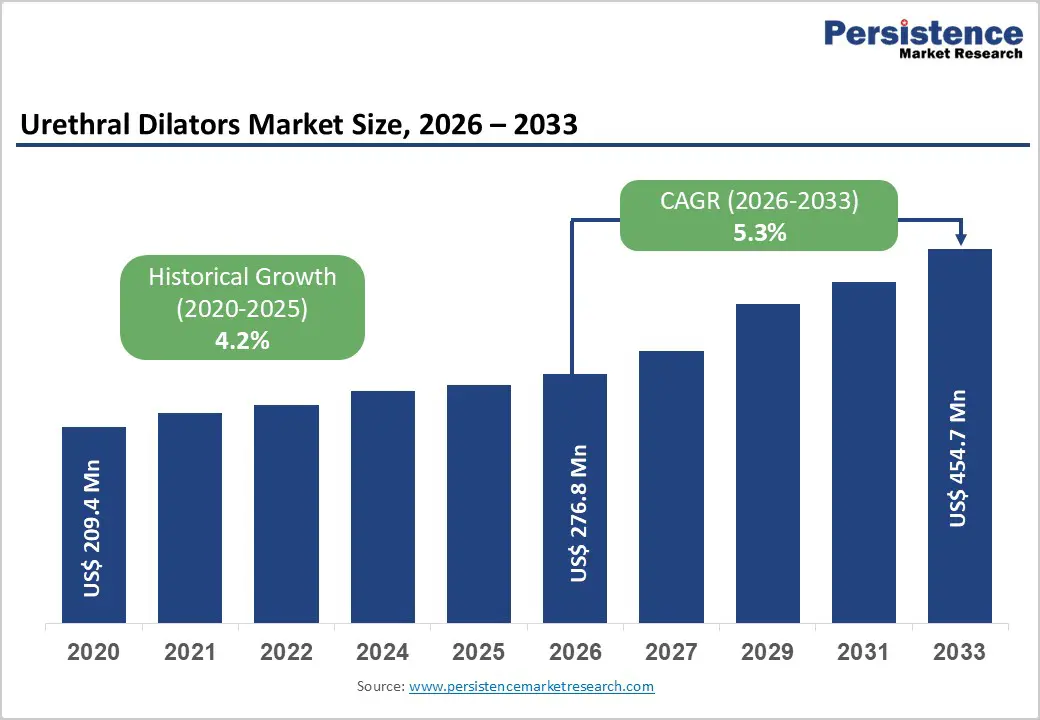
The global urethral dilators market size is estimated to grow from US$ 276.8 Mn in 2026 to US$ 454.7 Mn by 2033. The market is projected to record a CAGR of 5.3% during the forecast period from 2026 to 2033.
Global demand for urethral dilators is increasing steadily, driven by the rising prevalence of urological disorders such as urethral strictures, meatal stenosis, urinary retention, and post-procedural urethral complications. Aging populations, increased catheterization rates, prostate-related conditions, and a higher incidence of urological surgeries are expanding the target patient pool requiring urethral dilation. Urethral dilators are widely used across hospitals, specialty urology clinics, ambulatory surgical centers, and home care settings to restore urinary flow, relieve obstruction, and manage chronic conditions through minimally invasive intervention. Growing preference for non-surgical, low-risk, and cost-effective urology treatments with minimal recovery time is accelerating adoption. Increased awareness of early diagnosis, improved access to urology care, and expansion of outpatient and office-based procedures further support demand. Technological advancements such as hydrophilic coatings, improved flexibility, disposable single-use designs, and patient-friendly kits are enhancing safety, comfort, and compliance. Additionally, strengthening healthcare infrastructure in emerging markets and rising investments in urology services are reinforcing long-term global demand for urethral dilators.
Key Industry Highlights
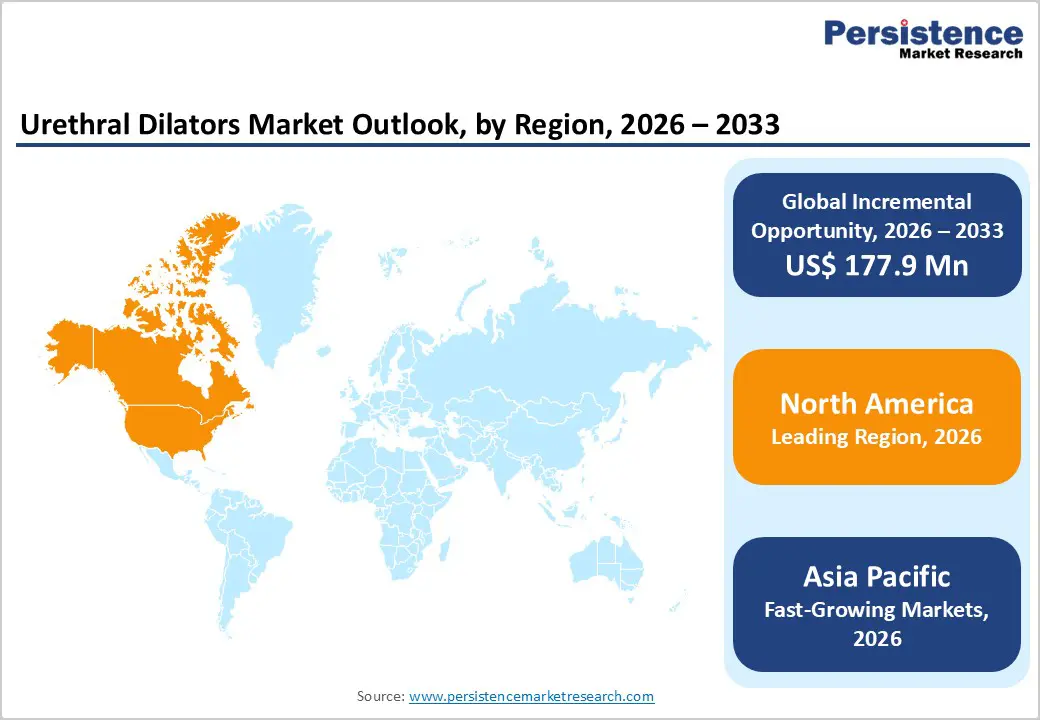
- Leading Region: North America holds the largest share at 47.3%, supported by advanced urology infrastructure, high diagnosis rates of urinary disorders, strong hospital procurement systems, and widespread adoption of disposable urology devices.
- Fastest-Growing Region: Asia Pacific is expanding fastest due to improving healthcare access, rising urological disease burden, aging populations, expanding private hospitals, and growing medical tourism.
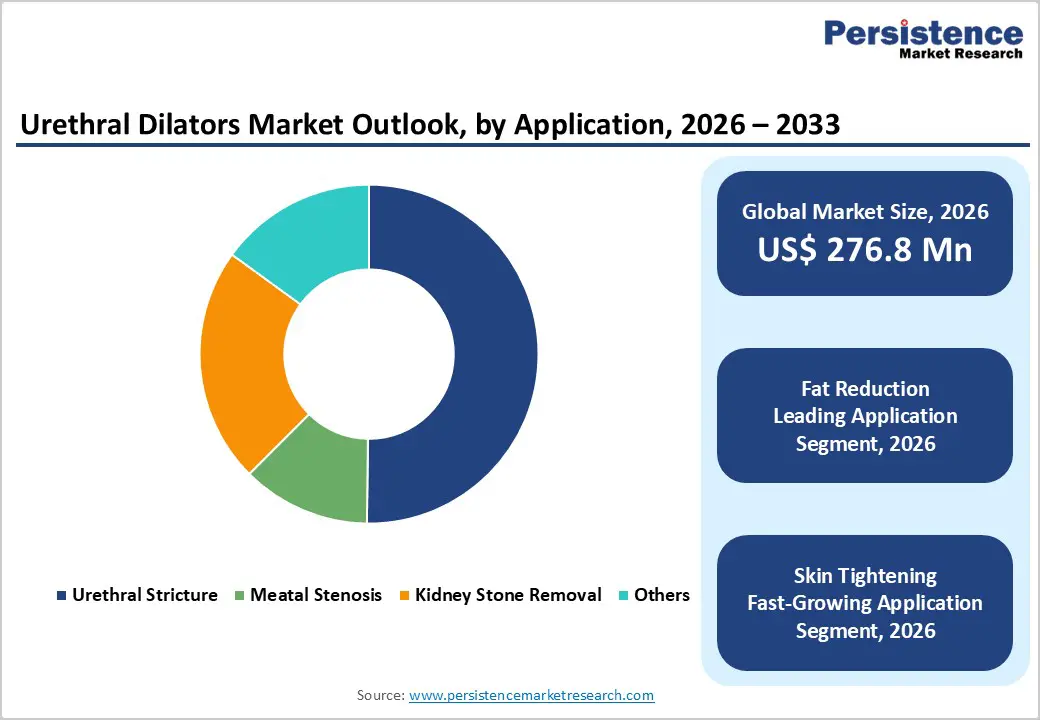
- Leading Application Segment: Urethral stricture dominates the market due to high clinical prevalence, repeat treatment requirements, cost efficiency, and strong reliance on dilation as a frontline management approach.
- Fastest-Growing Application Segment: Kidney stone removal–related procedures are growing rapidly as minimally invasive urological interventions increase and procedural volumes shift toward outpatient settings.
- Leading End User Segment: Hospitals remain the top segment, driven by high patient volumes, availability of specialized urologists, and management of complex and recurrent urological cases.
- Fastest-Growing End User Segment: Ambulatory surgical centers are scaling quickly as minimally invasive urology procedures shift toward outpatient care with shorter stays and lower procedural costs.
| Key Insights | Details |
|---|---|
|
Urethral Dilators Market Size (2026E) |
US$ 276.8 Mn |
|
Market Value Forecast (2033F) |
US$ 454.7 Mn |
|
Projected Growth (CAGR 2026 to 2033) |
5.3% |
|
Historical Market Growth (CAGR 2020 to 2025) |
4.2% |
Market Dynamics
Driver - Rising Prevalence of Urological Disorders, Aging Population, and Preference for Minimally Invasive Care
Growth is primarily driven by the increasing global burden of urological disorders such as urethral strictures, meatal stenosis, urinary retention, and post-surgical urethral complications. Aging populations, particularly among men, are more susceptible to these conditions due to prostate enlargement, prior catheterization, trauma, and inflammatory diseases, significantly expanding the patient pool requiring urethral dilation. A strong clinical preference for minimally invasive, low-risk procedures further supports adoption, as urethral dilators offer effective symptom relief without the need for complex surgical intervention or prolonged hospitalization.
Rising awareness of early diagnosis and timely urological intervention is improving procedure rates across both developed and emerging markets. Increasing use of outpatient and office-based urology procedures, supported by advancements in disposable and patient-friendly dilator designs, is enhancing procedural efficiency and patient compliance. Infection prevention initiatives and strict hospital hygiene protocols are accelerating the shift toward single-use dilators, particularly in hospitals and ambulatory surgical centers. Additionally, growing adoption of home-based and self-dilation protocols for chronic conditions is expanding demand beyond institutional settings. Continuous product improvements focused on flexibility, atraumatic insertion, and patient comfort are reinforcing sustained market growth momentum.
Restraints - Procedure Discomfort, Risk of Complications, and Limited Access in Low-Resource Settings
The market faces restraints related to patient discomfort, risk of urethral trauma, and potential complications such as bleeding, infection, and false passage formation, particularly when procedures are not performed correctly. These concerns can limit patient acceptance, especially for repeat or long-term dilation therapy. Variability in clinical outcomes due to differences in practitioner skill levels and adherence to procedural protocols further impacts confidence among both patients and providers.
In developing and low-resource regions, limited access to trained urologists and specialized healthcare infrastructure restricts adoption. Cost sensitivity remains a barrier, particularly for disposable dilators in price-conscious healthcare systems, where reusable devices are still preferred despite higher infection risks. Inconsistent reimbursement coverage for urological procedures in certain markets can also affect procedure volumes. Regulatory requirements related to medical device approval, sterilization standards, and quality compliance may increase manufacturing and distribution costs, especially for smaller suppliers. Additionally, the availability of alternative treatments such as urethrotomy or surgical reconstruction in advanced cases may reduce reliance on dilation in specific patient subsets. Collectively, these factors can slow penetration in select regions and care settings.
Opportunity - Growth of Home Care, Disposable Adoption, and Expanding Urology Infrastructure in Emerging Markets
Significant opportunities are emerging from the expanding adoption of home-based urological care and self-dilation protocols for chronic urethral conditions. The growing emphasis on patient convenience, reduced hospital visits, and long-term disease management is increasing demand for easy-to-use, disposable dilators designed for safe home use. This trend is particularly relevant in aging populations and patients with recurrent strictures requiring frequent intervention.
Emerging markets across Asia Pacific, Latin America, and parts of the Middle East offer substantial untapped potential due to improving healthcare infrastructure, rising urology awareness, and increasing diagnosis rates of urinary disorders. Expansion of private hospitals, specialty urology clinics, and ambulatory surgical centers is improving access to minimally invasive urological procedures. Technological innovations focused on hydrophilic coatings, enhanced flexibility, and patient-centric designs are improving safety and comfort, thereby supporting broader adoption. Strategic collaborations between manufacturers, healthcare providers, and training institutions are strengthening clinical expertise and standardizing care delivery. Additionally, growing investment in infection control and single-use medical devices is expected to accelerate the shift toward disposable dilators, positioning the market for sustained long-term growth.
Category-wise Analysis
By Product, Disposable Dilators Lead Due to Lower Infection Risk and Ease of Single-Use Application
Disposable dilators are projected to dominate the global urethral dilators market in 2026, accounting for 60.0% of revenue. Their leadership is primarily driven by heightened focus on infection control, reduced cross-contamination risk, and growing preference for single-use urology devices in both inpatient and outpatient settings. Disposable dilators eliminate the need for reprocessing and sterilization, improving workflow efficiency and reducing procedural turnaround time. They are widely adopted in hospitals, ambulatory surgical centers, and home care environments, particularly for recurrent urethral stricture management.
The increasing emphasis on patient safety, compliance with stringent hygiene protocols, and favorable clinician acceptance further support adoption. Additionally, rising use of self-catheterization and home-based urethral care strengthens demand. Continuous product improvements focused on flexibility, patient comfort, and atraumatic insertion are expected to reinforce the dominance of disposable dilators throughout the forecast period.
By Application, Urethral Stricture Leads Due to High Clinical Prevalence and Recurrent Treatment Needs
The urethral stricture segment is expected to dominate the global urethral dilators market in 2026, capturing 50.2% of the market share. This leadership is driven by the high global prevalence of urethral strictures resulting from trauma, infections, prior urological surgeries, and age-related anatomical changes. Urethral dilation remains a frontline and repeat treatment option for stricture management, particularly in mild to moderate cases.
The procedure’s cost-effectiveness, minimally invasive nature, and suitability for both clinical and home settings contribute to sustained demand. Increasing diagnosis rates, improved access to urology care, and growing awareness of the benefits of early intervention are further expanding procedure volumes. Additionally, rising incidence of chronic urological conditions among aging male populations supports long-term utilization. As urethral stricture management continues to rely heavily on dilation therapy, this application segment is expected to maintain its leading position.
By End User, Hospitals Lead Due to High Patient Volume and Availability of Specialized Urology Services
Hospitals are projected to dominate the global urethral dilators market in 2026, accounting for 40.1% of revenue. This dominance is attributed to high patient inflow, availability of trained urologists, and comprehensive diagnostic and surgical infrastructure. Hospitals manage a wide range of complex urological conditions, including severe strictures, post-operative complications, and trauma-related urethral disorders, where dilation is frequently performed. Strong adherence to clinical protocols and infection control standards further supports consistent use of both disposable and reusable dilators.
While specialty clinics and ambulatory surgical centers are expanding rapidly, hospitals continue to lead due to their capacity to handle high-risk and recurrent cases. Integration of urology departments within multispecialty hospitals, rising urological admissions among elderly populations, and increasing procedural volumes ensure sustained leadership of hospitals within the end-user landscape.
Region-wise Insights
North America Urethral Dilators Market Trends
North America is expected to dominate the global urethral dilators market with a value share of 47.3% in 2026, led primarily by the United States. The region benefits from a well-established urology care ecosystem, high awareness of urinary tract disorders, and widespread access to advanced medical devices. A growing aging population, coupled with rising incidence of urethral strictures, benign prostatic hyperplasia, and post-surgical urological complications, significantly contributes to market demand. Strong adoption of disposable dilators is supported by stringent infection prevention standards and regulatory emphasis on patient safety.
Additionally, favorable reimbursement coverage for urological procedures and high healthcare spending facilitate consistent device utilization. The presence of leading manufacturers, robust hospital procurement systems, and continuous product innovation further strengthens regional leadership. Increasing use of home-based urological care and self-dilation protocols is also expanding the addressable market. These factors collectively position North America as the largest revenue-generating region throughout the forecast period.
Europe Urethral Dilators Market Trends
The Europe urethral dilators market is expected to grow steadily, supported by strong regulatory oversight, standardized clinical guidelines, and widespread access to urology services across countries such as Germany, the U.K., France, Italy, and Spain. The region benefits from an aging demographic profile, which is closely associated with higher prevalence of urethral strictures and lower urinary tract disorders. Public and private healthcare systems emphasize early diagnosis and minimally invasive management, driving consistent demand for urethral dilation procedures.
European healthcare providers place strong emphasis on device safety, material quality, and compliance with medical device regulations, favoring the adoption of high-quality disposable and reusable dilators. Expansion of outpatient urology clinics and ambulatory surgical centers is improving procedural accessibility. Additionally, cross-border healthcare and medical tourism in select European countries are contributing to procedural volumes. These factors are expected to support sustained, long-term market growth across the region.
Asia Pacific Urethral Dilators Market Trends
The Asia Pacific urethral dilators market is expected to register a relatively higher CAGR of around 7.2% between 2026 and 2033, driven by improving healthcare infrastructure, rising urological disease burden, and expanding access to medical devices. Countries such as China, India, Japan, South Korea, and Australia are witnessing an increase in the diagnosis of urinary tract disorders due to growing awareness and improved diagnostic capabilities. Rapid urbanization, aging populations, and lifestyle-related health issues are contributing to rising procedural demand.
Expansion of private hospitals, specialty urology clinics, and ambulatory centers is significantly improving market penetration. Increasing affordability of disposable dilators and the entry of regional manufacturers are enhancing accessibility in cost-sensitive markets. Government initiatives to strengthen healthcare delivery and rising medical tourism further support growth. With improving clinical capacity and growing acceptance of minimally invasive urological care, the Asia Pacific is expected to emerge as the fastest-growing regional market.
Market Competitive Landscape
The global urethral dilators market is highly competitive, with strong participation from companies such as B. Braun SE, BD, Cook, MED pro Medical BV, and Teleflex Inc. These players leverage extensive global distribution networks, strong brand recognition, and diversified urology-focused product portfolios to address the growing demand for safe, effective, and minimally invasive solutions for urethral dilation procedures.
Their offerings emphasize product reliability, precision design, patient comfort, ease of use, and compatibility across multiple clinical applications including urethral stricture management, meatal stenosis treatment, and urological interventions. Continuous technological innovation, regulatory compliance, clinical performance validation, sterilization standards, and adherence to international quality and manufacturing norms remain critical for maintaining competitive positioning in the global urethral dilators market.
Key Industry Developments:
- In April 2025, Optilume™ was introduced as a minimally invasive treatment for urethral stricture, combining urethral dilation with targeted drug delivery to reduce recurrence rates and improve long-term outcomes, offering an effective alternative to repeated dilation and invasive surgical procedures.
- In February 2022, Laborie Medical Technologies Corp. announced that Australia’s Therapeutic Goods Administration (TGA) approved the Optilume® Urethral Drug Coated Balloon for the treatment of anterior urethral stricture.
Companies Covered in Urethral Dilators Market
- B. Braun SE
- BD
- Cook
- MED pro Medical BV
- Teleflex Inc.
- UROMED
- Boston Scientific Corporation
- Smiths Medical (ICU Medical)
- Urovision-Urotech
- Coloplast
- ACE Medical Devices Pvt. Ltd.
- Advin Health Care
- Others
Frequently Asked Questions
The global urethral dilators market is projected to be valued at US$ 276.8 Mn in 2026.
Rising incidence of urethral strictures and other urological disorders, along with increasing adoption of minimally invasive urology procedures, is driving global demand for urethral dilators.
The global Urethral Dilators Market is poised to witness a CAGR of 5.3% between 2026 and 2033.
Expanding healthcare infrastructure and rising demand in emerging markets, coupled with innovations in home-use, smart, and patient-centric urethral dilator solutions, present significant growth opportunities.
B. Braun SE, BD, Cook, MED pro Medical BV, and Teleflex Inc.are some of the key players in the body urethral dilators market.


