




- Food Ingredients & Additives
- Prebiotic Ingredient Market
Prebiotic Ingredient Market Size, Share, and Growth Forecast 2026 - 2033
Prebiotic Ingredient Market by Product Type (Inulin, Oligosaccharide (MOS/GOS/FOS), Others), Applications (Food & Beverage, Dietary Supplements, Others), Source (Roots, Grains, Vegetables, Others), Distribution Channel, and Regional Analysis, 2026 - 2033

Prebiotic Ingredient Market Share and Trends Analysis
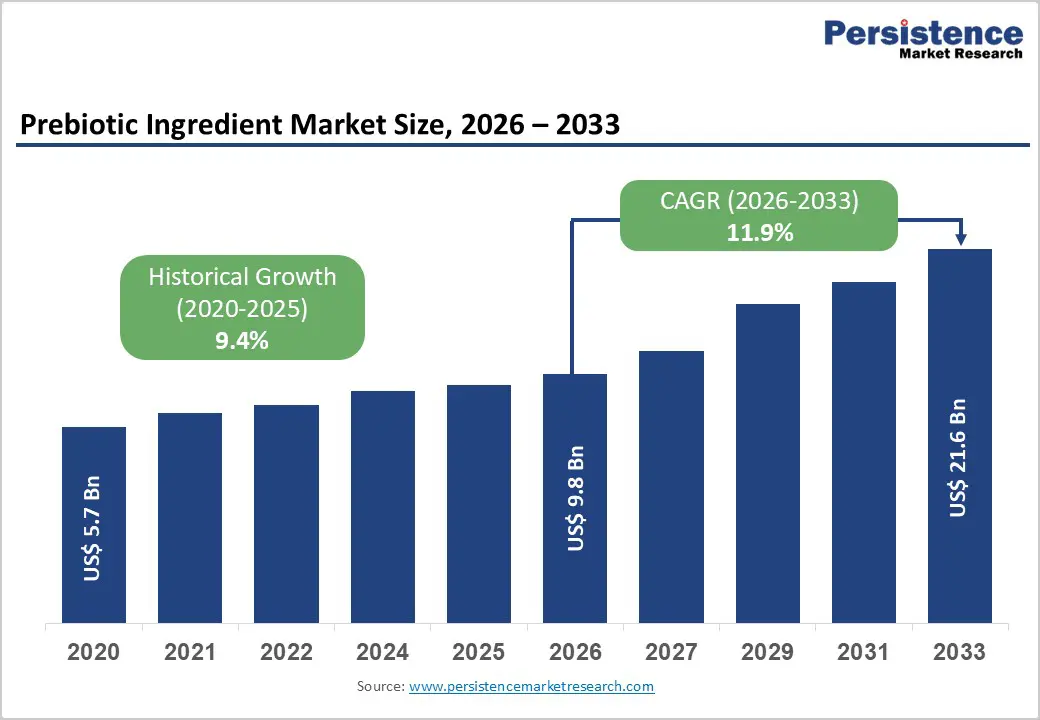
The global prebiotic ingredient market size is expected to be valued at US$ 9.8 billion in 2026 and projected to reach US$ 21.6 billion by 2033, growing at a CAGR of 11.9% between 2026 and 2033.
The prebiotic ingredient market focuses on dietary fibers and functional ingredients that stimulate the growth of beneficial gut bacteria, supporting digestive health, immunity, and metabolic wellness. Common prebiotics include inulin, fructo-oligosaccharides (FOS), galacto-oligosaccharides (GOS), and mannan-oligosaccharides (MOS), widely used in foods, beverages, supplements, infant nutrition, and animal feed. Key trends shaping the market include rising consumer awareness of gut health, increasing demand for functional and clean-label foods, rapid growth of dietary supplements, and expanding use in infant formula. Asia-Pacific is emerging as the fastest-growing region, supported by urbanization and lifestyle changes.
Key Industry Highlights:
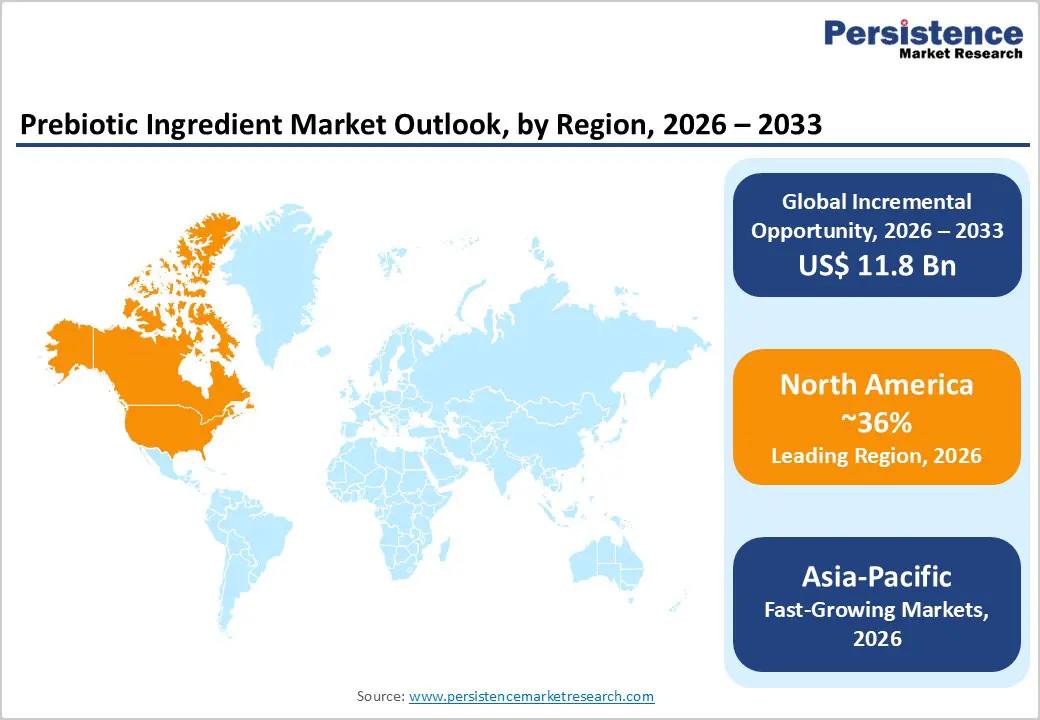
- Leading Region: North America leads the Prebiotic Ingredient Market, supported by high consumer awareness of gut health, strong demand for functional foods and dietary supplements, advanced food processing industries, and well-established retail and e-commerce networks.
- Fastest Growing Region: Asia Pacific is the fastest-growing region, driven by rising disposable incomes, expanding middle-class populations, increasing adoption of fortified foods and beverages, rapid urbanization, and growing focus on preventive healthcare.
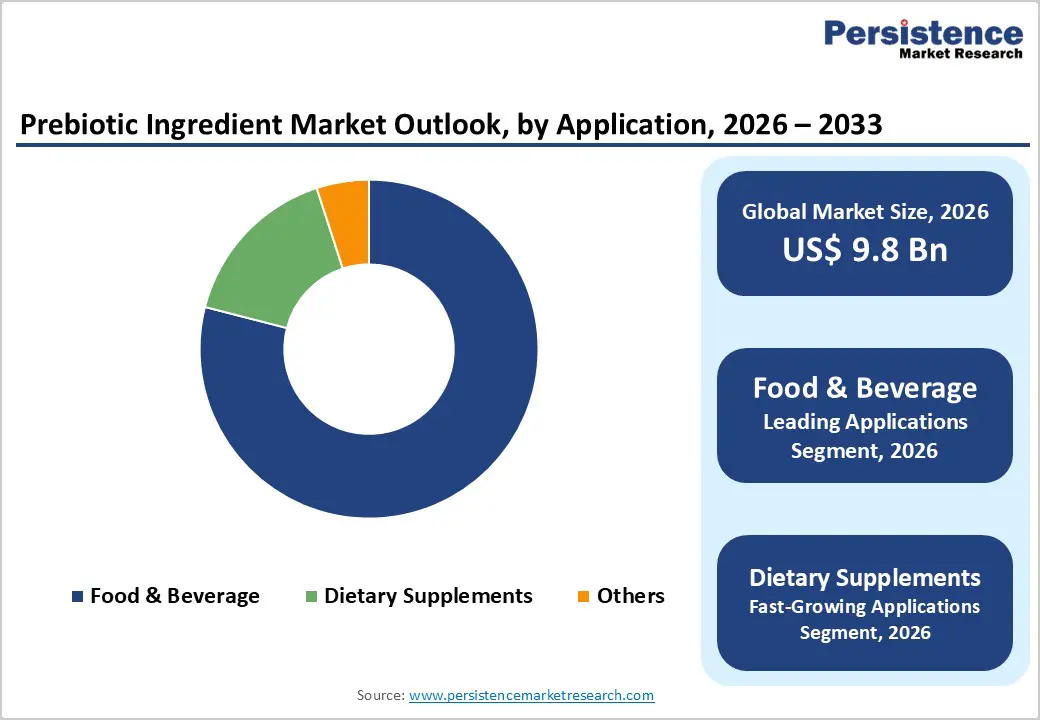
- Dominant Segment: Food & beverages dominate the market due to widespread use of prebiotics in dairy products, bakery items, cereals, and functional drinks, along with rising demand for low-sugar and digestive-health formulations.
- Fastest Growing Segment: Dietary supplements represent the fastest-growing segment, fueled by personalized nutrition trends, increasing health consciousness, aging populations, and expanding applications in infant and clinical nutrition products.
| Key Insights | Details |
|---|---|
| Prebiotic Ingredient Market Size (2026E) | US$ 9.8 billion |
| Market Value Forecast (2033F) | US$ 21.6 billion |
| Projected Growth CAGR (2026 - 2033) | 11.9% |
| Historical Market Growth (2020 - 2025) | 9.4% |
Market Dynamics
Driver - Rising Gut Health Awareness and Plant-Based Ingredient Preference
Growing consumer awareness of gut microbiome health is a major driver for the prebiotic ingredient market. Increasing scientific evidence linking prebiotics with improved digestion, immune support, and metabolic wellness has encouraged consumers to incorporate fortified foods and dietary supplements into daily diets. Surveys from health organizations indicate that a significant proportion of North American consumers associate gut health with overall well-being, accelerating purchases of functional products. Social media platforms, nutrition influencers, and wellness campaigns further amplify this trend, prompting manufacturers to launch innovative prebiotic-enriched beverages, snacks, and nutrition formats. This sustained shift toward preventive healthcare and functional eating is expected to maintain long-term market momentum.
Rising preference for natural and plant-based ingredients is also strengthening demand for prebiotics derived from sources such as chicory root, grains, and fruits. Environmentally conscious consumers increasingly favor sustainable, clean-label products over synthetic alternatives, encouraging food processors to reformulate existing portfolios. High adoption among vegan and lactose-intolerant populations has reinforced the dominance of plant-derived prebiotics, positioning them as essential components in modern health-focused food and beverage offerings.
Restraints - Regulatory Hurdles for Claims and High Production Costs
Strict regulatory requirements for health claims pose a notable restraint on market growth. Authorities such as the European Food Safety Authority and the U.S. Food and Drug Administration demand strong clinical evidence before approving digestive-health or immunity-related statements, increasing development timelines and compliance costs. In Europe, Regulation 1924/2006 sets particularly high standards for substantiating cause-and-effect relationships, often delaying commercialization of new formulations. Smaller manufacturers may face difficulties navigating these complex frameworks, slowing innovation and limiting the speed at which new products reach consumers.
High production costs further restrict market expansion, particularly for naturally sourced ingredients. Extraction and processing of chicory-based inulin, along with specialized fermentation required for galacto-oligosaccharides, raise operational expenses amid fluctuating raw-material prices. These cost pressures challenge price competitiveness, especially in emerging markets, and can constrain adoption among cost-sensitive consumers. Large multinational players with scale advantages are better positioned to absorb such costs, intensifying competitive pressure on smaller firms.
Opportunity - Expansion in Dietary Supplements and Emerging Animal Feed Applications
The dietary supplements segment represents a major growth opportunity for prebiotic ingredient suppliers, supported by rising interest in personalized nutrition, digestive wellness, and weight management. Consumption continues to expand in North America and Europe as health-conscious consumers seek products that enhance calcium absorption and promote beneficial gut bacteria. Prebiotics such as GOS are also gaining traction for their similarity to components found in breast milk, broadening appeal across adult and infant nutrition categories. Rapid growth in Asia-Pacific, supported by double-digit regional CAGRs, further strengthens revenue prospects for innovative formulations.
Animal feed applications also present a promising avenue for expansion as regulatory restrictions on antibiotic growth promoters drive demand for natural gut-health alternatives in livestock. Sustainability initiatives and plant-based feed trends are accelerating the use of prebiotics to improve animal performance and digestion, particularly in North America and the Asia-Pacific. Companies investing in this segment can benefit from premium pricing opportunities and long-term supply contracts with feed manufacturers, enhancing overall market profitability.
Category-wise Analysis
By Product Type Insights
Inulin accounted for the largest share of the global prebiotic ingredient market in 2025, contributing over 40% of total revenue, primarily due to its widespread use in baked goods and beverages. Its ability to improve fiber content, mouthfeel, and sugar replacement has driven adoption across the food and beverage industry. Growing incorporation of inulin in infant nutrition products is further supporting demand, as manufacturers focus on digestive health benefits for early-life consumers. In addition, rising utilization of inulin in dietary supplements and functional health products is strengthening its market position. The increasing emphasis on low-calorie and reduced-sugar formulations across packaged foods and drinks is also expected to accelerate inulin consumption over the forecast period.
Oligosaccharides are projected to witness the fastest growth, registering a CAGR of around 12.8%, driven by expanding applications and strong consumer demand. Rising consumption of confectionery items, higher disposable incomes, and shifting dietary patterns toward functional foods are key contributors to this trend. Technological advancements in ingredient processing and formulation are enabling broader use in beverages and nutrition products, further boosting segment expansion during the forecast timeline.
By Application Insights
The food and beverage segment dominated the global prebiotic ingredient market in 2025, accounting for more than 79% of total revenue, supported by strong sales growth across multiple product categories. Shifting lifestyles, rapid urbanization, and evolving dietary preferences toward healthier and functional foods have significantly increased the incorporation of prebiotic ingredients in everyday consumables. Beverage manufacturers are expanding their portfolios with gut-health-focused drinks, fortified juices, and functional dairy alternatives, further strengthening segment performance. In addition, the growing popularity of convenient, ready-to-consume nutrition products has accelerated the use of prebiotics in bakery, cereals, and snack formulations.
Rising demand for specialty food products is another major factor fueling segment expansion. Consumers with digestive sensitivities are increasingly opting for lactose-free, low-sugar, and high-fiber food options, prompting producers to integrate prebiotic fibers to enhance nutritional profiles without compromising taste or texture. Clean-label trends, preventive healthcare awareness, and premiumization in packaged foods are also expected to sustain strong momentum for the food and beverage segment over the forecast period.
Region-wise Insights
North America Prebiotic Ingredient Market Trends
North America accounted for the largest share of the global prebiotic ingredient market in 2025, contributing over 36% of total revenue, driven primarily by strong demand in the U.S. and Canada. High consumer awareness regarding digestive health, immunity, and preventive nutrition has encouraged widespread incorporation of prebiotics in packaged foods, beverages, and dietary supplements. Rising purchasing power, coupled with a preference for premium and functional food products, continues to support market expansion across the region. Beverage manufacturers and dairy processors are actively launching fiber-enriched and gut-health-focused offerings, further strengthening regional dominance.
The region also offers attractive opportunities for consumer goods companies due to advanced retail infrastructure, rapid product innovation, and favorable regulatory acceptance of functional ingredients. Increasing imports of specialty prebiotic compounds reflect rising demand from food processors seeking differentiated formulations. In addition, the growing popularity of lactose-free, low-sugar, and clean-label products is encouraging manufacturers to integrate prebiotic fibers into everyday consumables. These factors are expected to sustain steady growth momentum for the North American market throughout the forecast period.
Europe Prebiotic Ingredient Market Trends
Europe represents a significant and steadily expanding market for prebiotic ingredients, supported by strong consumer awareness of digestive health, immunity, and overall wellness. Countries such as Germany, the United Kingdom, France, and the Netherlands have witnessed widespread adoption of functional foods and dietary supplements enriched with prebiotic fibers. The region’s well-established food processing industry and stringent quality standards have encouraged manufacturers to invest in scientifically supported ingredients such as inulin, FOS, and GOS. Demand for clean-label, plant-based, and reduced-sugar products is also reinforcing the use of prebiotics across bakery, dairy alternatives, cereals, and beverage applications.
Innovation and regulatory clarity further underpin market growth in Europe. Food companies are focusing on product reformulation to meet nutritional guidelines and sustainability goals, while launching premium gut-health offerings targeted at aging populations. Expanding applications in infant nutrition and clinical dietary products, along with strong retail penetration and private-label development, are expected to sustain moderate but consistent growth in the European prebiotic ingredient market over the forecast period.
Asia Pacific Prebiotic Ingredient Market Trends
Asia Pacific is projected to register robust growth in the global prebiotic ingredient market, supported by rising consumption of functional foods and nutrition products across the region. Increasing disposable incomes in major economies such as China and India are enabling consumers to spend more on health-oriented foods, dietary supplements, and fortified beverages. Growing urban populations and lifestyle shifts toward preventive healthcare are further stimulating demand for ingredients that support digestive wellness and immunity.
High population density and expanding middle-class segments are also driving strong growth in dairy and infant nutrition categories, where prebiotics are increasingly incorporated to enhance gut health benefits. Local and multinational food manufacturers are broadening their product portfolios with fiber-enriched yogurts, milk alternatives, and functional drinks tailored to regional preferences. Moreover, improving distribution networks and retail penetration are making such products more accessible to consumers. Together, these dynamics position Asia Pacific as one of the most attractive growth regions for prebiotic ingredient suppliers over the coming years.
Competitive Landscape
The competitive landscape of the global prebiotic ingredient market is characterized by continuous product innovation and expanding supplier participation. Established companies are actively developing new and advanced prebiotic formulations to address growing demand from food, beverage, dietary supplement, and infant nutrition manufacturers. Innovation efforts are largely focused on improving functional benefits, taste profiles, stability, and clean-label compatibility. At the same time, relatively low entry barriers and attractive growth potential are encouraging new players to enter the market, intensifying competition across both mature and emerging regions.
Rising consumption of gut-health products is also creating opportunities for localized product development in high-growth markets, particularly in the Asia Pacific and Latin America. Key industry participants continue to strengthen their positions through capacity expansions, partnerships, and geographic diversification to capture increasing demand worldwide.
Key Industry Developments:
- In July 2025, PepsiCo announced the launch of Pepsi Prebiotic Cola, a new beverage that delivers the brand’s iconic taste while incorporating 3 grams of prebiotic fiber as a functional ingredient.
- In November 2022, ADM finalized the acquisition of Deerland Probiotics and Enzymes, a Georgia-based company in the United States. Deerland specializes in probiotic and dietary supplement solutions utilizing probiotic, prebiotic, and enzyme technologies, and operates an extensive infrastructure that includes five manufacturing sites, one fermentation facility, and eight R&D and quality control laboratories worldwide.
Companies Covered in Prebiotic Ingredient Market
- Beneo-Orafti SA
- Tereos Group
- Ingredion Inc.
- Cargill Inc.
- DowDuPont Inc
- Royal FrieslandCampina N.V.
- Kerry Group
- Cosucra-groupe Warcoing SA
- Sensus BV
- Others
Frequently Asked Questions
The prebiotic ingredient market is estimated to be valued at US$ 1.4 Bn in 2026.
Rising gut health awareness, functional foods demand, dietary supplements growth, clean-label trends, and expanding infant nutrition applications drive markets.
The global market is expected to witness a CAGR of 8.6% between 2026 and 2033.
The top players are Beneo-Orafti SA, Tereos Group, Ingredion Inc., Cargill Inc., and DowDuPont Inc.
North America is the leading region in the global prebiotic ingredient market.


