




- Processed Food
- Kosher Foods Market
Kosher Foods Market Size, Share, Growth, and Regional Forecast, 2025 - 2032
Kosher Foods Market By Product Type (Meat, Poultry & Seafood, Dairy & Dairy Alternatives, Others), Sales Channel (Supermarkets & Hypermarkets, Others), and Regional Analysis for 2025 - 2032

Kosher Foods Market Share and Trends Analysis
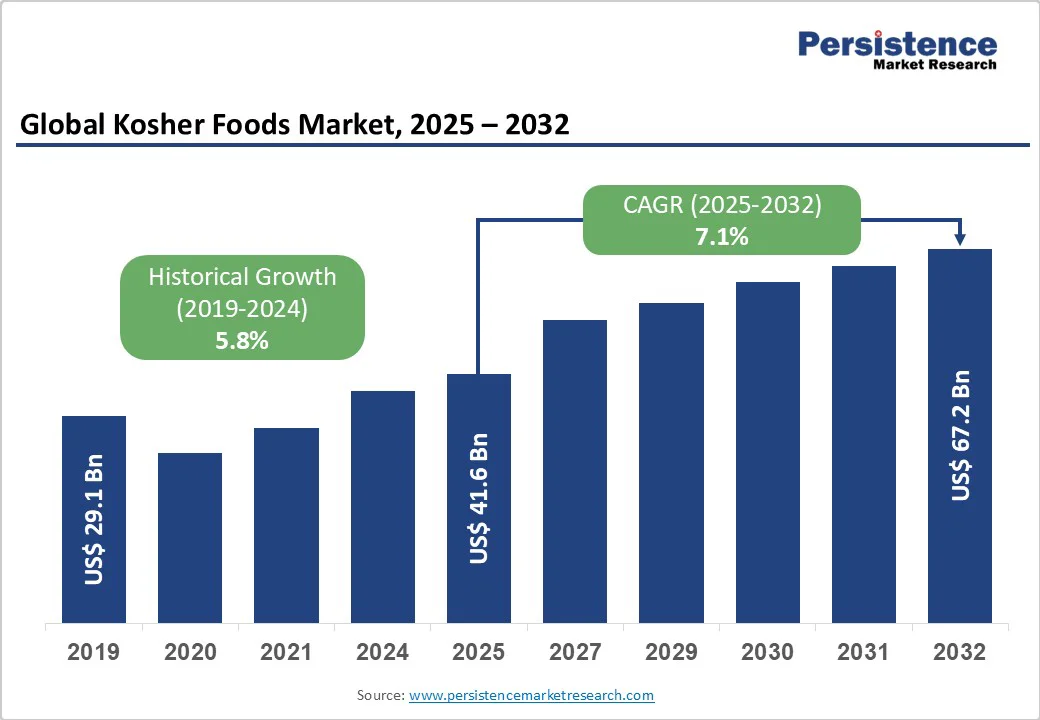
The global kosher foods market size is likely to be valued at US$41.6 Billion in 2025 and is expected to reach US$67.2 Billion by 2032, growing at a CAGR of 7.1% during the forecast period from 2025 to 2032, driven by growing consumer emphasis on food safety, transparency, and ethical sourcing, which boosts demand for kosher-certified products.
Key Industry Highlights
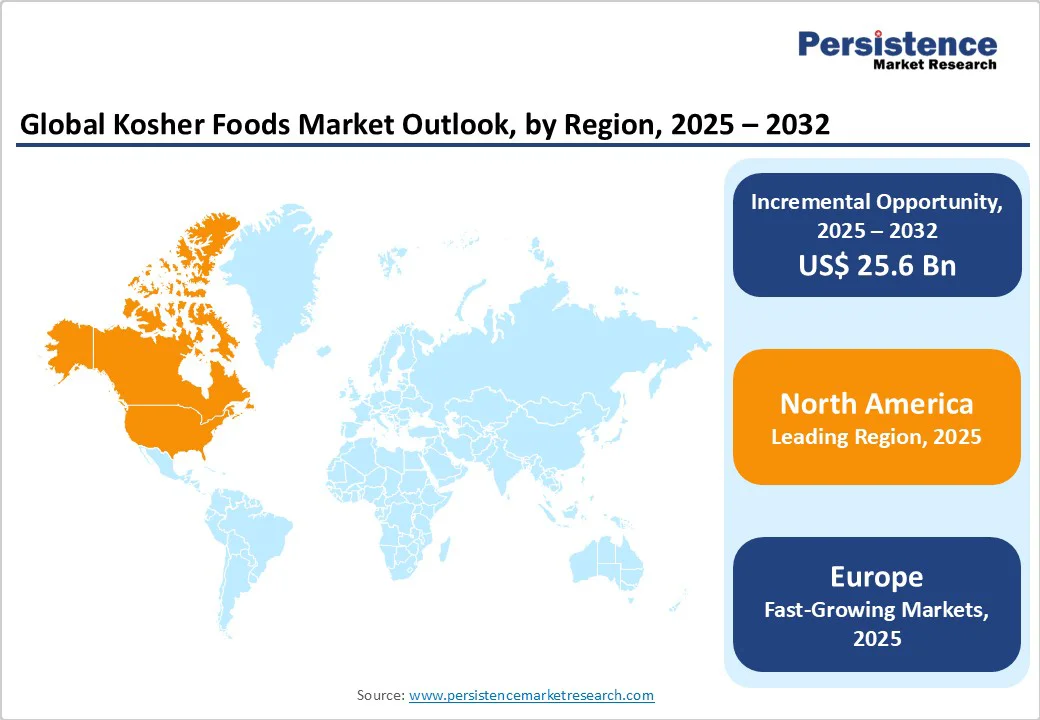
- Leading Region: North America, holding 39% market share, driven by health-conscious consumption, convenience, and high awareness of kosher certification.
- Fastest-Growing Region: Europe, fueled by rising consumer interest in dietary preferences, ethical sourcing, premium kosher bakery and confectionery, and online retail expansion.
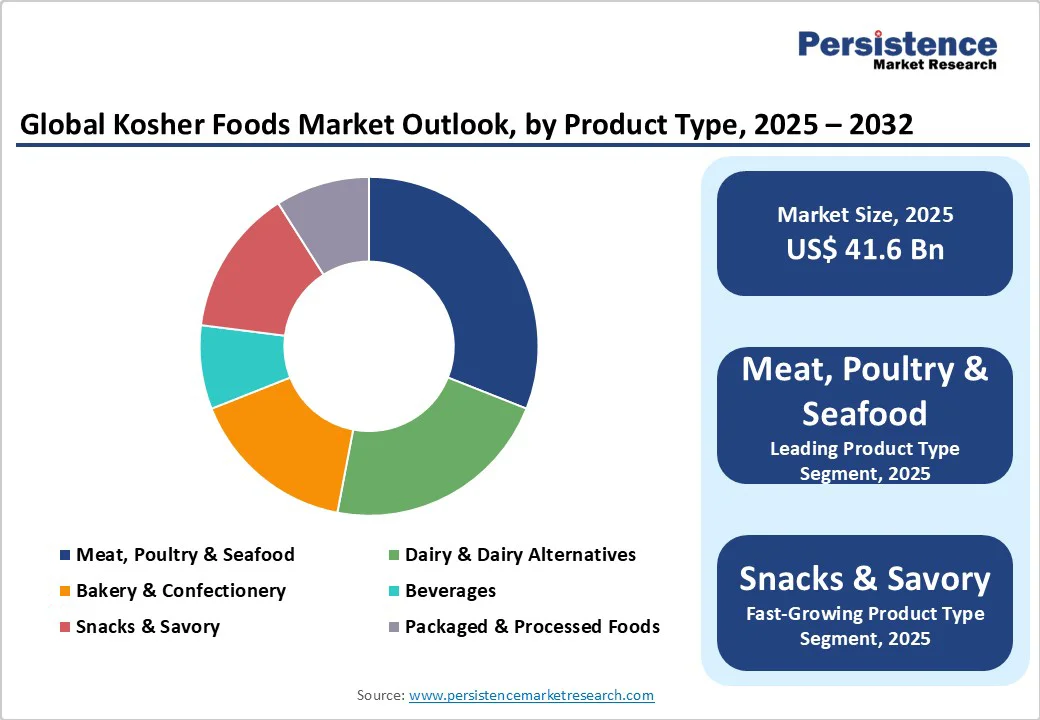
- Fastest-Growing Product Type Segment: Snacks & Savory, driven by premium, plant-based, and festive gifting-oriented kosher products appealing to younger and health-conscious consumers.
- Market Drivers: Kosher certification satisfies growing consumer trust needs around sourcing, handling, and quality assurance, expanding appeal to health-conscious, ethically minded, and specialty food consumers worldwide.
- Opportunities: Expanding premium kosher snack lines for gifting and festive occasions, leveraging personalization, limited editions, and innovative packaging.
- Key Developments: In August 2025, Jans Enterprises Corp expanded its kosher portfolio with Jans Ube Powder Purple Yam. In March 2025, Manischewitz launched “Deli on Wheels” a mobile Jewish deli.
| Key Insights | Details |
|---|---|
|
Kosher Foods Market Size (2025E) |
US$41.6 Bn |
|
Market Value Forecast (2032F) |
US$67.2 Bn |
|
Projected Growth (CAGR 2025 to 2032) |
7.1% |
|
Historical Market Growth (CAGR 2019 to 2024) |
5.8% |
Market Factors - Growth, Barriers, and Opportunity Analysis
Trust through Certified Sourcing
Trust has become a defining factor in food choices, and kosher certification is emerging as a key standard that reinforces consumer confidence in sourcing and handling. With stringent inspection of ingredients, preparation, and supply chain practices, kosher certification assures buyers that products meet high levels of purity, safety, and integrity. This has expanded its appeal beyond the Jewish population to health-conscious and ethically minded consumers worldwide. Retailers and brands highlight kosher labels as proof of transparency, traceability, and rigorous quality control, aligning with growing demand for clean-label and responsibly sourced food. As global consumers scrutinize what they eat with increasing care, kosher certification positions itself as a trusted benchmark, driving wider adoption across packaged foods, beverages, and specialty product categories.
Restricted Retail Partnerships Limit Growth
Building scale in the kosher food sector often collides with the barrier of limited retail partnerships, which directly restrict brand growth and diversification. Many mainstream supermarkets allocate minimal shelf space to kosher-certified items, concentrating on high-demand staples rather than broader specialty ranges. This lack of visibility reduces opportunities for smaller and emerging brands to introduce innovative kosher products such as snacks, ready-to-eat meals, or plant-based alternatives.
Distribution bottlenecks also affect consumer access, forcing buyers to rely on niche stores or online platforms for variety. Without stronger retail collaborations and wider distribution networks, kosher food producers face challenges in reaching mass-market audiences, which delay product innovations and slow the expansion of kosher offerings across diverse categories in global markets.
Premium Kosher Snacks for Gifting
Festive occasions and gifting traditions are opening a high-value niche for premium kosher snack lines, offering strong opportunities for both established brands and startups. Consumers increasingly seek thoughtfully packaged, indulgent, and culturally aligned snacks for holidays, celebrations, and corporate gifting, creating demand beyond everyday consumption. Premium kosher-certified chocolates, nut assortments, artisanal baked goods, and fusion-flavored snacks resonate with modern buyers who value both authenticity and innovation.
Eye-catching packaging, personalization options, and seasonal limited editions can further enhance appeal, positioning products as both tasteful gifts and luxury indulgences. Startups can carve out space by blending tradition with global flavors, while established players can expand portfolios to capture growing interest in elevated kosher gifting experiences worldwide.
Category-wise Analysis
Product Insights
The meat, poultry, & seafood segment holds approximately 32% market share as of 2024, making it the leading product type in the kosher foods market. This dominance is driven by the strict religious requirements surrounding animal slaughter and preparation, which position kosher certification as a key trust factor for consumers seeking authenticity and compliance. Demand is fueled by both traditional communities and a wider audience associating kosher meats with higher quality and stricter hygiene standards.
Bakery & confectionery products are steadily gaining traction through kosher-certified breads, cakes, and chocolates, while snacks & savory items such as chips and flavored nuts appeal to younger demographics. Packaged & processed foods, including ready meals and sauces, further extend accessibility and convenience for kosher consumers globally.
Sales Channel Insights
Online retail is projected to grow at a high CAGR during the forecast period in the kosher foods market, driven by evolving consumer shopping habits and the convenience of doorstep delivery. E-commerce platforms enable brands to reach niche and geographically dispersed kosher consumers, offering curated assortments, subscription boxes, and specialty products that may not be widely available in physical stores. Personalized recommendations, flexible payment options, and fast shipping enhance customer engagement and loyalty.
Online channels also provide an effective platform for marketing limited-edition, festive, and premium kosher products, appealing to gifting and celebratory occasions. The growth of digital infrastructure, mobile commerce, and targeted social media campaigns further accelerates adoption, positioning online retail as a key growth engine for kosher food distribution.
Regional Insights
North America Kosher Foods Market Trends
North America is anticipated to hold a 39% market share in 2025. As per OU Kosher Certification, over 12 million American consumers choose kosher food products for reasons related to health, food safety, taste, vegetarianism, lactose intolerance, and other dietary restrictions. Of well over 200,000 packaged food products on the U.S. supermarket shelves, the OU kosher symbol is found on close to 70% of all products combined.
In the U.S., premium kosher snacks, plant-based alternatives, and ready-to-eat meals are gaining traction, driven by convenience and health-conscious consumption. In Canada, the demand for organic, non-GMO, and ethically sourced kosher products is rising. Online retail and subscription services are increasingly used to access specialty kosher items, expanding availability and consumer reach across North America.
Europe Kosher Foods Market Trends
Europe is expected to show promising growth in the kosher foods market, driven by increasing consumer awareness of dietary preferences, ethical sourcing, and food safety standards. In Germany, demand for kosher-certified packaged and processed foods is rising, supported by a growing Jewish population and interest from health-conscious consumers. France is witnessing expansion in premium kosher bakery, confectionery, and snack segments, catering to festive and gifting occasions.
The U.K. shows strong growth in online and specialty retail channels, with e-commerce enabling wider access to diverse kosher products. Other leading European countries, including Italy, Belgium, and the Netherlands, are emphasizing organic, clean-label, and ethically sourced kosher offerings. Overall, Europe’s kosher food market is benefiting from innovation, premiumization, and increasing distribution reach across retail and online platforms.
Competitive Landscape
The global kosher foods market is highly dynamic, with established companies and agile startups competing to capture consumer loyalty through innovation, quality, and certification credibility. Leading players focus on expanding product portfolios, enhancing supply chain traceability, and forging strategic retail and e-commerce partnerships to broaden market reach. Startups are driving innovation by introducing plant-based kosher alternatives, gourmet snacks, and festive gift packs, often emphasizing clean-label and ethically sourced ingredients. Companies leverage digital marketing, subscription boxes, and personalized offerings to engage niche consumer segments. Emphasis on rigorous kosher certification, sustainable sourcing, and high-quality production practices reinforces trust and brand equity. Collaborative efforts, product diversification, and innovative packaging are shaping competition and driving growth in the global kosher foods landscape.
Key Industry Developments:
- In August 2025, Jans Enterprises Corp announced the expansion of its kosher-certified product portfolio with the upcoming launch of Jans Ube Powder Purple Yam.
- In March 2025, Manischewitz launched “Deli on Wheels,” a mobile Jewish deli bringing authentic cuisine to consumers year-round and expanding the brand’s reach beyond seasonal demand.
- In February 2025, Jimmy Donaldson, known as MrBeast and founder of Feastables, began rolling out OU Kosher-certified chocolate products across U.S. stores.
Companies Covered in Kosher Foods Market
- Nestlé S.A.
- PepsiCo, Inc.
- General Mills, Inc.
- Kellogg Company
- The Kraft Heinz Company
- Conagra Brands, Inc.
- Cargill, Incorporated
- Hain Celestial
- The Manischewitz Company
- Bob’s Red Mill Natural Foods, Inc.
- Dean Foods
- Unilever
Frequently Asked Questions
The kosher foods market is projected to be valued at US$41.6 Billion in 2025.
The demand for kosher foods is fueled by growing consumer trust in certified sourcing and proper handling practices.
The kosher foods market is poised to witness a CAGR of 7.1% between 2025 and 2032.
Expanding premium kosher snack lines for gifting and festive occasions is the key market opportunity.
Major players in the kosher foods market include Nestlé S.A., PepsiCo, Inc., General Mills, Inc., Kellogg Company, and The Kraft Heinz Company.


