




- Beauty & Personal Care
- EMF Radiation Protection Shields Market
EMF Radiation Protection Shields Market Size, Share, and Growth Forecast, 2025 - 2032
EMF Radiation Protection Shields Market by Product Type (Stationary, Portable), Application (Offline, Online), and Regional Analysis for 2025 – 2032

EMF Radiation Protection Shields Market Size and Trends Analysis
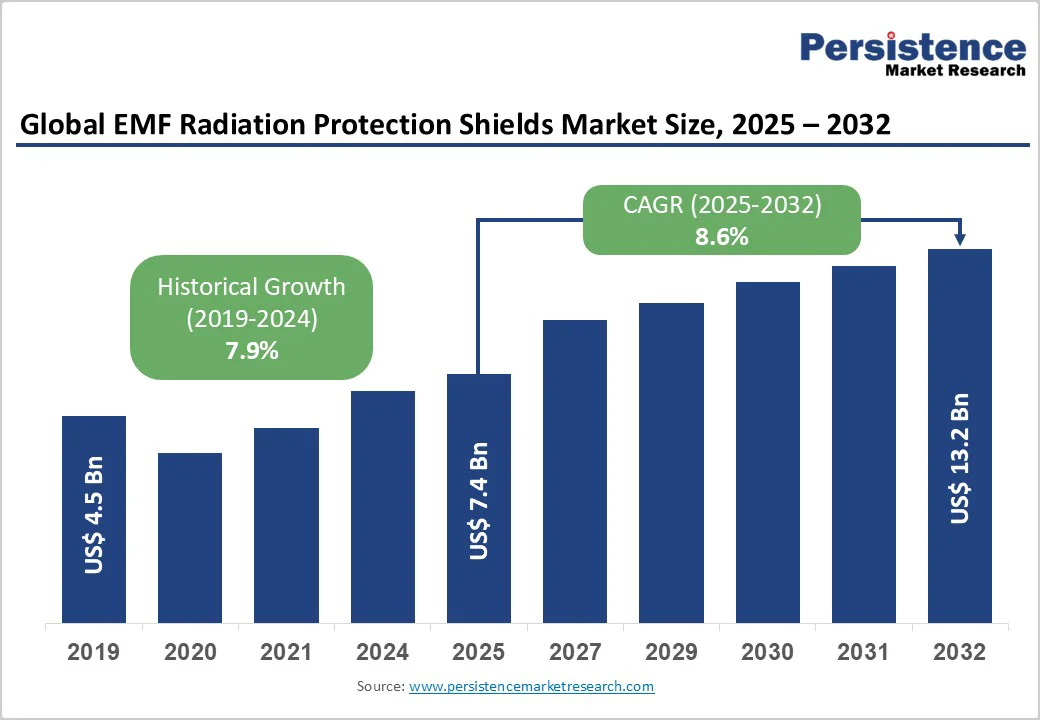
The global EMF radiation protection shields market size is likely to be valued US$7.4 Billion in 2025, estimated to reach at US$13.2 Billion by 2032 growing at a CAGR of 8.6% during the forecast period from 2025 to 2032.
The market is experiencing robust growth driven by increasing consumer awareness of electromagnetic field (EMF) health risks, widespread adoption of wireless technologies, and advancements in shielding materials.
The market is further propelled by innovations in lightweight, portable shielding solutions and wearable technologies, catering to preferences for convenient and non-intrusive products. The growing acceptance of EMF radiation protection shields as essential wellness tools, especially amid rising 5G deployment, is a key growth factor.
Key Industry Highlights:
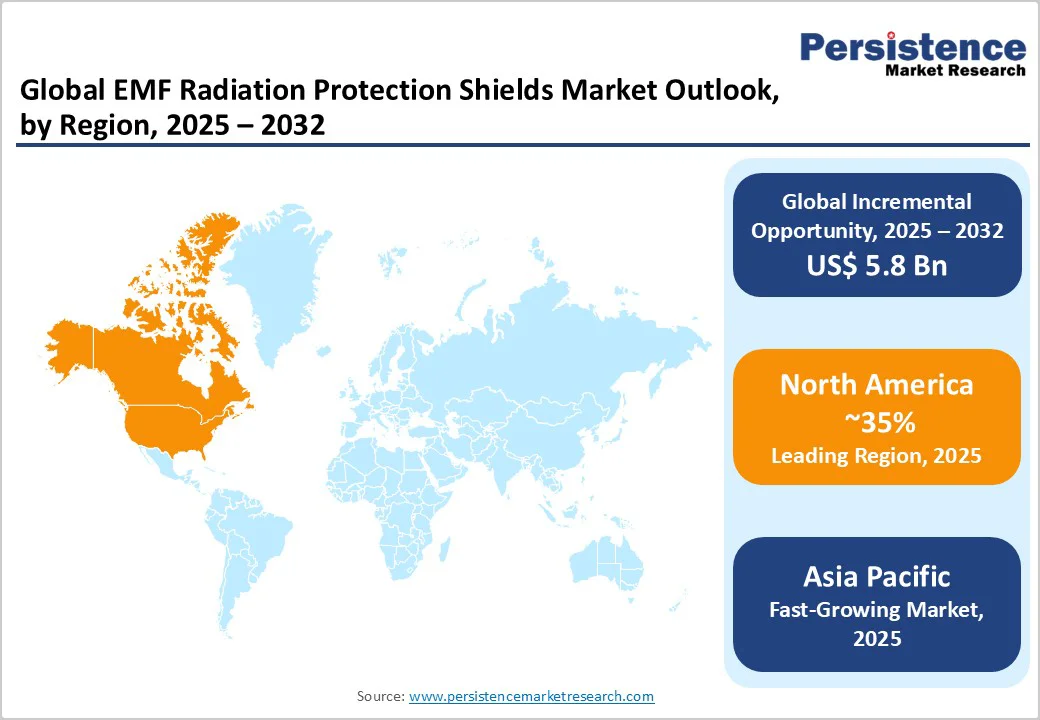
- Leading Region: North America, commanding a 35% market share in 2025, driven by high smartphone penetration and health awareness in the U.S.
- Fastest-growing Region: Asia Pacific, fueled by rapid 5G rollout and device proliferation in China and India.
- Dominant Product Type: Portable, holding approximately 60% of the market share, due to its convenience for daily use with mobile devices.
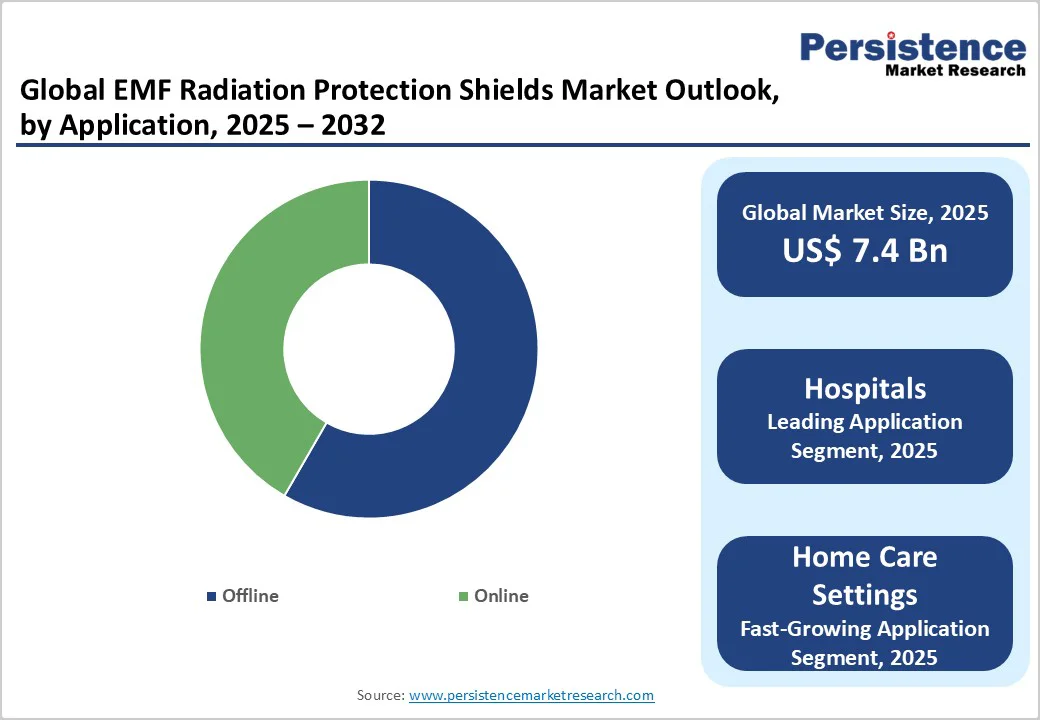
- Leading Application: Online, accounting for over 50% of market revenue, driven by e-commerce growth and direct-to-consumer sales.
- Key Market Driver: Increasing public concern over the potential health impacts of prolonged exposure to electromagnetic fields (EMFs) from smartphones, Wi-Fi routers, and other wireless devices is driving demand for protective solutions.
- Growth Opportunity: Integration of shields with wearable devices, enhancing consumer accessibility and functionality.
- Market Trend: Rising demand for nanotechnology-based shields for improved EMF blocking efficiency.
| Key Insights | Details |
|---|---|
|
EMF Radiation Protection Shields Market Size (2025E) |
US$7.4 Bn |
|
Market Value Forecast (2032F) |
US$13.2 Bn |
|
Projected Growth (CAGR 2025 to 2032) |
8.6% |
|
Historical Market Growth (CAGR 2019 to 2024) |
7.9% |
Market Dynamics
Driver - Rising awareness of EMF health risks and wireless device proliferation
The increasing awareness of potential health risks associated with electromagnetic field (EMF) exposure, combined with the rapid proliferation of wireless devices. With smartphones, tablets, laptops, Wi-Fi routers, and other connected devices becoming an integral part of daily life, consumers are increasingly conscious of prolonged exposure to EMFs. Health discussions in media, wellness blogs, and scientific forums have heightened public understanding of potential long-term effects such as sleep disruption, stress, and other physiological concerns, even as scientific consensus remains cautious.
This growing awareness is driving demand for personal protective solutions, ranging from portable shields for smartphones and wearables to stationary options for homes and offices. The trend is further reinforced by the global expansion of 5G networks, smart home devices, and IoT-enabled products, all of which increase the density of EMF-emitting sources in residential and professional environments. As consumers prioritize health-conscious lifestyles, they are actively seeking products that combine efficacy, convenience, and technological innovation.
Restraint - Lack of scientific consensus and high product costs
The growth of the EMF radiation protection shields market faces challenges due to the lack of scientific consensus and the relatively high cost of products. Despite rising consumer awareness about potential health risks from electromagnetic field exposure, global health authorities such as the World Health Organization (WHO) and national radiation safety agencies have not reached a definitive conclusion on the harmful effects of EMF at typical exposure levels. This uncertainty creates skepticism among consumers, limiting adoption to more health-conscious or niche segments.
The cost of high-quality EMF protection products often made with advanced materials such as silver fibers, graphene, or nanocomposites remains considerably high compared to conventional accessories. The need for ongoing research, material innovation, and product certification further adds to production expenses, making premium shields less accessible to price-sensitive consumers. As a result, the combination of inconclusive scientific evidence and elevated product pricing constrains large-scale market penetration, especially in developing regions.
Opportunity - Integration with wearable devices and smart technology
Integration with wearable devices and smart technology is significantly transforming the EMF radiation protection shields market. As consumers increasingly adopt smartwatches, fitness trackers, and connected accessories, manufacturers are embedding EMF shielding materials directly into these devices or developing compatible protective accessories. This integration enhances user convenience by providing continuous, unobtrusive protection against electromagnetic exposure from daily electronic interactions.
Advanced materials such as graphene and nanocomposites are being utilized to create thin, flexible, and breathable shields that can be seamlessly incorporated into wearable fabrics, wristbands, and clothing. Smart EMF protection devices are also emerging, equipped with sensors and Bluetooth connectivity to monitor exposure levels and provide real-time alerts via mobile apps. The fusion of EMF protection with wearable technology aligns with the growing global trend of personalized health monitoring and preventive wellness solutions.
Category-wise Analysis
Product Type Insights
Portable dominates the market, accounting for 60% of the share in 2025. Their popularity stems from compact, lightweight designs that seamlessly integrate with smartphones, tablets, and wearable devices. These products offer convenient, on-the-go protection, aligning with modern consumer lifestyles focused on mobility, health consciousness, and daily exposure reduction to electromagnetic fields.
Stationary is the fastest-growing segment, driven by rising demand for home and office shielding solutions. Increasing remote work, smart home adoption, and awareness of constant EMF exposure have led consumers to invest in stationary products such as wall paints, window films, and desk shields for continuous, environment-wide protection.
Application Insights
Online leads with 50% share, driven by the convenience and accessibility of e-commerce platforms such as Amazon and official brand websites. Consumers benefit from a wide product range, competitive pricing, and detailed reviews, while brands leverage digital marketing and global reach to expand their customer base efficiently.
Offline is the fastest-growing, driven by specialty health and wellness stores that offer hands-on product demonstrations and personalized guidance. These physical outlets allow consumers to test shielding effectiveness, compare materials, and gain expert advice, enhancing trust and accelerating product adoption among health-conscious buyers.
Regional Insights
North America EMF Radiation Protection Shields Market Trends
North America accounts for 35% in 2025, fueled by high smartphone penetration, extensive use of connected devices, and rising consumer awareness of potential health risks linked to prolonged EMF exposure. The U.S. market benefits from robust investments in health technology, estimated at around US$ 50 billion annually, which supports innovation in EMF shielding materials, wearable protection products, and smart home safety solutions. The presence of leading wellness and tech brands fosters product credibility and consumer trust. Interestingly, the U.K. market though geographically part of Europe reflects similar dynamics. Under the guidance of the Medicines and Healthcare products Regulatory Agency (MHRA), growing public discussions around 5G radiation have accelerated the adoption of portable EMF protection shields such as smartphone cases, stickers, and wearable fabrics. Combined with increasing e-commerce activity and heightened health consciousness, these trends underscore a strong and sustained demand for EMF radiation protection solutions across North America and the U.K. markets.Top of FormBottom of Form
Europe EMF Radiation Protection Shields Market Trends
Europe holds about 25% market share, led by Germany and France leading regional growth. The dominance of these countries stems from stringent electromagnetic field (EMF) exposure regulations and a strong cultural emphasis on health and wellness. Germany’s proactive stance on radiation safety, supported by its Federal Office for Radiation Protection (BfS), has spurred consumer awareness and adoption of certified shielding products in homes, workplaces, and public spaces. France’s precautionary policies such as restrictions on Wi-Fi use in schools and labeling requirements for mobile devices have encouraged demand for EMF protection solutions. The region’s robust wellness economy, valued at approximately €15 billion annually, further supports market growth as consumers increasingly invest in personal health and preventive technologies. Moreover, Europe’s strong e-commerce penetration and preference for sustainable, scientifically tested materials are influencing product development trends.
Asia Pacific EMF Radiation Protection Shields Market Trends
Asia Pacific commands around 30% share and is the fastest-growing region, The region’s growth is primarily driven by China’s rapid 5G network expansion, which has intensified concerns over electromagnetic field (EMF) exposure. With China leading in telecommunications infrastructure, the proliferation of 5G-enabled devices has fueled demand for effective EMF shielding materials across consumer electronics and wearable accessories. India’s surge in smartphone penetration, digitalization, and smart home adoption is contributing to a growing awareness of radiation-related health risks.
Consumers in these markets are increasingly seeking cost-effective and accessible EMF protection solutions such as shielded phone cases, clothing, and home devices. The rise of local manufacturers offering affordable products and expanding online retail networks has enhanced product availability. Government initiatives supporting domestic electronics manufacturing and health-conscious consumer behavior are expected to further accelerate regional growth, positioning Asia Pacific as a crucial hub for innovation and production in the EMF radiation protection shields market.
Competitive Landscape
The global EMF radiation protection shields market is highly competitive, characterized by the presence of several established and emerging players competing through innovation and product differentiation. Leading companies are focusing on material advancements such as graphene-based, carbon fiber, and silver-infused fabrics to enhance shielding efficiency while maintaining comfort and usability. Nanotechnology is becoming a critical area of innovation, enabling the development of thinner, more effective materials that block electromagnetic frequencies without compromising design flexibility. With growing awareness about potential health effects of prolonged EMF exposure from smartphones, Wi-Fi routers, and electronic devices, consumer demand has shifted toward wearable and home-based protection solutions. To reach a broader audience, market players are increasingly adopting e-commerce channels, leveraging online retail platforms and digital marketing to attract health-conscious consumers globally. Partnerships with wellness brands and technology firms further strengthen market presence.
Key Developments
- In July 2025, Mission Darkness launched a portable phone shield with 99% RF blocking, targeting urban consumers.
- In May 2025, Radi Armor expanded nanotechnology-based fabric shields for online sales, focusing on 5G protection.
Companies Covered in EMF Radiation Protection Shields Market
- Huagasion
- Kakawin
- PureGoods
- e-link
- Equival
- Yongirl
- Newbeau
- Mission Darkness
- Radi Protection
- KeeperOn
- Radi Armor
- Millster
- Yinox
- Tamiaa
Frequently Asked Questions
The global EMF radiation protection shields market is projected to reach US$7.4 Bn in 2025, driven by rising EMF health concerns.
Increasing public concern over the potential health impacts of prolonged exposure to electromagnetic fields (EMFs) from smartphones, Wi-Fi routers, and other wireless devices is driving demand for protective solutions.
The market is poised to witness a CAGR of 8.6% from 2025 to 2032, supported by wearable and nanotechnology innovations.
Wearable EMF radiation protection shields integrated with smart devices offer opportunities for consumer electronics markets.
Mission Darkness, Radi Armor, PureGoods, Equival, and Radi Protection lead through innovative portable EMF radiation protection shields.


