




- Food Ingredients & Additives
- Date Powder Market
Date Powder Market Size, Share, and Growth Forecast, 2026 – 2033
Date Powder Market by Product Type (Organic Date Powder, Conventional Date Powder, Instant Date Powder), Application (Food & Beverage, Nutraceuticals, Cosmetics), End-User (Household, Food Service & Industrial), and Regional Analysis for 2026-2033

Date Powder Market Share and Trends Analysis
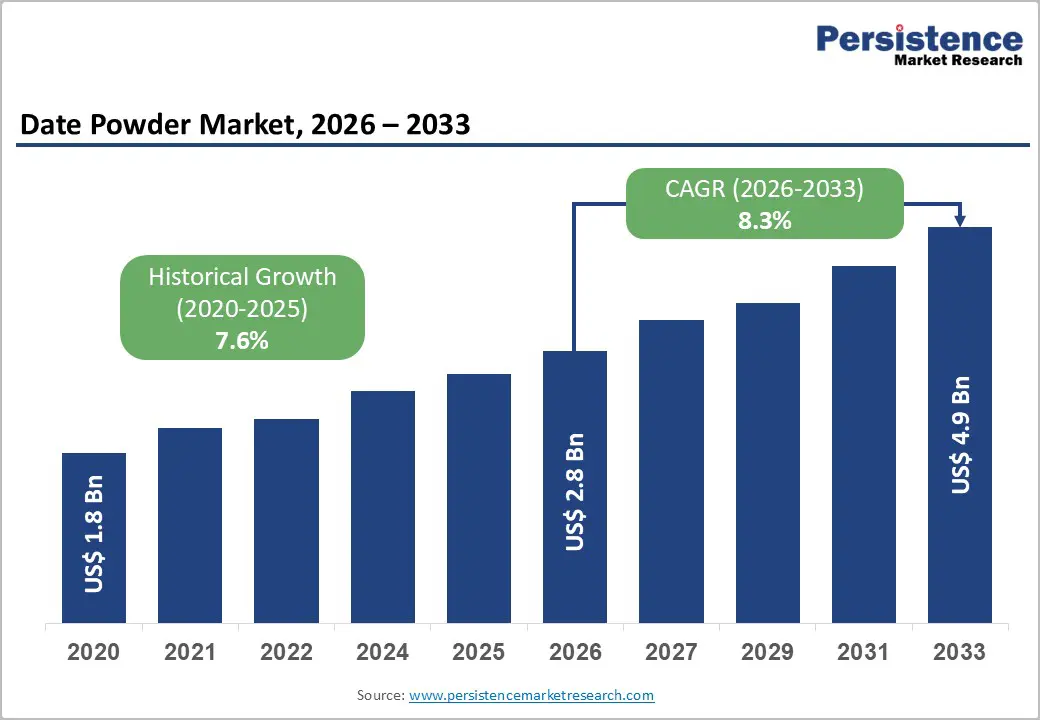
The global date powder market is projected to be valued at US$ 2.8 billion in 2026 and US$ 4.9 billion by 2033, growing at a CAGR of 8.3% during the forecast period 2026−2033. Rising substitution of refined sugar with natural sweeteners across food processing, increasing consumer preference for clean-label ingredients, and expanding application scope in nutraceutical and cosmetic formulations are the primary factors fueling market expansion.
Date powder benefits from its high mineral content, low glycemic index, and compatibility with organic and plant-based product positioning, strengthening adoption across developed and emerging economies. Growth acceleration is further supported by expanding date cultivation volumes in the Middle East and Asia-Pacific regions, improved processing technologies, and rising demand for shelf-stable ingredients from industrial food manufacturers.
Key Industry Highlights
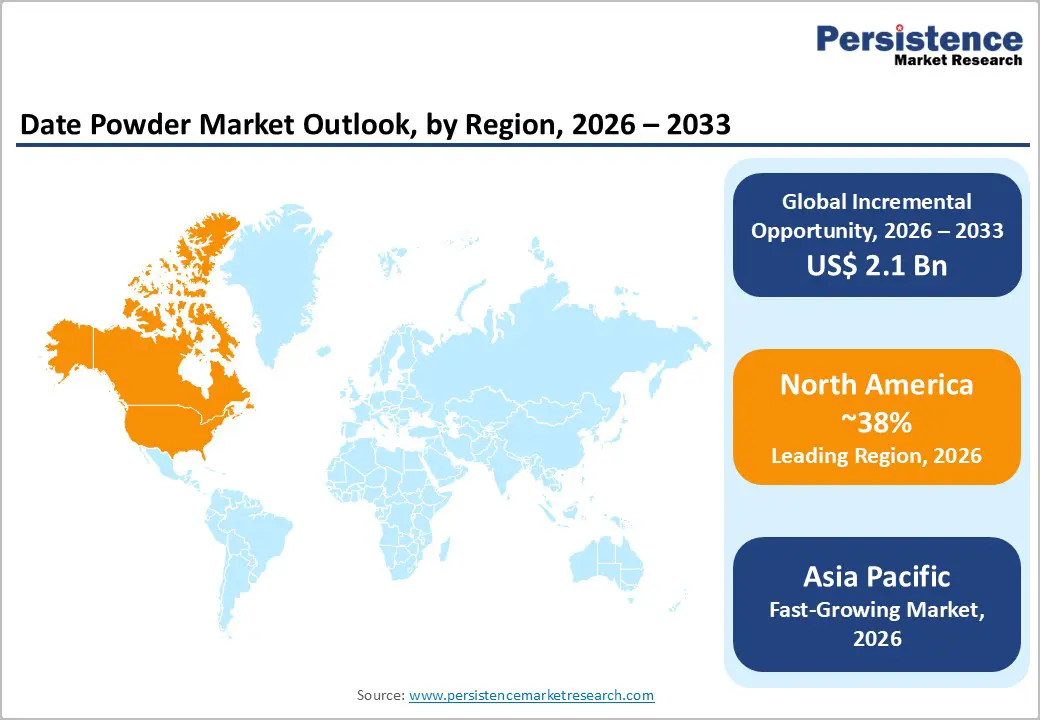
- Dominant Region: North America is expected to dominate in 2026 with about 38% share, driven by advanced processing infrastructure and widespread consumer preference for functional and organic food products.
- Fastest-growing Market: Asia Pacific is projected to emerge as the fastest-growing market through 2033, propelled by a growing demand for natural, functional, and plant-based food, beverage, and nutraceutical products.
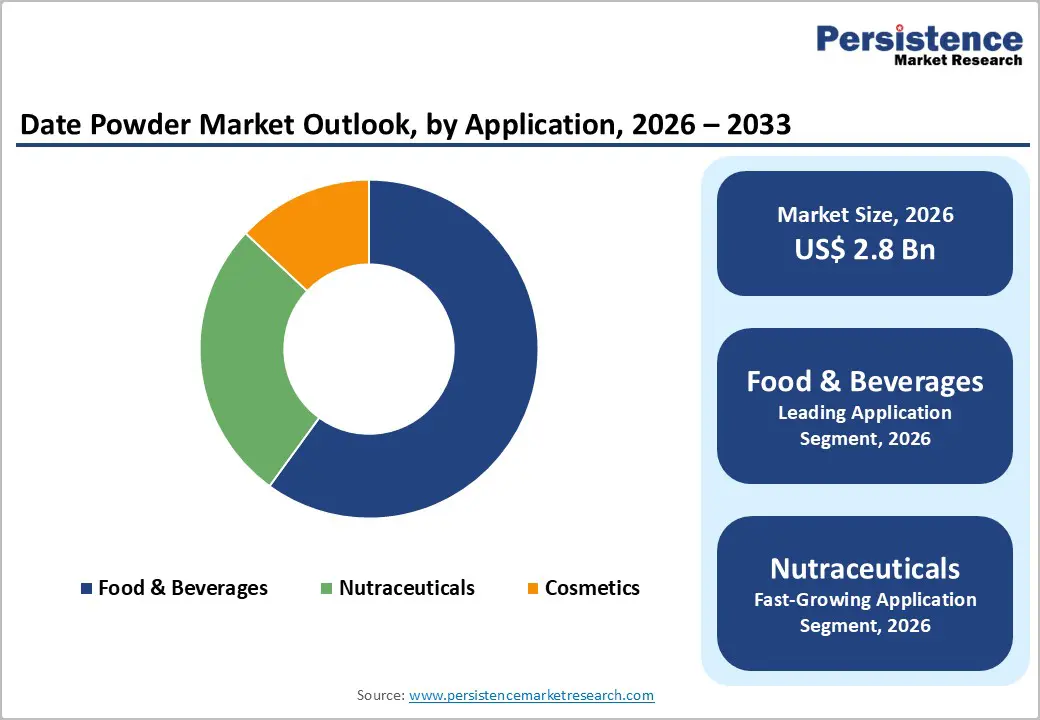
- Leading Application: Food & beverages is set to command an anticipated 60% share in 2026, owing to the broad use of date powder in bakery, confectionery, dairy alternatives, and ready-to-drink beverages.
- Fastest-growing Application: Nutraceuticals are expected to record the fastest growth between 2026 and 2033, supported by the rising integration of plant-derived, clean-label ingredients in fortified nutrition products.
| Key Insights | Details |
|---|---|
| Date Powder Market Size (2026E) | US$ 2.8 Bn |
| Market Value Forecast (2033F) | US$ 4.9 Bn |
| Projected Growth (CAGR 2026 to 2033) | 8.3% |
| Historical Market Growth (CAGR 2020 to 2025) | 7.6% |
Market Factors – Growth, Barriers, and Opportunity Analysis
Rising Demand for Natural Sweeteners and Functional Foods
Shifting preference for clean-label sweetness reflects a structural shift in food formulation strategy. Food and beverage producers face sustained pressure to replace refined sugar with ingredients that align with natural positioning, glycemic control, and micronutrient density. Date-derived powder delivers intrinsic sweetness alongside potassium, magnesium, and dietary fiber, supporting functional claims without synthetic additives. This profile enables label simplification, premium pricing, and portfolio differentiation across bakery, dairy alternatives, beverages, and nutrition bars. Procurement teams value supply traceability from agricultural origins, while brand teams leverage familiar fruit-based narratives to reinforce trust, wellness alignment, and everyday usability in mainstream consumption.
Demand acceleration is reinforced by clinical nutrition alignment and regulatory guidance shaping reformulation priorities. The World Health Organization (WHO) recommends limiting free sugars to less than 10% of total energy intake, underscoring the urgency of naturally sweet solutions backed by whole-food credentials. Date-based sweetness supports lower perceived sugar content through caramel notes and bulking properties that preserve texture and mouthfeel. Product developers gain formulation efficiency, reduced reliance on artificial sweeteners, and improved consumer acceptance in sugar-reduction programs.
Price Volatility of Raw Dates and Agricultural Dependency
Price volatility in raw dates is strongly influenced by climatic variability, harvest cycles, and the geographic concentration of cultivation. Annual yields fluctuate due to changes in rainfall, temperature extremes, pest infestations, and water availability, resulting in inconsistent supply across years. Most production is concentrated in a few key regions, increasing vulnerability to local disruptions such as droughts, heat waves, and trade restrictions. Adding to this are input costs for labor, irrigation, and transportation, which are, in turn, closely tied to energy prices, causing procurement budgets to be highly volatile.
Agricultural dependency also creates significant challenges for planning, profit margins, and scalability within processing operations. Contract farming and forward buying strategies are at risk when actual yields differ from forecasts or when quality grades vary, leading to higher rejection rates and increased reprocessing expenses. Limited storage capacity and the perishable nature of dates lead to greater losses, while inconsistent quality often necessitates blending, reducing product uniformity. Currency fluctuations in producing regions impact import parity, placing additional pressure on working capital and the effectiveness of hedging strategies.
Technological Convergence with Nutraceuticals
The burgeoning convergence between date powder and nutraceuticals on the technological front is unlocking high-value opportunities, driven by the growing consumer preference for food-as-medicine concepts. Advances in food processing, microencapsulation, and nutrient stabilization enable the integration of raw dates into functional formulations designed for glycemic control, digestive wellness, and energy management. Clean-label trends favor naturally derived sweetening agents that provide both caloric energy and essential micronutrients. The inclusion of dates in nutraceutical delivery formats such as sachets, functional beverages, nutrition bars, and powdered supplements supports premiumization and product differentiation within health-focused portfolios, strengthening their relevance in wellness-driven consumption ecosystems.
This trend is further reinforced by compatibility with digital nutrition tools, personalized health platforms, and formulation analytics used by nutraceutical developers. Precision blending technologies allow for standardized mineral and fiber content, ensuring consistent functional claims and regulatory compliance. The ability to align with plant-based, vegan, and allergen-free frameworks increases adoption across global wellness brands. Research-led validation of metabolic and antioxidant properties enhances credibility and supports the preventive health positioning of date-based nutraceuticals, making them a strategic asset in modern wellness strategies.
Category-wise Analysis
Product Type Insights
The organic segment is projected to capture about 45% of the date powder market revenue share in 2026, driven by its strong alignment with premium positioning strategies adopted by food brands and nutraceutical manufacturers. Clean-label formulation trends, certified organic sourcing, and traceability standards have reinforced consumer preference, particularly among health-conscious buyers. Its high adoption in bakery, functional foods, dietary supplements, and plant-based nutrition products supports stable volume growth. Consumers in Europe and North America have consistently shown a greater willingness to pay for certified organic inputs, which further strengthens supplier margins and market position.
Instant date powder is expected to experience the fastest growth from 2026 to 2033, as its product functionality meets the evolving needs of beverage, infant nutrition, and sports performance categories. Superior solubility, rapid dispersion, and consistent sweetness enhance manufacturing efficiency and product quality. The rising demand for convenient, ready-to-mix nutrition formats is accelerating adoption among large-scale processors. Its compatibility with automated production lines also reduces processing time and minimizes waste, making instant date powder an increasingly attractive option for industrial applications.
Application Insights
The food and beverages segment is expected to lead with over 60% of the market share in 2026, due to its broad applicability across high-volume categories such as bakery, confectionery, dairy alternatives, and ready-to-drink beverages. Manufacturers are prioritizing naturally derived sweetening solutions to meet clean-label positioning, sugar reduction goals, and flavor enhancement needs without synthetic additives. Large-scale food processors incorporate this ingredient into standardized recipes, ensuring repeat procurement and predictable demand. Its compatibility with thermal processing, baking stability, and shelf-life requirements further strengthens adoption in industrial production lines.
The nutraceuticals segment is projected to be the fastest-growing application area between 2026 and 2033, driven by increasing demand for functional nutrition and whole-food-based supplement formats. Consumers are increasingly seeking plant-derived ingredients perceived as clean, minimally processed, and nutritionally rich, which supports strong adoption in powders, capsules, gummies, and fortified nutrition blends. The acceptance of natural ingredients within dietary supplement regulations reduces formulation risk and enables faster commercialization cycles, making nutraceuticals a key growth driver in the market.
End-User Insights
Food service and industrial users are expected to hold nearly 55% of the market share in 2026, driven by bulk procurement agreements, expansion of private-label manufacturing, standardized recipes, and centralized sourcing. Their consistent high-volume usage across commercial bakeries, beverage preparation facilities, confectionery units, and institutional catering operations ensures predictable demand cycles, pricing stability, and long-term supplier engagement.
Household consumption is projected to become the fastest-growing end-user segment between 2026 and 2033, fueled by rising home baking activity, greater penetration of direct-to-consumer organic food platforms, increasing urban health awareness, and wider availability through digital grocery channels. Smaller and affordable packaging formats, along with a stronger preference for natural, minimally processed sweetening alternatives in daily cooking and homemade nutrition products, are accelerating adoption among consumers.
Regional Insights
North America Date Powder Market Trends
North America is projected to lead with approximately 38% of the date powder market share in 2026, due to strong industrial adoption, advanced processing infrastructure, and high consumer demand for functional and organic food products. The region’s dominance is rooted in large-scale commercial food production, especially in bakery, confectionery, and beverage sectors, where manufacturers favor natural sweetening agents to meet clean-label and health-focused product requirements. Widespread private-label penetration in major supermarket chains generates recurring bulk demand, ensuring predictable procurement cycles and stable revenue streams.
North America’s market position is further reinforced by growing health and wellness trends and high disposable income among urban consumers, which sustain premiumization in functional foods, nutraceuticals, and specialty bakery products. Advances in processing technologies, such as instant and spray-dried date powders, enhance solubility, shelf stability, and scalability, allowing manufacturers to serve a broad range of product applications. Strategic collaborations between ingredient suppliers and leading food manufacturers accelerate product development, strengthening adoption in both retail and industrial channels.
Europe Date Powder Market Trends
Europe is positioned to emerge as a highly attractive market for date powder, driven by strong consumer preference for clean-label, organic, and functional food products among urban populations with elevated health awareness. Well-established regulatory frameworks enforce quality, traceability, and certification standards, which enable premium product positioning and support higher pricing structures. Widespread adoption across bakery, confectionery, dairy alternatives, and nutraceutical segments has ensured consistent industrial demand, while private-label expansion in leading supermarket chains creates recurring procurement opportunities.
This market growth is further strengthened by alignment with sustainability and plant-based nutrition trends. Consumers increasingly favor minimally processed ingredients, natural sweeteners, and functional foods that deliver tangible health benefits, encouraging manufacturers to incorporate date powder into premium offerings. Collaboration between ingredient suppliers, food manufacturers, and health-focused brands accelerates product innovation and reduces time-to-market. Enhanced awareness of clean-label certification and traceable sourcing builds brand trust and promotes repeat purchases across diverse consumer segments.
Asia Pacific Date Powder Market Trends
Asia Pacific is expected to be the fastest-growing market for date powder between 2026 and 2033, fueled by rapid urbanization, rising disposable income, and a growing health-conscious consumer base. Changing dietary preferences toward natural, functional, and plant-based ingredients are increasing demand across beverages, bakery, confectionery, and nutraceutical products. Expanding middle-class populations are more willing to pay for premium and organic formulations, while the growth of modern retail chains, e-commerce platforms, and direct-to-consumer channels is improving product accessibility and visibility.
This rapid growth is further supported by increasing interest in fortified, low-sugar, and clean-label products, reflecting a shift toward wellness-focused nutrition. Home baking trends, social media influence, and urban lifestyle changes are driving household consumption, while large-scale food manufacturers are incorporating natural sweeteners into ready-to-eat, functional, and sports nutrition products. Regulatory support for natural and minimally processed ingredients enables faster product launches and innovation, and technological advancements in instant and spray-dried powders are enhancing solubility and versatility, allowing manufacturers to diversify their offerings across multiple applications.
Competitive Landscape
The global date powder market structure is moderately fragmented, dominated by Al Barakah Dates Factory L.L.C., Sharmeen Foods, GNS Pakistan, Mevive International, and NVR Nutrition Pvt. Ltd. Accounting for an estimated 40% of the market revenue share, these leading firms operate alongside numerous regional processors, fostering a competitive landscape that blends global reach with local expertise. Market success depends on consistent product quality, broad certification portfolios, and reliable supply to meet diverse requirements in food, beverage, nutraceutical, and personal care sectors.
Competitive positioning in the market is strengthened by operational excellence, value-added services, and robust supply chain management. Leading suppliers emphasize traceable sourcing, standardized processing, and sustainable cultivation to build credibility with both manufacturers and consumers. Continuous innovation in product formats, such as instant powders, spray-dried options, and functional blends, enables companies to adapt to evolving industry demands and differentiate their offerings in a dynamic marketplace.
Key Industry Developments
- In December 2025, researchers at Loyola Academy, India, developed chocolate by incorporating 13-17% roasted date seed powder into cocoa powder with date syrup and butter. Tray drying at 60°C reduced seed moisture to ~1%, and roasting enhanced flavor, demonstrating waste valorization into a nutritionally enriched, sustainable product with good consumer acceptance. This novel approach promotes fiber-rich, antioxidant-enhanced chocolate while reducing environmental waste from date processing.
- In December 2025, a study from the Desert Research Center, Egypt, demonstrated successful incorporation of roasted date seed powder (RDSP) replacing up to 75% cocoa powder in chocolate balls, spreads, and dark chocolate, enhancing crude fiber, total phenols, minerals such as potassium and sodium, and phenolic/flavonoid content. RDSP exhibits dose-dependent cytotoxicity against MCF-7 breast cancer cells and received good sensory acceptability.
- In November 2025, it was demonstrated through a study led by the AlMaarefa University, Saudi Arabia, that Ajwa date seed powder and fruit pulp extracts have neuroprotective and antidepressant effects in a chronic mild stress rat model, reducing plasma nitrite and corticosterone levels while showing high phenolic, flavonoid, and tannin content. Phytochemical screening confirmed presence of saponins, alkaloids, tannins, glycosides, flavonoids, phenolics, and terpenoids in both extracts.
Companies Covered in Date Powder Market
- Al Barakah Dates Factory L.L.C.
- Sharmeen Foods.
- GNS Pakistan
- Mevive International.
- NVR Nutrition Pvt. Ltd.
- Sarika Ventures Pvt Ltd.
- Arat Company Pjs.
- VHAfoods
- Miresi
Frequently Asked Questions
The global date powder market is projected to reach US$ 2.8 billion in 2026.
Rising demand for natural sweeteners, clean‑label ingredients, and functional food applications drives the market.
The market is poised to witness a CAGR of 8.3% from 2026 to 2033.
Expanding use in nutraceuticals, plant-based beverages, and convenient food formulations presents key market opportunities.
Some of the key market players include Al Barakah Dates Factory L.L.C.,Sharmeen Foods, GNS Pakistan, and Mevive International.


