




- Food Ingredients & Additives
- Carob Bean Gum Market
Carob Bean Gum Market Size, Share, and Growth Forecast, 2026 - 2033
Carob Bean Gum Market by Physical Type (Powder, Liquid, Granules), Source Type (Organic Carob Bean Gum, Conventional Carob Bean Gum), Application (Food & Beverages, Pharmaceuticals, Cosmetics, Others), and Regional Analysis for 2026 - 2033

Carob Bean Gum Market Share and Trends Analysis
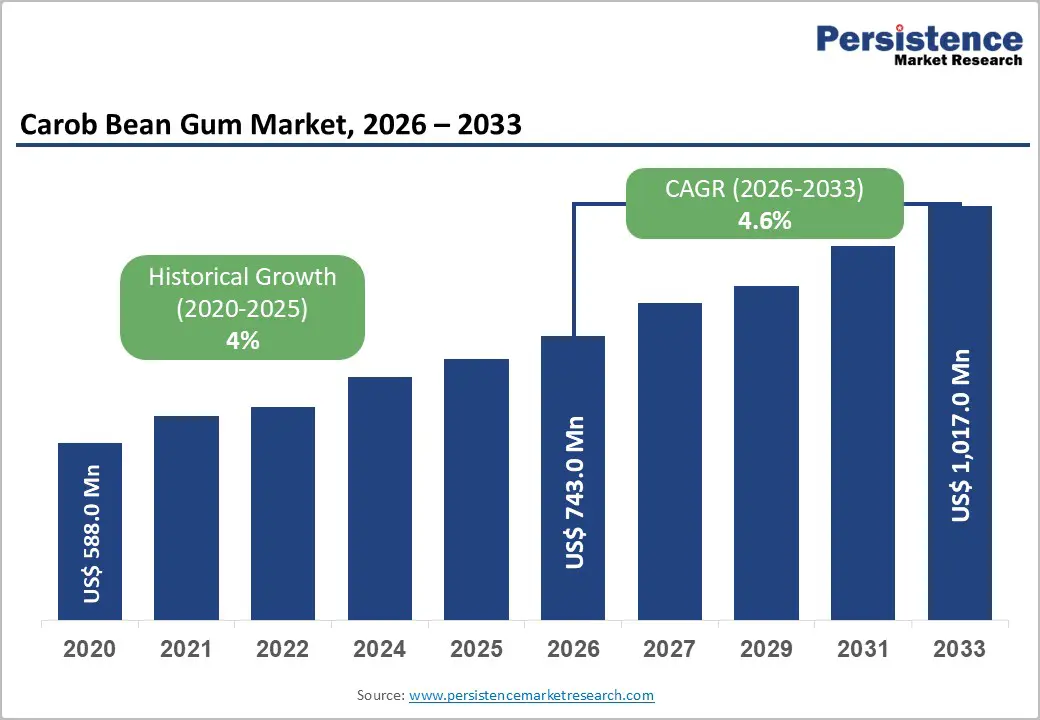
The global carob bean gum market size is likely to be valued at US$ 743.0 million in 2026, and is projected to reach US$ 1,017 million by 2033, growing at a CAGR of 4.6% during the forecast period 2026−2033.
Widening applications in food & beverage, pharmaceutical, and cosmetic are driving product demand. Technological advancements in extraction processes and a shift towards organic ingredients have significantly boosted market prospects. The increasing use of carob bean gum as a natural thickening agent, driven by consumer preference for healthier, natural alternatives, continues to expand market opportunities. The global shift towards plant-based diets is expected to further drive market growth. Challenges such as cost constraints in production and fluctuations in raw material availability might impede growth.
Key Industry Highlights
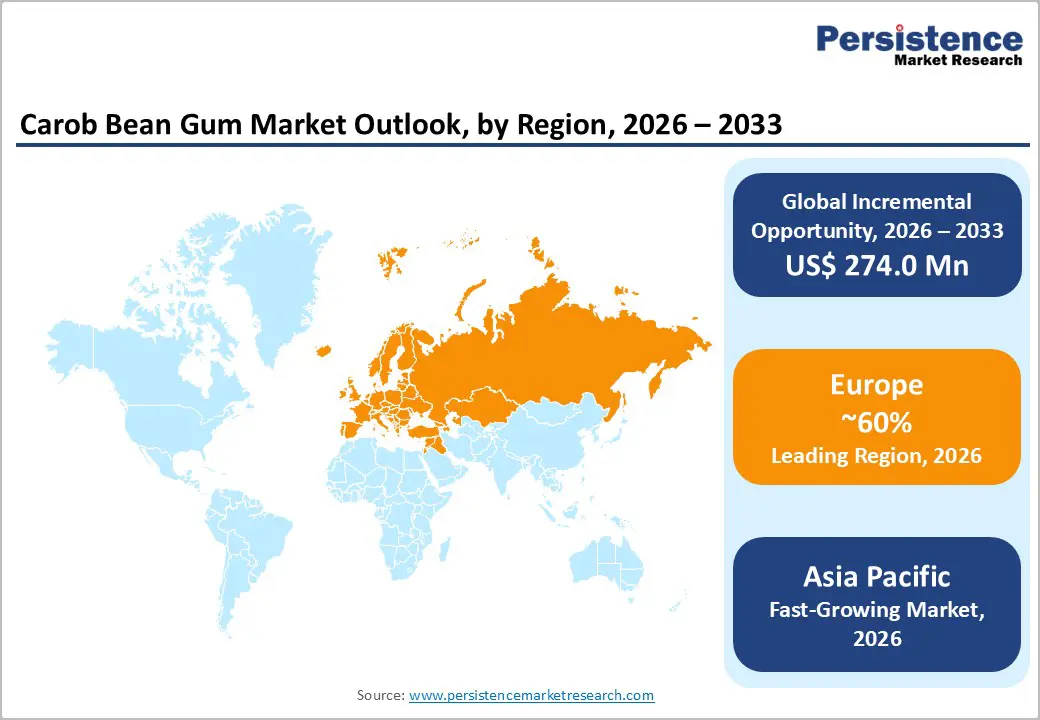
- Dominant Region: Europe is set to hold a 60% market share in 2026, supported by extensive carob tree cultivation in Mediterranean countries.
- Fastest-growing Market: Asia Pacific is forecasted to be the fastest-growing market from 2026 to 2033, fueled by the rising demand for natural, plant-based ingredients.
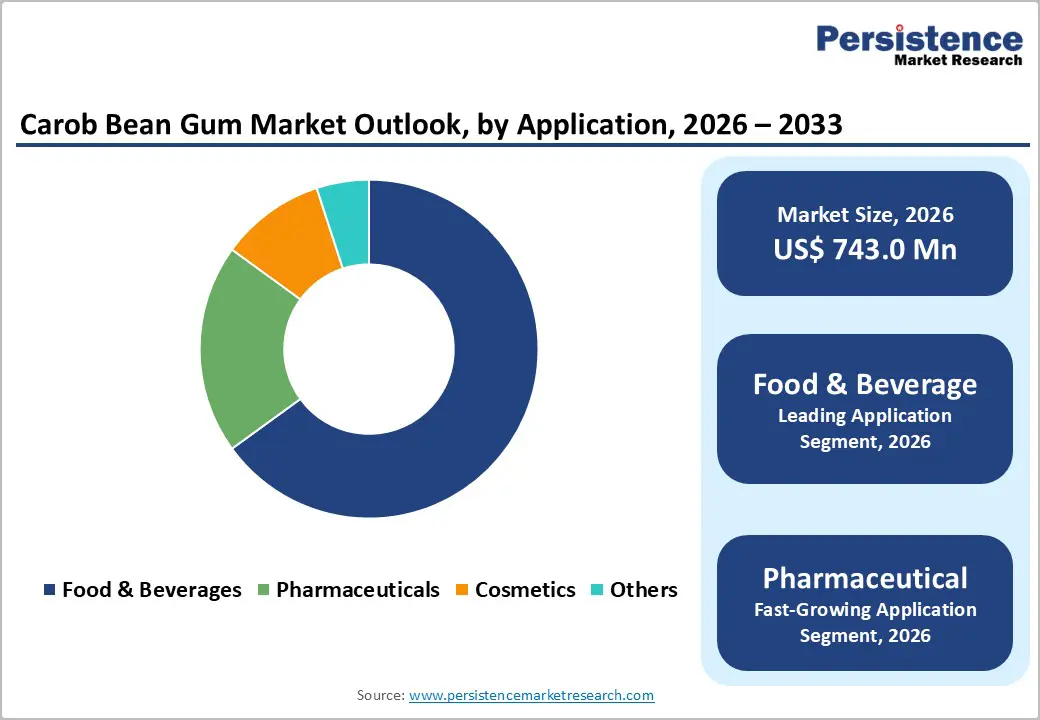
- Leading Application: The food & beverage industry is likely to lead with about 65% market share in 2026, driven by the demand for gluten-free, vegan, and organic products.
- Fastest-growing Application: The pharmaceutical sector is slated to grow the fastest through 2033, supported by the increasing use of carob bean gum in drug formulations and controlled-release systems.
| Key Insights | Details |
|---|---|
|
Carob Bean Gum Market Size (2026E) |
US$ 743.0 Mn |
|
Market Value Forecast (2033F) |
US$ 1,017 Mn |
|
Projected Growth (CAGR 2026 to 2033) |
4.6% |
|
Historical Market Growth (CAGR 2020 to 2025) |
4% |
Market Factors - Growth, Barriers, and Opportunity Analysis
Surging Demand for Natural and Clean-Label Ingredients
The rapidly increasing demand for natural and clean-label ingredients has positioned carob bean gum as a central growth driver in its market, as health-conscious consumers have prioritized sustainability and product transparency. Shoppers have actively sought formulations featuring simple, recognizable components free from artificial additives, synthetic preservatives, and intricate chemical blends. Carob bean gum, sourced from the locust bean tree (Ceratonia siliqua), has emerged as a premium natural thickener and stabilizer that aligns seamlessly with these preferences, offering superior functionality without synthetic alternatives. Food and beverage manufacturers have increasingly incorporated it to enhance texture and stability while meeting evolving clean-label standards across beverages, dairy alternatives, and processed foods.
The expanding plant-based movement has further accelerated carob bean gum adoption, as consumers embracing vegan and allergen-free diets have demanded sustainable, versatile ingredients. This gum has excelled as a gluten-free, non-genetically modified organism (non-GMO) solution for formulating plant-based yogurts, meat substitutes, and personal care emulsions. Its neutral flavor profile and robust stabilizing properties have made it indispensable for maintaining product quality under diverse processing conditions. Companies positioning themselves in this space should explore strategic sourcing partnerships and R&D investments to leverage carob bean gum’s multifunctional benefits and capture premium market segments focused on wellness and environmental responsibility.
Competition from Alternative Hydrocolloids
Competition from alternative hydrocolloids has constrained the growth of the carob bean gum market, as more cost-effective and multifunctional substitutes have gained preference across key industries. Hydrocolloids such as guar gum, xanthan gum, and locust bean gum have delivered comparable thickening, gelling, and stabilizing capabilities, often outperforming carob bean gum in critical applications such as food and beverage processing, where texture consistency and shelf-life stability matter most. Manufacturers have frequently shifted to these options due to their superior price-performance balance and broader adaptability across formulations, from sauces to dairy products. This competitive dynamic has limited the carob bean gum market penetration unless it demonstrates clear differentiation in niche performance areas.
The established supply chains and reliable sourcing for these alternative hydrocolloids have further intensified competitive pressures, particularly as carob bean gum has encountered variability in production volumes tied to agricultural conditions in Mediterranean regions. Synthetic and advanced plant-based gums have also expanded the range of viable options, compelling carob bean gum producers to compete on unique attributes such as premium clean-label appeal rather than solely on cost. To counter these restraints, companies should invest in hybrid formulations that combine carob bean gum with complementary hydrocolloids, optimize regional supply partnerships, and emphasize its natural, allergen-free profile in high-value segments such as organic and plant-based products. Such strategies will help mitigate substitution risks and strengthen long-term market positioning.
Technological Convergence in Pharmaceutical and Cosmetic Applications
Technological convergence in the pharmaceutical and cosmetic sectors has created a compelling opportunity for carob bean gum, leveraging its distinctive functional properties as a stabilizer, emulsifier, and gelling agent. Rising demand for natural, multifunctional ingredients in personal care and healthcare formulations has positioned this gum as a prime choice, particularly as brands integrate advanced delivery systems with clean-label components. Manufacturers have increasingly valued their ability to enhance texture stability and sensory performance without synthetic additives, aligning with consumer expectations for transparency and efficacy. This synergy between innovation and natural sourcing has elevated carob bean gum's role in next-generation products across both sectors.
Expanding applications in these industries are poised to unlock substantial growth for carob bean gum through sophisticated formulations that prioritize sustainability and performance. As the focus on clean-label alternatives intensifies, its capacity to thicken emulsions, form protective films, and retain moisture has proven invaluable in drug delivery matrices, topical therapeutics, and cosmetic essentials such as creams, lotions, and shampoos. Forward-looking companies should pursue R&D collaborations to optimize hybrid systems, blending carob bean gum with bioactive compounds, and target premium segments such as anti-aging skincare and sustained-release pharmaceuticals. These initiatives will maximize its value proposition and secure leadership in high-margin, innovation-driven markets.
Category-wise Analysis
Physical Type Insights
The powdered form is projected to dominate with an estimated 55% of the carob bean gum market revenue share in 2026, driven by its superior handling characteristics, extended shelf stability, and broad compatibility across food and beverage applications. Manufacturers have favored this format in sectors such as baking, sauces, and dairy processing, where it integrates seamlessly with diverse ingredients to deliver consistent thickening and stabilization. Its cost advantages, coupled with efficient storage and transportation logistics, have solidified its position as the global leader, particularly for high-volume operations seeking reliability and scalability.
The liquid form of carob bean gum is anticipated to register the fastest growth between 2026 and 2033, propelled by surging demand for ready-to-use solutions in food production and cosmetic manufacturing. This variant excels with its rapid dissolution and straightforward incorporation, making it ideal for beverages, liquid food items, and emulsion-based personal care products where processing speed directly impacts efficiency. As industries prioritize convenience and streamlined formulations, companies adopting liquid carob bean gum stand to gain competitive edges through reduced production times and enhanced product innovation in fast-expanding clean-label categories.
Source Type Insights
Conventional carob bean gum is projected to lead with an estimated 70% revenue share in 2026, supported by its lower production costs and reliable global availability. Manufacturers across the food, pharmaceutical, and cosmetic sectors have preferred this variant for large-scale operations, as it delivers consistent performance at optimal pricing. Sourced primarily from carob tree plantations in Mediterranean countries, conventional carob bean gum benefits from mature supply chains that ensure steady volumes and minimal disruptions. This accessibility has made it the go-to option for formulators balancing quality, scalability, and budget constraints in everyday applications such as processed foods and industrial emulsions.
Organic carob bean gum is expected to emerge as the fastest-growing segment between 2026 and 2033, driven by surging consumer preference for certified organic and clean-label products. Health-focused shoppers have increasingly selected sustainable ingredients, prompting adoption in premium health foods, natural cosmetics, and pharmaceutical excipients. Regulatory incentives for eco-friendly farming practices have further accelerated this shift, enhancing supply reliability and certification standards. Companies targeting this trajectory should prioritize organic sourcing partnerships and marketing that highlights traceability, as this segment will command higher margins in wellness-oriented markets and reinforce brand differentiation through environmental leadership.
Application Insights
The food & beverage industry is projected to capture approximately 65% of the carob bean gum market share in 2026, underscoring its leading role in consumption volumes. Rising consumer interest in gluten-free, vegan, and organic products has accelerated adoption of natural thickeners such as carob bean gum, which excels in thickening, stabilizing, and emulsifying functions. Manufacturers have integrated it extensively into dairy alternatives, sauces, and bakery goods, where it ensures superior texture and shelf stability without synthetic additives. This sustained emphasis on clean-label formulations has reinforced the sector’s dominance and positioned carob bean gum as an essential ingredient for meeting evolving taste and nutritional demands.
The pharmaceutical sector is expected to grow at the fastest pace through 2033, driven by the expanding use of carob bean gum in advanced drug formulations. Formulators have increasingly selected it as a natural excipient for controlled-release systems and as an emulsion stabilizer, capitalizing on its biocompatibility and performance consistency. The broader industry shift toward sustainable, plant-derived components has amplified this trend, particularly as regulatory approvals favor clean-label alternatives. Companies should explore R&D partnerships to optimize their role in personalized medicine and biologics, unlocking premium opportunities in a high-margin segment focused on efficacy and patient safety.
Regional Insights
North America Carob Bean Gum Market Trends
North America holds a pivotal position in the carob bean gum market, driven by accelerating demand for clean-label and natural ingredients across diverse applications. The food and beverage sector has led this momentum, as manufacturers have shifted toward plant-based, gluten-free, and vegan formulations where carob bean gum delivers essential thickening, stabilizing, and emulsifying functions. Consumers have increasingly favored healthier, sustainable options, prompting brands to integrate this versatile hydrocolloid into dairy alternatives, sauces, and bakery products for enhanced texture and extended shelf life. This alignment with wellness trends has solidified the region’s market strength amid broader nutritional shifts.
Heightened emphasis on product transparency and responsible ingredient sourcing has further sustained the adoption of carob bean gum, as shoppers have prioritized minimally processed components with clear origins. A robust regulatory framework, enforced by agencies such as the Food and Drug Administration (FDA), ensures rigorous safety and quality standards, building consumer confidence in its applications across food categories. Companies leveraging this environment should invest in traceability certifications and localized supply partnerships to differentiate premium offerings, positioning themselves to capture sustained growth in North America’s premium clean-label segment.
Europe Carob Bean Gum Market Trends
Europe is set to maintain a commanding position in the carob bean gum market, projected to hold approximately 60% share in 2026, anchored by its longstanding expertise in carob tree cultivation across Mediterranean nations such as Spain, Greece, and Italy. These countries have leveraged extensive plantations and mature supply chain networks to deliver consistent access to raw materials, enabling cost-efficient production and processing. Local manufacturers have refined extraction and refinement techniques over decades, which has strengthened their edge in supplying high-quality gum for both regional and international demand. This foundational advantage has positioned Europe as the epicenter for reliable, scalable output amid global supply pressures.
Consumer shifts toward natural, sustainable ingredients, coupled with rigorous regulatory frameworks, have further propelled Europe’s leadership in sectors such as food, pharmaceuticals, and cosmetics. Industries have increasingly adopted carob bean gum for plant-based, gluten-free, and organic formulations, valuing its thickening and stabilizing prowess. Strict standards from bodies such as the European Food Safety Authority (EFSA) have upheld premium quality and safety, fostering trust in diverse applications from bakery emulsions to drug excipients. Organizations aiming to thrive here should pursue sustainable farming certifications and innovation in hybrid clean-label systems, capitalizing on Europe’s eco-conscious momentum to secure premium pricing and long-term growth.
Asia Pacific Carob Bean Gum Market Trends
Asia Pacific is projected to register the fastest growth in the carob bean gum market during the 2026-2033 forecast period, fueled by a surging demand for natural, plant-based ingredients across food, pharmaceutical, and cosmetic sectors. Consumers have increasingly embraced healthier, sustainable options, prompting manufacturers to integrate carob bean gum for its superior thickening, stabilizing, and emulsifying capabilities. This momentum has been particularly evident in countries such as Japan, where clean-label, organic, and eco-friendly formulations have gained strong traction in functional foods, beverages, and personal care products. Rapid urbanization and rising disposable incomes have amplified these trends, positioning the region for accelerated market expansion.
The pharmaceutical and cosmetic industries in the Asia Pacific have further intensified carob bean gum adoption, as health-conscious consumers have prioritized natural excipients and stabilizers over synthetic alternatives. Formulators have leveraged its biocompatibility in controlled-release drug systems, emulsions, and skincare emulsions, enhancing product efficacy and sensory appeal. Japan has led this shift through innovation in functional foods and premium cosmetics, where carob bean gum supports clean-label claims and regulatory compliance. Companies targeting this dynamic market should secure diversified supply chains and invest in localized R&D for hybrid applications, enabling them to capture high-growth premiums and navigate import dependencies effectively.
Competitive Landscape
The global carob bean gum market structure has remained moderately consolidated, where leading companies such as Cargill Incorporated, Tate & Lyle, Ingredion Incorporated, Kerry Group plc, and DuPont de Nemours Inc. have captured a substantial revenue share through optimized operations and strategic capabilities. These organizations have dominated via mature supply chains, comprehensive product ranges, and extensive distribution infrastructure that span mature and emerging regions. Their substantial investments in R&D, regulatory compliance expertise, and international market presence have sustained competitive leadership, enabling rapid adaptation to clean-label demands and formulation innovations across food, pharmaceutical, and cosmetic applications.
Mid-sized and emerging enterprises have complemented this structure by emphasizing delivery innovations and targeted regional expansion to address niche opportunities. These firms have prioritized cost-efficient processing techniques, enhanced solubility systems, and customized solutions that improve accessibility in underserved markets such as plant-based foods and natural cosmetics. Through strategic alliances with local suppliers and industry partners, they have penetrated high-growth geographies, diversifying supply sources and accelerating adoption. Companies navigating this landscape should pursue collaborative R&D for hybrid hydrocolloid blends and sustainability certifications, positioning themselves to challenge incumbents while capturing premium segments driven by organic and functional ingredient trends.
Key Industry Developments
- In December 2025, more than 100 families in El Impenetrable, Chaco, Argentina, harvested 16 tons of carob pods to foster a regenerative economy based on sustainable forest products and local processing. This initiative promotes community income, environmental conservation, and value-added commercialization of carob.
- In December 2025, researchers at the National University of Singapore (NUS) developed enzyme-based techniques to enhance carob pulp's flavor as a sustainable cocoa alternative. These techniques anticipate lower production costs by valorizing locust bean gum by-products, reducing waste, and cutting prices for manufacturers and consumers.
- In November 2025, CSM Ingredients introduced Nuaré, a carob-based cocoa-free alternative line for bakery and ice cream applications such as coatings and fillings. The product offers cost stability, sustainability, and unique sensory qualities amid cocoa shortages.
Companies Covered in Carob Bean Gum Market
- Cargill, Incorporated.
- Tate & Lyle
- Ingredion.
- Kerry Group plc.
- DuPont.
- CAROB S.A.
- Ceamsa.
- Altrafine Gums.
Frequently Asked Questions
The global carob bean gum market is projected to reach US$ 743.0 million in 2026.
The market is driven by the increasing demand for the product as a natural thickening agent in food, beverages, and cosmetics.
The market is poised to witness a CAGR of 4.6% from 2026 to 2033.
Key market opportunities include the growing use of carob bean gum in clean-label products, plant-based foods, and sustainable cosmetic formulations.
Key players in the market include Cargill, Tate & Lyle, Ingredion, and Kerry Group plc.


