




- Home Care & Utilities
- Candles Market
Candles Market Size, Share, and Growth Forecast, 2026 - 2033
Candles Market by Product Type (Tea Lights, Votive Candles, Pillar Candles, Occasional Candles, Others), Raw Material (Paraffin Wax, Others), Scent Type (Scented, Unscented), End-user (Residential, Others), and Regional Analysis for 2026 – 2033

Candles Market Size and Trends Analysis
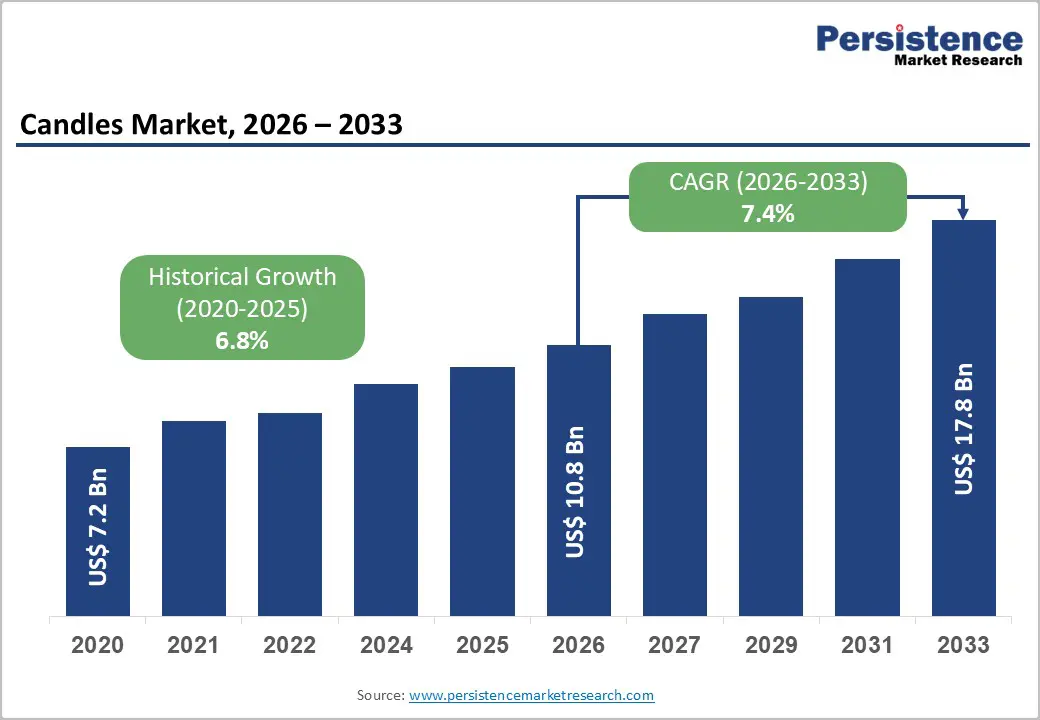
The global candles market size is likely to be valued at US$10.8 billion in 2026, and is expected to reach US$17.8 billion by 2033, growing at a CAGR of 7.4% during the forecast period from 2026 to 2033, driven by the rising consumer preference for home fragrance and wellness products, increasing use of candles in aromatherapy and self-care routines, growing demand for premium scented and eco-friendly candles, and strong gifting culture during festive seasons and home décor trends. Increasing recognition of candles as affordable luxury, mood enhancers, and decorative elements in emerging wellness, gifting, and sustainable-living markets remains a major driver of market growth.
Key Industry Highlights:
- Leading Region: Europe, anticipated to account for a 38% market share in 2026, driven by premium scented Candles culture, high per-capita spend, and strong demand in the U.S.
- Fastest-growing Region: Asia Pacific, fueled by rising disposable incomes, growing aromatherapy awareness, and expanding e-commerce penetration in China and India.
- Dominant Product Type: Pillar candles, to hold approximately 35% of the market share, as they remain the most popular decorative and long-burning format.
- Leading Raw Material: Paraffin wax, to contribute nearly 48% of the market revenue, due to cost-effectiveness and widespread availability.
| Key Insights | Details |
|---|---|
|
Candles Market Size (2026E) |
US$10.8 Bn |
|
Market Value Forecast (2033F) |
US$17.8 Bn |
|
Projected Growth CAGR (2026-2033) |
7.4% |
|
Historical Market Growth (2020-2025) |
6.8% |
Market Factors – Growth, Barriers, and Opportunity Analysis
Growth Analysis – Wellness & Self-Care Trend and Premium Scented Candles Demand
The rising focus on personal well-being and mindful living has significantly influenced consumer choices, driving demand for premium scented candles. Consumers increasingly seek products that enhance mental relaxation, emotional comfort, and home ambiance. Scented candles, particularly those made with natural waxes, essential oils, and artisanal fragrances, are now perceived not just as decorative items but as tools for stress relief, meditation, and self-care rituals. The choice of fragrance plays a crucial role in mood enhancement, with lavender, sandalwood, and citrus-based scents gaining popularity for their calming and uplifting properties.
Premiumization in the candle market reflects this shift, with consumers willing to pay higher prices for quality craftsmanship, sustainable ingredients, and unique scent profiles. Artisanal brands are emphasizing eco-friendly packaging, long burn times, and aesthetic designs that complement home interiors, making candles a lifestyle accessory rather than a mere functional product. Social media and influencer-led promotion of self-care routines have further amplified interest, encouraging consumers to integrate candle usage into daily rituals, yoga sessions, and relaxation routines. This convergence of wellness focus, sustainability, and aesthetic appeal has created a robust demand for high-end scented candles, positioning them as an essential element in modern self-care practices.
E-commerce Penetration and Gifting Culture
The rapid growth of online retail has transformed how consumers discover, purchase, and gift products, significantly influencing demand for items such as premium scented candles. E-commerce platforms provide convenience, a wider selection, and the ability to compare brands and reviews, making it easier for consumers to explore niche and luxury offerings that may not be available in local stores. Features such as personalized recommendations, curated gift sets, and subscription services enhance the shopping experience, encouraging repeat purchases and experimentation with new scents or designs.
Gifting culture has become more expressive and experience-driven, with people seeking meaningful, aesthetically pleasing, and functional gifts. Scented candles fit seamlessly into this trend, serving both as decorative home accents and as symbols of care and thoughtfulness. Holidays, birthdays, housewarmings, and corporate gifting occasions increasingly incorporate premium candles, often bundled in attractive packaging or paired with other self-care products. The combination of easy online access and growing interest in thoughtful gifting has made premium candles a popular choice for personal indulgence as well as presents. Social media sharing of unboxing experiences and curated gift recommendations further amplifies visibility, reinforcing consumer preference for online purchasing and the integration of candles into modern gifting traditions.
Barrier Analysis – Raw Material Price Volatility and Supply Chain Issues
Fluctuations in the cost of key raw materials, such as soy wax, beeswax, essential oils, and fragrance compounds, have a direct impact on production expenses for premium scented candles. Price volatility can arise from factors such as climate-related crop variations, geopolitical tensions affecting imports, and rising transportation costs. For smaller artisanal brands, even minor price swings can significantly affect profitability, while larger manufacturers face challenges in maintaining consistent pricing without compromising quality.
Supply chain disruptions, including delays in raw material procurement, shipping constraints, and limited availability of specialized fragrance oils, further complicate production schedules. These issues can lead to inventory shortages, delayed product launches, and increased lead times, affecting both retail availability and online sales. To mitigate these risks, many manufacturers are diversifying supplier networks, sourcing locally where possible, and maintaining higher inventory buffers.
Environmental Concerns and Regulatory Pressure
Growing awareness of environmental sustainability is shaping the production and consumption of premium scented candles. Consumers increasingly prefer products made from natural, renewable materials such as soy, coconut, or beeswax instead of paraffin, which is petroleum-based and releases harmful emissions when burned. Brands are responding by emphasizing eco-friendly formulations, biodegradable packaging, and cruelty-free ingredients to meet customer expectations for responsible consumption.
Regulatory frameworks are also influencing industry practices. Governments in various regions are tightening standards on chemical safety, labeling requirements, and emission controls, particularly for fragrances and dyes used in candles. Compliance with these regulations ensures consumer safety but can increase production costs and necessitate changes in sourcing, manufacturing, and packaging processes. Companies are adopting sustainable supply chains, transparent ingredient disclosures, and certifications such as FSC-certified packaging or clean-label claims to align with both legal mandates and evolving consumer values.
Opportunity Analysis – Growth in Sustainable and Natural Wax Candles
The rising consumer preference for eco-friendly and health-conscious products has driven significant interest in sustainable and natural wax candles. Unlike traditional paraffin candles, which are petroleum-based and emit soot and potentially harmful chemicals when burned, natural wax candles, such as soy, coconut, and beeswax, provide a cleaner and safer alternative. Consumers increasingly associate these candles with wellness, home purification, and mindful living, making them an attractive choice for both everyday use and gifting. Manufacturers are responding by innovating in formulation, scent blending, and packaging to create premium experiences that align with sustainability values.
Soy and coconut waxes, being renewable and biodegradable, appeal to environmentally conscious consumers, while beeswax candles are valued for their natural honey scent and long burn times. Brands are also focusing on minimalistic and recyclable packaging, reducing reliance on plastics and non-recyclable materials. The versatility of natural wax allows for customization in shapes, colors, and fragrance intensity, enabling brands to cater to niche consumer preferences and seasonal trends. Social media and influencer promotion of eco-conscious lifestyles has further amplified demand, positioning natural wax candles as not just functional products but symbols of environmental responsibility and elevated home aesthetics.
Expansion in Online Gifting Channels
The rise of digital retail has transformed gifting habits, making online channels a primary avenue for purchasing thoughtful presents, including premium scented candles. Consumers now value the convenience of browsing a wide variety of products, reading reviews, and comparing brands from the comfort of their homes. Online gifting platforms often offer curated collections, gift bundles, and personalization options such as custom labels or engraved messages, enhancing the appeal of candles as a meaningful, premium gift.
E-commerce also allows smaller, artisanal candle brands to reach a wider audience without the limitations of physical retail space. Seasonal campaigns, flash sales, and targeted promotions through social media and email marketing further drive engagement and purchases. Features such as gift wrapping services, scheduled delivery, and subscription gifting add convenience and encourage repeat buying. The trend is reinforced by social media culture, where unboxing experiences and aesthetically pleasing product photography increase visibility and inspire consumers to purchase candles as gifts.
Category-wise Analysis
Product Type Insights
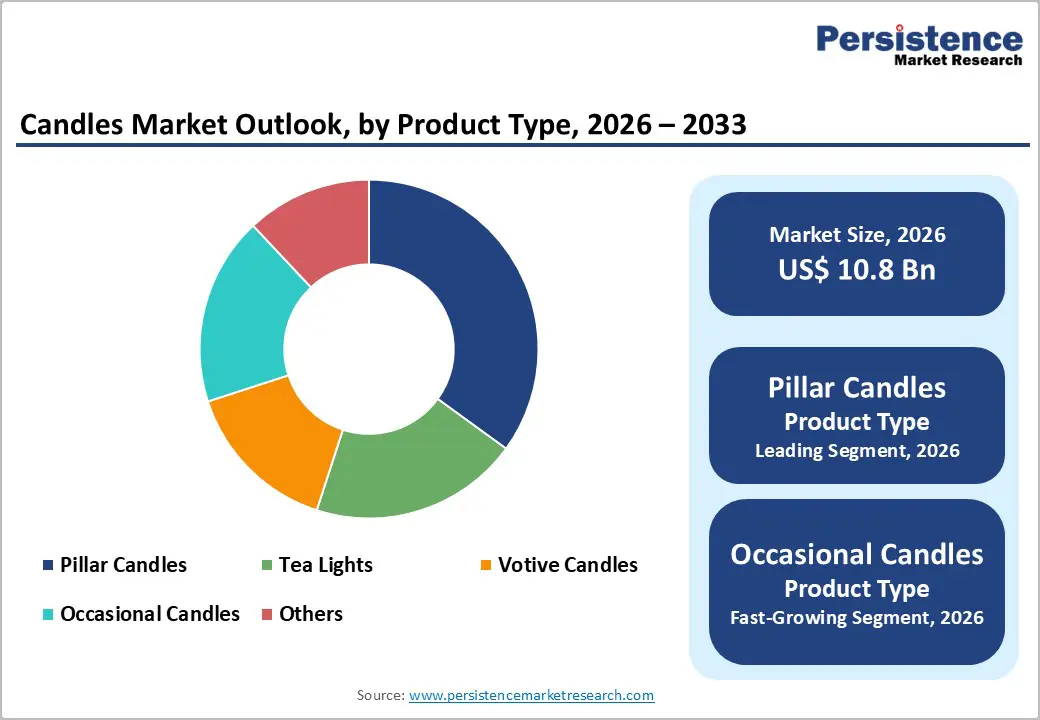
Pillar candles are anticipated to dominate the market, accounting for 35% of the market share in 2026. Their dominance is driven by their versatility, long burn time, and aesthetic appeal. Their freestanding design allows them to be used without holders, making them suitable for both decorative and functional purposes in homes, events, and wellness settings. They can be crafted in various sizes, colors, and scents, catering to diverse consumer preferences. Consumers appreciate their ability to create ambiance, enhance interior décor, and serve as statement pieces for dining tables, living rooms, or spa-like environments. IRIS Celeste Black Oudh Premium Large Pillar Candle is a premium scented pillar candle that blends rich oudh fragrance with a long lasting wax burn, making it popular for home décor and gifting. These types of pillar candles are frequently showcased on e commerce platforms alongside other high demand variants such as ProKart Premium Scented Pillar Candles and Fabindia Orange Gardenia Fragrance Wax Pillar Candle, demonstrating broad consumer interest in pillar formats for ambience and presents.
Occasional candles represent the fastest-growing product type, due to their emotional and experiential appeal. Consumers increasingly seek products that enhance special moments, creating ambiance and adding a personal touch to celebrations. These candles are often offered in themed designs, vibrant colors, and seasonal fragrances, making them ideal for gifting or décor during events. Their limited-edition nature and association with memorable occasions drive higher consumer engagement and repeat purchases. Party Propz Spiral Metallic Golden Cake Candles, Party Candles Crown Set of 5, and Meri Meri Meadow Unicorns Candles are designed specifically for celebratory events, adding decorative flair and fun to occasions such as birthdays and themed parties.
Raw Material Insights
Paraffin wax is expected to dominate the market, contributing nearly 48% of revenue in 2026, propelled by its affordability, availability, and versatility in manufacturing. It has excellent scent-holding properties and a smooth, uniform finish, making it suitable for a wide range of candle types, from pillars to votives. Its low cost allows manufacturers to produce candles at scale while maintaining competitive pricing, appealing to both mass-market and premium segments. Paraffin wax’s ease of coloring and molding enables creative designs and intricate shapes, supporting trends in decorative and themed candles. Yankee Jar Paraffin Wax Candles by Yankee Candle are widely sold scented jar candles made primarily with paraffin wax, known for long burn times and strong fragrance throw, a staple product in the home fragrance category available globally.
Beeswax represents the fastest-growing raw material, fueled by its natural, non-toxic properties and strong appeal among eco-conscious consumers. Unlike paraffin, beeswax burns cleanly, emits minimal smoke, and naturally releases a subtle, honey-like fragrance, enhancing ambiance without added chemicals. Its renewable nature and biodegradable characteristics align with sustainability trends, attracting both premium and wellness-focused buyers. Indigenous Honey Beeswax Candle, a popular pure beeswax candle sold on Amazon India, is known for its natural honey scent and clean burning, highlighting consumer preference for non toxic candles.
Regional Insights
North America Candles Market Trends
Market growth in North America is driven by changing consumer lifestyles, home décor trends, and a focus on wellness. Consumers increasingly view candles not only as decorative items but also as tools for relaxation, meditation, and aromatherapy. This shift has boosted demand for scented, natural, and premium candles that offer long burn times and high-quality fragrances. Soy and beeswax candles are gaining popularity due to their clean-burning properties and environmental appeal, aligning with growing sustainability awareness among North American consumers.
E-commerce has emerged as a key sales channel, offering convenience, personalization, and curated gifting options. Subscription services, themed collections, and customized fragrance sets are attracting repeat purchases and encouraging experimentation with different candle types. Seasonal and occasion-based candles, such as holiday-themed or celebratory designs, are also driving short-term spikes in demand. Luxury and artisanal candle brands are leveraging aesthetics, unique scents, and eco-friendly packaging to differentiate themselves, appealing to both home décor enthusiasts and wellness-focused consumers.
Europe Candles Market Trends
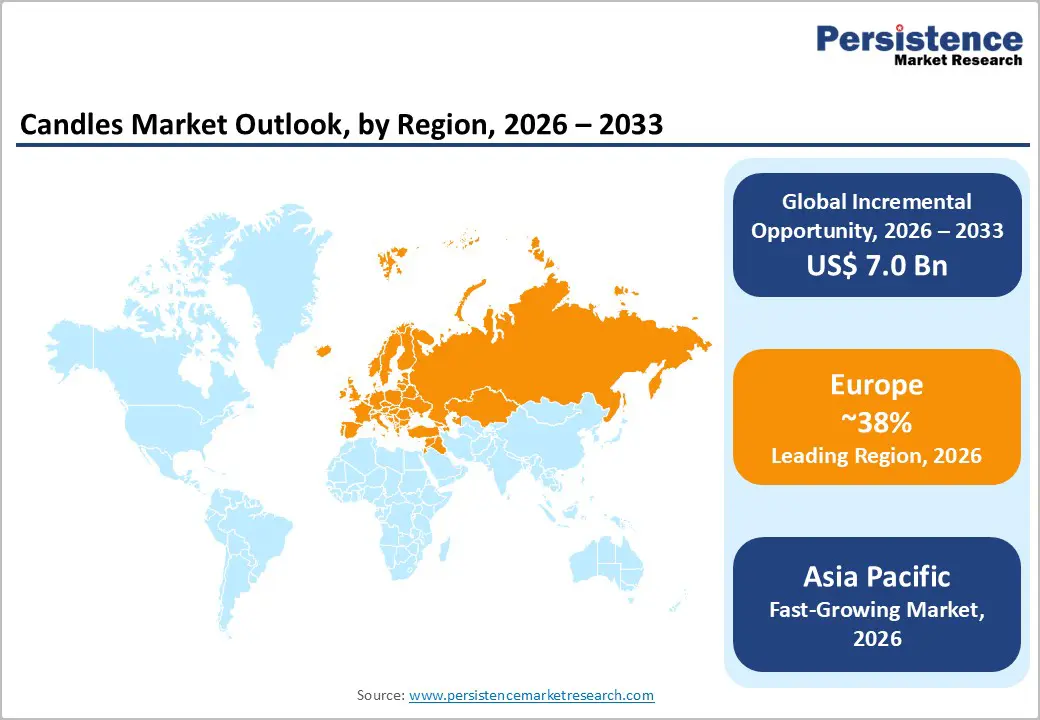
Europe is projected to lead with a market share of 38% of the revenue in 2026, driven by a combination of cultural traditions, sustainability awareness, and lifestyle trends. Candles have long been a part of European home décor, religious ceremonies, and seasonal celebrations, making them culturally ingrained products. Modern consumers are increasingly seeking premium, scented, and natural candles that enhance ambiance, support wellness routines, and align with eco-conscious values. Beeswax, soy, and coconut wax candles are gaining popularity as environmentally friendly alternatives to traditional paraffin, offering cleaner burns and minimal emissions.
Customization and personalization are the key trends, with consumers opting for unique fragrances, decorative designs, and limited-edition collections for gifting or home styling. Luxury and artisanal brands are capitalizing on these preferences, emphasizing craftsmanship, long burn times, and sustainable packaging. Retail strategies are evolving as well, with online platforms and direct-to-consumer models enabling greater reach, convenience, and curated gifting experiences. Seasonal and festival-specific candles, such as those for Christmas, Diwali, or midsummer celebrations, drive temporary demand surges, often accompanied by special packaging and fragrances. Health and wellness considerations are influencing product choice, with clean-burning, non-toxic candles being highly preferred. Social media influence and lifestyle marketing further reinforce consumer interest in premium, environmentally responsible candles.
Asia Pacific Candles Market Trends
Asia Pacific is likely to be the fastest-growing market for candles, propelled by cultural, religious, and lifestyle factors. In many countries across the region, candles are an integral part of religious rituals, festivals, and ceremonies, creating consistent demand. Beyond traditional uses, urban consumers are increasingly adopting candles for home décor, relaxation, and wellness purposes. Scented and premium candles are gaining popularity among middle- and upper-class consumers who view them as lifestyle and self-care products.
Sustainability and natural materials are becoming important considerations. Beeswax, soy, and coconut wax candles are increasingly preferred over paraffin due to their clean-burning properties and eco-friendly appeal. Manufacturers are introducing innovative designs, fragrances, and decorative options to appeal to both younger consumers and affluent households. Limited-edition seasonal candles, festival-themed products, and gift sets are driving occasion-based sales, particularly during Diwali, Lunar New Year, and other regional festivals. E-commerce is rapidly emerging as a key channel, offering convenience, home delivery, and curated gifting options, which expand access to premium and niche candle brands.
Competitive Landscape
The global candle market is shaped by competition between established fragrance houses and newer lifestyle-oriented brands. In North America and Europe, leading players such as Yankee Candle, Bath & Body Works, and Diptyque maintain strong market positions through extensive scent portfolios, premium retail experiences, and targeted wellness-oriented offerings such as scented pillars and aromatherapy-focused candles. Their products cater to consumers seeking both décor and self-care benefits, reinforcing brand loyalty and repeat purchases.
In the Asia Pacific region, a mix of local and international brands drives growth by offering affordable luxury and festival-specific candle collections, making premium experiences more accessible to a broader consumer base. Scented pillar candles are increasingly popular for enhancing home ambiance while reducing the monotony of generic options, fitting seamlessly into daily rituals and décor.
Key Industry Developments:
- In March 2026, Bath & Body Works released a homemade sourdough scented candle as part of its spring “Rooted” collection, inspired by homesteading and slow-living trends. The candle featured notes of fresh sourdough, olive oil drizzle, and whipped butter. The collection also included seasonal hand soaps and home décor items, offering unique, food-inspired fragrances that appealed to consumers seeking distinctive, experiential scents.
- In June 2025, Diptyque Launched Summer Fruit Garden Collection Inspired by Nature, Diptyque launched its Summer Fruit Garden collection, a seasonal range featuring fragrances, skincare, and decorative objects inspired by nature and summertime living. The Maison drew on its longstanding relationship with botanical influences to create the collection, offering a curated selection of products designed to deliver a multi-sensory experience.
Companies Covered in Candles Market
- Colonial Candle
- Bridgewater Candle Company
- Bath & Body Works, Inc.
- Circle E Candles
- Diptyque S.A.S.
- Jo Malone London
- GreenPan
- Malin + Goetz
- NEST Fragrances, LLC
- The Yankee Candle Company, Inc.
Frequently Asked Questions
The global candles market is projected to reach US$10.8 billion in 2026.
The candles market is driven by growing wellness and self-care trends, along with rising demand for premium scented candles.
The candles market is poised to witness a CAGR of 7.4% from 2026 to 2033.
Sustainable and natural wax candles and expansion in Asia Pacific and online gifting channels are the key opportunities.
Yankee Candle, Bath & Body Works, Diptyque, Jo Malone London, and NEST Fragrances are the key players.


