




- Food Ingredients & Additives
- Buckwheat Market
Buckwheat Market Size, Share, Growth, and Regional Forecast, 2026 - 2033
Buckwheat Market by Form (Groats, Flour, Flakes, Others), Route of Administration (Oral, Parenteral, Topical), Nature, End-user, and Regional Analysis from 2026 - 2033

Buckwheat Market Share and Trends Analysis
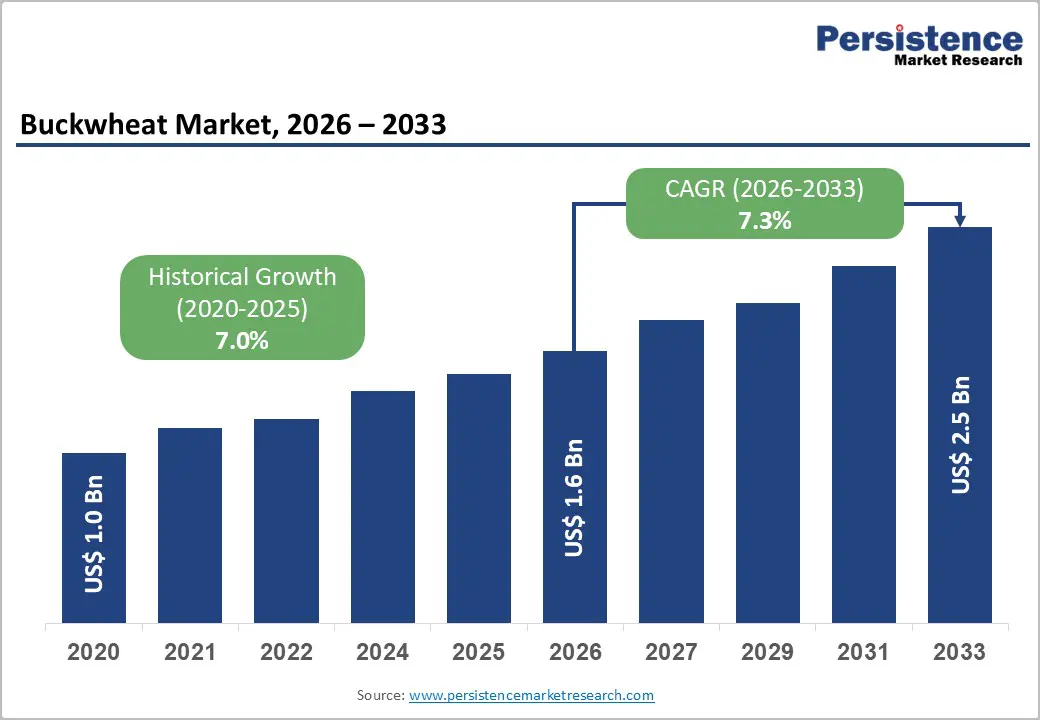
The global buckwheat market size is estimated to grow from US$1.6 billion in 2026 to US$2.5 billion by 2033 growing at a CAGR of 7.3% during the forecast period from 2026 to 2033.
Buckwheat slips through the cracks of mainstream crops, yet it keeps gaining attention for all the right reasons. Demand is rising because everyone suddenly remembers they like food that’s gluten-free, nutrient-dense, and doesn’t trash the environment. Farmers don’t mind either since buckwheat grows fast, survives in poor soil, and pretends it’s a superhero for sustainable agriculture. Food manufacturers use it in flour, noodles, snacks, and healthy foods, while supplements and cosmetics quietly borrow its antioxidants.
Key Industry Highlights:
- The global shift toward gluten-free diets is significantly increasing demand for buckwheat, a naturally gluten-free pseudocereal.
- As vegan and plant-based lifestyles grow globally, buckwheat is emerging as a reliable plant protein source. It is used in plant-based milk, baking mixes, healthy snacks, and meat alternatives.
- Buckwheat extracts and proteins are gaining attention in skincare and haircare products due to antioxidants and anti-inflammatory properties.
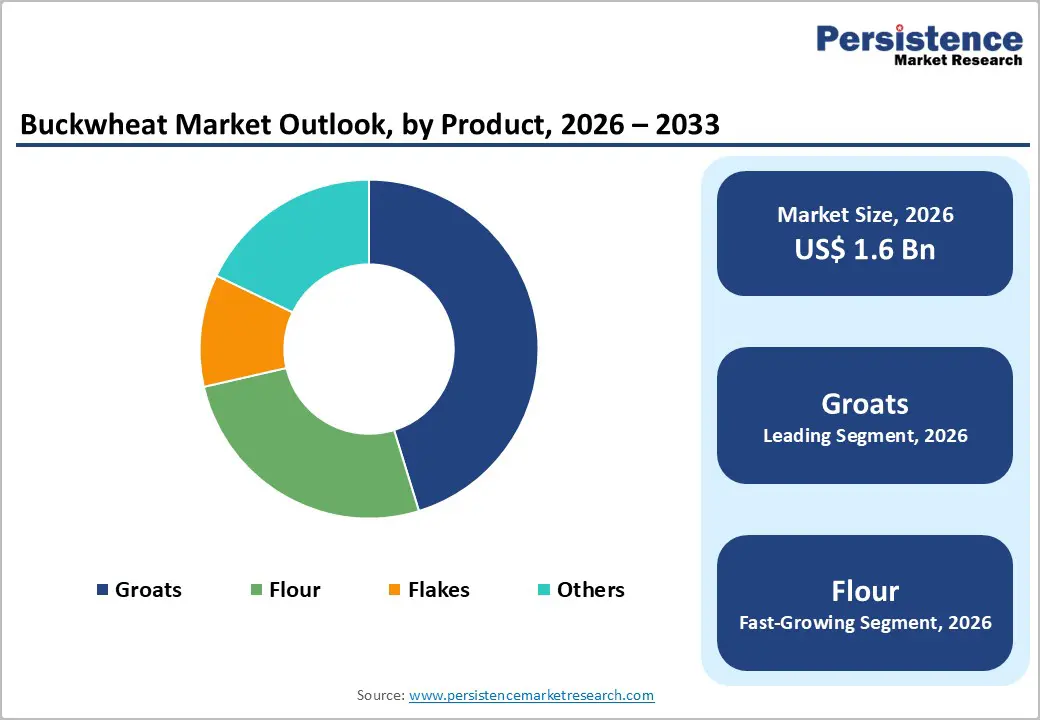
- Leading Form: Buckwheat groats are the most widely consumed form of buckwheat globally because they are used in cereals, porridge, bakery, healthy foods, and gluten-free diets.
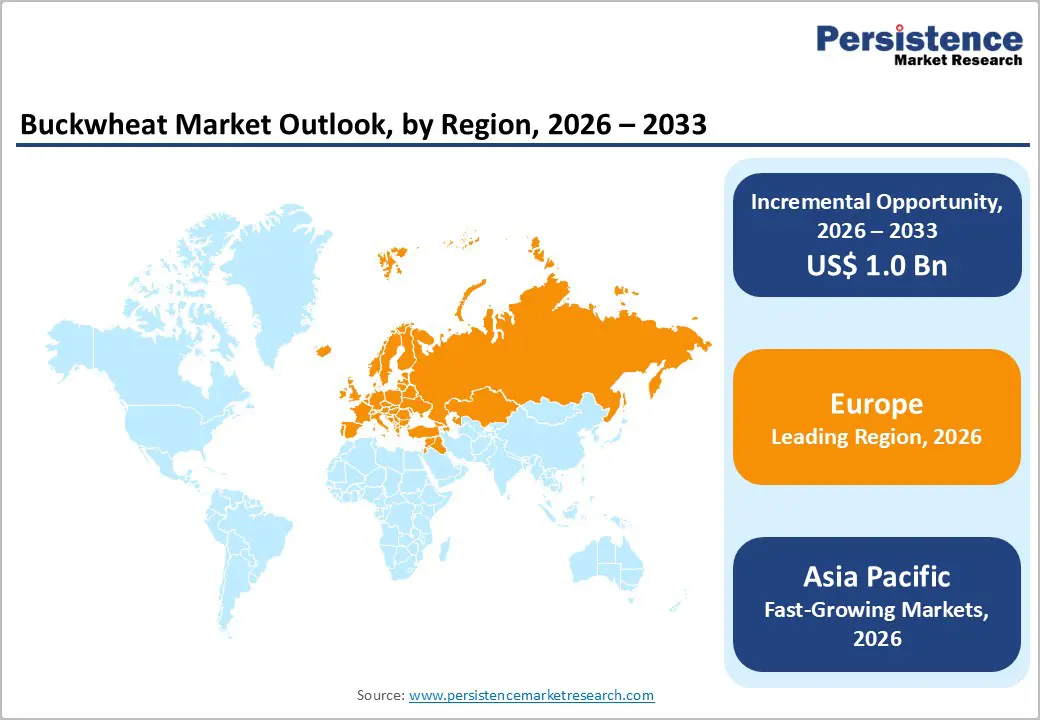
- Leading Region: Europe accounts for the highest market share, driven by high consumption in Russia, Poland, Ukraine, and Germany, along with strong demand for buckwheat-based foods and organic products.
| Key Insights | Details |
|---|---|
|
Buckwheat Market Size (2026E) |
US$1.6 Bn |
|
Market Value Forecast (2033F) |
US$2.5 Bn |
|
Projected Growth (CAGR 2026 to 2033) |
7.3% |
|
Historical Market Growth (CAGR 2020 to 2025) |
7.0% |
Market Dynamics
Driver - Increasing Gluten-Free Demand
The growing awareness and adoption of gluten-free diets are significantly driving the demand for buckwheat products globally. Unlike wheat, barley, or rye, buckwheat is naturally free from gluten, making it an ideal alternative for individuals with celiac disease, gluten intolerance, or those pursuing healthier dietary lifestyles. Consumers are increasingly seeking nutritious substitutes that do not compromise on taste or texture, and buckwheat flour, groats, and noodles meet this requirement effectively. Additionally, the rise of health-conscious eating, combined with the popularity of gluten-free baked goods, cereals, and snacks, has encouraged food manufacturers to integrate buckwheat into their product lines. This trend is particularly strong in North America and Europe, where gluten-free awareness is at its peak, supporting steady market expansion.
Restraints - Seasonal Production Constraints
Buckwheat is a short-season crop, typically grown in temperate regions during specific months of the year. Its cultivation is highly sensitive to climatic conditions, including temperature, rainfall, and soil quality, which directly affect yield and quality. Unlike staple grains such as wheat or rice, buckwheat cannot be easily grown year-round in most regions, creating supply gaps during off-season periods. This seasonality poses challenges for manufacturers and retailers seeking consistent availability of groats, flour, or processed products. Additionally, unpredictable weather events, such as droughts, excessive rainfall, or unseasonal frosts, can drastically reduce harvests, leading to price volatility and potential shortages. Such constraints limit the scalability and continuous supply in global markets.
Opportunity - Cosmetic & Skincare Applications
Buckwheat is emerging as a promising ingredient in cosmetics and skincare due to its rich profile of bioactive compounds, particularly rutin, flavonoids, and antioxidants. These compounds help neutralize free radicals, reducing oxidative stress that accelerates skin aging, thereby offering natural anti-aging benefits. Buckwheat extracts also have anti-inflammatory and soothing properties, making them suitable for sensitive or irritated skin. Additionally, its mineral content, including zinc and magnesium, supports skin repair and hydration. Cosmetic brands are increasingly incorporating buckwheat in face creams, serums, masks, and cleansers to promote healthy, glowing skin while appealing to consumers seeking natural, plant-based, and sustainable beauty solutions. This trend opens a unique niche in the growing clean and functional skincare market.
Category-wise Analysis
By Form Insights
Buckwheat groats account for the highest market share because they are the most traditional and versatile form of consumption globally. In regions like Russia, Eastern Europe, and parts of Asia, groats are a staple food used in porridge, pilafs, and other cultural dishes, ensuring consistent demand. Groats retain the nutritional integrity of the whole seed, offering high protein, fiber, and antioxidants, which appeals to both health-conscious consumers and conventional households. Unlike flour or flakes, groats require minimal processing, making them cost-effective and widely accessible. Additionally, their long shelf life, easy storage, and adaptability in both sweet and savory dishes make them a preferred choice over other buckwheat products, securing their position as the leading segment in the market.
By End-user Insights
The Food & Beverages segment dominates the buckwheat market because buckwheat is primarily consumed as a staple or functional food across the globe. It is widely used in products such as groats, flour, noodles, pancakes, cereals, and gluten-free baked goods, catering to both traditional diets and modern health-conscious consumers. Its high protein, fiber, and antioxidant content enhances its appeal in the growing wellness and functional food markets. Additionally, buckwheat’s versatility in sweet and savory preparations ensures year-round demand across households, restaurants, and food manufacturers. Compared to other applications like animal feed, cosmetics, or pharmaceuticals, the food sector has a broader consumer base and higher consumption volume, making it the largest contributor to the overall buckwheat market.
Regional Insights
Europe Buckwheat Market Trends
Europe is the leading region in the global buckwheat market, driven by strong traditional consumption and growing health awareness. Countries like Russia, Poland, Ukraine, and Germany have long-standing cultural preferences for buckwheat groats, flour, and noodles, which form staple diets in many households. In addition to tradition, there is increasing demand for gluten-free, organic, and functional foods, aligning with Europe’s health-conscious consumer trends. Food manufacturers and specialty brands are introducing ready-to-eat buckwheat products, snacks, and breakfast cereals to cater to modern lifestyles. The region also benefits from well-established distribution channels, including supermarkets, organic stores, and e-commerce platforms, ensuring widespread availability. Combined, these factors sustain Europe’s dominance while fostering innovation and premiumization in buckwheat products.
Asia Pacific Buckwheat Market Trends
The Asia Pacific buckwheat market is emerging rapidly due to growing health awareness and increasing adoption of gluten-free and functional foods. Countries like China, Japan, and South Korea are major consumers, using buckwheat in traditional dishes such as noodles, pancakes, and teas. Rising disposable incomes and urbanization are driving demand for processed buckwheat products, ready-to-eat meals, and snacks. Additionally, the expansion of organic and health-food stores, e-commerce platforms, and premium brands is improving accessibility. Government initiatives promoting nutritious diets and increasing investments in buckwheat cultivation further support market growth, positioning the Asia Pacific as the fastest-growing region in the global buckwheat industry.
Competitive Landscape
The buckwheat market’s competitive landscape is shaped by a mix of large-scale producers and specialized health-food manufacturers. Leading players dominate through extensive production, processing, and distribution networks, ensuring a consistent supply and wide market reach. Meanwhile, niche manufacturers focus on organic, gluten-free, and specialty products, targeting health-conscious and premium consumers. Regional producers contribute high-quality groats, flour, and noodles for both domestic consumption and export markets.
Key Industry Developments:
- In February 2024, INVL Baltic Sea Growth Fund acquired 100% of the shares of Galinta Group, which was one of the largest producers of buckwheat in Europe and among the leading producers and traders of flakes, rice, and other groats in the Baltic region.
Companies Covered in Buckwheat Market
- Archer Daniels Midland (ADM)
- Bob’s Red Mill
- Birkett Mills
- INVL group
- Homestead Organics
- Arrowhead Mills
- Doves Farm Foods
- Nature’s Path Foods
- Hain Celestial Group
- Minn-Dak Growers
- Wilmar International
- Sichuan Huantai Industrial
- Anhui Jinjian Grain & Oil
- Lifebridge Agro Processing
- Cargill Inc.
- Other
Frequently Asked Questions
The global buckwheat market is projected to be valued at US$1.6 Bn in 2026.
Buckwheat is naturally gluten-free, making it popular in gluten-free products, health foods, and dietary supplements.
The global market is poised to witness a CAGR of 7.3% between 2026 and 2033.
Increasing demand for gluten-free, high-protein, and fiber-rich foods.
Archer Daniels Midland (ADM), Bob’s Red Mill, INVL group, and others.


