




- Food Ingredients & Additives
- Bay Leaf Market
Bay Leaf Market Size, Share, and Growth Forecast, 2026-2033
Bay Leaf Market by Product Type (California Bay Leaf, Indian Bay Leaf, Mexican Bay Leaf, Others), Application (Food, Medicine, Cosmetics), End-user (Healthcare, Food and Beverage, Consumer Goods), and Regional Analysis 2026-2033

Bay Leaf Market Size and Trends Analysis
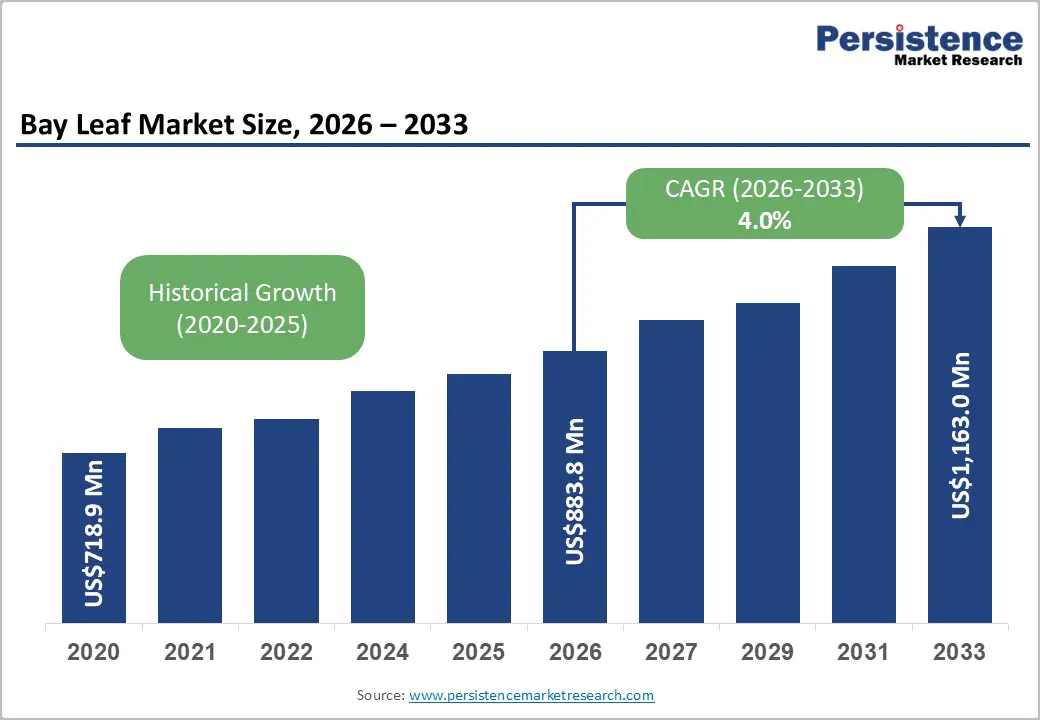
The global bay leaf market size is likely to be valued at US$883.8 million in 2026 and is expected to reach US$1,163.0 million by 2033, growing at a CAGR of 4.0% during the forecast period from 2026 to 2033, driven by the increasing globalization of culinary practices across developed regions.
Rising consumer preference for clean-label ingredients continues to influence procurement strategies, while the growing use of natural flavor enhancers in food processing further fuels market expansion. Manufacturers are increasingly focusing on sustainable sourcing practices to meet evolving transparency expectations. Additionally, the expansion of digital commerce is transforming distribution channels for specialty spices, and advancements in essential oil extraction technologies are likely to widen application areas. Overall, these factors underscore the market’s steady growth and resilience within the global spice industry.
Key Industry Highlights:
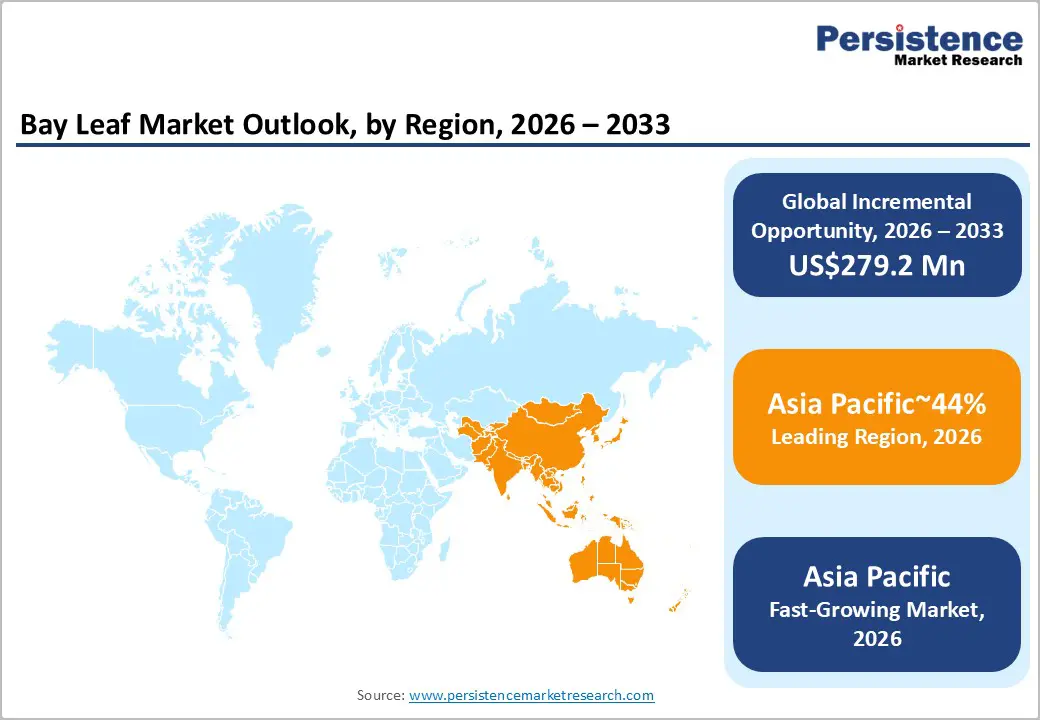
- Leading Region: Asia Pacific is projected to lead, accounting for approximately 44% share in 2026, supported by dense production clusters and high domestic utilization.
- Fastest-growing Region: Asia Pacific is anticipated to grow the fastest, driven by increasing export volumes and rising disposable income levels.
- Leading Product Type: California bay leaf is expected to lead, accounting for approximately 38% share in 2026, anchored by its potent aroma and culinary versatility.
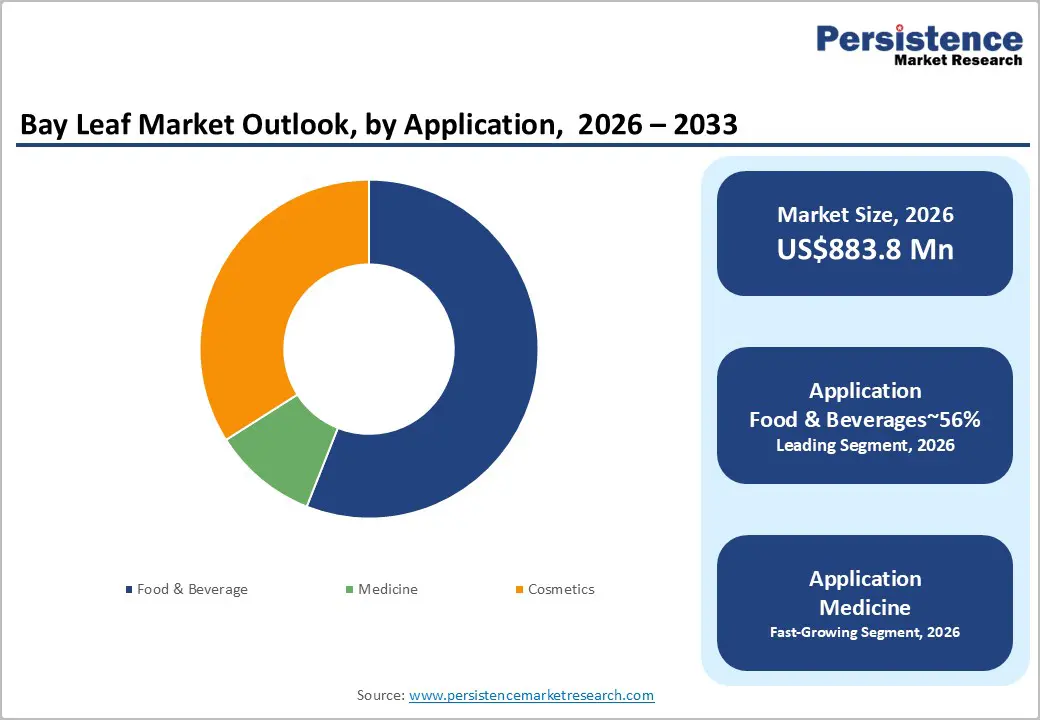
- Leading Application: Food & beverages is anticipated to dominate, accounting for approximately 56% share in 2026, anchored by traditional recipe integration.
| Key Insights | Details |
|---|---|
|
Bay Leaf Market Size (2026E) |
US$883.8 Mn |
|
Market Value Forecast (2033F) |
US$1,163.0 Mn |
|
Projected Growth (CAGR 2026 to 2033) |
4.0% |
|
Historical Market Growth (CAGR 2020 to 2025) |
3.5% |
Market Factors – Driver, Restraint, and Opportunity Analysis
Driver Analysis
Culinary Globalization and Ethnic Food Expansion
The proliferation of diverse culinary traditions is generating consistent demand for authentic flavoring agents. Modern consumers are increasingly exploring Mediterranean and South Asian recipes requiring specific herbal profiles. This shift is compelling food manufacturers to secure a reliable supplier of high-quality leaves. Global trade networks are facilitating the availability of regional spice varieties to international buyers. Increasing curiosity regarding traditional cooking methods reinforces the necessity for standardized spice products.
Procurement activity is set to expand as international food service chains adopt ethnic menus. Standardization of spice quality remains essential for maintaining flavor consistency across global franchises. McCormick & Company, with McCormick Gourmet Turkish Bay Leaves, addresses these requirements through rigorous sourcing protocols. This alignment between consumer curiosity and corporate supply chain stability supports consistent market expansion. Retailers are likely to increase shelf space for premium spice collections in urban centers.
Rising Demand for Clean Label Ingredients
Health-conscious consumers are actively seeking natural alternatives to synthetic food additives and preservatives. This preference for plant-based ingredients is transforming procurement patterns within the food industry. Transparency regarding ingredient origin and processing methods has become a critical purchase criterion. Regulatory bodies are strengthening oversight to ensure the purity of botanical products in retail. Natural flavoring agents like bay leaves offer the desired sensory profiles without chemical residues.
Manufacturers are positioned to capitalize on this trend by offering certified organic product lines. Sustainable farming practices are becoming a baseline requirement for entry into premium markets. Frontier Co-op with Frontier Co-op Organic Whole Bay Leaves demonstrates this commitment through verified sourcing. This strategic focus on purity remains a significant driver for high-value segment growth. Documented health benefits of herbal ingredients further encourage uptake among wellness-focused consumer groups.
Restraint Analysis
Pesticide Residue Compliance Burdens Across Import-Dependent Supply Chains
Regulatory limits on contaminants impose intensive testing burdens across globally fragmented import-dependent agricultural supply chains. Processors encounter elevated rejection risks as residue thresholds tighten within destination markets, enforcing stricter compliance protocols. Compliance expenditures increase as laboratories expand capabilities for volatile oil analysis and multi-residue detection systems. This cost escalation compresses operating margins, particularly within price-sensitive segments lacking pricing power flexibility. Structural barriers persist where smallholder cultivation systems lag certification alignment with international residue compliance frameworks. Consequently, procurement networks experience fragmentation as uncertified sources fail to meet evolving regulatory acceptance criteria.
Synthite Industries with Indonesian Laurel Extract navigates constraints through advanced purification, yet processing delays extend fulfillment timelines. Downstream buyers increasingly shift procurement toward verified suppliers to mitigate regulatory exposure and rejection uncertainties. McCormick with California Bay Leaf Ground absorbs elevated testing overheads, constraining expansion velocity across regulated distribution channels. These compliance dynamics introduce elongated lead times and necessitate selective sourcing strategies across procurement functions. Supply chain participants reconfigure vendor qualification processes to prioritize traceability, certification, and laboratory validation capabilities.
Supply Volatility from Weather-Induced Agricultural Instability
Climate variability introduces structural disruptions in harvest cycles across tropical cultivation zones supplying bay leaf raw materials. Erratic monsoon patterns reduce both leaf quality consistency and volume predictability across key producing regions. Processors face recurring shortages that elevate raw material procurement costs and destabilize pricing mechanisms within contracts. This volatility constrains fulfilment reliability across export-oriented supply agreements dependent on stable agricultural output levels. Value chains experience operational strain as inconsistent input availability disrupts processing schedules and inventory planning cycles. Consequently, buyers adopt conservative sourcing approaches to hedge against supply-side uncertainties and seasonal disruptions.
Everest Spices with Bay Laurel Whole Leaves mitigates exposure through diversified sourcing, though premium costs erode competitiveness. Buyers delay capacity expansion decisions due to uncertainty surrounding consistent raw material availability and pricing stability. Badia Spices with Mexican Bay Leaf Dried encounters volume shortfalls that directly constrain achievable growth trajectories. Procurement strategies shift toward maintaining buffered inventories to absorb fluctuations in upstream agricultural supply conditions. These adjustments increase working capital requirements while reducing responsiveness to demand variability in downstream markets.
Opportunity Analysis
Expansion into Pharmaceutical and Preventive Wellness Formulations
Rising awareness of herbal medicine is expanding application pathways for bay leaf derivatives within pharmaceutical formulations. Phytochemical compounds present in these leaves support growing integration into digestive health and metabolic regulation supplements. Scientific investigation into anti-inflammatory properties is strengthening clinical relevance and encouraging incorporation into evidence-based therapeutic products. Consumers increasingly demand natural interventions supporting immune resilience, influencing formulation strategies across nutraceutical and healthcare segments. This demand stimulates the development of standardized extracts ensuring consistent potency, purity, and regulatory compliance across diverse applications. Consequently, manufacturers align extraction technologies with pharmaceutical-grade requirements, enhancing the scalability and reproducibility of active compounds.
Healthcare providers are integrating botanical ingredients into preventative and adjunct therapeutic protocols across multiple treatment categories. Innovation in delivery mechanisms improves bioavailability, enabling more efficient absorption of active phytochemicals within targeted physiological systems. This evolution is exemplified by entities such as MDH Herbals, which prioritizes dedicated medicinal plant research and certified organic cultivation to meet the rigorous standards of modern clinical protocols. MDH Spices with MDH Tej Patta continues supporting traditional wellness applications while aligning with formalized product development frameworks. This convergence between ethnobotanical knowledge and clinical validation expands addressable markets within regulated healthcare ecosystems. Supply chains adapt by incorporating traceability, quality assurance, and pharmacological validation into sourcing and processing stages. Overall, scientific substantiation of traditional claims reinforces long-term commercial viability and premium positioning within wellness-driven demand structures.
Integration into Clean Beauty Preservation and Functional Cosmetic Systems
Natural antimicrobial properties position bay leaf oils as viable alternatives to synthetic preservatives within clean beauty formulations. Consumer preference for botanical ingredients is compelling brands to reformulate products using plant-derived actives with multifunctional benefits. Advances in extraction technologies enhance compound stability, enabling consistent performance within emulsified cosmetic systems and complex formulations. This capability aligns with premiumization trends where efficacy, safety, and ingredient transparency define competitive differentiation. Regulatory scrutiny on synthetic additives further accelerates the adoption of naturally derived preservation systems across global personal care markets. Consequently, bay leaf derivatives gain traction as functional ingredients supporting both preservation and therapeutic cosmetic benefits.
Naturex under Givaudan, with Indian Bay Leaf Extract supplies stabilized inputs for formulations meeting stringent cosmetic stability requirements. Vendors increasingly establish collaborative partnerships to co-develop formulations integrating antimicrobial efficacy with sensory performance attributes. Kanegrade with California Bay Leaf Powder supports multifunctional claims, including preservation, fragrance, and skin-conditioning properties within product portfolios. These developments expand formulation versatility while enabling entry into high-margin, performance-driven cosmetic segments. Supply ecosystems evolve to prioritize standardized botanical inputs compatible with industrial-scale cosmetic manufacturing processes. Overall, convergence of clean label demand and formulation science drives sustained opportunity expansion within advanced personal care applications.
Category–wise Analysis
Product Type Insights
California bay leaf is expected to lead, accounting for approximately 38% share in 2026, underpinned by its potent aromatic profile. This variety remains highly favored in industrial food processing due to its concentrated flavor characteristics. Adoption remains anchored in the consistency and availability of North American production networks. Manufacturers prioritize this type for spice blends that require a distinct, menthol-like herbal note. Pacific Spice Co. Inc., with Pacific Spice Whole Bay Leaves and Badia Spices with Badia Whole Bay Leaves, provides these standardized ingredients to global distributors. This dominance is reinforced by established culinary traditions within Western markets that specify California varieties. Ongoing supply chain optimization further strengthens the leadership position of this specific product segment.
Indian bay leaf is anticipated to be the fastest-growing segment, driven by rising demand for authentic ethnic seasonings. Global consumers are increasingly seeking the unique, cinnamon-like notes provided by the Cinnamomum Tamala species. This transition is supported by the expanding popularity of South Asian cuisine across international urban centers. Integration into herbal tea blends and traditional wellness products is also gaining significant traction. As health consciousness increases, the medicinal reputation of this variety facilitates broader market uptake. This shifting preference toward specialized regional flavors continues to accelerate segment momentum.
Application Insights
The food & beverage segment is anticipated to dominate, accounting for approximately 56% share in 2026, anchored by widespread use in savory processing. This segment remains the primary consumer of dried leaves for soups, stews, and meat products. High-volume procurement is driven by the necessity for natural flavor enhancers in packaged goods. McCormick & Company, with McCormick Gourmet Turkish Bay Leaves and Frontier Co-op, with Frontier Whole Bay Leaves, support these industrial needs with bulk supply solutions. Retail demand for whole leaves also remains steady among home cooks prioritizing traditional recipes. This established utility ensures a resilient revenue base for the majority of market participants. Consistent demand from the food service industry further reinforces the dominant status of this application.
Medicine is expected to be the fastest-growing segment, driven by the expanding utilization of botanical extracts. Pharmaceutical formulators are increasingly exploring the antimicrobial and antioxidant properties of bay leaf essential oils. This trend aligns with the global shift toward natural and plant-derived therapeutic agents. Mother Organic with Mother Organic Bay Leaves and Alpina Organic Co. with Alpina Organic Milled Bay Leaves address these specialized quality requirements. Growing scientific interest in herbal treatments for metabolic disorders is also fuelling procurement activity. Adoption is accelerating within the supplement industry as consumers seek natural digestive and respiratory aids. This research-led expansion is poised to redefine the commercial value of bay leaf products.
Regional Insights
Asia Pacific Bay Leaf Market Trends
Asia Pacific is expected to remain the leading regional market as well as the fastest-growing, accounting for approximately 44% share in 2026, driven by massive cultivation networks and high internal consumption. This dominance is anchored in the region's diverse culinary heritage, where bay leaves serve as a fundamental flavoring agent. Production hubs are set to expand as international demand for specific regional varieties continues to rise. Local manufacturers are projected to invest in better processing infrastructure to meet global export quality standards. The region's vast agricultural base provides a significant competitive advantage in terms of raw material availability. High population density and rising urban incomes further reinforce the regional demand for packaged spice products.
India is expected to anchor regional momentum through sustained investments in modernized spice processing and export-oriented farming. The national government is implementing the Pesticide Management Bill 2025 to ensure higher safety standards for agricultural exports. Everest Spices with Everest Tejpatta is poised to benefit from these regulatory enhancements that build international buyer confidence. Increased procurement of Indian Bay Leaf varieties is projected as global interest in authentic South Asian flavors intensifies. Local entrepreneurs are also exploring the production of high-value essential oils for the pharmaceutical sector. This strategic focus on quality and value addition remains likely to strengthen the country's global market position.
North America Bay Leaf Market Trends
North America is expected to remain a structurally steady regional market, with demand primarily anchored in the diverse food service and retail segments. The market is likely to experience fluctuations in 2026, due to evolving trade policies and potential tariff adjustments. Consumers are increasingly interested in the provenance and purity of their culinary herbs and spices. This trend is expected to encourage retailers to stock more single-origin and ethically sourced products. The expanding popularity of Mediterranean diets continues to underpin the consistent utilization of whole bay leaves. Procurement strategies are poised to emphasize supply chain resilience to mitigate the impact of international trade uncertainties.
The U.S. is anticipated to lead regional demand through a sophisticated retail landscape and a massive food processing sector. McCormick & Company, with McCormick Gourmet Organic Turkish Bay Leaves, addresses the consumer shift toward premium, transparently sourced spices. Adoption of digital commerce platforms is projected to broaden the reach of specialized and organic bay leaf varieties. Regulatory oversight by the FDA ensures that imported spice products meet stringent microbial and chemical safety standards. Manufacturers are set to focus on innovative packaging solutions that appeal to younger, style-conscious home cooks. This alignment between product quality, regulatory compliance, and consumer trends supports a stable growth trajectory.
Europe Bay Leaf Market Trends
Europe is expected to remain a mature and structurally stable regional market, with demand primarily anchored in the high-end culinary and organic sectors. The region's market is characterized by strict adherence to sustainability and ethical sourcing regulations. Consumers are anticipated to prioritize Fairtrade and Organic certified products over conventional spice varieties. This preference is set to drive innovation in transparent supply chains and labeling practices. Manufacturers are likely to focus on premium packaging that preserves the aromatic integrity of Mediterranean varieties. The mature food processing industry continues to provide a steady demand for standardized herbal extracts.
Greece is expected to remain a vital supplier of high-quality Bay Laurel to the broader European market. ANATOLI SPICES SA, with Anatoli Bay Leaves, maintains a leading presence by aligning with regional quality and safety certifications. Local producers are anticipated to leverage the Protected Designation of Origin status to command premium pricing. Strengthening trade ties within the European Union facilitates the seamless distribution of these specialized botanical products. Ongoing investments in organic farming techniques are poised to meet the growing demand for chemical-free ingredients. This concentration on high-value, authentic production ensures the long-term viability of the local spice sector.
Competitive Landscape
The global bay leaf market exhibits a fragmented structure characterized by a mix of global spice conglomerates and specialized regional producers. Leading players exert functional influence through extensive global distribution networks and established procurement relationships with diverse agricultural cooperatives. These organizations matter because they set the standards for quality, safety, and sustainability across the entire value chain. Market leaders leverage significant brand equity to maintain premium positioning in both retail and industrial segments. McCormick & Company with McCormick Gourmet Turkish Bay Leaves, Frontier Co-op with Frontier Whole Bay Leaves, and Everest Spices with Everest Tejpatta serve as industry benchmarks for product consistency and sourcing transparency. This fragmentation allows niche participants to thrive by focusing on specific regional varieties or certified organic product lines.
Competitive positioning is increasingly defined by horizontal differentiation across product forms, such as the transition from whole leaves to essential oils. Premium-positioned vendors emphasize Regenerative Organic and Fairtrade certifications to appeal to ethical consumer segments. In contrast, value-oriented players focus on high-volume distribution and competitive pricing in emerging markets. Mountain Rose Herbs with Organic Bay Laurel targets the high-margin wellness and aromatherapy sectors, while Catch Spices with Catch Bay Leaf focuses on the mass-market culinary segment. M&A activity is expected to centre on acquiring specialized technology for extraction and digital supply chain tracking. Future competitive intensity is likely to head toward digital integration and verifiable sustainability as core differentiators.
Key Industry Developments:
- In February 2026, Louisiana Fish Fry launched two new seafood boil seasonings featuring cracked bay leaves as a key ingredient. This move strengthened competition by tapping into the growing popularity of at-home seafood boils and customizable Cajun/Creole flavors, increased demand for premium bay leaf in value-added spice blends, created new revenue opportunities for suppliers, and differentiated products through natural herbal depth and visual appeal.
Companies Covered in Bay Leaf Market
- McCormick & Company
- Olam International
- Givaudan (Naturex)
- Symrise
- Kalsec
- Robertet
- Mane
- Synthite Industries
- Everest Spices
- MDH Spices
- Badia Spices
- Kanegrade
- Plant-Ex
- Frontier Co-op
- Mountain Rose Herbs
- Pacific Spice Co. Inc.
Frequently Asked Questions
The global market size is projected to be US$883.8 million in 2026. By 2033, the market value is expected to reach US$1,163.0 million through consistent expansion.
Growth is primarily driven by the globalization of ethnic cuisines and the rising demand for clean-label ingredients. Increasing awareness of the herbal health benefits of bay leaves also accelerates procurement across the pharmaceutical sector.
The global bay leaf market is anticipated to grow at a CAGR of 4.0% during the forecast period. This follows a historical growth rate of 3.5% recorded between 2020 and 2025.
Asia Pacific is expected to lead the market, accounting for approximately 44% share in 2026. This region is also anticipated to be the fastest-growing market due to rising production and consumption.
Key participants include global leaders such as McCormick & Company, Frontier Co-op, and Everest Spices. Other significant contributors include Alpina Organic Co., ANATOLI SPICES SA, and Badia Spices.


