




- Medical Devices
- Antibacterial Wipes Market
Antibacterial Wipes Market Size, Share, and Growth Forecast, 2026 - 2033
Antibacterial Wipes Market by Product Type (Alcohol Based Wipes, Others), Application (Sanitizing, Skin Care, Others), End-user (Offices, Retail Stores, Restaurants, Healthcare Facilities), and Regional Analysis for 2026 – 2033

Antibacterial Wipes Market Size and Trends Analysis
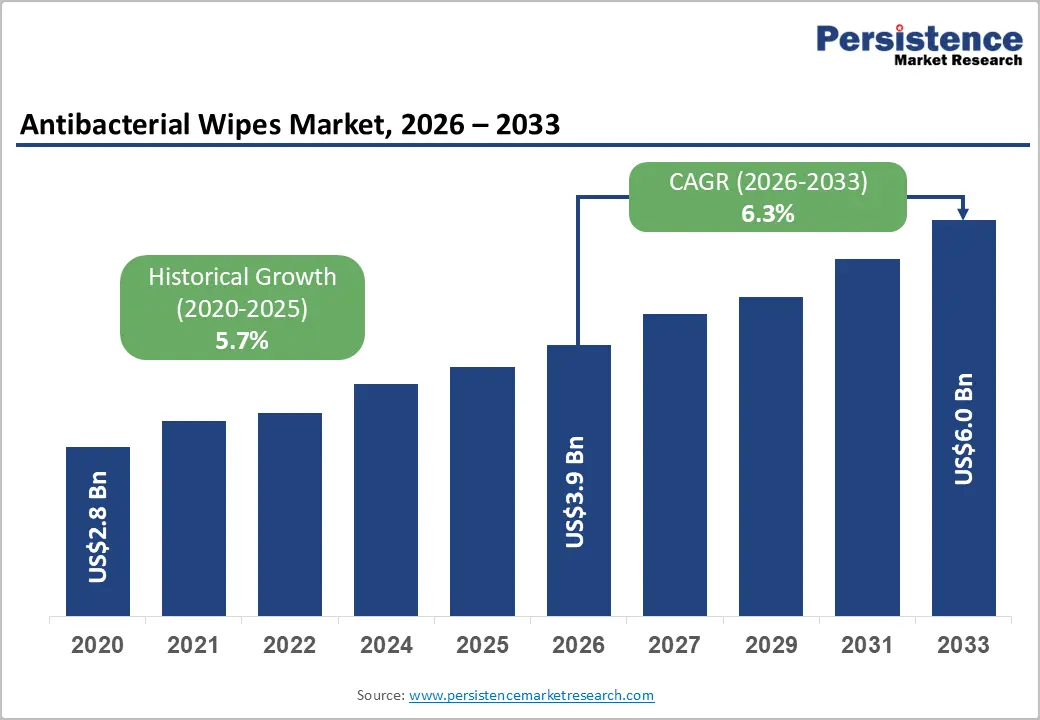
The global antibacterial wipes market size is likely to be valued at US$3.9 billion in 2026, and is expected to reach US$6.0 billion by 2033, growing at a CAGR of 6.3% during the forecast period from 2026 to 2033, driven by the increasing prevalence of hygiene awareness, rising demand for convenient surface and skin disinfection solutions, and growing adoption of single-use antibacterial wipes in healthcare, food service, and public spaces.
Growing demand for alcohol-based and natural/organic antibacterial wipes, especially in healthcare facilities and offices, is accelerating adoption across end-user segments.
Advances in fragrance-free, skin-friendly formulations and eco-friendly, biodegradable substrates are further boosting uptake by offering improved user comfort and greater sustainability compliance. Increasing recognition of antibacterial wipes as critical for rapid pathogen reduction, infection prevention, and daily hygiene maintenance in post-pandemic environments remains a major driver of market growth.
Key Industry Highlights:
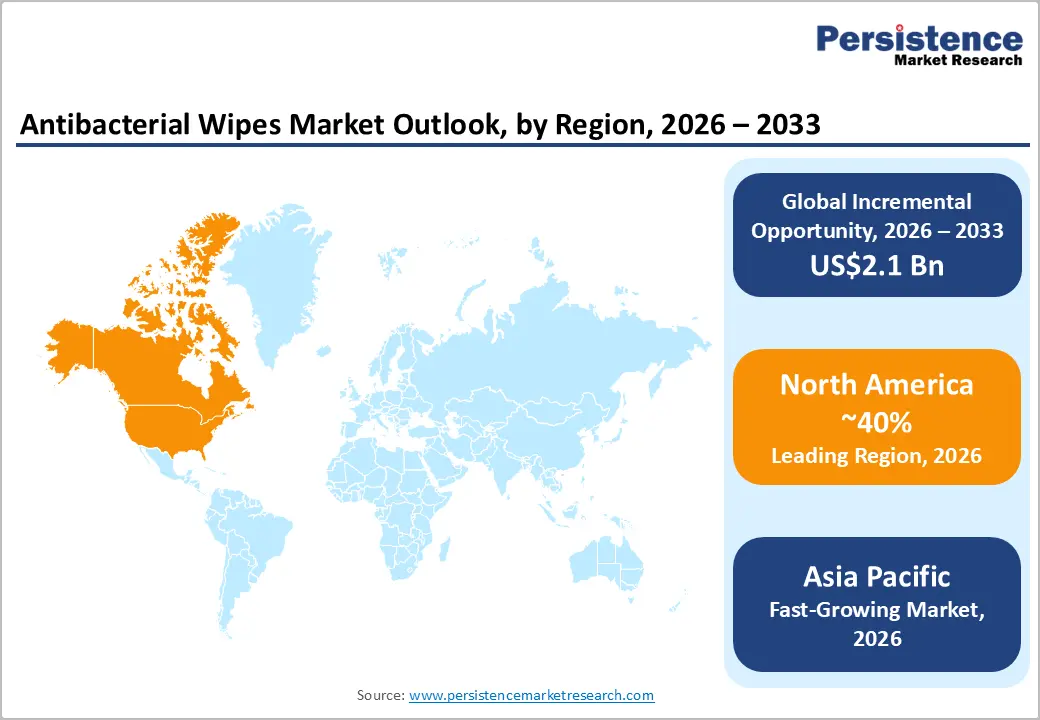
- Leading Region: North America, anticipated to account for a 40% market share in 2026, driven by high hygiene standards, strong healthcare & institutional demand, and premium consumption in the U.S.
- Fastest-growing Region: Asia Pacific, fueled by rising middle-class hygiene consciousness, rapid urbanization, and expanding healthcare & retail infrastructure in China and India.
- Dominant Product Type: Alcohol-based wipes, which hold approximately 52% of the market share, as they remain the fastest-acting and most trusted disinfectant format.
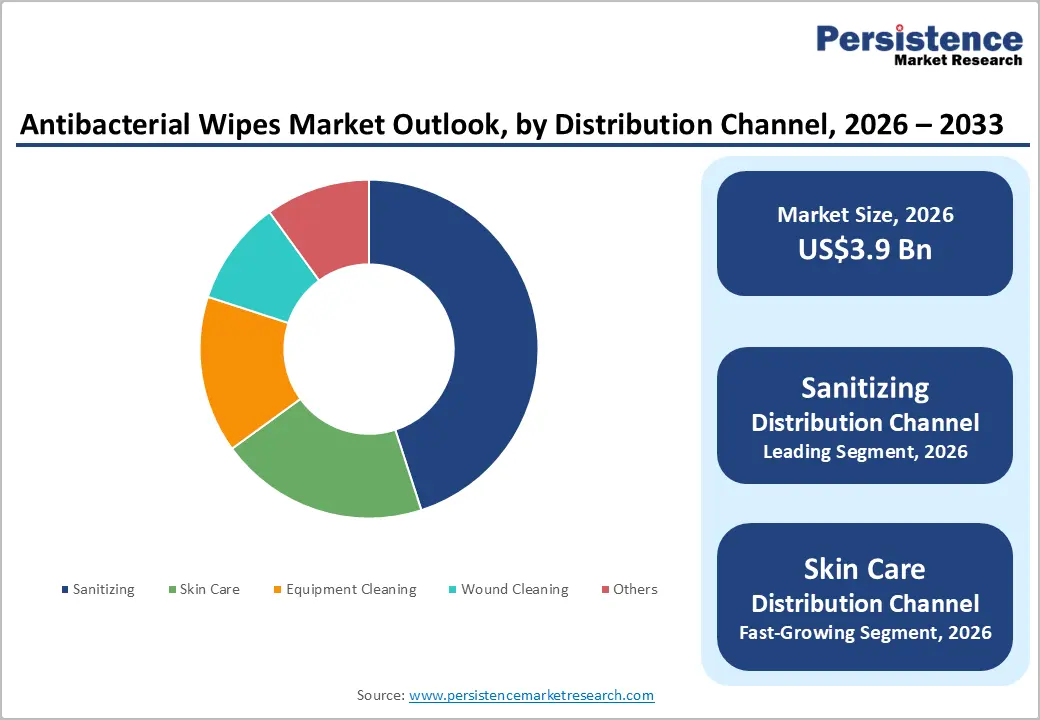
- Leading Application: Sanitizing, to contribute nearly 58% of the market revenue in 2026, due to primary use in surface disinfection across multiple sectors.
- Leading End-user: Healthcare facilities, which are expected to account for over 42% of market revenue in 2026, owing to stringent infection-control protocols and high wipe consumption.
| Key Insights | Details |
|---|---|
| Antibacterial Wipes Market Size (2026E) | US$3.9 Bn |
| Market Value Forecast (2033F) | US$6.0 Bn |
| Projected Growth CAGR (2026-2033) | 6.3% |
| Historical Market Growth (2020-2025) | 5.7% |
Market Factors – Growth, Barriers, and Opportunity Analysis
Growth Analysis – Heightened Hygiene Awareness and Institutional Demand
Heightened hygiene awareness and growing institutional demand are significantly influencing the adoption of antibacterial wipes across multiple sectors. Increased public understanding of infection transmission, particularly through surface contact, has encouraged individuals and organizations to prioritize routine sanitation. Consumers are increasingly incorporating antibacterial wipes into daily cleaning practices because of their convenience, portability, and ability to provide rapid disinfection without requiring additional cleaning materials. The growing focus on preventive healthcare and personal well-being has further strengthened demand, especially in high-traffic environments where maintaining cleanliness is essential.
Institutional sectors such as healthcare facilities, educational institutions, hospitality establishments, and corporate offices are also driving substantial demand. Hospitals and clinics rely heavily on antibacterial wipes for surface disinfection, medical equipment cleaning, and the maintenance of sterile environments to minimize healthcare-associated infections. Schools and childcare centers are adopting stricter cleaning protocols to reduce the transmission of illness among students. The hospitality and transportation industries are increasingly using antibacterial wipes to maintain sanitation standards and improve customer confidence.
Rising Penetration in Markets and Retail Channels
Rising penetration in emerging and developed markets, along with the expansion of diverse retail channels, is significantly supporting the growth of the antibacterial wipes market. Increasing urbanization and improving disposable income levels are enabling consumers to spend more on convenience-based hygiene products. As awareness of sanitation and personal hygiene grows, antibacterial wipes are increasingly regarded as essential household and travel cleaning agents. Their compact packaging, ease of use, and time-saving benefits make them attractive to busy urban consumers and working professionals, accelerating their adoption across multiple regions.
The expansion of organized retail formats such as supermarkets, hypermarkets, and pharmacy chains has enhanced product visibility and accessibility. These retail outlets offer consumers multiple brand choices, promotional discounts, and bundled hygiene product offerings, thereby encouraging bulk purchases. The rapid growth of e-commerce platforms has played a crucial role in increasing product reach. Online marketplaces enable manufacturers to connect directly with consumers, offer subscription-based delivery of hygiene products, and expand their product portfolios without geographic constraints.
Barrier Analysis – Environmental Concerns and Regulatory Pressure on Disposables
Environmental concerns and increasing regulatory pressure on disposable hygiene products are emerging as significant challenges for the antibacterial wipes market. Most antibacterial wipes are manufactured using non-biodegradable synthetic fibers, such as polyester and polypropylene, which contribute to plastic pollution when improperly disposed of. These materials do not degrade readily, leading to accumulation in landfills, drainage systems, and water bodies. Growing consumer awareness of environmental sustainability is prompting scrutiny of single-use hygiene products, including wipes, thereby influencing purchasing behavior and encouraging demand for eco-friendly alternatives.
Government authorities and environmental agencies across several regions are also implementing stricter waste-management policies and plastic-reduction regulations. Regulations restricting single-use plastics and promoting biodegradable materials are compelling manufacturers to reformulate product compositions and invest in sustainable packaging solutions. Compliance with these regulations often requires higher production costs due to the adoption of plant-based fibers, recyclable packaging materials, and environmentally safe disinfectant formulations. Smaller manufacturers may face financial and technological barriers to adapting to these requirements, thereby limiting market entry and product expansion.
Raw Material Price Volatility and Supply Constraints
Raw material price volatility and supply constraints present significant challenges for manufacturers in the antibacterial wipes market. The production of antibacterial wipes relies heavily on materials such as nonwoven fabrics, chemical disinfectants, preservatives, and packaging plastics. Fluctuations in input prices, particularly for petroleum-based synthetic fibers such as polypropylene and polyester, directly affect production costs. Changes in crude oil prices, transportation costs, and geopolitical tensions often affect the availability and pricing of these materials, complicating cost planning for manufacturers. Sudden increases in raw material costs can reduce profit margins or compel companies to raise product prices, potentially affecting consumer demand.
Supply chain disruptions further intensify these challenges, especially when manufacturers depend on global sourcing networks. Factors such as transportation delays, trade restrictions, and shortages of chemical disinfectants or specialty fibers can interrupt production cycles and delay product delivery. Seasonal demand spikes during public health emergencies or outbreaks can also strain supply availability, leading to temporary shortages and uneven distribution across markets. Smaller manufacturers are particularly vulnerable as they often lack long-term supplier agreements or diversified sourcing strategies.
Opportunity Analysis – Growth in Natural/Organic and Biodegradable Wipe Formulations
opportunity in the antibacterial wipes market, driven by increasing consumer preference for environmentally responsible and skin-friendly hygiene products. Consumers are becoming more aware of the potential environmental impact of synthetic fibers and chemical-based disinfectants commonly used in traditional wipes. As a result, demand is rising for wipes made from plant-based fibers such as bamboo, cotton, and wood pulp, which are biodegradable and decompose more readily than petroleum-based materials. These alternatives help reduce landfill accumulation and microplastic pollution, supporting sustainability initiatives.
In addition to environmental concerns, consumers are prioritizing personal health and safety. Natural and organic wipes often incorporate botanical extracts, essential oils, and mild antimicrobial agents rather than harsh chemical disinfectants. These formulations are particularly attractive for individuals with sensitive skin, infants, and frequent users who require gentle yet effective cleaning solutions. The shift toward skin-compatible and toxin-free ingredients is encouraging manufacturers to reformulate products to meet clean-label expectations.
Expansion in Healthcare Facilities and Food-Service Channels
Expansion in healthcare facilities and food-service channels is significantly contributing to the rising demand for antibacterial wipes, as both sectors require strict hygiene and contamination control. Healthcare facilities, including hospitals, clinics, diagnostic laboratories, and ambulatory surgical centers, are increasingly adopting antibacterial wipes to maintain sterile environments and reduce the risk of healthcare-associated infections. These wipes are widely used to disinfect medical equipment, patient beds, operating rooms, and high-touch surfaces, such as door handles and monitoring devices. The growing number of healthcare institutions, rising patient admissions, and increased focus on infection prevention protocols are driving consistent product demand across healthcare settings.
The food-service industry, including restaurants, catering services, food-processing units, and quick-service outlets, is expanding rapidly and strengthening compliance with hygiene requirements. Food-handling environments require regular sanitation of preparation surfaces, dining areas, and kitchen equipment to prevent bacterial contamination and ensure food safety. Antibacterial wipes provide a convenient, ready-to-use solution that supports quick cleaning without the need for complex dilution or mixing procedures. Their portability and ease of disposal make them particularly useful in fast-paced food-service environments where maintaining cleanliness is critical for operational efficiency.
Category-wise Analysis
Product Type Insights
Alcohol based wipes are anticipated to dominate the market, accounting for approximately 52% of the market share in 2026, fueled by fast-acting and broad-spectrum antimicrobial effectiveness. These wipes are widely used in healthcare, commercial, and household environments because they can quickly eliminate bacteria, viruses, and fungi without requiring additional cleaning agents. Their rapid evaporation leaves minimal residue, making them suitable for disinfecting medical equipment, electronic devices, and frequently touched surfaces.
Clinell (GAMA Healthcare) manufactures Clinell Alcohol Wipes, widely used in healthcare and clinical settings. The product contains 70% pharmaceutical-grade isopropyl alcohol, enabling rapid and effective surface disinfection. These wipes are designed to kill 99.999% of pathogens, including MRSA and E. coli, and to evaporate quickly without leaving residue.
Natural/organic wipes represent the fastest-growing product type, driven by rising consumer preference for eco-friendly and skin-safe hygiene products. Increasing awareness regarding chemical exposure, skin sensitivity, and environmental sustainability is encouraging consumers to shift toward wipes formulated with plant-based ingredients, essential oils, and biodegradable fibers. These wipes reduce exposure to harsh chemicals such as synthetic preservatives, alcohols, and artificial fragrances, making them suitable for sensitive skin and frequent use.
The Honest Company offers plant-based wipes formulated using sustainably sourced materials and naturally derived ingredients. The company focuses on avoiding potentially harmful chemicals such as parabens, phthalates, and synthetic fragrances through its ingredient “No List.” Its wipes are marketed as eco-friendly and skin-safe, supporting growing consumer demand for natural and biodegradable hygiene products.
Application Insights
Sanitizing is expected to dominate the market, contributing nearly 58% of revenue in 2026, due to the widespread need for rapid and effective surface and hand disinfection across multiple environments. Increasing awareness about infection prevention in healthcare facilities, food-service operations, workplaces, and households is significantly driving the demand for sanitizing wipes. These wipes offer convenience, portability, and immediate antimicrobial action without requiring additional cleaning solutions.
The Clorox Company offers Clorox® Disinfecting Wipes, widely used to sanitize and disinfect high-touch surfaces in healthcare, commercial, and household environments. These wipes are designed to kill 99.9% of viruses and bacteria, including cold and flu pathogens, making them highly preferred for routine sanitation. The product is commonly used in hospitals, offices, schools, and food-service areas due to its ready-to-use format and rapid antimicrobial action.
Skin care is the fastest-growing category, driven by rising consumer focus on personal hygiene, skin health, and convenience. Rising awareness regarding skincare routines, pollution exposure, and the need for quick cleansing solutions is encouraging the adoption of antibacterial and cleansing wipes. These wipes are widely used for removing dirt, oil, makeup, and bacteria while maintaining skin hydration and comfort. Growing demand for dermatologically tested, alcohol-free, and natural-ingredient-based wipes is further driving market expansion.
Johnson & Johnson Consumer Health (now Kenvue) offers Neutrogena Makeup Remover Cleansing Towelettes, widely used for facial cleansing, makeup removal, and skin hygiene. These wipes are designed with gentle, dermatologist-tested formulations that remove dirt, oil, and impurities without harsh scrubbing. Their alcohol-free and skin-friendly composition supports frequent daily use, making them popular among consumers seeking convenient skin maintenance solutions.
Regional Insights
North America Antibacterial Wipes Market Trends
North America is projected to dominate, with over 40% of the revenue in 2026, fueled by the region’s high hygiene standards, strong institutional and retail demand, and high public awareness of infection prevention. Distribution systems in the U.S. and Canada provide extensive support for antibacterial wipes programs, ensuring wide accessibility across alcohol-based, sanitizing, and healthcare facility populations. Increasing demand for premium, convenient, and easy-to-use forms is further accelerating adoption, as these formats improve compliance and reduce barriers associated with traditional disinfectants.
Innovation in antibacterial wipe technology, including stable natural/organic formulations, improved fragrance-free delivery, and targeted retail enhancement, is attracting significant investment from both the public and private sectors. Government initiatives and CDC campaigns continue to promote use to mitigate pathogen risks, surface contamination concerns, and emerging hygiene threats, thereby creating sustained market demand. The growing focus on skin-care grades and specialty uses, particularly for sanitizing and others, is expanding the target applications for antibacterial wipes.
Europe Antibacterial Wipes Market Trends
Europe shows significant growth, driven by increased awareness of hygiene and sustainability benefits, robust regulatory systems, and government-led public health programs. Countries such as Germany, France, the U.K., and Italy have well-established retail and healthcare frameworks that support routine use of antibacterial wipes and encourage the adoption of innovative wipe delivery methods, including natural/organic and fragrance-free solutions. These high-safety formulations are particularly appealing for sanitizing populations, regulation-conscious retailers, and healthcare users, improving coverage rates.
Technological advancements in antibacterial wipe development, such as enhanced biodegradability, application-specific delivery, and improved skin-care properties, are further enhancing market potential. European authorities are increasingly supporting research and trials of wipes for both routine and specialized needs, thereby strengthening market confidence. The growing emphasis on convenient, eco-friendly options aligns with the region’s focus on reducing contamination and restricting single-use plastics. Public awareness campaigns and promotional drives are expanding reach across both retail and institutional segments, while suppliers are investing in sustainable substrates and novel variants to enhance efficacy.
Asia Pacific Antibacterial Wipes Market Trends
Asia Pacific is likely to be the fastest-growing market for antibacterial wipes in 2026, driven by rising hygiene awareness, increasing government initiatives, and expanding application programs across the region. Countries such as China, India, Japan, and South Korea are actively promoting wipes campaigns to address urban health and emerging retail needs. Antibacterial wipes are particularly attractive in these regions due to their cost-effectiveness, ease of use, and suitability for large-scale retail and healthcare distribution in both urban and rural populations.
Technological advancements are supporting the development of stable, effective, and easy-to-deploy antibacterial wipes, which can withstand challenging climatic conditions and minimize irritation. These innovations are critical for reaching domestic retailers and improving overall hygiene coverage. Growing demand for alcohol-based, sanitizing, and retail store applications is contributing to market expansion. Public-private partnerships, increased consumer spending, and rising investment in wipes research and production capacity are further accelerating growth. The convenience of wipes delivery, combined with improved efficacy and reduced risk of illness, positions it as a preferred choice.
Competitive Landscape
The global antibacterial wipes market features competition between established consumer health giants and emerging hygiene specialists. In North America and Europe, Reckitt Benckiser and Procter & Gamble lead through strong R&D, distribution networks, and retail ties, bolstered by innovative alcohol-based and natural/organic programs. In Asia Pacific, local players advance with cost-competitive solutions, enhancing accessibility. Alcohol-based delivery boosts rapid kill, cuts pathogen risks, and enables mass integrations across channels. Strategic partnerships, collaborations, and acquisitions merge expertise, expand portfolios, and speed commercialization. Natural formulations solve skin-sensitivity issues, aiding penetration in consumer segments.
Key Industry Developments
- In September 2025, CloroxPro launched Clorox Screen+ Sanitizing Wipes for cleaning and sanitizing touchscreens, laptops, tablets, keyboards, and other sensitive electronics. The wipes eliminated 99.9% of bacteria while removing fingerprints, dust, and smudges without damaging delicate surfaces. They supported enhanced hygiene and equipment protection in commercial, healthcare, educational, and workplace settings.
Companies Covered in Antibacterial Wipes Market
- Smith & Nephew
- ConvaTec
- Reckitt Benckiser
- Procter & Gamble
- Tufco LP
- Multi-Pack Solutions
- Edgewell
- Advantus Corporation
- Becton
- Kimberly-Clark
- Dynarex
- Clorox
- Unwipe
Frequently Asked Questions
The global antibacterial wipes market is projected to reach US$3.9 billion in 2026.
Growing demand for convenient, ready-to-use cleaning products is accelerating adoption, as antibacterial wipes provide quick disinfection, portability, and ease of use compared to traditional liquid disinfectants and cleaning methods.
The antibacterial wipes market is poised to witness a CAGR of 6.3% from 2026 to 2033.
Rising demand for sustainable and biodegradable wipe formulations is creating growth opportunities for manufacturers to develop plant-based fibers, natural disinfecting agents, and recyclable packaging that align with environmental regulations and consumer preferences.
Reckitt Benckiser, Procter & Gamble, Clorox, Kimberly-Clark, and ConvaTec are the key players.


