




- Pharmaceuticals
- Antibacterial Drugs Market
Antibacterial Drugs Market Size, Share and Growth Forecast, 2026-2033
Antibacterial Drugs Market by Drug Class (Beta-Lactams, Quinolones, Macrolides, Aminoglycosides, Tetracyclines, Sulfonamides & Trimethoprim, Others), Route of Administration (Oral, Parenteral, Topical, Inhalational, Pediatric Formulations, Others), End-Use (RTIs, UTIs, Skin Infections, Bloodstream & Sepsis, Intra-abdominal Infections, Surgical Prophylaxis, Community-Acquired Infections, Others), and Regional Analysis for 2026-2033

Antibacterial Drugs Market Share and Trends Analysis
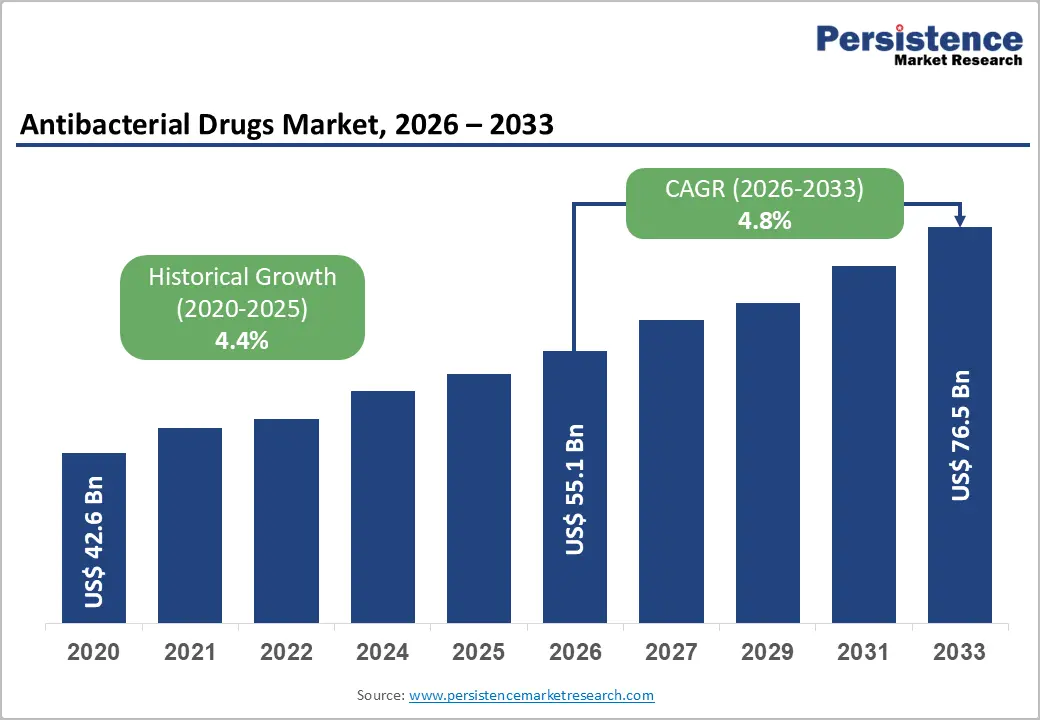
The global antibacterial drugs market size is likely to be valued at US$ 55.1 billion in 2026, and is projected to reach US$76.5 billion by 2033, growing at a CAGR of 4.8% during the forecast period 2026–2033.
As the incidence of bacterial infections continues to escalate in both community and hospital settings, the demand for antibiotics is likely to remain sharply upward. Antimicrobial resistance (AMR) is intensifying treatment complexity, which is sustaining the need for advanced and combination antibacterial therapies. Aging populations and a growing number of immunocompromised patients are requiring more frequent and targeted antibiotic interventions. Healthcare systems are prioritizing infection control and stewardship programs to address resistant pathogens, which reinforces the strategic importance of effective antibacterial agents.
As hospitalization rates and surgical procedures expand globally, the baseline need for antibacterial prophylaxis and treatment continues to support stable revenue growth. Technological progress in drug discovery platforms is enabling the identification of novel mechanisms of action and improved pharmacokinetic profiles. Regulatory authorities are implementing incentive frameworks, such as accelerated approval pathways and market exclusivity extensions, to encourage the development of therapies that address resistant organisms. These policies are supporting pipeline activity despite substantial research and development costs.
Companies are allocating capital selectively, focusing on high-need indications where unmet clinical demand justifies investment. However, pricing pressure, reimbursement scrutiny, and stringent regulatory standards are forcing pharmaceutical companies to rethink and recalibrate their commercialization strategies.
Key Industry Highlights
- Dominant Drug Classes: Beta-lactams are projected to account for approximately 28% of the revenue share in 2026, while quinolones are likely to grow the fastest at a 6.5% CAGR through 2033, driven by expanding clinical indications.
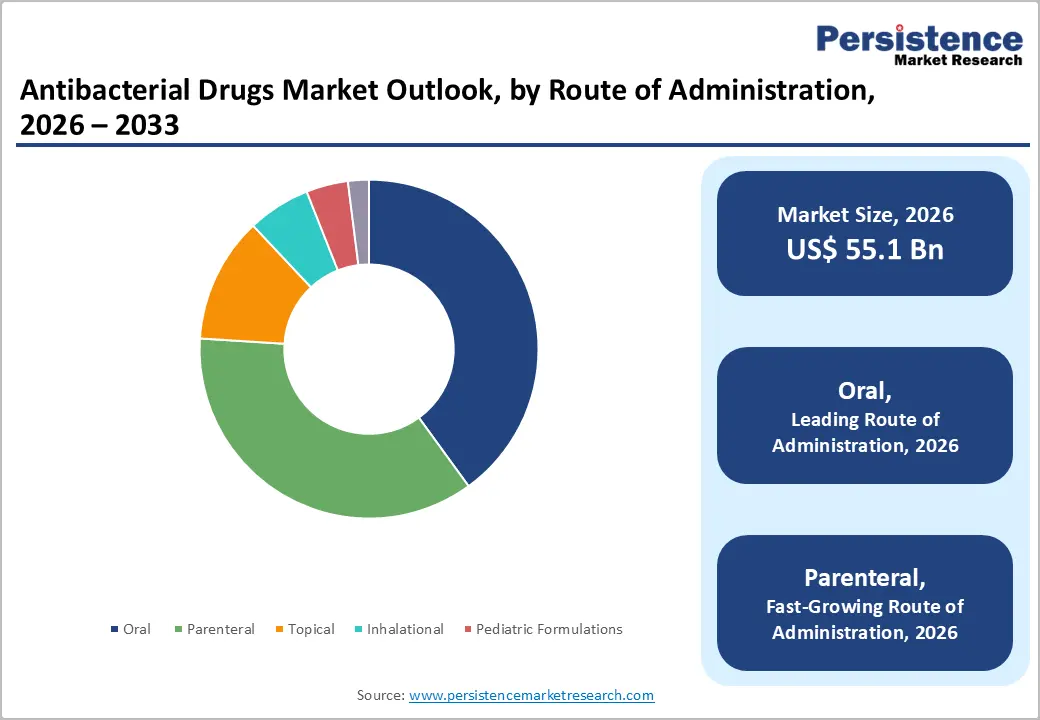
- Leading Routes of Administration: Oral therapies are expected to account for an estimated 40% share in 2026, while parenteral formulations are projected to be the fastest-growing segment through 2033, reflecting their increased use in critical care.
- Dominant End-Use: Respiratory tract infections (RTIs) are projected to account for approximately 25% of the market in 2026, whereas UTIs are expected to grow fastest, driven by rising prevalence among aging and female populations.
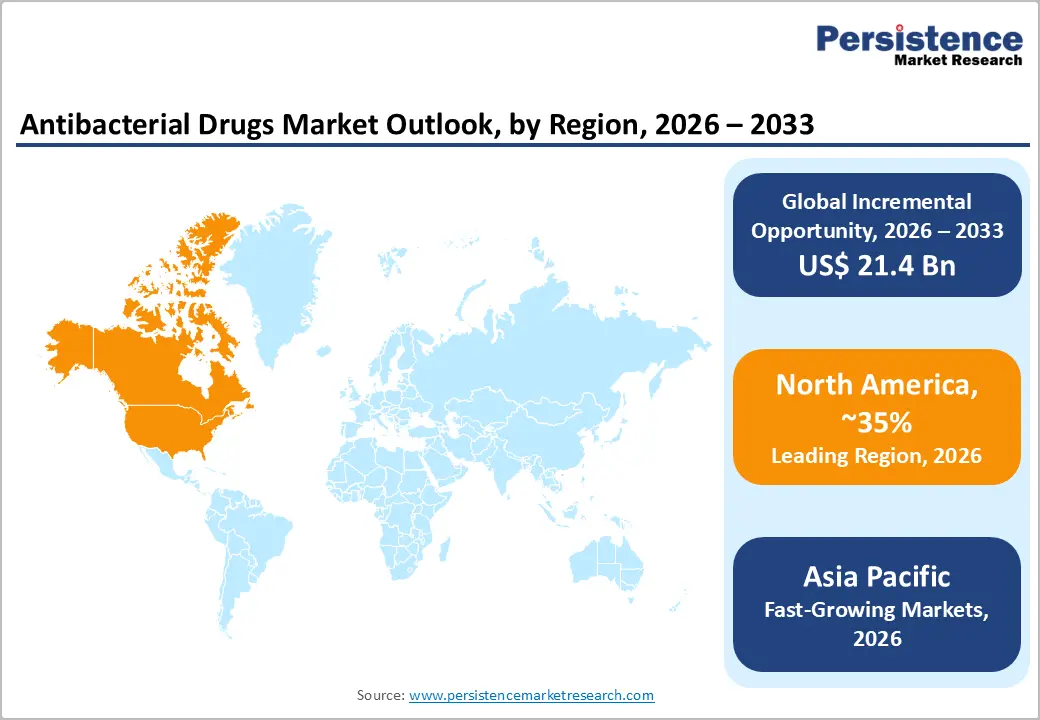
- Regional Leadership: North America is projected to hold approximately 35% share in 2026, while the Asia-Pacific market is projected to grow at nearly an 8% CAGR through 2033, supported by a rising infectious disease burden.
- Competitive Environment: New drug launches, expedited regulatory approvals, strategic R&D partnerships, and enhancing pipeline depth and geographic presence are the core focus areas of market players.
| Global Market Attributes | Key Insights |
|---|---|
| Antibacterial Drugs Market Size (2026E) | US$ 55.1 Bn |
| Market Value Forecast (2033F) | US$ 76.5 Bn |
| Projected Growth (CAGR 2026 to 2033) | 4.8% |
| Historical Market Growth (CAGR 2020 to 2025) | 4.4% |
Market Factors – Growth, Barriers, and Opportunity Analysis
Infectious Disease Burden and AI Innovation Drive Market Growth
The surge in bacterial infections, including respiratory, urinary, and bloodstream infections, is a key factor propelling the antibacterial drugs market. The World Health Organization (WHO) has identified AMR as a critical health challenge, prompting the development and adoption of advanced antibacterial therapies. In the United States alone, the CDC reports over 2.8 million antimicrobial-resistant infections annually, resulting in more than 35,000 deaths, with six hospital-onset resistant infections increasing about 20% during the COVID-19 pandemic. These figures highlight not only the high volume but also the rising severity and clinical impact of bacterial infections, reinforcing the growing demand for effective antibacterial drugs in both hospital and outpatient settings.
The technological advancements are reshaping antibacterial drug discovery. Computational biology, high-throughput screening, and AI-enabled platforms accelerate the identification and optimization of new antibacterial molecules, thereby reducing preclinical timelines and enabling more precise targeting of resistant pathogens. A prime example is Phare Bio’s strategic AI partnership with Basilea Pharmaceutica, in which generative AI is being used to develop a next-generation broad-spectrum antibiotic based on AI-designed molecules. This initiative highlights how AI-driven drug design can shorten discovery cycles, expand chemical space, and improve candidate selection, creating deeper and more efficient R&D pipelines. These innovations, combined with the rising burden of bacterial infections, converge to create a robust environment for sustained growth in the antibacterial drugs market.
High Development Costs, Regulatory Hurdles, and Market Pressures Constrain Growth
Developing new antibacterial drugs remains resource-intensive, high-cost, and scientifically challenging, which continues to deter sustained investment. Evidence shows that only about 12.5% of antibacterial candidates in preclinical development successfully reach registration, underscoring the biological complexity and regulatory rigor associated with antibiotic discovery. Lengthy and expensive clinical trials, combined with stringent safety and efficacy requirements, significantly extend approval timelines and increase financial exposure for developers. These barriers disproportionately affect smaller biotech firms that lack long-term capital resilience. Public health authorities have also highlighted that relatively few truly novel antibacterial agents are advancing through development pipelines, with many candidates relying on existing mechanisms of action.
Adding to these challenges, economic and competitive pressures further constrain profitability. Unlike chronic disease treatments, antibacterial drugs are typically prescribed for short durations, which limits per-patient revenue potential and weakens return on investment. The patent expirations enable generic manufacturers to enter the market, exerting sustained downward pricing pressure and compressing margins for branded products. Pricing and reimbursement controls in cost-sensitive healthcare systems further restrict revenue upside. In addition, manufacturing complexity and supply chain dependencies can affect the consistency of product availability. Thus, high development costs, regulatory intensity, limited revenue duration, and competitive pricing pressures create a difficult commercial environment, tempering long-term growth prospects for the antibacterial drugs market.
Innovation and Emerging Therapeutic Frontiers Offer Strong Growth Opportunities
Expanding antibacterial demand is creating opportunities across specific therapeutic fields and emerging technologies. Demand for narrow-spectrum antibacterial agents that target priority pathogens such as methicillin-resistant Staphylococcus aureus (MRSA), carbapenem-resistant Enterobacterales (CRE), and Pseudomonas aeruginosa is increasing as antimicrobial stewardship programs encourage reduced reliance on broad-spectrum therapies. Narrow-spectrum agents are projected to grow faster than traditional broad-spectrum drugs through the coming decade as clinicians adopt targeted treatments that limit resistance development and improve clinical outcomes.
The rapid diagnostics integration, including nucleic acid amplification tests and resistance profiling, enables faster pathogen identification and supports more precise antibacterial prescribing. This shift strengthens demand for therapies that work alongside diagnostics, thereby enhancing treatment effectiveness and commercial differentiation.
Beyond conventional drug classes, non-traditional antibacterial therapeutics constitute an emerging field of research. According to the WHO pipeline assessments, approximately 40 non-traditional antibacterial approaches are currently in development, including bacteriophages, monoclonal antibodies, immune-modulating therapies, and microbiome-based interventions. These approaches aim to address infections that are resistant to existing antibiotics. Although the number of late-stage innovative candidates remains constrained, continued research investment is focused on expanding the pool of agents with novel mechanisms of action.
The adoption of rapid diagnostics further supports these therapies by shortening the time to effective treatment. Policy-driven incentive programs such as subscription-style reimbursement models and accelerated regulatory pathways have further enhanced commercial viability for differentiated antibacterial products, strengthening long-term market attractiveness for innovation-led portfolios.
Category-wise Analysis
Drug Class Insights
Beta-lactams are expected to remain the leading drug class, accounting for around 45% of the antibacterial drugs market revenue share in 2026. Their dominance is supported by broad clinical efficacy, inclusion in first-line treatment guidelines, and widespread use across hospital and outpatient settings. Penicillins, cephalosporins, and carbapenems remain cornerstone therapies for respiratory, intra-abdominal, and urinary tract infections (UTIs). Prescriber familiarity and cost efficiency sustain high utilization. AbbVie, in collaboration with Pfizer, received regulatory approval for Emblaveo (aztreonam–avibactam) to treat complicated Gram-negative infections. This approval reinforces ongoing reliance on advanced beta-lactam combinations.
Quinolones are projected to be the fastest-growing drug class, with an estimated CAGR of about 5.5–6.0% from 2026 to 2033. The growth is driven by increasing resistance to older therapies and demand for agents with improved pharmacokinetics and differentiated mechanisms. Clinical interest is increasing in drugs that address resistant pathogens in urogenital and respiratory infections. Innoviva Specialty Therapeutics, in partnership with GARDP, secured approval for zoliflodacin (Nuzolvence), a first-in-class oral antibiotic for gonorrhea. This milestone highlights momentum behind novel antibacterial classes and supports accelerated adoption.
Route of Administration Insights
Oral administration is expected to account for approximately 60% of the antibacterial drugs market share in 2026, supported by established prescribing patterns in outpatient and community settings. Physicians are routinely selecting oral antibiotics for uncomplicated respiratory tract infections and UTIs because these formulations are convenient, cost-effective, and easier for patients to complete. High treatment adherence and lower overall therapy expenses are reinforcing prescription volumes in primary care environments. Healthcare providers rely heavily on oral regimens to manage mild-to-moderate infections without hospital admission.
The U.S. Food and Drug Administration (FDA)’s approval of zoliflodacin, marketed as Nuzolvence, by Entasis Therapeutics and Innoviva Specialty Therapeutics, is expanding oral treatment options for resistant pathogens. This approval strengthens the relevance of oral therapies in outpatient antimicrobial management and supports continued revenue leadership for this route of administration.
Parenteral administration is set to become the fastest-growing route and is projected to expand at a CAGR of approximately 5.5% through 2033. Growth reflects increasing hospital admissions for severe bacterial infections, such as sepsis and bloodstream infections, which require immediate systemic intervention. Injectable antibiotics remain essential in intensive care unit (ICU) environments and surgical settings where rapid therapeutic levels are critical. Expansion of hospital infrastructure, rising procedural volumes, and greater critical care capacity are supporting demand for intravenous and intramuscular formulations.
Avenacy has introduced several injectable antibacterial products into the United States hospital market, indicating sustained investment in acute-care therapeutics.
End-Use Insights
RTIs are estimated to account for the largest therapeutic application, contributing approximately 30% of total market revenue in 2026. High incidence of bacterial pneumonia and bronchitis sustains consistent antibacterial utilization across inpatient and outpatient settings. Emergency care and primary care channels generate recurring prescription demand. Clinical guidelines continue to support antibiotic use in confirmed bacterial cases. Seasonal infection surges further stabilize volumes. Ongoing availability of broad-spectrum therapies supports continuity of care. Collectively, these factors reinforce respiratory infections as the leading application segment.
Urinary tract infections are projected to be the fastest-growing therapeutic segment, expanding at an estimated CAGR of close to 6% during the 2026–2033 forecast period. Growth is driven by rising prevalence among aging populations and higher diagnosis rates among women. Increasing resistance to first-line therapies elevates treatment complexity. GSK’s approval of gepotidacin (Blujepa) expanded treatment options beyond traditional antibiotics. This marked the first new oral antibacterial class for UTIs in decades, reinforcing confidence in oral therapies. As a result, prescribing intensity is expected to rise. UTIs are therefore positioned as a key contributor to future market expansion.
Regional Insights
North America Antibacterial Drugs Market Trends
North America is projected to remain the leading regional market for antibacterial drugs, capturing an estimated 35% share in 2026, supported by strong healthcare infrastructure and extensive clinical antibiotic use. The U.S. FDA’s approval of axtreonam-avibactam (Emblaveo) in February 2025 for complicated intra-abdominal and hospital-associated infections underscores ongoing regulatory support for advanced antibacterial combinations addressing resistant Gram-negative bacteria.
Accelerated regulatory pathways, such as priority review and qualified infectious disease product designations, continue to facilitate quicker entry for high-need therapies. Antimicrobial stewardship programs and stable reimbursement frameworks further support adoption of clinically effective agents. Large pharmaceutical and biotechnology companies maintain substantial investments in antibacterial R&D, thereby strengthening their commercialization pipelines.
Ongoing development of novel antibacterial candidates also underpins regional momentum. The U.S. FDA approved zoliflodacin (Nuzolvence) for uncomplicated gonorrhea, introducing a new oral treatment against resistant Neisseria gonorrhoeae. This milestone reflects active regulatory pathways for first-in-class agents that address critical resistance challenges. Hospital and outpatient settings in the U.S. continue to integrate targeted antibacterial therapies within standard treatment regimens.
Combined with strong health insurance coverage and robust R&D expenditure, these structural advantages support North America’s steady forecasted CAGR, despite pricing pressures and mature market segments.
Europe Antibacterial Drugs Market Trends
The European antibacterial drugs market is shaped by harmonized regulatory frameworks under the oversight mechanisms of the European Medicines Agency (EMA) and consistent national action plans in member states such as Germany, France, and the U.K. These policies focus on antimicrobial resistance reduction and promote appropriate antibiotic use, sustaining demand across respiratory, urinary, and hospital-acquired infection categories. Stewardship programs and coordinated public health initiatives support disciplined prescribing, aligning clinical practices with resistance mitigation strategies. Pricing regulations and reference pricing mechanisms create cost-management pressures but do not hinder the adoption of clinically necessary therapies.
Roche advanced its novel antibiotic candidate zosurabalpin into Phase III clinical trials targeting carbapenem-resistant Acinetobacter baumannii, a pathogen associated with severe hospital infections, highlighting active European pipeline engagement with high-priority resistant pathogens. This development reflects continued investment in addressing critical bacterial threats at the clinical stage. The combination of structured regulatory guidance, public health oversight, and ongoing clinical development reinforces Europe’s role as a key region for antibacterial innovation and targeted therapy adoption.
Asia Pacific Antibacterial Drugs Market Trends
Asia Pacific is expected to be the fastest-growing market for the antibacterial market, with forecasts indicating a CAGR of around 6.5% between 2026 and 2033. The presence of large underserved patient populations, expanding healthcare access, and increasing infection incidence are the primary growth drivers for the market. Countries such as China and India are central to this momentum, with rising middle-class healthcare utilization and strengthened hospital infrastructure supporting broader adoption of antibacterial agents.
Government efforts to improve antibiotic stewardship and enforce prescription controls are gradually aligning treatment practices with resistance-containment goals, thereby strengthening sustainable market growth.
A significant regional milestone was the development and launch of India’s first indigenous antibiotic, nafithromycin, by the Department of Biotechnology, in partnership with Wockhardt, to treat resistant respiratory infections and to reflect local innovation capacity. This breakthrough reinforces Asia Pacific’s growing role in antibacterial R&D and positions domestic companies to address unmet clinical needs within regional healthcare systems. Complementary investments in manufacturing scale and regulatory modernization further enhance the region’s attractiveness for both generics and novel agents, consolidating its position as the fastest-growing antibacterial market over the forecast period.
Competitive Landscape
The global antibacterial drugs market structure is moderately consolidated, with leading pharmaceutical companies such as Pfizer, GlaxoSmithKline, Johnson & Johnson, Novartis, and Merck collectively capturing a significant portion of market share. These established players leverage extensive global distribution networks, strong relationships with hospitals and healthcare providers, and well-established R&D capabilities. Heavy investment in next-generation antibacterial research, clinical trials, and precision-targeted therapies allows them to maintain leadership in addressing AMR and emerging pathogen threats.
Regional and specialized biotech firms, including Wockhardt, Phare Bio, and Lupin Pharmaceuticals, focus on niche segments, such as novel antibiotics for resistant infections and localized markets with high unmet needs. Barriers such as complex regulatory approval processes, stringent clinical safety requirements, and the high cost of R&D limit new entrants. However, innovation trends, including AI-assisted drug discovery, rapid diagnostics integration, and partnerships for targeted therapy development, enable smaller companies to collaborate with global leaders. Market consolidation is expected to continue gradually as multinational pharma firms acquire or partner with niche innovators to expand their antibacterial pipelines and geographic reach.
Key Industry Developments
- In January 2026, Wellcome announced a renewal of its partnership with CARB-X, providing up to US$ 60 million in funding for early-stage antibacterial R&D projects over 2026–2028. The support targets innovative antibiotics, diagnostics, and vaccines for high-burden, drug-resistant infections, particularly in low- and middle-income countries.
- In December 2025, the WHO and the European Commission’s HERA extended their collaboration to combat antimicrobial resistance with a € 3.5 million agreement under the EU4Health program. The initiative focuses on targeted R&D of new antibacterial and non-traditional therapies, advancing diagnostics based on the WHO Priority Pathogen List, and promoting sustainable access to treatments.
- In November 2025, GSK, in partnership with the Fleming Initiative, announced a £ 45 million investment to fund six new research programs leveraging AI, machine learning, and supercomputing to accelerate antibacterial and antifungal drug discovery. The programs focus on priority pathogens, including Gram-negative bacteria, MRSA, and Aspergillus.
Companies Covered in Antibacterial Drugs Market
- Pfizer Inc.
- GlaxoSmithKline plc
- Merck & Co., Inc.
- Novartis AG
- Bayer AG
- Johnson & Johnson Services, Inc.
- AstraZeneca plc
- Sanofi S.A.
- Cipla Ltd.
- Aurobindo Pharma Ltd.
- Lupin Ltd.
- Basilea Pharmaceutica Ltd
Frequently Asked Questions
The global antibacterial drugs market is projected to reach US$ 55.1 billion in 2026.
Increasing prevalence of bacterial infections, widening AMR, and ongoing technological innovation in diagnostic-guided therapies and novel antibiotic development are the primary growth drivers.
The market is poised to witness a CAGR of 4.8% from 2026 to 2033.
Growing adoption of narrow-spectrum and precision antibiotics, and policy-driven incentives for AMR-targeted therapies represent key market opportunities.
Pfizer, GlaxoSmithKline, Johnson & Johnson, Novartis, and Merck are among the top companies shaping the market.


