




- Food Ingredients & Additives
- Anise Seed Extract Market
Anise Seed Extract Market Size, Share, and Growth Forecast, 2025 - 2032
Anise Seed Extract Market by Product Type (Standardized Extracts, Others), Form (Powders, Granules), Application (Flavoring Agents, Others), End-user (Food Manufacturers, Pharmaceutical Companies, Others), and Regional Analysis for 2025 - 2032

Anise Seed Extract Market Size and Trends Analysis
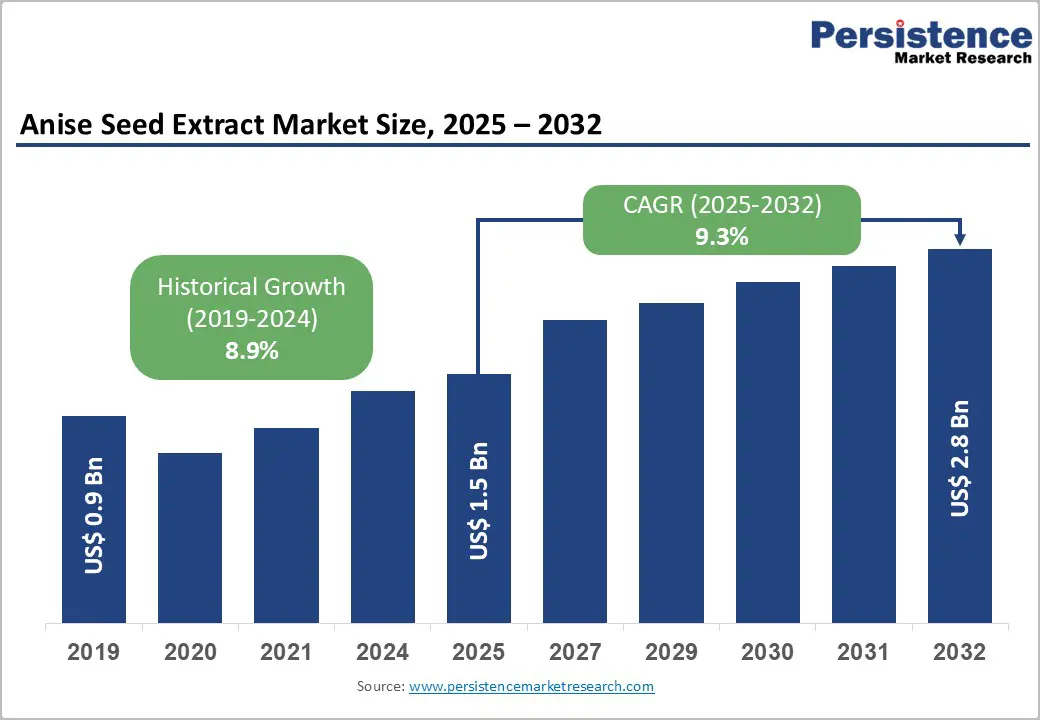
The global anise seed extract market size is likely to be valued at US$1.5 billion in 2025, projected to reach US$2.8 billion by 2032, growing at a CAGR of 9.3% during the forecast period from 2025 to 2032, driven by the increasing prevalence of natural flavor demand in food & beverages, rising consumer preference for herbal ingredients in nutraceuticals, and advancements in extraction technologies.
Rising demand for aromatic ingredients, especially in the cosmetics industry, has greatly increased the use of anise seed extract among diverse consumer groups. Market growth is further supported by advancements in both liquid and powdered formulations, which appeal to preferences for concentrated and flexible applications. The expanding recognition of anise seed extract as a valuable component in digestive health products, particularly within the pharmaceutical sector, is also a major driver shaping current market trends.
Key Industry Highlights:
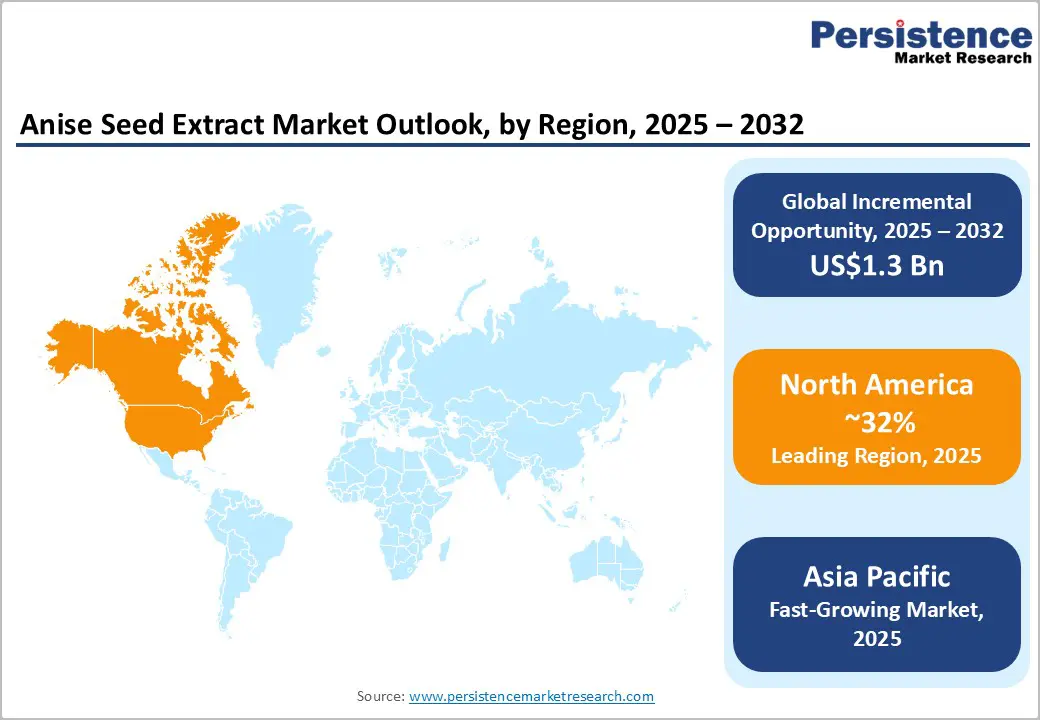
- Leading Region: North America, to command a 32% market share in 2025, due to high consumer demand for natural flavors and herbal ingredients in food, beverages, and nutraceuticals.
- Fastest-growing Region: Asia Pacific, due to rising health consciousness, increasing demand for natural and herbal products, and expanding food & beverage industries.
- Dominant Product Type: Liquid extracts, to hold approximately 40% of the revenue share, due to ease of incorporation in beverages.
- Leading Application: Flavoring agents, to account for over 35% of the market revenue, driven by aromatic enhancement needs.
- Leading Form: Powdered extracts, to contribute nearly 30% of the market revenue, due to shelf stability.
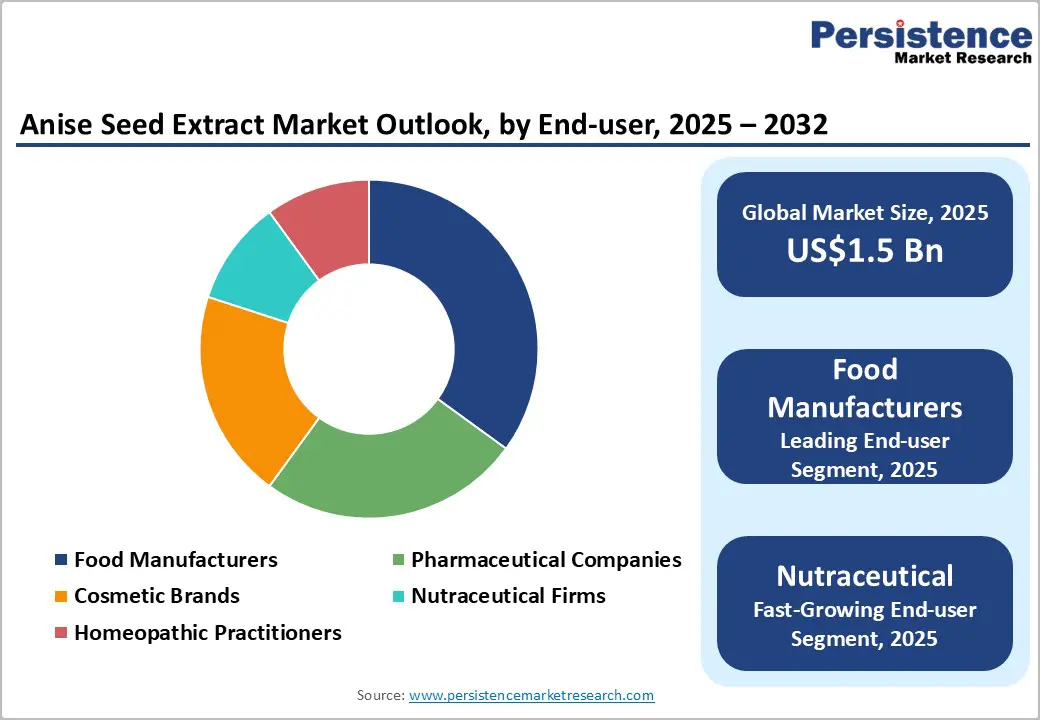
- Leading End-user: Food manufacturers, to lead with nearly 38% revenue share, as anise seed extract is extensively used to impart a natural, licorice-like flavor to bakery products, confectionery, beverages, and savory foods.
| Key Insights | Details |
|---|---|
| Anise Seed Extract Market Size (2025E) | US$1.5 Bn |
| Market Value Forecast (2032F) | US$2.8 Bn |
| Projected Growth (CAGR 2025 to 2032) | 9.3% |
| Historical Market Growth (CAGR 2019 to 2024) | 8.9% |
Market Factors - Growth, Barriers, and Opportunity Analysis
Growing Demand for Natural Flavors and Herbal Nutraceutical Ingredients
The increasing demand for natural flavors in the food and beverage industry, alongside growing interest in herbal ingredients within the nutraceutical sector, is reshaping ingredient preferences across multiple markets. Consumers are progressively moving away from artificial additives due to rising health awareness, clean-label preferences, and concerns over the long-term effects of synthetic flavoring agents. With its naturally sweet and aromatic profile, anise seed extract is widely used as a natural flavoring in bakery products, confectionery, beverages, and dairy items, helping manufacturers align with evolving consumer expectations.
The nutraceutical industry is also experiencing strong growth, fueled by rising demand for immunity-enhancing, digestive, and wellness-focused supplements. Anise seed extract, rich in bioactive compounds such as anethole and flavonoids, is valued for its digestive, antimicrobial, and anti-inflammatory properties. This makes it a popular herbal ingredient in capsules, teas, syrups, and functional beverages, with its combined flavor and health benefits driving adoption across various product categories.
High Development and Supply Chain Volatility Costs
The high costs associated with development and supply chain volatility of anise seed extract pose a significant restraint on market growth. Developing high-quality extracts requires advanced extraction technologies, stringent quality control, and specialized equipment, all of which increase production expenses. Manufacturers must also invest in R&D for improved purity, standardized active compounds, and clean-label formulations to meet rising food, beverage, and nutraceutical expectations. These ongoing costs raise overall product pricing, limiting adoption among small and mid-scale processors.
Supply chain volatility further intensifies the challenge. Anise seed cultivation is sensitive to climatic fluctuations, soil conditions, and changing agricultural practices, leading to inconsistent raw material availability. Global disruptions such as freight delays, geopolitical uncertainties, and fluctuating export regulations affect the steady flow of seeds from key producing regions. Price swings in raw materials, transportation surcharges, and dependency on seasonal harvest cycles create unpredictable operational planning for manufacturers. Competition for high-quality anise seeds from the essential oil, flavoring, and herbal medicine industries amplifies cost pressures.
Advancements in Extraction Technologies and Expanded Functional Applications
Advancements in supercritical CO2 and ultrasonic extraction technologies are improving yield, purity, and cost-effectiveness, creating significant growth opportunities. Modern techniques such as supercritical CO2 extraction, ultrasonic-assisted extraction, and membrane filtration are enabling manufacturers to achieve higher yields, improved purity, and better preservation of volatile aromatic compounds. These technologies also support cleaner processing with fewer solvents, aligning with rising consumer interest in natural and eco-friendly products. As extraction becomes more efficient, companies can tailor concentrations, customize flavor profiles, and produce specialized grades for different industries.
Functional applications for anise seed extract are expanding beyond traditional culinary uses. Increasing awareness of its digestive, antimicrobial, and anti-inflammatory properties is driving demand in nutraceuticals, dietary supplements, and herbal formulations. In personal care, its soothing aroma and skin-calming benefits are strengthening adoption in aromatherapy blends, premium skincare, and natural fragrances. The beverage industry is incorporating anise extracts into botanical spirits, alcohol-free drinks, and wellness beverages.
Category-wise Analysis
Product Type Insights
Liquid extracts lead the market with an estimated 40% revenue share in 2025, owing to their seamless integration into beverages, syrups, and liquid nutraceutical formulations. High solubility, a stable and consistent flavor profile, and precise dosing capabilities make them the preferred choice for food, beverage, and herbal supplement manufacturers. The expanding demand for ready-to-drink wellness beverages and flavored syrups is further driving the adoption of liquid anise seed extracts. Kalsec provides liquid extracts, oleoresins, and essential oils widely used by beverage manufacturers to deliver consistent flavor and aroma in products such as juices, functional drinks, flavored syrups, and specialty beverages. These liquid formats are designed for direct incorporation into liquid systems without reconstitution, making them well-suited for ready-to-drink beverages and liquid nutraceutical applications.
Essential oil extracts represent the fastest-growing segment, driven by surging demand in aromatherapy, luxury skincare, and holistic wellness products. Their high anethole concentration and potent therapeutic aroma appeal to premium cosmetic brands seeking effective natural actives. Increasing consumer preference for stress-relief solutions, botanical beauty formulations, and clean-label ingredients is further accelerating the adoption of anise seed essential oils across the wellness and personal care sectors. ACTIZEET aniseed essential oil is a steam-distilled, 100% natural anise seed essential oil, widely used in aromatherapy, relaxation blends, massage oils, and holistic wellness applications.
Application Insights
Flavoring agents remain the leading application segment, capturing around 35% of revenue share in 2025, as star anise is widely used to deliver sweet, warm, and licorice-like flavors in bakery products, confectionery, and liqueurs. Its intense aromatic profile and natural origin make it a favored ingredient for taste enhancement, clean-label formulations, and product innovation within these high-consumption categories. McCormick & Company, Inc., a leading global spice and flavor supplier, offers McCormick® Pure Anise Extract, derived from star anise and rich in anethole, as a key flavoring ingredient for baked goods and confections, commonly used to enhance Italian cookies, biscotti, muffins, and similar baked products.
Beverage additives are the fastest-growing segment, with brands increasingly incorporating star anise extracts to add depth of flavor, aroma, and functional value. Growth in craft spirits, botanical cocktails, functional beverages, and alcohol-free alternatives is fueling adoption. To align with clean-label preferences, manufacturers are turning to natural botanicals such as star anise, driving demand across premium and innovative beverage categories. Pernod Anise, a traditional French spirit produced by Pernod Ricard, blends star anise with botanicals such as fennel to create its signature anise and black licorice flavor, enjoyed both as a standalone drink and as a cocktail ingredient.
End-user Insights
Food manufacturers lead, accounting for nearly 38% of the revenue share in 2025, as anise seed extract is extensively used to impart a natural, licorice-like flavor to bakery products, confectionery, beverages, and savory foods. Its clean-label positioning, strong aroma, and versatility across both sweet and herbal formulations make it an attractive alternative to synthetic flavorings. McCormick offers pure anise extract derived from anise seed oil as a natural flavoring solution for chefs and food producers, highlighting its use in baked goods such as glazed anise cookies and chocolate-dipped anise biscotti, demonstrating its relevance in bakery and confectionery applications.
Nutraceutical companies are the fastest-growing end-user segment, supported by increasing demand for natural digestive health remedies and women’s wellness supplements. Anise seed extract is gaining traction in capsules, syrups, and herbal formulations due to its calming, anti-inflammatory, and hormone-supporting properties. Rising consumer interest in plant-based and clean-label products is further driving adoption in this segment. Herb Pharm manufactures a certified organic anise seed extract used in nutraceutical formulations and daily wellness practices, positioning it for traditional digestive support and overall gastrointestinal comfort.
Regional Insights
North America Anise Seed Extract Market Trends
North America dominates with a 32% market share in 2025, supported by growing consumer demand for natural, clean-label, and plant-based ingredients across the food, beverage, and wellness sectors. Usage is rising in specialty teas, craft beverages, baked goods, and functional foods, where anise seed extract is prized for its distinctive aroma and digestive health benefits. The region’s well-established nutraceutical industry further fuels growth, with the extract increasingly incorporated into digestive aids, respiratory health products, herbal syrups, and aromatherapy formulations in line with expanding interest in holistic wellness.
Ongoing clean-label reformulation efforts by food and beverage brands are also driving adoption, as manufacturers replace synthetic flavorings with botanical alternatives. Greater use of solvent-free extraction methods and organic-certified variants aligns with consumer expectations for ingredient transparency and purity. The personal care industry is contributing to market expansion through the use of anise seed extract in natural oral care products, botanical fragrances, and calming skincare formulations. Expanding online retail channels and wider availability through specialty stores are further enhancing market reach.
Europe Anise Seed Extract Market Trends
Market growth in Europe is driven by strong demand for natural flavors, herbal wellness products, and clean-label formulations. European consumers are increasingly favoring botanical ingredients in foods, beverages, and nutraceuticals, boosting the adoption of anise seed extract for its aromatic, digestive, and soothing qualities. The extract finds extensive use in specialty baked goods, confectionery, flavored spirits, herbal teas, and plant-based beverages, complementing Europe’s rich culinary traditions. In the wellness segment, it is gaining popularity in digestive supplements, cough syrups, functional products, and aromatherapy blends, reflecting the region’s growing focus on preventive health and natural remedies.
Regulatory emphasis on purity and traceability further shapes the market, prompting manufacturers to pursue organic certification, solvent-free extraction, and sustainable sourcing practices. Rising demand for vegan, allergen-free, and low-additive products is also encouraging the use of botanical extracts as natural alternatives to synthetic flavors. In the personal care sector, anise seed extract is increasingly incorporated into natural oral care, perfumes, and skincare products due to its antimicrobial and aromatic properties.
Asia Pacific Anise Seed Extract Market Trends
Asia Pacific is the fastest-growing region, with India, China, and Vietnam leading the way, supported by strong agricultural output, expanding processing infrastructure, and rising domestic consumption. These countries have large-scale cultivation of anise and related spices, ensuring a consistent and cost-effective supply of raw materials. This advantage enables local manufacturers to produce extracts competitively for both regional and international markets. Growth is further fueled by the traditional use of anise in systems such as Ayurveda and Traditional Chinese Medicine, where it is prized for its digestive, respiratory, and antibacterial properties.
The rising popularity of herbal beverages, functional teas, and natural remedies is driving broader incorporation into everyday consumer products. Urbanization and increasing disposable incomes are also promoting a shift toward clean-label, plant-based ingredients, boosting demand for high-quality anise seed extracts in foods, wellness products, and aromatherapy applications. The region’s rapidly expanding nutraceutical and pharmaceutical industries are integrating botanical extracts into a wider array of formulations.
Competitive Landscape
The global anise seed extract market is highly competitive, with demand growing across food, beverage, pharmaceutical, and personal care sectors. Producers in Europe and North America are consolidating their positions by offering high-purity, solvent-free, and organic-certified extracts that cater to clean-label and premium product segments. These companies focus on advanced extraction methods, rigorous quality control, and adherence to international food safety standards to provide formulators with consistent aroma, potency, and traceability.
Many Asian manufacturers lead in volume supply, benefiting from large-scale cultivation, cost-effective processing, and expanding export networks. As global consumers increasingly favor natural ingredients, companies worldwide are investing in transparent sourcing strategies, including direct procurement programs and long-term partnerships with farming communities to ensure authenticity and sustainability. Certifications such as organic, non-GMO, and fair-trade are becoming key market differentiators. Manufacturers are also expanding their offerings with concentrated liquid extracts, spray-dried powders, and customized blends for use in functional foods, herbal supplements, and aromatherapy products.
Key Industry Developments
- In January 2025, Advanced Biotech announced a new sustainable extraction process for anise seed extract. Frontier Natural Products Co-op also established partnerships with farmers to ensure fair trade sourcing practices.
Companies Covered in Anise Seed Extract Market
- Herb Pharm
- Aura Cacia
- Martin Bauer Group
- Qingdao Vista Bio. Tech. Co., Ltd.
- Maruti Natural Fragrances
- Silverline Chemicals
- O'Laughlin
- Flavorganics LLC
- Frontier Natural Products Co-op
Frequently Asked Questions
The global anise seed extract market is projected to reach US$1.5 billion in 2025.
The market is primarily driven by growing demand for natural, licorice-like flavors in food and beverages, alongside the increasing use of herbal extracts in digestive health products and functional foods.
The anise seed extract market is expected to grow at a CAGR of 9.3% from 2025 to 2032.
Advancements in extraction technologies and growing applications in non-alcoholic beverages, digestive supplements, and natural cosmetics present major opportunities.
Leading players include Herb Pharm, Martin Bauer Group, Aura Cacia, Silverline Chemicals, and Frontier Natural Products Co-op.


