




- Medical Devices
- Allergy Diagnostics Market
Allergy Diagnostics Market Size, Share, and Growth Forecast, 2026-2033
Allergy Diagnostics Market by Product Type (Inhaled Allergens, Food Allergens, Drug Allergens, Insect Venom Allergens, Others), Test Approach (In-Vivo Diagnostics, In-Vitro Diagnostics (IVD), Rapid POC Testing), Solution (Consumables & Reagents, Instruments & Equipment, Services & Support), and Regional Analysis for 2026-2033

Allergy Diagnostics Market Share and Trends Analysis
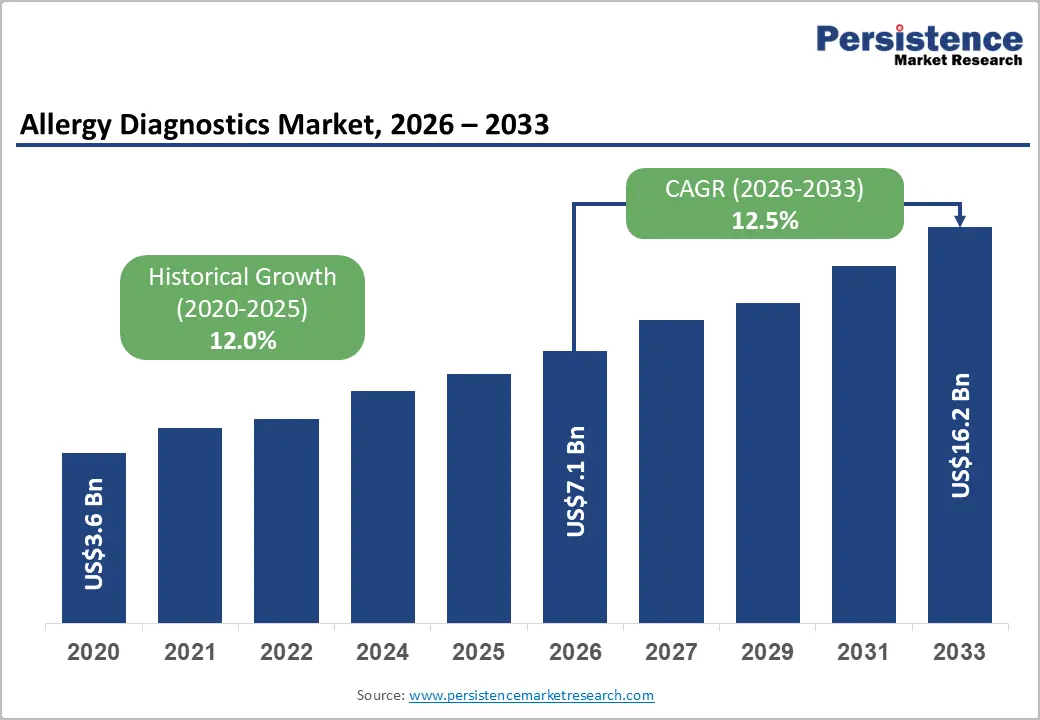
The global allergy diagnostics market size is likely to be valued at US$ 7.1 billion in 2026, and is projected to reach US$16.2 billion by 2033, growing at a CAGR of 12.5 % during the forecast period 2026–2033.
Growth is accelerating as the prevalence of allergic disorders is increasing in parallel with environmental pollution, urban expansion, and lifestyle shifts. Airborne particulates, industrial emissions, and indoor allergens are contributing to the rising incidence of allergic rhinitis, asthma, and food hypersensitivity. The World Health Organization (WHO) reports that respiratory conditions affect hundreds of millions of individuals worldwide, thereby intensifying demand for early and accurate diagnostic solutions.
Healthcare systems in North America and Europe are witnessing substantial clinical burdens associated with chronic allergy management, which is encouraging broader adoption of laboratory-based and rapid testing platforms. As patient awareness improves and referral pathways strengthen, diagnostic volumes continue to rise across hospitals, specialty clinics, and independent laboratories. Providers are expanding the use of in vitro diagnostics (IVD) platforms that enable multiplex allergen testing with improved sensitivity and specificity.
Point-of-care (POC) testing solutions are also gaining traction, particularly in outpatient settings, where rapid result turnaround supports timely therapeutic decisions. Healthcare providers are prioritizing diagnostic tools that reduce misdiagnosis and optimize immunotherapy planning. Investments in automated laboratory analyzers and digital reporting systems are improving operational efficiency and throughput capacity. Emerging economies are improving access to allergy screening services through expanded healthcare infrastructure and the growth of diagnostic networks.
Key Industry Highlights
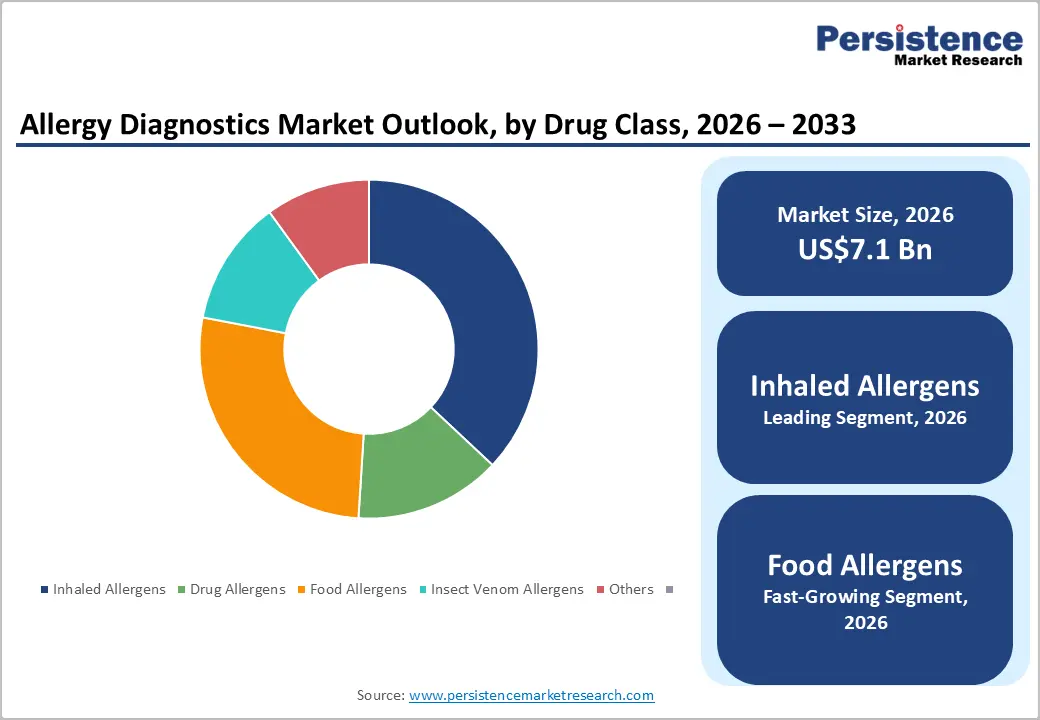
- Dominant Product Types: Inhaled allergens are projected to account for approximately 42% of revenue in 2026, while food allergens are expected to grow the fastest at a 13.5% CAGR through 2033, driven by pediatric allergy prevalence.
- Leading Test Approaches: In-vivo diagnostics are expected to lead with an estimated 48% share in 2026, while in-vitro and rapid point-of-care tests may grow fastest through 2033, supported by automation and multiplex assays.
- Dominant Solutions: Consumables & reagents are expected to dominate, accounting for roughly 50% of revenue in 2026, while instruments & equipment are likely to exhibit the highest 2026-2033 CAGR due to extensive laboratory modernization.
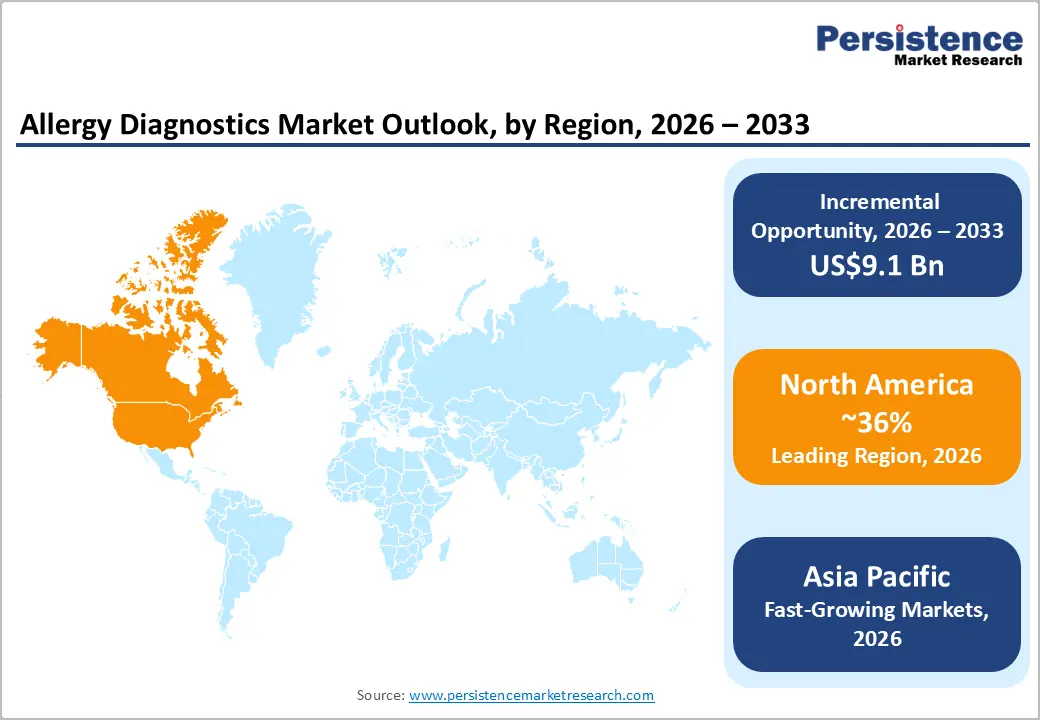
- Regional Leadership: North America is poised to dominate with approximately 36% share in 2026, while the Asia-Pacific market may see the fastest growth at nearly a 15% CAGR through 2033, driven by widespread urbanization and healthcare expansion.
- Competitive Environment: Multiplex panel launches, AI-enabled diagnostics, and expansions into emerging markets, enhancing reach and technological leadership, are characterizing the competitive environment of the market.
| Global Market Attributes | Key Insights |
|---|---|
| Allergy Diagnostics Market Size (2026E) | US$ 7.1 Bn |
| Market Value Forecast (2033F) | US$ 16.2 Bn |
| Projected Growth (CAGR 2026 to 2033) | 12.5% |
| Historical Market Growth (CAGR 2020 to 2025) | 12.0% |
Market Factors – Growth, Barriers, and Opportunity Analysis
Rising Global Allergy Burden and Advanced Diagnostics Adoption
The allergy diagnostics market growth is driven by a significant global increase in allergic diseases, which now affect a large portion of the world’s population. According to the World Allergy Organization (WAO) and World Health Organization (WHO), approximately 400 million people suffer from allergic rhinitis globally, while 300-million individuals live with asthma, a major allergic condition. An estimated 200 million to 250 million people experience food allergies worldwide, and about one-tenth of the global population is affected by drug allergies. These trends indicate that allergic conditions are among the most prevalent chronic illnesses, significantly expanding the need for precise diagnostic solutions. Environmental influences such as urban pollution, longer pollen seasons, and increased indoor allergen exposure further escalate disease incidence and diagnostic demand.
As allergic prevalence rises, demand for accurate, efficient diagnostic tools continues to grow. Advanced technologies including multiplex immunoassays, high-throughput specific IgE tests, and AI-assisted interpretation platforms enable clinicians to identify multiple allergen triggers with greater sensitivity and specificity. Rapid point-of-care tests and home testing kits are expanding access to diagnostics beyond traditional clinical settings, while integration with telehealth platforms supports remote monitoring and longitudinal care. By providing faster turnaround, higher accuracy, and broader accessibility, these innovations are improving clinical decision-making and patient outcomes.
Cost, Regulatory Complexity, and Limited Diagnostic Access
The market faces significant challenges due to high costs and inconsistent reimbursement. Advanced tests such as multiplex assays and component-resolved diagnostics require expensive reagents, instruments, and trained personnel, limiting adoption in smaller clinics and resource-constrained regions. In Germany, 77% of allergology clinics cited cost intensity as a key barrier, and 88.5% indicated that allergological care needs improvement, particularly in test reimbursement.
Regulatory hurdles and limited availability of test substances further delay access to innovative diagnostics. Additionally, insurers often classify advanced tests as investigational, restricting coverage and limiting broader clinical adoption. These financial and regulatory constraints reduce the reach of advanced allergy testing.
Limited access to specialized services and trained professionals further restricts market growth. Many rural and underserved areas lack adequate laboratory infrastructure and certified allergists, forcing reliance on less sensitive testing methods and contributing to under-diagnosis. Variability in test protocols and interpretation guidelines across regions leads to inconsistent results and clinician uncertainty. Without standardized procedures and enhanced training initiatives, confidence in advanced diagnostics remains low. These workforce and quality barriers continue to impede the adoption of modern allergy testing solutions, restricting broader clinical implementation.
Public Health Expansion and Digital Diagnostic Adoption
Government-led healthcare expansion and allergy awareness initiatives are creating tangible opportunities for the allergy diagnostics market. In Asia Pacific, ministries of health in countries such as China and India have expanded non-communicable disease screening programs to include respiratory and allergic conditions, driven by rising asthma and allergic rhinitis prevalence. The WHO has identified allergic diseases as a growing public health burden, encouraging early diagnosis and standardized testing pathways within primary care systems. These policy directions are increasing demand for affordable and scalable allergy diagnostics. Public investment in laboratory infrastructure and school-based screening programs further supports market penetration. Such initiatives directly translate into higher testing volumes and broader patient reach.
Parallel to public health expansion, digital and decentralized diagnostic models are unlocking new growth avenues. Major diagnostics providers have introduced home-based sample collection kits supported by digital reporting platforms, enabling remote allergy assessment and clinician-reviewed results. For example, Quest Diagnostics launched QuestDirect™, a consumer-initiated testing platform that allows patients to order allergy blood tests online, collect samples at partner labs, and access digital results without prior physician visits, as disclosed in company communications.
Similarly, Everlywell has commercialized at-home allergy and food sensitivity testing kits with digital dashboards, supported by CLIA-certified laboratories. These models reduce dependence on specialist-heavy settings and extend allergy diagnostics into outpatient and home environments, supporting broader adoption.
Category-wise Analysis
Allergen Type Insights
Inhaled allergens are estimated to account for around 42% of the allergy diagnostics market revenue share in 2026, based on observed testing volumes and clinical usage patterns. Demand is largely driven by the high burden of respiratory allergies, with routine testing for pollen, dust mites, mold spores, and pet dander across hospitals and outpatient clinics. Standardized skin prick panels and seasonal testing cycles support sustained procedural volumes. Thermo Fisher Scientific announced an expansion of its respiratory allergen testing portfolio, including region-specific pollen panels, indicating continued commercial focus on inhaled allergens. These developments support the segment’s estimated leadership position.
Food allergens are projected to be the fastest-growing allergen segment, expanding at an estimated 2026-2033 CAGR of 13.5%. Rising incidence of food allergies, particularly among children, is increasing diagnostic demand. Broader diagnostic menus covering peanuts, tree nuts, milk, eggs, wheat, and sesame are improving detection accuracy. Eurofins Scientific reported scaling its food allergen testing operations to meet rising clinical and regulatory requirements, signaling increased testing activity. Component-resolved diagnostics are further supporting growth by improving specificity, adding momentum to the accelerated expansion of food allergen testing.
Test Approach Insights
In-vivo diagnostics are slated to maintain a leading position in 2026 and are estimated to capture approximately 48% of the allergy diagnostics market share. This dominance is reflecting their established clinical acceptance and long-standing integration into standard allergy assessment protocols. Skin prick testing is continuing as a primary screening tool because it delivers rapid results at relatively low cost, which supports high patient throughput in hospital and specialist settings. Intradermal and patch testing are remaining important for evaluating drug hypersensitivity and contact dermatitis.
National Health Service England (NHS England) allergy services are sustaining routine use of skin prick testing across secondary care facilities and specialist clinics, reinforcing continued reliance on direct exposure-based diagnostic methods. Physicians are valuing in-vivo approaches for their immediate clinical feedback and straightforward procedural framework. As healthcare providers are prioritizing accessible and cost-effective screening strategies, these diagnostic techniques are preserving a substantial share of total testing volumes.
In-vitro diagnostics (IVD) and rapid POC testing formats are forecasted to advance at the fastest pace at a CAGR of about 14% from 2026 to 2033. Specific immunoglobulin E (IgE) assays, multiplex testing platforms, and automated immunoassay analyzers are enabling comprehensive allergen profiling with minimal patient discomfort. Laboratories are increasingly adopting scalable automation systems to improve efficiency, reduce manual handling, and enhance reproducibility. Rapid decentralized testing solutions are gaining acceptance in outpatient clinics and community healthcare environments where timely decision-making is essential.
Siemens Healthineers has expanded allergy testing capabilities across its automated immunoassay portfolio, reflecting growing demand for high-throughput laboratory solutions. These advancements are supporting a structural shift toward automation, convenience, and improved analytical precision, which will have strengthened the competitive positioning of technology-driven diagnostic providers by 2033.
Solution Insights
Consumables and reagents are estimated to account for nearly 50% of the allergy diagnostics market sales in 2026. Allergen extracts, assay kits, control materials, and antigen cartridges are required for each diagnostic procedure, which is creating consistent repeat purchasing across hospitals and independent laboratories. Testing volumes are remaining elevated due to rising allergy prevalence and expanded screening programs. Limited product shelf life and strict quality standards are reinforcing regular replenishment cycles.
ALK-Abelló has announced expanded production capacity for standardized allergen extracts, signaling sustained demand from clinical providers. Healthcare facilities are maintaining steady procurement patterns to ensure uninterrupted diagnostic operations. This recurring consumption model is providing stable revenue visibility and supporting the segment’s continued leadership within the overall solution landscape.
Instruments and equipment are projected to be the fastest-growing segment, expanding at an approximate CAGR of 13% through the 2026-2033 forecast period. Diagnostic laboratories are investing in automated immunoassay analyzers, multiplex detection systems, and digitally integrated platforms to increase throughput and reduce manual intervention. These technologies are improving workflow efficiency, data traceability, and result standardization. Roche Diagnostics has introduced enhancements to its immunoassay systems to support broader allergy testing menus and higher processing capacity, reflecting modernization trends across clinical settings.
Laboratories are prioritizing capital expenditure that strengthens long-term operational scalability and quality compliance. Continued automation adoption and digital connectivity is reinforcing market growth momentum in the equipment segment as healthcare providers align diagnostic capabilities with expanding patient demand.
Regional Insights
North America Allergy Diagnostics Market Trends
North America is estimated to remain the leading regional market, accounting for approximately 36% of allergy diagnostics market value in 2026, driven by strong clinical adoption and reimbursement support. The United States anchors regional demand through widespread allergy screening across hospital systems, reference laboratories, and specialty clinics. Quest Diagnostics expanded allergy testing integration within Epic’s electronic health record (EHR) ecosystem, enabling standardized ordering and digital reporting across U.S. health systems, reinforcing routine diagnostic utilization.
Canada contributes steadily through provincially funded laboratory networks that support skin and in-vitro testing for respiratory and food allergies. High diagnostic awareness and early-stage testing practices sustain consistent testing volumes across age groups.
Market momentum is reinforced by high disease prevalence, established payer coverage, and broad physician familiarity with allergy diagnostics. In-vitro IgE testing and multiplex panels are increasingly embedded into outpatient workflows, while in vivo testing remains a first-line tool in allergy clinics. Regulatory oversight through the U.S. Food and Drug Administration (FDA) provides structured approval pathways for diagnostic assays and instruments, supporting product availability. Corporate performance disclosures from leading diagnostic providers in 2025 reflect stable growth in clinical testing services, underscoring North America’s continued market leadership and maturity.
Europe Allergy Diagnostics Market Trends
Europe is poised to hold a significant share of the allergy diagnostics market through 2033 and stands as the second-largest regional contributor. Countries such as Germany, the U.K., France, and Spain drive demand through publicly funded healthcare systems that integrate allergy testing into routine clinical pathways. In Germany, Charité – Universitätsmedizin Berlin operates specialized allergy diagnostic units that routinely apply skin prick and specific IgE testing for respiratory and pediatric allergies.
In the U.K., NHS England maintains standardized allergy testing protocols across hospital trusts, supporting consistent diagnostic volumes nationwide. Broad access to reimbursed testing sustains stable utilization across hospital, outpatient, and laboratory care settings.
Regulatory enforcement under the European Union (EU) In Vitro Diagnostic Regulation (IVDR) ensures high clinical and analytical standards, shaping product adoption patterns across member states. Strong adherence to national clinical guidelines sustains demand for both inhalant and food allergen testing. Laboratory services increasingly rely on centralized diagnostic workflows to manage costs while maintaining test quality. Diagnostic manufacturers are emphasizing compliance-driven portfolio optimization rather than rapid product turnover, while investment activity is gaining a strong foothold in the realms of laboratory upgrades and digital connectivity.
Asia Pacific Allergy Diagnostics Market Trends
Asia Pacific is projected to be the fastest-growing regional market for allergy diagnostics, with an estimated CAGR exceeding 15% between 2026 and 2033. China, Japan, India, and selected ASEAN countries are driving expansion through rising healthcare access and increasing allergy prevalence linked to urbanization and environmental exposure. In China, the Peking Union Medical College Hospital reports high outpatient volumes for allergic rhinitis and asthma, supporting sustained demand for inhalant allergen diagnostics.
Japan demonstrates mature adoption of pediatric allergy testing through hospital-based screening programs. These trends reflect growing clinical emphasis on early allergy detection.
India’s expansion is supported by private diagnostic networks such as Apollo Diagnostics, which provide both in vivo and in vitro allergy testing across major metropolitan areas. Regulatory pathways in China and India have become more structured, improving the availability of approved diagnostic assays and instruments. Laboratory modernization and reagent supply expansion support higher testing throughput. Clinician awareness of food and respiratory allergies continues to rise across urban centers. While access disparities persist, large patient volumes sustain strong demand. These factors collectively position Asia Pacific as the fastest-growing regional market.
Competitive Landscape
The global allergy diagnostics market structure is moderately consolidated, with leading players such as Thermo Fisher Scientific, Siemens Healthineers, bioMérieux, and Abbott collectively controlling a significant share of market revenue. These established companies leverage their broad clinical networks, regulatory expertise, and comprehensive diagnostic portfolios, which include in vivo testing systems, in vitro assays, and multiplex panels. Continuous investment in R&D allows them to maintain leadership in automation, digital reporting integration, and advanced immunoassay technologies.
Regional and niche competitors, including Freenome Diagnostics, Omega Diagnostics, and Hycor Biomedical, focus on specialized allergen testing segments, such as food or pediatric diagnostics, and target specific geographic or hospital networks. Barriers such as regulatory approvals, standardization of testing protocols, and the need for trained laboratory personnel limit new entrants. However, increasing digitalization and telehealth integration are enabling smaller companies to participate through point-of-care and home testing platforms. Market consolidation is likely to increase gradually as global leaders expand through acquisitions, partnerships, and technological collaborations, while digital and AI-focused firms continue integrating with established diagnostic workflows.
Key Industry Developments
- In January 2026, GSK entered a definitive agreement to acquire a U.S. biotech for US$ 2.2 billion, gaining access to ozureprubart, a promising anti-IgE therapy in Phase IIb development for food allergies. The drug’s potential for less frequent dosing (once every 12 weeks) provides a strategic advantage over existing therapies. Phase III trials for adult and pediatric populations are planned, supporting GSK’s expansion in respiratory and immunology pipelines.
- In November 2025, UK-based Reacta Healthcare achieved rapid growth with patented oral food challenge tests supplied to over 300 clinical trial sites globally. Its pharmaceutical-grade challenge meals enable standardized, double-blind testing for allergens such as peanut, egg, and milk, with pediatric versions under development.
- In April 2025, Beckman Coulter introduced a BAT using dry reagent technology to enhance safety, efficiency, and reproducibility in allergy research. The test allows food allergy evaluation without exposing patients to allergens, reducing anaphylaxis risk. Supported by a US$ 1 million FARE Innovation Award, the platform integrates with existing flow cytometers and simplifies complex assay procedures.
Companies Covered in Allergy Diagnostics Market
- Thermo Fisher Scientific, Inc.
- Siemens Healthineers AG
- bioMérieux SA
- Danaher Corporation
- R Biopharm AG
- EUROIMMUN Medizinische Labordiagnostika AG
- Omega Diagnostics Group Plc
- AESKU.GROUP GmbH
- Hycor Biomedical LLC
- HOB Biotech Group
- Lincoln Diagnostics, Inc.
- Quest Diagnostics
- Abbott Laboratories
- Roche Diagnostics
Frequently Asked Questions
The global allergy diagnostics market is projected to reach US$ 7.1 billion in 2026.
Rising prevalence of allergic diseases, technological advancements in diagnostic platforms, and increasing patient awareness are driving the market.
The market is poised to witness a CAGR of 12.5% from 2026 to 2033.
Expansion in emerging healthcare markets and integration of digital health and tele-diagnostics represent key opportunities.
Thermo Fisher Scientific, Siemens Healthineers, bioMérieux, and Abbott are among the key players.


