

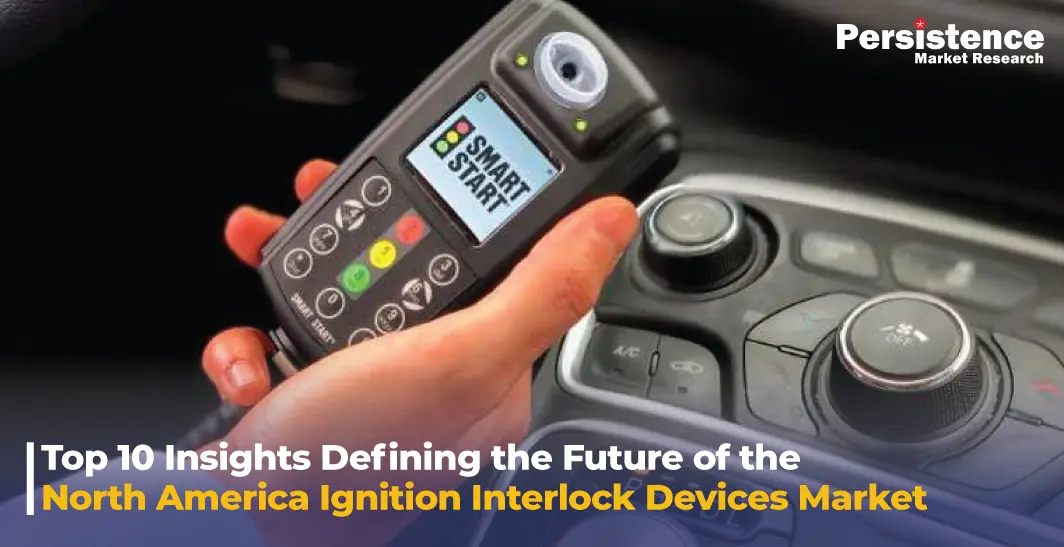
The market for ignition interlock devices in North America is currently driven by the top ten insights listed below.
- Market demand is still anchored by mandatory DUI laws.
The market for ignition interlock devices in North America is still primarily driven by strict state-level DUI laws. Ignition interlock installation is now required in several U.S. states for first-time offenders as well as repeat offenders, greatly increasing the number of eligible users. The market is more dependent on policy consistency and less susceptible to economic downturns as a result of this legal enforcement, which guarantees a consistent demand pipeline.
- Use Preventive Safety Solutions Instead of Punitive Tools
Ignition interlock devices are becoming less of a punitive legal tool and more of a preventive road safety technology. IIDs are being portrayed by legislators, advocacy organizations, and transportation authorities as life-saving measures that reduce repeat offenses and safeguard communities. Public acceptance is increasing as a result of this narrative change, which is also promoting wider usage outside of required use cases.
- Improvements in Technology Are Improving User Experience
Compared to earlier models, modern ignition interlock systems are much more sophisticated, offering faster response times, better accuracy, and reduced false positives. GPS tracking, camera integration, and real-time data reporting are examples of features that have enhanced compliance monitoring while reducing user intrusiveness. Manufacturers are increasing retention rates and differentiating their products due to these advancements.
- Telematics Integration Is Increasing Market Value
In North America, ignition interlock devices are gaining additional value from telematics integration. These days, devices gather and send information about driving behavior, location, and compliance, which is helpful to courts, insurance companies, and monitoring organizations. Instead of being stand-alone hardware devices, IIDs are becoming linked safety platforms due to this data-driven strategy.
- Insurance Collaborations Are Creating New Revenue Streams
Ignition interlock devices are becoming more recognized by insurance companies as risk-reduction strategies. Drivers who use certified IIDs may occasionally be eligible for policy discounts or cheaper premiums. These collaborations are establishing the industry as a component of a larger automotive risk management ecosystem and indirectly generating demand for ignition interlock installations.
- Adoption of Fleet and Commercial Vehicles Is Accelerating
In order to enhance safety records and lower liability, commercial fleets are implementing ignition interlock devices in addition to individual drivers. IIDs are used by municipal fleets, logistics firms, and public transit organizations to guarantee driver accountability and adhere to internal safety regulations. Market income streams are being diversified by this move into fleet applications.
- Business Models Based on Subscriptions Are Reshaping Profitability
Subscription-based arrangements, as opposed to one-time device purchases, are driving the North American market for ignition interlock devices. For providers, recurrent income is generated by maintenance plans, monitoring fees, and monthly service costs. This change reduces upfront expenses for consumers while enhancing financial stability for producers.
- Regulatory Alignment Across Borders Promotes Regional Development
There is increasing uniformity in the implementation of laws against drunk driving throughout North America, despite the fact that laws differ between U.S. states and Canadian provinces. Manufacturers may more effectively grow operations, standardize product offerings, and expand internationally due to this regulatory uniformity. Long-term market expansion is being supported by regional harmonization.
- Public Awareness Initiatives Are Increasing Adoption Rates
The significance of ignition interlock devices is still being emphasized by government-led and nonprofit awareness efforts that highlight the risks associated with drunk driving. Public confidence in IID systems is being strengthened by educational campaigns that emphasize accident avoidance and decreased recidivism. Higher acceptability and compliance are a result of increased awareness.
- Integration of Smart Vehicles Will Shape Future Growth
Ignition interlock devices are anticipated to interface directly with onboard vehicle systems as cars get smarter and more networked. Future solutions could include biometric authentication, AI-powered impairment detection, and smooth integration with infotainment systems. The market for ignition interlocks is now positioned as a long-term part of intelligent transportation systems due to this evolution.
Conclusion
The market for ignition interlock devices in North America is now driven by a wider commitment to road safety, technological innovation, and data-driven accountability rather than just by legal enforcement. Ignition interlock devices are becoming a crucial component of contemporary transportation safety tactics due to developments in telematics, rising insurance and fleet uptake, and expanding public acceptance. The market is expected to grow steadily and significantly throughout North America as laws tighten and cars become more interconnected.


