

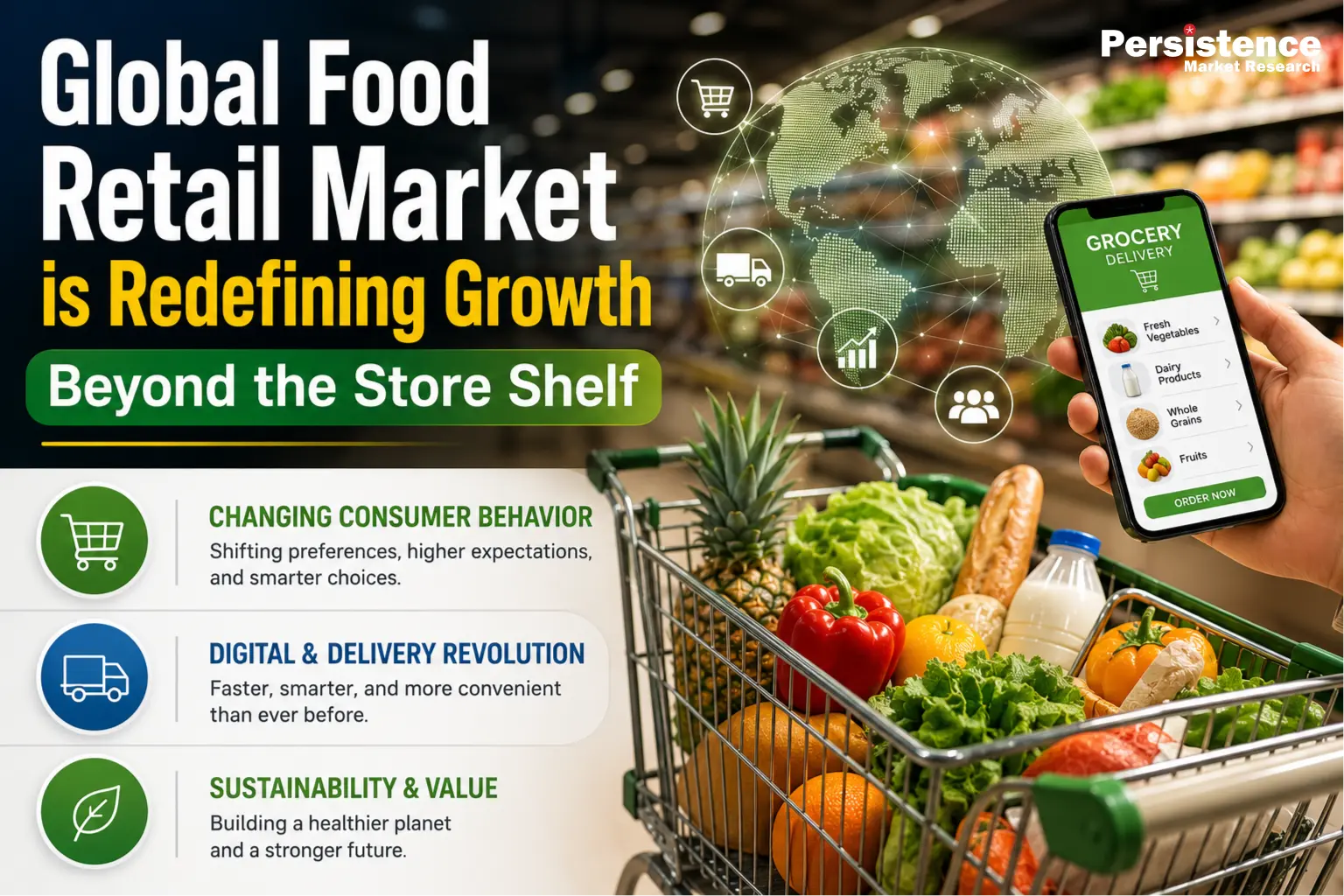
According to Persistence Market Research, the global food retail market size was estimated at US$6,306.1 billion in 2025 and is projected to reach US$9,419.6 billion by 2032. This growth is being fueled not only by rising consumer demand but also by retailers investing heavily in digital platforms, supply chain modernization, and personalized shopping experiences. The market is no longer being influenced solely by what consumers buy, but by how they choose to buy it.
Three Consumer Shifts That Explain the Market Better Than Any CAGR
- The Value Shift: Inflation Has Created a Private-Label Opportunity
Food inflation has forced shoppers to compare prices more carefully than ever before. Instead of simply reducing overall grocery spending, many consumers are making smarter choices in product categories. For example, a shopper who previously purchased a premium branded yogurt may now choose a retailer-owned alternative that offers similar quality at a lower price.
This behavior, often referred to as "trading within categories," has become increasingly common as households try to manage rising living costs without significantly changing their eating habits. Retailers are hence improving margins while shoppers still feel they are saving money. This is one of the few strategies that benefits both sides of the checkout counter.
- The Time Shift: Cooking Competes with Convenience
Consumers are not necessarily cooking less because they dislike preparing meals. They are cooking less because time has become one of their most limited resources. Long working hours, hybrid work schedules, daily commuting, and small households have reduced the time people can dedicate to meal preparation. Hence, several shoppers are looking for food options that minimize preparation without compromising on freshness or nutrition.
This shift is driving demand for prepared meals, salad kits, pre-cut vegetables, marinated meats, frozen meal solutions, and bakery-to-go products. These offerings can reduce meal preparation time by 20 to 40 minutes, making them attractive for working professionals, students, and families with busy schedules. These categories generate frequent repeat purchases and higher basket values than many center-store products.
- The Speed Shift: Delivery Has Become a Competitive Differentiator
Online grocery is no longer just an e-commerce channel, but it has evolved into a logistics-supported business where speed, inventory accuracy, and fulfilment efficiency determine customer satisfaction. Consumers increasingly expect groceries to arrive in a few hours, or even minutes, making fast and reliable delivery a key differentiator for retailers.
To meet these expectations, retailers are investing in micro-fulfilment centres, automated warehouses, AI-powered inventory management systems, and route optimization technologies. These investments help retailers identify product availability in real time, reduce picking errors, and shorten delivery windows while lowering operating costs. Many supermarket chains are also partnering with quick-commerce platforms to expand their reach without building entirely new delivery networks. Instacart, for example, expanded AI-assisted shopping features in 2025 to improve product recommendations and simplify online grocery purchases.
What Consumers Expect from Food Retailers Today?
|
Consumer Expectation |
What It Means for Retailers |
|
Keep prices predictable |
Deliver better value |
|
Make healthy choices that are easy to find |
Build trust |
|
Deliver faster than one can drive to the store |
Compete on convenience |
|
Recommend products that fit one’s habits |
Use personalization effectively |
Fresh Food is Emerging as a Powerful Loyalty Driver
Fresh food is difficult to standardize across retailers. Consumers who consistently trust a retailer's produce, bakery, or deli offerings are less likely to switch stores, making these categories key drivers of repeat visits and long-term loyalty. Unlike packaged goods, the quality and freshness of perishable products influence the in-store shopping experience, giving retailers a unique opportunity to differentiate themselves.
That is why chains such as Whole Foods Market, Marks & Spencer, and regional grocery leaders continue investing heavily in fresh and ready-to-eat assortments even while expanding online operations. As competition intensifies across digital and physical channels, maintaining a superior fresh food portfolio is becoming a strategic advantage for building customer retention and increasing basket sizes.
Food Label Regulations Matter More Than Ever
Food labels have become a retail issue, and not just a manufacturing issue. The U.S. Food and Drug Administration (FDA) requires clear disclosure of calories, added sugars, and serving sizes. As shoppers read labels more carefully, retailers are giving more visibility to products with simpler ingredient lists, lower sugar content, and stronger nutritional positioning.
Retailers are further expanding their private-label portfolios with clean-label and health-focused products to keep up with evolving consumer expectations and regulatory standards. Surging transparency is no longer viewed as a compliance requirement alone. But, it has become an important factor influencing consumer trust and purchase decisions.
Sustainability is Becoming a Business Imperative
Food waste is no longer a CSR slide, it is a margin issue. According to the United Nations Environment Program (UNEP), the world generated about 1.05 billion tons of food waste in 2022. Retailers are responding with dynamic pricing, better demand forecasting, and partnerships that redirect unsold food instead of discarding it.
Several retailers are also investing in AI-supported inventory management systems to better predict demand, reduce spoilage, and improve operational efficiency. Beyond lowering costs, these initiatives strengthen brand reputation among environmentally conscious consumers who often consider sustainability when choosing where to shop.
The Future of the Food Retail Market
The next phase of the food retail market will not be won by the retailer with the largest number of stores. It will be won by those retailers that can combine affordable pricing, trusted fresh food, personalized recommendations, and fast delivery into a single experience. Consumers are not choosing between online and offline anymore. They are choosing whichever option solves dinner fastest.
Retailers that successfully integrate digital innovation with operational efficiency and customer-centric strategies will likely be better positioned to capture long-term market share. As consumer expectations continue to evolve, adaptability and convenience are anticipated to remain the defining factors augmenting the future of the global food retail market.


