

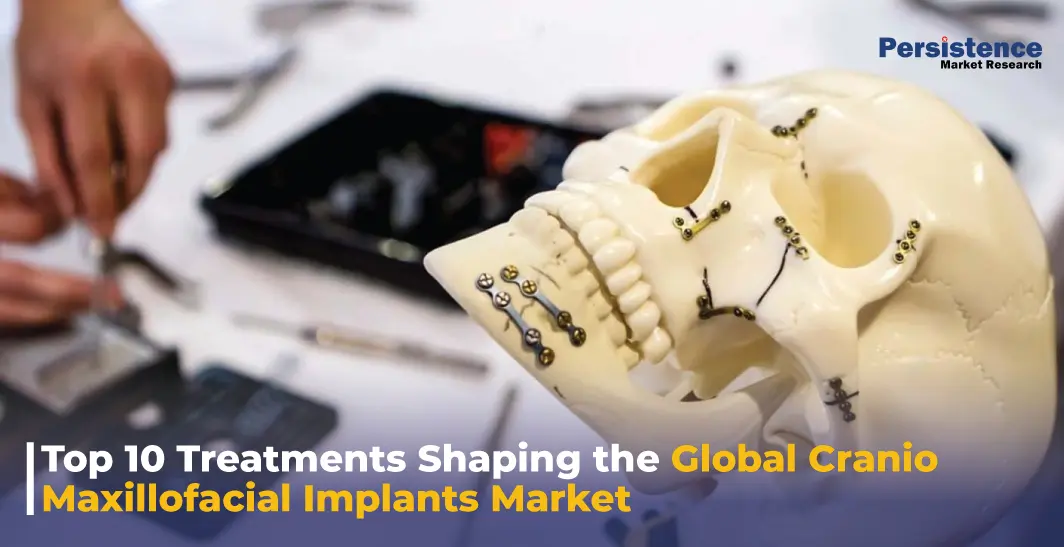
1. Facial Fracture Fixation
Facial fractures, including those of the mandible, zygomatic complex, and midface, are stabilized using rigid fixation implants such as plates and screws. These devices maintain proper alignment of bone fragments, support natural occlusion, and prevent post-traumatic deformities. In addition to restoring structural integrity, these implants help preserve nerve pathways and soft tissue positioning, which is essential for both functional and cosmetic recovery.
2. Mandibular Reconstruction
Mandibular reconstruction addresses defects caused by trauma, infection, or tumor resection. Implants and bridging devices restore continuity of the mandible, enabling proper articulation and masticatory function. The reconstruction process also considers soft tissue support and facial contour, ensuring that functional and aesthetic aspects are balanced. Custom-fitted implants often improve surgical precision and integration with remaining bone structures.
3. Orbital Floor and Midface Repair
Defects in the orbital floor or midface region can compromise vision, facial symmetry, and ocular function. Implants such as titanium meshes, porous polyethylene, or patient-specific constructs are used to reconstruct these areas, providing mechanical support to the orbit and adjacent structures. These implants maintain ocular positioning, reduce enophthalmos, and facilitate restoration of mid-facial contours.
4. Cranial Vault Reconstruction
Skull defects resulting from trauma, decompressive craniectomy, or tumor removal are managed with cranial implants designed to restore protective cranial integrity. These implants not only provide structural support but also recreate natural cranial contours. Materials such as rigid titanium or polymer composites offer biocompatibility and durability, while patient-specific 3D-printed implants enhance anatomical accuracy in complex reconstructions.
5. Orthognathic (Jaw) Surgery
Orthognathic surgery involves repositioning the maxilla or mandible to correct malocclusion, skeletal asymmetry, or functional impairments. Plates, screws, and fixation devices stabilize the bones post-repositioning, ensuring proper alignment and healing. This type of surgery integrates CMF implants to achieve both functional occlusion and facial balance, improving mastication, speech, and overall facial aesthetics.
6. Dural and Neuro Reconstruction
Cranial surgery often requires repair of the dura mater and reconstruction of the underlying neuroanatomy. Specialized implants provide mechanical support, prevent cerebrospinal fluid leakage, and protect neural tissue. These implants are critical in trauma, tumor resection, or congenital defect cases where precise reconstruction is essential to prevent neurological complications.
7. Bone Grafting and Augmentation
CMF implants serve as scaffolds for bone grafts in areas of osseous deficiency. These implants support bone regeneration, ensure proper integration, and maintain facial structure during healing. The combination of graft material and implant scaffolding allows complex reconstructions in trauma, tumor, or congenital defect cases, creating a foundation for additional surgical interventions when necessary.
8. Temporomandibular Joint (TMJ) Replacement
TMJ dysfunction or degenerative disease may require implantable prosthetic joints to restore mandibular articulation. TMJ implants replicate natural joint mechanics, reducing pain, improving mastication, and maintaining mandibular alignment. These implants are engineered to withstand load-bearing forces while ensuring smooth joint movement and durability.
9. Tumor Resection Reconstruction
Post-oncologic resections frequently leave significant craniofacial defects. CMF implants restore facial contours, provide soft tissue support, and maintain structural integrity. Patient-specific implants allow precise restoration of skeletal frameworks, facilitating both functional rehabilitation and aesthetic reconstruction, which is particularly important in visible facial regions.
10. Cosmetic and Aesthetic Enhancements
Beyond reconstructive needs, CMF implants are used for elective facial enhancements such as chin, cheek, or jaw augmentation. These implants provide controlled contour modification and symmetry improvement while maintaining structural stability. They are particularly valuable in cases where soft tissue support and skeletal alignment are required to achieve desired aesthetic outcomes.
Conclusion
Cranio-maxillofacial implants are integral to modern reconstructive and restorative surgery, supporting a diverse range of treatments from trauma management and oncologic reconstruction to orthognathic correction and aesthetic enhancement. Their design and material composition allow precise anatomical restoration, structural stability, and improved functional outcomes. The continued development of patient-specific implants, advanced biomaterials, and surgical planning technologies has expanded the clinical applications of CMF implants, allowing surgeons to achieve higher precision and more predictable results. As these innovations continue, the cranio-maxillofacial implants field will advance further, offering increasingly sophisticated solutions for complex craniofacial challenges while enhancing both functional and cosmetic outcomes for patients.


