




- Processed Food
- Stir-in Sauces Market
Stir-in Sauces Market Size, Share, and Growth Forecast 2026 - 2033
Stir-in Sauces Market by Sauces Type (Sun Dried Light, Sun Dried Tomato, Sweet Pepper, Bacon & Tomato, Garlic & Tomato, Others), by Sales Channel (Hypermarkets/Supermarkets, Speciality Stores, Convenience Stores, Online Retail), by Regional Analysis, 2026-2033

Stir-in Sauces Market and Trends Analysis
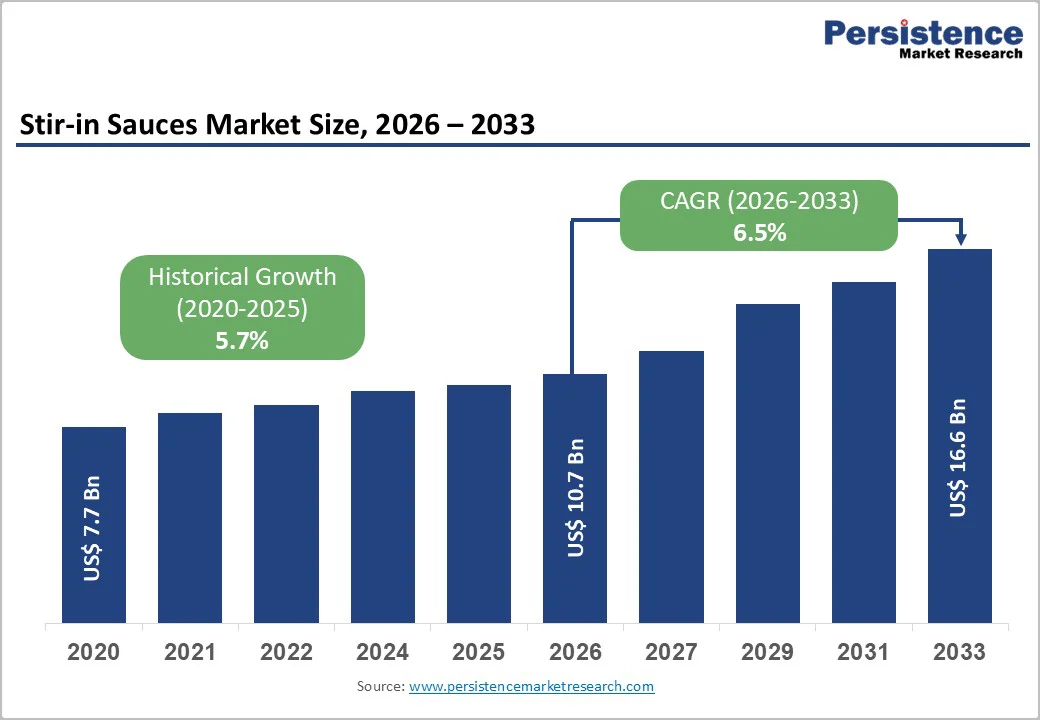
The global stir-in sauces market size is expected to be valued at US$ 10.7 billion in 2026 and projected to reach US$ 16.6 billion by 2033, growing at a CAGR of 6.5% between 2026 and 2033.
Growth is anchored in rising demand for convenience-led home-cooking solutions, with sauces, dressings, and condiments already exceeding US$165 billion globally and continuing to expand as consumers seek easy flavor upgrades. The stir-in format aligns with this trend, allowing quick preparation of pasta, rice, and skillet meals while supporting experimentation with global cuisines, which trade sources identify as a major driver of the broader cooking sauces category. Digital grocery and online retail further accelerate adoption by offering wide assortments and recipe inspiration, enabling niche stir-in products to reach consumers that traditional shelf placement might miss.
Key Industry Highlights
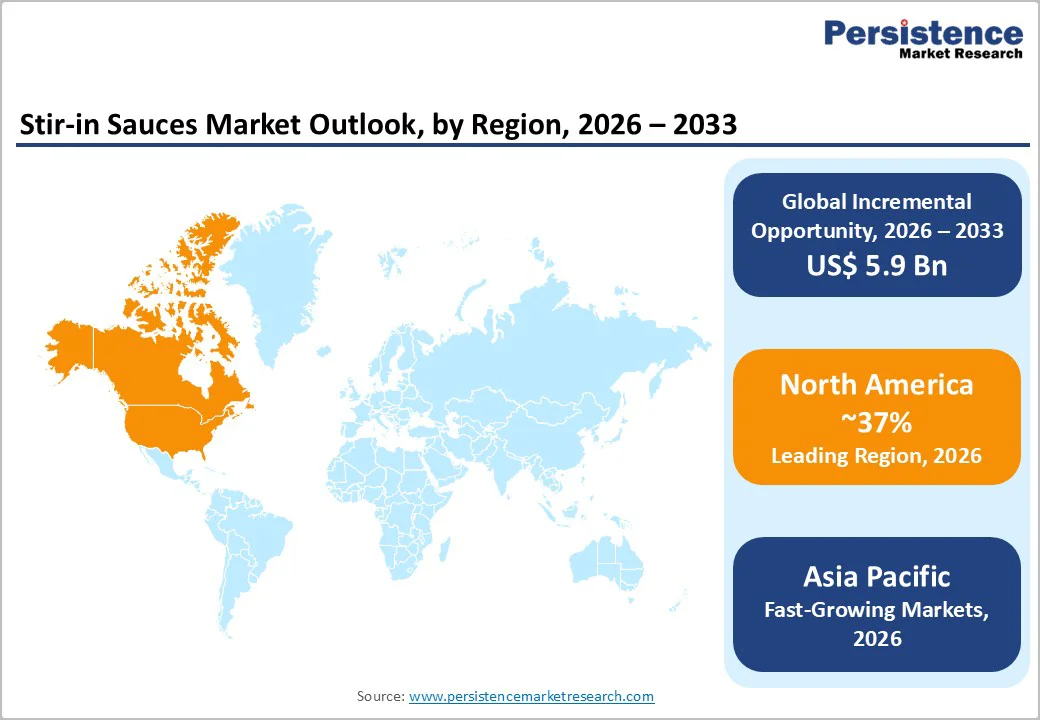
- Leading Region: North America leads the global stir-in sauces market, supported by high consumer demand for convenient, ready-to-use culinary solutions, strong retail and specialty store networks, and widespread adoption of diverse international flavors and meal kits.
- Fastest Growing Region: Asia Pacific is the fastest-growing region for stir-in sauces, driven by rising disposable incomes, rapid urbanization, expanding middle-class populations, and growing interest in both local and Western culinary styles in countries such as China, India, Japan, and Southeast Asia.
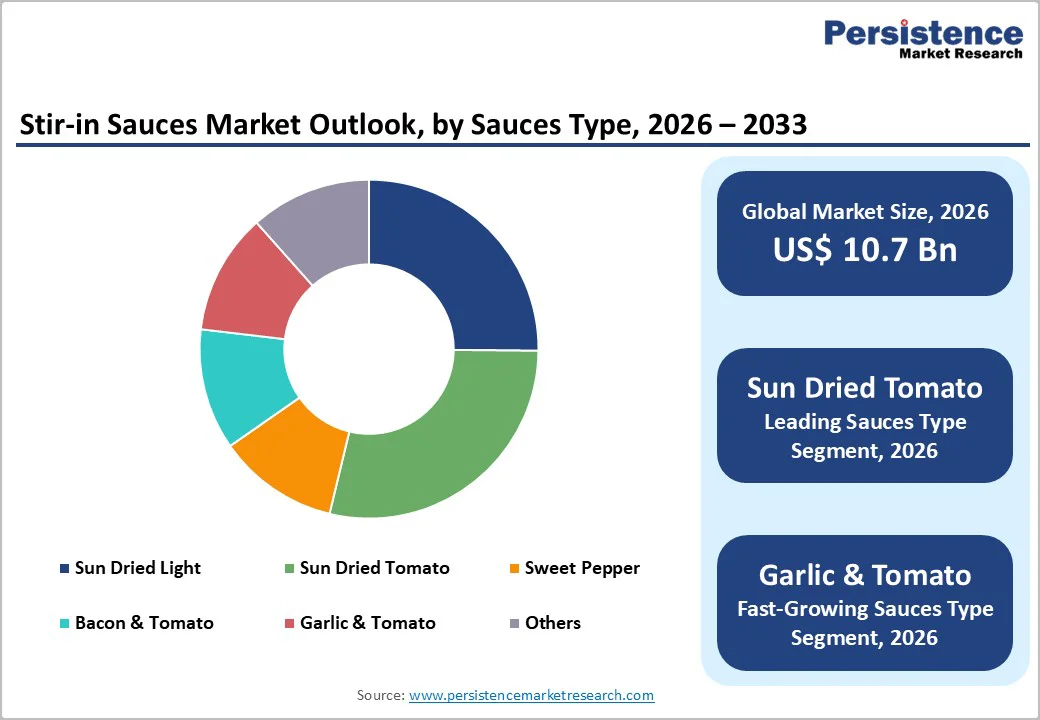
- Dominant Segment: Sun-dried tomato remains the dominant segment due to its widespread use in pasta, Italian-style dishes, and consumer familiarity, making it a staple in both home and foodservice kitchens.
- Fastest Growing Segment: Garlic & Tomato exhibits the highest growth, driven by rising demand for bold, savory flavors, health-conscious formulations, and versatile sauces suitable for multiple cuisines.
| Global Market Attributes | Key Insights |
|---|---|
| Stir-in Sauces Market Size (2026E) | US$ 10.7 Bn |
| Market Value Forecast (2033F) | US$ 16.6 Bn |
| Projected Growth (CAGR 2026 to 2033) | 6.5% |
| Historical Market Growth (CAGR 2020 to 2024) | 5.7% |
Market Dynamics
Driver – Convenience cooking and home-meal occasions
The main growth engine for stir-in sauces is the global shift toward convenient, time-saving meal solutions that still offer freshness and customization. Surveys of cooking behavior show more people preparing meals at home but seeking shortcuts such as ready-to-use sauces, bases, and meal starters that reduce preparation time without compromising flavor. Stir-in sauces, whether used with pasta, grains, or vegetables, fit this need by allowing consumers to control portions, add fresh ingredients, and quickly achieve restaurant-like dishes. The broader sauces, dressings, and condiments category benefits from rising demand for diverse flavors and at-home experimentation, trends that spill over directly into the stir-in segment and support recurring purchases through retail and online grocery.
Rising interest in global and premium flavors
Consumers increasingly explore world cuisines, seeking bold, authentic flavors such as Mediterranean sun-dried tomato, Asian-style sweet pepper, and smoky bacon-and-tomato profiles. Industry analyses highlight that sauces inspired by international dishes are driving incremental growth as shoppers move beyond basic tomato or cheese sauces toward more specialized stir-in variants. Manufacturers respond with premium formulations featuring high tomato content, extra-virgin olive oil, roasted vegetables, and a clean-label positioning, supporting higher price points. As pasta and rice dishes remain staples in foodservice and at home, globally inspired stir-in sauces become key flavor carriers, reinforcing category growth and enabling cross-promotions with pasta, noodles, and ready-meal kits.
Restraints – Health concerns over salt, sugar, and fat
A major restraint is growing consumer and regulatory scrutiny around the levels of sodium, added sugars, and saturated fats in processed sauces. Public-health campaigns and voluntary reformulation programs in markets such as the U.S. and U.K. encourage reductions in salt and sugar, pushing brands to redesign recipes or risk losing health-conscious consumers. Some shoppers turn toward homemade sauces or minimally processed alternatives, limiting growth for high-additive stir-in products that fail to meet evolving nutritional expectations.
Intense competition and private-label pressure
Stir-in sauces compete on a crowded shelf with pasta sauces, cooking sauces, and broader condiments, leading to intense price competition and frequent promotions. Supermarket private labels have expanded aggressively in this space, often matching branded flavors at lower price points and winning significant share in mature markets. As retailers allocate finite shelf space, smaller or niche brands can struggle to maintain visibility, and promotional intensity can erode margins even as volumes grow.
Opportunity – Clean-label, plant-based, and functional stir-in sauces
There is a substantial opportunity for brands to develop clean-label stir-in sauces with recognizable ingredients, reduced sodium, and no artificial additives, aligning with broader health and wellness trends. Demand is rising for products that highlight vegetables, whole ingredients, and plant-based proteins, as well as functional claims such as high fiber or inclusion of superfoods like roasted peppers or sun-dried tomatoes rich in antioxidants. Manufacturers that reformulate classics like Sun Dried Tomato or Garlic & Tomato with organic ingredients, cold-pressed oils, and sustainable packaging can command premium price points and appeal to environmentally and health-conscious consumers.
E-commerce, D2C, and meal-kit integration
Online grocery, direct-to-consumer (D2C) channels, and meal-kit services are reshaping how consumers discover and purchase sauces. Reports indicate that online segments in sauces and condiments are growing fastest, as digital platforms allow shoppers to access niche, regional, and premium brands alongside mainstream offerings. Stir-in sauces are particularly suitable for bundling within meal kits and subscription services, where they simplify cooking while delivering variety. Brands that invest in strong digital content, recipe videos, and influencer partnerships can boost trial. At the same time, data from e-commerce platforms enables fine-tuned innovation, such as limited editions targeting specific cuisines or dietary preferences.
Category-wise Analysis
Sauces Type Analysis
Within Sauces Type, Sun Dried Tomato holds the leading position, accounting for around 25% of the stir-in sauces market in 2025. This dominance stems from its versatility across pasta, grain bowls, and sandwich spreads, and from consumer associations with Mediterranean cuisine, which has been widely promoted for its health benefits. Sun-dried tomato sauces deliver intense umami and concentrated tomato flavor while pairing well with herbs, olives, and cheeses, making them a staple in both retail jars and chilled fresh formats. Premium brands emphasize high percentages of Italian or Mediterranean tomatoes and olive oil, reinforcing quality cues and justifying higher price points.
Sales Channel Analysis
In Sales Channel, Hypermarkets/Supermarkets can be identified as the leading segment, estimated to capture roughly 48% market share in 2025 for stir-in sauces. Large-format grocery retailers remain the primary destination for weekly food shopping in North America and Europe, with expansive shelf space allocated to pasta sauces, cooking sauces, and meal starters, including stir-in lines from global brands and private labels. These outlets offer strong in-store promotions, cross-merchandising with pasta and meal kits, and new product displays that drive trial. Nevertheless, Online Retail is registering the fastest growth in distribution, benefiting from convenience, home delivery, and the ability to stock long-tail specialty flavors and international brands unavailable in local stores.
Region-wise Insights
North America Stir-in Sauces Market Trends
North America represents one of the most important regional markets for stir-in sauces, accounting for an estimated 37% share of global sales in 2025. Consumers in the U.S. and Canada exhibit high purchase rates for sauces, dressings, and condiments, driven by busy lifestyles and a strong preference for convenient home-cooking shortcuts. The region has seen robust growth in pasta and skillet meal kits, with brands such as Prego and other leading sauce labels offering stir-in variants that promise “one-pan” or “15-minute” meals, aligning with cooking-convenience trends highlighted by business associations.
Regulatory frameworks enforced by agencies such as the U.S. Food and Drug Administration (FDA) shape labelling for allergens, sodium content, and added sugars, prompting reformulation toward cleaner labels and health-oriented positioning. Innovation remains intense, with large multinationals and emerging challenger brands developing premium, organic, and plant-based stir-in sauces, often featuring globally inspired flavors. E-commerce and click-and-collect models, widely adopted by major grocers, further enhance accessibility and encourage trial of niche stir-in lines.
Europe Stir-in Sauces Market Trends
Europe is a mature yet dynamic market for stir-in sauces, supported by strong pasta consumption, rich culinary traditions, and a well-established private-label landscape. In the U.K., analyses of cooking and pasta sauces highlight the importance of stir-in products as quick solutions for busy households, especially in ambient and chilled convenience aisles. Countries such as Italy, Germany, France, and Spain show sustained demand for tomato-based sauces. At the same time, Northern European consumers increasingly experiment with Mediterranean and global flavors, including sun-dried tomato and sweet pepper combinations.
The European Union (EU)’s food labelling and additive regulations encourage transparency in ingredients, nutrition, and allergens, which has prompted brands to clean up their recipes and emphasize naturalness. Retailers across Europe have also expanded their store-brand stir-in ranges, often focusing on organic or reduced-salt options to align with public health goals. Growth opportunities arise from premiumization, such as chilled, small-batch sauces and products co-branded with chefs or restaurants and from the spread of online grocery platforms in markets like the U.K. and France, where home-delivery adoption is high.
Asia and Pacific Stir-in Sauces Market Trends
Asia Pacific is projected to be the fastest-growing regional market for stir-in sauces between 2025 and 2032, underpinned by urbanization, rising disposable incomes, and evolving eating habits. Regional consumers increasingly adopt Western-style pasta and fusion dishes, while also using stir-in sauces to simplify traditional recipes that previously required lengthy preparation. Countries such as China, Japan, and India are central to this expansion: China leads growth in sauces, dressings, and condiments, benefiting from modern retail networks and strong demand for convenient, ready-to-cook meal components.
Local and international manufacturers are tailoring flavor portfolios for regional palates, including spicy variants, soy-based blends, and tomato sauces infused with indigenous spices. Government support for food processing, investments in cold chain and modern grocery formats, and rapid growth of e-commerce platforms such as major online marketplaces all contribute to market penetration. Meal-delivery and instant-meal ecosystems in large cities further increased awareness of stir-in sauces as components of quick, flavorful meals, reinforcing the Asia Pacific’s high growth trajectory.
Market Competitive Landscape
The stir-in sauces market is moderately fragmented, combining global food giants with strong brand portfolios and a long tail of regional and private-label players. Multinationals such as Unilever PLC and brand owners like Prego leverage extensive R&D, large-scale manufacturing, and multi-channel distribution to maintain shelf presence in both mature and emerging markets. Regional specialists include Dolmio, Veeba, Wingreens Farms, Dr. Oetker Funfoods, Weikfield, Sainsbury’s, Sacla, House of Tsang, Rao’s Homemade, and others, which differentiate through cuisine authenticity, premium ingredients, or localized flavors. Emerging business models include D2C sauce brands, co-branding with restaurant chains, and collaborations with meal-kit providers. At the same time, innovation focuses on clean labels, plant-based formulations, and convenient packaging such as pouches and single-serve cups.
Key Industry Developments:
- In September 2023, Heinz launched a limited-edition Heinz Tomato Ketchup Pasta Sauce, blending ketchup flavor with sun-ripened Italian tomatoes to tap social-media interest in unconventional pasta sauces and expand stir-in use occasions.
Companies Covered in Stir-in Sauces Market
- Cabot Creamery
- Tillamook County Creamery Association
- Yancey's Fancy
- Murray's Cheese
- Bel Group
- Eden Valley Swiss Cheese
- Nantucket Cheese
- Kraft Heinz Company
- H Dairy
- Dairy Farmers of America
- Tillamook Cheese
- Sargento Foods
- Others
Frequently Asked Questions
The global market is projected to be valued at US$ 10.7 Bn in 2026.
Rising preference for convenient home cooking, interest in global and premium flavors, and growth in sauces, dressings, and condiments overall are key drivers boosting stir-in sauces usage in pasta, skillet, and rice dishes.
The global market is poised to witness a CAGR of 6.5 between 2026 and 2033.
A major opportunity lies in developing clean-label, plant-based, and functional stir-in sauces and scaling them through e-commerce, D2C, and meal-kit partnerships to capture health-conscious and adventurous home cooks worldwide.
Key companies include Unilever PLC, Dolmio, Veeba, Wingreens Farms, Dr. Oetker Funfoods, Weikfield, Sainsbury’s, Sacla, House of Tsang.


