




- Processed Food
- Sprouted Flourless Flax Tortillas Market
Sprouted Flourless Flax Tortillas Market Size, Share, Growth, and Regional Forecast, 2026 to 2033
Sprouted Flourless Flax Tortillas Market by Product Type (Plain, Flavored, Herb Infused), by Ingredient Source (Organic, Conventional), by Distribution Channel (Supermarket, Health Food Store, Online Retailers, Convenience Store), by Regional Analysis, 2026-2033

Sprouted Flourless Flax Tortillas Market Market Overview 2026 to 2033
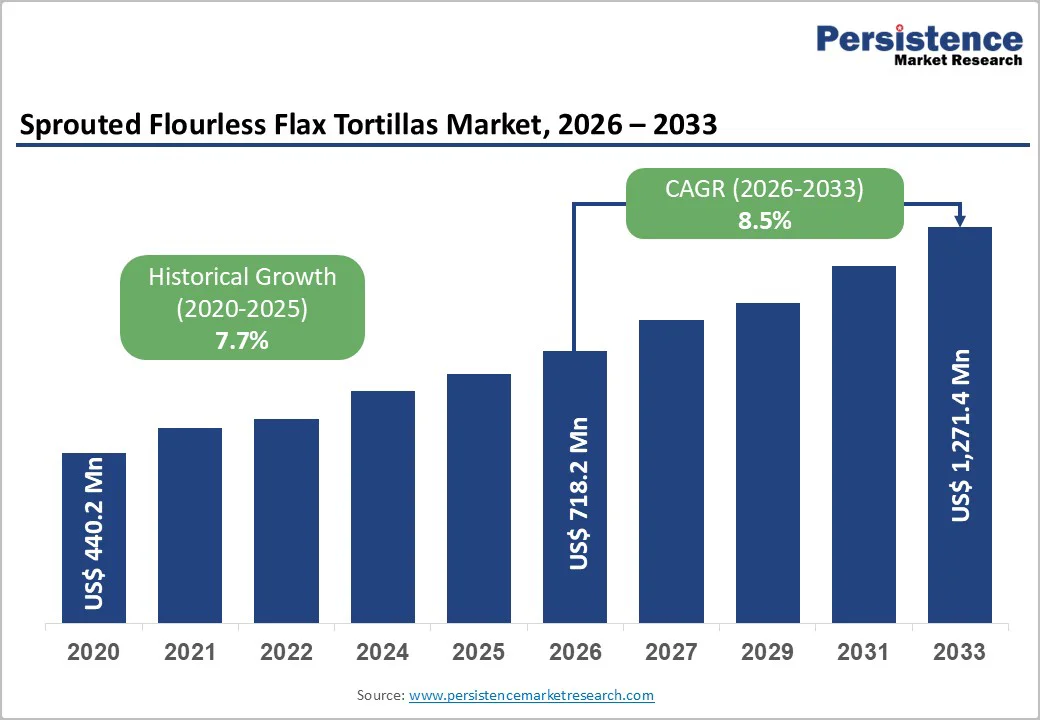
The global sprouted flourless flax tortillas market is estimated to grow from US$ 718.2 Mn in 2026 to US$ 1,271.4 Mn by 2033. The market is projected to record a CAGR of 8.5% from 2026 to 2033.
The sprouted flourless flax tortillas industry is growing steadily, driven by health-conscious consumers and demand for nutrient-rich, functional foods. North America leads with strong clinical research, advanced healthcare infrastructure, and high adoption of healthy diets. The Asia-Pacific region is rapidly expanding due to an aging population, improved healthcare access, and rising awareness of preventive nutrition and wellness trends.
Key Highlights Summary
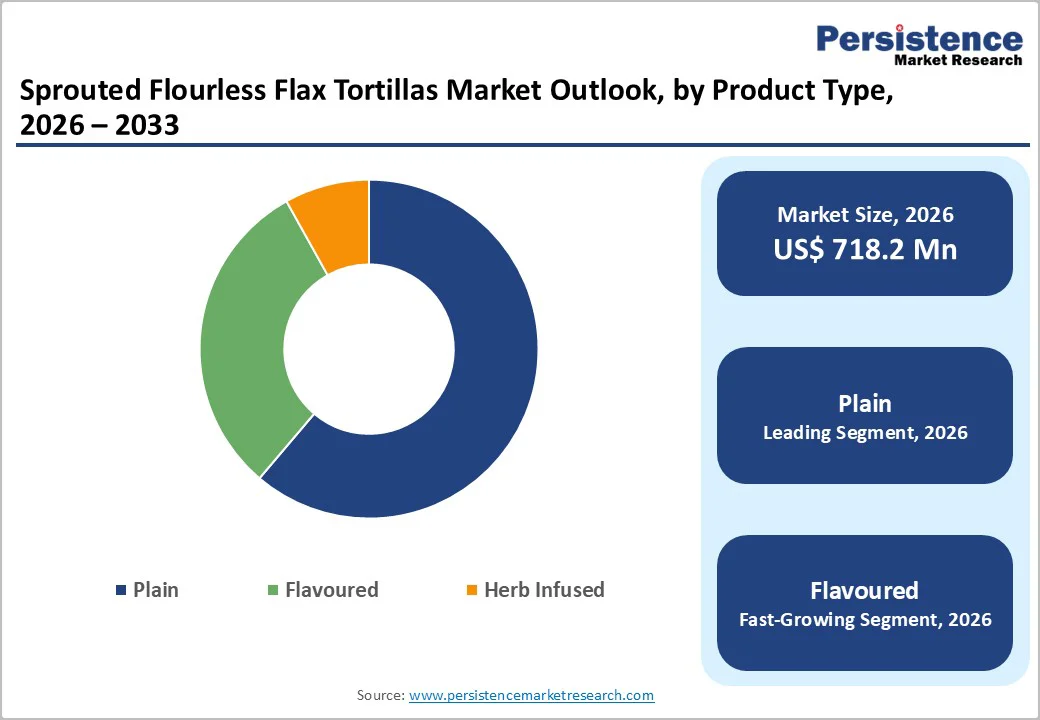
- Dominant Segment: Plain sprouted flax tortillas dominate the market in 2025, with a 61.2% share, driven by their high fiber content, keto- and gluten-free positioning, and widespread consumer preference for clean-label, health-focused snacks. Flavored and herb-infused variants are growing steadily, appealing to taste-conscious consumers.
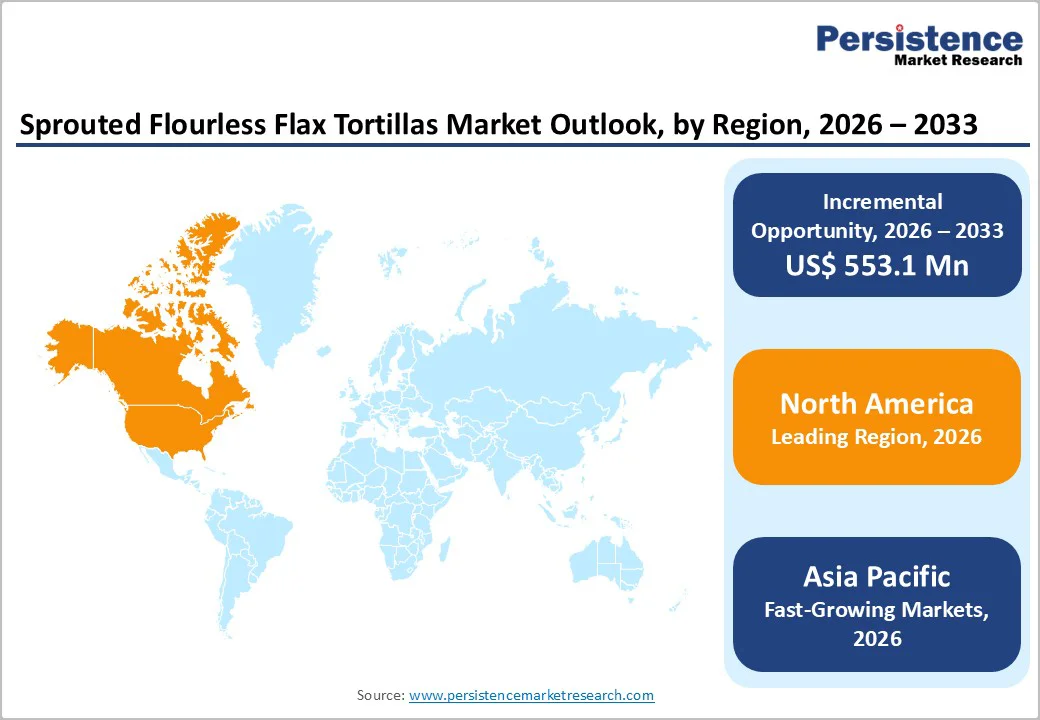
- Dominant Region: North America leads the market in 2025 with 40.5% share, supported by strong demand for functional and plant-based foods, established distribution networks, and high consumer health awareness. Asia-Pacific is the fastest-growing region due to rising adoption of Western-style diets, increasing awareness of low-carb foods, and expanding retail availability.
- Market Drivers: Growth is fueled by rising demand for gluten-free, keto-friendly, and high-fiber products, growing health consciousness, the preference for plant-based diets, and innovation in clean-label and fortified tortillas.
- Market Opportunity: Key opportunities include developing fortified and flavored variants, expanding into e-commerce and direct-to-consumer channels, integrating with meal kits and functional diets, growing in emerging markets with rising disposable incomes, and promoting tortillas as convenient, healthy alternatives to traditional breads.
| Key Insights | Details |
|---|---|
|
Sprouted Flourless Flax Tortillas Market Size (2026E) |
US$ 718.2 Mn |
|
Market Value Forecast (2033F) |
US$ 1,271.4 Mn |
|
Projected Growth (CAGR 2026 to 2033) |
8.5% |
|
Historical Market Growth (CAGR 2020 to 2025) |
7.7% |
Market Dynamics
Driver – Rising Demand for Gluten-Free and Grain-Free Products
Consumers increasingly avoid gluten due to rising diagnoses of celiac disease and gluten sensitivity, with the reporting over 1 in 100people worldwide affected. Sprouted flourless flax tortillas offer a clean-label alternative, rich in omega-3s from flax and easier-to-digest sprouted seeds, aligning with the gluten-free foods market surge. FDA data show gluten-free product sales climbing steadily, driven by demand for label transparency. This shift positively impacts the market as manufacturers innovate with flax-based recipes, capturing health-focused millennials and Gen Z who prioritize gut health, evidenced by Nielsen scans showing double-digit growth in grain-free bakery items.
Driver - Surge in Plant-Based and Keto Diet Adoption
The global shift toward plant-based diets, driven by environmental concerns and wellness trends, is boosting demand for flax tortillas. FAO statistics indicate plant-based food consumption rose 25% in developed markets from 2020 to 2024. Keto diets emphasize low-carb, high-fat foods, where flax's high fiber and healthy fats shine, with Google Trends data spiking searches for "flaxseed keto recipes" by 40% yearly. Clinical trials in Nutrition Journal validate flax's role in weight management, encouraging brands to expand portfolios and fuel sustained market expansion.
Restraints – High Production Costs and Supply Chain Volatility
Sprouting processes require precise humidity and temperature controls, increasing costs by 20-30% compared to conventional tortillas, per USDA agricultural reports. Flaxseed supply fluctuates due to climate impacts, with 2023 droughts in key regions like Canada reducing yields by 15%, as noted by Statistics Canada. These factors squeeze margins, deter small producers, limit affordability, and negatively affect broader market penetration despite demand.
Restraints – Limited Consumer Awareness in Emerging Markets
Many consumers in developing regions remain unaware of the benefits of sprouted flourless, with WHO nutrition surveys showing only 30% familiarity with superfoods like flax in Asia. Cultural preferences for wheat-based staples hinder adoption, slowing education efforts and stalling growth as marketing budgets strain against entrenched habits.
Opportunity – Expansion into Flavoured and Herb-Infused Variants
The fastest-growing flavoured segment presents opportunities as taste innovation meets health demands. Mintel reports 45% of consumers seek flavored functional foods, with herb-infused options like cilantro-lime gaining traction for their antioxidant boosts. Companies can leverage this by partnering with spice suppliers, targeting the $10 billion global functional snack market. Recent FDA approvals for natural flavor enhancers support scalability, promising revenue growth through premium pricing and e-commerce bundling.
Opportunity – Leveraging Organic Ingredient Sourcing for Premium Positioning
Organic segments offer high potential amid rising clean-label preferences, with EU Organic Regulation data showing 12% annual growth in certified products. Fastest-growing organic demand aligns with sustainability policies like the U.S. Farm Bill, enabling premium pricing. Firms investing in traceable supply chains from Canada’s flax belts can capture eco-conscious buyers, supported by Non-GMO Project certifications boosting trust and sales by 25%, per industry journals.
Category-wise Analysis
Product Type Analysis
Plain variants lead with 61% market share in 2025, favored for their versatility in everyday meals such as wraps and tacos. USDA nutritional data highlights plain flax tortillas' superior fiber content (10g per serving), appealing to purists seeking minimal ingredients amid clean-label trends. Consumer surveys from Statista confirm 70% prefer unflavored bases for customization, solidifying plain's dominance through broad applicability in keto recipes and allergen-free diets.
Ingredient Source Analysis
Organic leads with 55% market share in 2025, driven by health premiums and pesticide avoidance. IFOAM statistics reveal organic food sales up 15% yearly, with flax's soil-regenerative properties enhancing appeal. Certifications like USDA Organic assure purity, justifying higher prices, as 68% of consumers pay more for organics per Pew Research, cementing its lead via trust and alignment with sustainability.
Distribution Channel Analysis
Supermarkets dominate with 45% market share in 2025, offering wide accessibility and impulse buys. Nielsen retail data shows supermarkets accounting for 60% of healthy bakery sales, bolstered by end-cap displays and loyalty programs. Major chains like Whole Foods prioritize sprouted products, driving volume through convenience and trust in established retail environments.
Regional Insights
North America Sprouted Flourless Flax Tortillas Market Trends
North America commands a 41% global share in 2025, led by the U.S., where FDA gluten-free labeling fuels innovation. The region's mature wellness ecosystem sees brands like Siete Family Foods launch flax variants, with Kraft Heinz reporting 20% growth in grain-free sales. Regulatory frameworks like FSMA ensure safety, spur R&D in sprouted tech at universities like Cornell, and position the market for sustained dominance.
Europe Sprouted Flourless Flax Tortillas Market Trends
Europe thrives on regulatory harmonization via EFSA standards, with Germany and the U.K. leading adoption. Eurostat data shows 18% rise in gluten-free consumption, driven by NHS endorsements for digestive health. France and Spain emphasize Mediterranean diets that incorporate flax, with EU Green Deal policies boosting organic sourcing and fostering steady growth through cross-border trade.
Asia-Pacific Sprouted Flourless Flax Tortillas Market Trends
Asia Pacific is the fastest-growing region, driven by China and India’s urbanization. APAC health ministry reports indicate a 30% surge in low-carb diets, with Japan’s functional food boom per MHLW adding momentum. ASEAN manufacturing hubs offer cost advantages, while India’s FSSAI approves sprouted imports, enabling scalable production to meet rising middle-class demand.
Market Competitive Landscape
The market remains fragmented, with top players holding 35% share amid numerous niche entrants. Leaders like Toufayan Bakeries pursue expansion via retail partnerships and R&D in sprouted fermentation for better texture. Key differentiators include organic certifications and flavor innovation, while emerging models emphasize D2C e-commerce and subscription boxes, fostering agility in this dynamic space.
Key Industry Developments:
- In March 2025, Siete Family Foods has expanded distribution of its products to Walmart stores nationwide, but there is no specific information in the search results about a new product launch for herb-infused sprouted flax tortillas.
- In July 2024, Food for Life introduced organic plain variants with enhanced omega-3 fortification, certified by USDA, targeting keto consumers.
Companies Covered in Sprouted Flourless Flax Tortillas Market
- Toufayan Bakeries
- Jovial Foods
- Nurture Nature
- Siete Family Foods
- Health Warrior
- Ezekiel (Food For Life)
- Mannaya
- Baked on a Dream
- La Tortilla Factory
- Maria and Ricardo’s
- Mission Foods
- Food for Life
- Amy’s Kitchen
- Others
Frequently Asked Questions
The global sprouted flourless flax tortillas market is projected to be valued at US$ 718.2 Mn in 2026.
Aging population, rising chronic diseases, sedentary lifestyles, awareness, technological advances, protein supplements, exercise programs, healthcare access.
The global sprouted flourless flax tortillas market is poised to witness a CAGR of 8.5% between 2026 and 2033.
Expanding elderly population, innovative therapies, nutraceuticals, personalized treatments, fitness programs, emerging markets, partnerships, digital health solutions.
Toufayan Bakeries, Jovial Foods, Nurture Nature, Siete Family Foods, Health Warrior, Ezekiel (Food For Life).


