




- Processed Food
- Shrimp Market
Shrimp Market Size, Share, Growth, and Regional Forecast, 2026 - 2033
Shrimp Market by Variety (White Shrimp, Black Shrimp, Red Shrimp, Others), by Source (Aquaculture, Wild-caught), by Distribution Channel (B2B, B2C), and Regional Analysis from 2026 - 2033

Shrimp Market Share and Trends Analysis
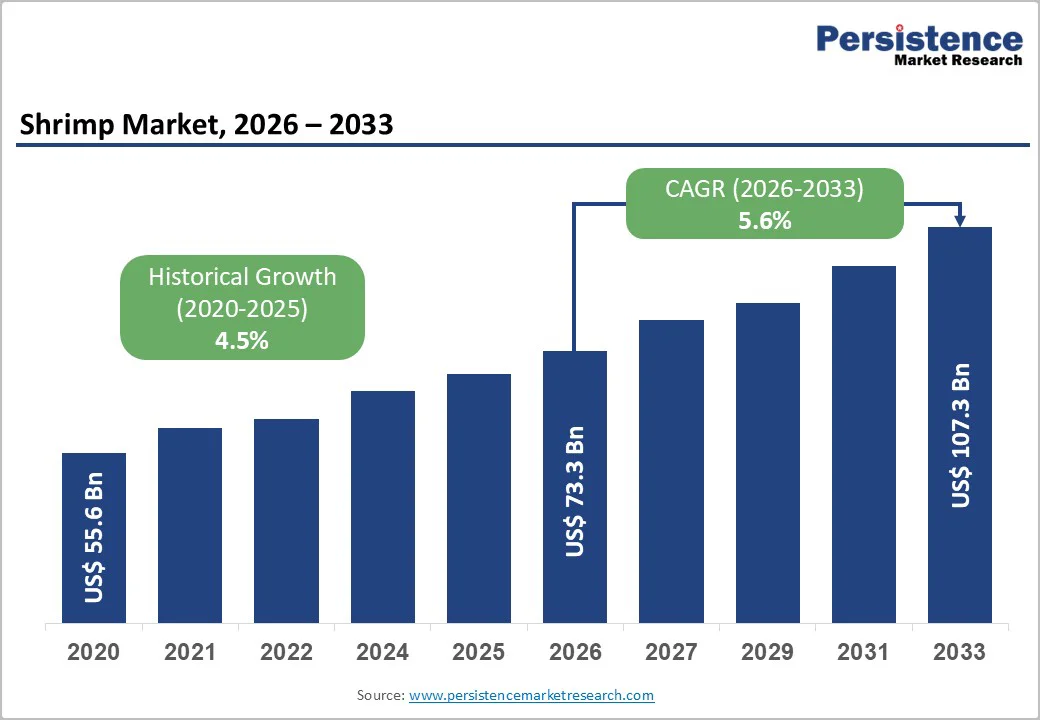
The global shrimp market size is estimated to grow from US$ 73.3 billion in 2026 to US$ 107.3 billion by 2033 growing at a CAGR of 5.6% during the forecast period from 2026 to 2033. The shrimp industry is entering a decisive growth phase, shaped by booming foodservice demand, rapid aquaculture modernization, and tightening regulatory expectations. Producers, retailers, and exporters are repositioning aggressively as technology, sustainability, and menu innovation shift the competitive balance.
Key Industry Highlights:
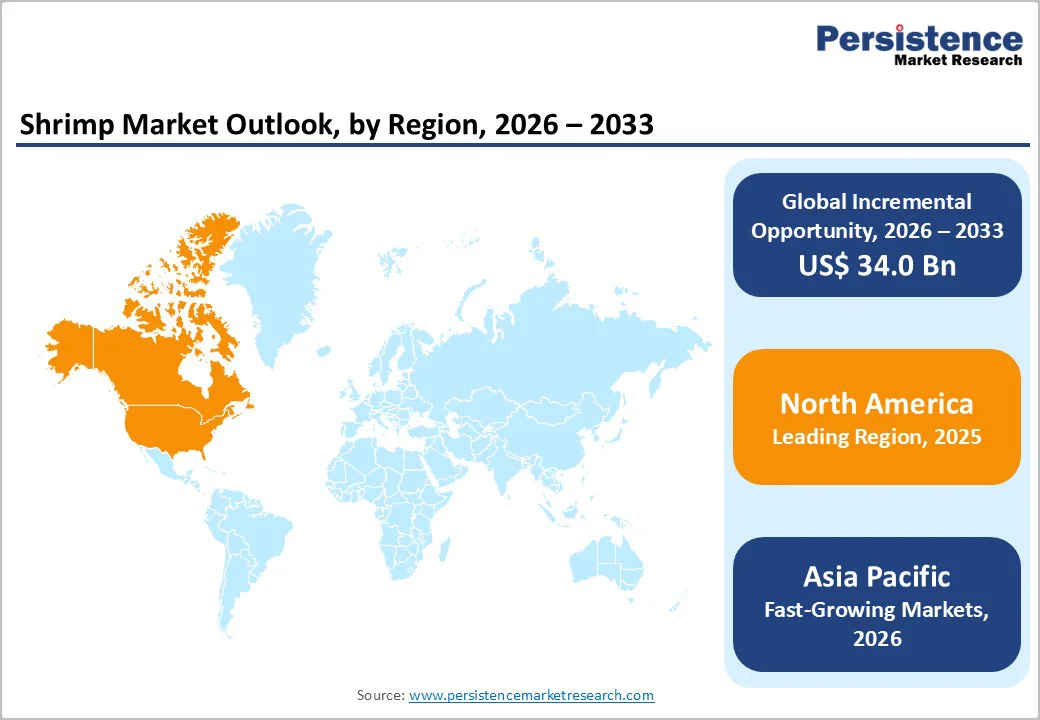
- Leading Region: North America holds a commanding position, driven by strong U.S. and Canadian shrimp consumption, rapid menu integration across HoReCa and QSR chains, and rising import inflows supported by robust retail and cold-chain expansion.
- Fastest-Growing Region: Asia Pacific is advancing at the fastest pace, supported by expanding aquaculture clusters in India, China, and Vietnam, rising export competitiveness, and accelerated adoption of value-added shrimp formats across regional markets.
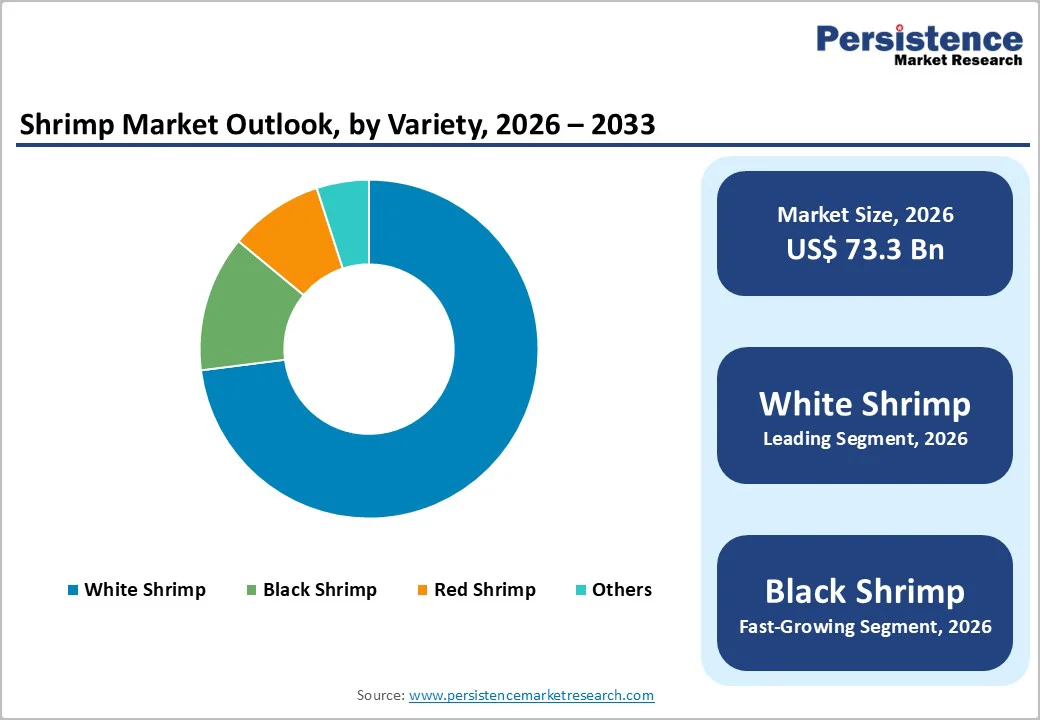
- Dominant Variety Segment: White shrimp leads the global market with approx. 73% share, supported by fast growth rates, predictable yields, and its suitability for high-volume aquaculture and large-scale food processing.
- Fastest-Growing Source Segment: Aquaculture shrimp is projected to grow at a CAGR of 6.9% during the forecast period as producers scale intensive farming systems, deploy better broodstock, and strengthen traceability to meet global buyer requirements.
- Growth Indicators: Growing incorporation of shrimp dishes across HoReCa and QSR menus boosts demand, with operators favoring shrimp’s versatility, quick cooking performance, and alignment with premium, globally inspired menu trends.
- Opportunities: Adoption of automated farming and AI-driven aquaculture enables higher survival rates, lower disease risk, real-time monitoring, and improved margins, making technology integration a key growth lever for producers and startups.
- Key Developments: In November 2025, Midland Co. rolled out its shrimp products across all Fareway Meat Markets and expanded its network of independent land-based shrimp farms across Iowa and the Midwest; In May 2025, Thai Union secured a USD 150 million Blue Loan from the Asian Development Bank to advance environmentally responsible and climate-aligned shrimp production
| Key Insights | Details |
|---|---|
|
Global Shrimp Market Size (2026E) |
US$ 73.3 Bn |
|
Market Value Forecast (2033F) |
US$ 107.3 Bn |
|
Projected Growth (CAGR 2026 to 2033) |
5.6% |
|
Historical Market Growth (CAGR 2020 to 2025) |
4.5% |
Market Dynamics
Driver - Growing incorporation of shrimp dishes across HoReCa and QSR menus
A noticeable shift is unfolding across global dining culture as shrimp gains stronger visibility on HoReCa and QSR menus. Restaurants are leaning into shrimp’s versatility, using it in bowls, tacos, biryanis, noodles, and globally inspired comfort foods that match evolving consumer preferences. Chefs value its quick cook times and ability to take on bold flavors, making it a dependable ingredient for high-turnover kitchens. As diners gravitate toward seafood for its perceived lightness and premium appeal, shrimp becomes a natural fit for menus aiming to balance indulgence and health cues.
Fast-food chains and casual dining brands are reinforcing this momentum by launching shrimp-based limited-time offers and regional specials. QSR operators appreciate shrimp’s consistent portioning, scalable supply, and strong consumer acceptance. With rising demand for protein-rich, convenient meals, chains are upgrading procurement networks and integrating responsibly sourced shrimp to meet quality expectations. This sustained menu penetration across global foodservice channels is accelerating shrimp consumption and strengthening its position as a mainstream choice.
Restraints - Stringent import regulations, antibiotic checks, and certification requirements
A tightening regulatory climate is reshaping the global shrimp trade, placing heavy pressure on exporters to meet rigorous import rules, antibiotic screening protocols, and traceability demands. Major markets are raising inspection frequencies and enforcing stricter residue limits, making compliance a costly and complex task for producers. Shipments flagged for non-compliance face delays, rejections, or destruction, creating added financial risks and disrupting supply stability. These hurdles force processors to upgrade testing labs, strengthen documentation, and maintain greater control over farming practices.
Certification requirements add another layer of responsibility as buyers increasingly expect proof of responsible farming, disease management, and transparent sourcing. Smaller farms struggle with the high cost of audits and continuous monitoring. As regulatory scrutiny intensifies across major importing regions, exporters must invest in stronger biosecurity, better feed management, and digital traceability systems to safeguard market access.
Opportunity - Adoption of automated farming and AI-driven aquaculture
A new wave of intelligent aquaculture is opening powerful opportunities for shrimp producers ready to modernize. Automated feeding systems, real-time water quality sensors, and AI-driven biomass prediction tools are helping farms cut mortality, stabilize yields, and improve consistency. These technologies reduce dependence on manual labor while enabling precise control over dissolved oxygen, ammonia levels, and plankton balance. Established players are integrating these systems across large pond clusters to boost productivity and minimize disease outbreaks, positioning technology as a core differentiator in global supply networks.
Startups see a clear entry point through software platforms, machine-vision shrimp counters, and predictive health analytics. Their solutions attract small and mid-scale farms seeking affordable efficiency upgrades. As producers pursue climate-smart operations and traceability expectations rise, AI-enabled aquaculture becomes a strategic pathway for growth, higher margins, and stronger market credibility.
Category-wise Analysis
By Variety, white shrimp dominates the global Shrimp market
White shrimp holds approx. 73% market share as of 2025, and this dominance reflects how decisively the industry has aligned around a species known for fast growth, high survival rates, and strong adaptability to intensive aquaculture. Producers favor white shrimp for predictable yields, efficient feed conversion, and broad consumer acceptance across retail, HoReCa, and export channels. Its mild flavor and consistent texture make it a universal fit for breaded products, grilled formats, and value-added convenience foods, giving processors a reliable foundation for large-scale production.
Black shrimp, red shrimp, and pink shrimp continue to serve niche culinary and regional preferences, though their volumes remain smaller due to specific habitat needs and limited farming scalability. These varieties maintain relevance in premium seafood dishes and selective export markets, offering diversity but lacking the production efficiency that keeps white shrimp firmly at the center of global supply chains.
By Source, aquaculture shrimp is expected to show promising growth during the forecast period
Aquaculture shrimp are projected to grow at a CAGR of 6.9% during the forecast period, driven by the industry’s push toward controlled, predictable, and high-yield production systems. Producers are investing in intensive and super-intensive farming, supported by biosecurity protocols and recirculating aquaculture systems that tighten survival rates and improve volume consistency. As wild shrimp resources face tightening quotas and fluctuating catch levels, buyers increasingly rely on farmed output for stable procurement across retail, foodservice, and processing.
The segment’s expansion is supported by hatchery innovations, genetic improvements, disease-resistant broodstock, and feed formulations that reduce environmental pressure while enhancing growth cycles. Rising demand for traceable and sustainably managed seafood is steering importers and major brands toward aquaculture-verified supply chains, positioning farmed shrimp as the most scalable source in the global market.
Region-wise Insights
North America Shrimp Market Trends
North America holds approximately 33% share in the global shrimp market, reflecting strong consumer demand across both the U.S. and Canada for fresh, frozen, and value-added shrimp products. According to NOAA, shrimp imports to the U.S. were up 18 percent year over year in the first half of 2025, with 413,718 metric tons (MT) of foreign shrimp entering the nation’s borders. This increase underscores the region’s reliance on both domestic aquaculture and international suppliers to meet growing retail and foodservice demand.
In the U.S., restaurants and QSR chains are integrating shrimp into seasonal menus and fusion cuisines, while cold-chain and ready-to-cook options gain traction among consumers seeking convenience. Canada is witnessing rising adoption of sustainably sourced shrimp, with processors emphasizing traceability and eco-friendly packaging to attract environmentally conscious buyers.
Asia Pacific Shrimp Market Trends
Asia Pacific shrimp market is expected to grow at a CAGR of 7.3%, driven by expanding aquaculture capacity, rising export competitiveness, and rapid adoption of premium value-added shrimp products across major economies. China is strengthening its position through indoor farming systems and disease-resistant broodstock programs, while India continues to scale intensive farming clusters. As per The Monterey Bay Aquarium Seafood Watch, India is the world’s third-largest producer of whiteleg shrimp (Litopenaeus vannamei), yielding close to 1 million metric tons each year, reinforcing its importance in regional and global trade.
Japan is embracing higher-end, traceable shrimp varieties for retail and foodservice, favouring antibiotic-controlled and sashimi-grade imports. Vietnam is accelerating export momentum through processing upgrades and sustainability certifications. As per the Vietnam Association of Seafood Exporters and Producers, in the first eight months of 2025, Vietnam’s shrimp exports reached 269,000 tons, up 1% year-on-year, with an estimated export value of USD 2.85 billion, highlighting strong recovery in key markets.
Competitive Landscape
The global shrimp market reflects a moderately consolidated nature at the top while remaining broadly competitive due to the surge of regional producers and tech-driven startups. Leading companies are strengthening their edge through advanced processing technologies, high-capacity aquaculture farms, and export-focused supply chains built around traceability and quality control. Startups are pushing automation, sensor-based pond management, and AI-driven yield forecasting to reduce disease risks and stabilize output. Online retail platforms are expanding direct-to-consumer distribution, amplifying demand for clean-label frozen and ready-to-cook shrimp. Governments in Asia and Latin America are supporting producers through targeted subsidies for hatcheries and farming infrastructure, while the food processing industry is investing in value-added shrimp products to meet shifting global consumption patterns.
Key Developments:
- In November 2025, Midland Co. announced the rollout of its shrimp products across all Fareway Meat Markets and select Fareway grocery stores. The company also expanded its network of independent land-based shrimp farms across Iowa and the broader Midwest, strengthening its regional production footprint.
- In May 2025, Thai Union secured a USD 150 million Blue Loan from the Asian Development Bank (ADB), marking a first for Thailand’s seafood sector. The financing strengthens the company’s push toward sustainable shrimp production and improved environmental stewardship.
- In February 2025, JALA, in collaboration with Konservasi Indonesia, introduced Asia’s first Climate Smart Shrimp Farming initiative. The program blends shrimp cultivation with mangrove restoration to boost farm productivity while strengthening climate resilience.
Companies Covered in Shrimp Market
- Thai Union Group PCL.
- Charoen Pokphand Foods PCL
- Apex Frozen Foods Ltd.
- Mowi ASA
- Gulf Shrimp Company
- Mazzetta Company LLC
- Seaprimexco
- Pacific Seafood
- Midland Co.
- Omarsa
- Seajoy Group
- Others
Frequently Asked Questions
The global shrimp market is projected to be valued at US$ 73.3 Bn in 2026.
Growing incorporation of shrimp dishes across HoReCa and QSR menus is driving the global Shrimp market.
The global shrimp market is poised to witness a CAGR of 5.6% between 2026 and 2033.
Adoption of automated farming and AI-driven aquaculture creating a strong growth opportunity for industry players.
Major players in the global Shrimp market include Thai Union Group PC., Charoen Pokphand Foods PCL, Apex Frozen Foods Ltd., Mowi ASA, Gulf Shrimp Company, Mazzetta Company LLC, and others.


