




- Food Ingredients & Additives
- Sequestrants Market
Sequestrants Market Size, Share, and Growth Forecast, 2026 - 2033
Sequestrants Market by Product Type (Natural Sequestrants, Synthetic Sequestrants), Form Type (Dry, Liquid), End-user (Food & Beverage, Pharmaceuticals, Cosmetics & Personal Care, Others), and Regional Analysis for 2026 - 2033

Sequestrants Market Size and Trends Analysis
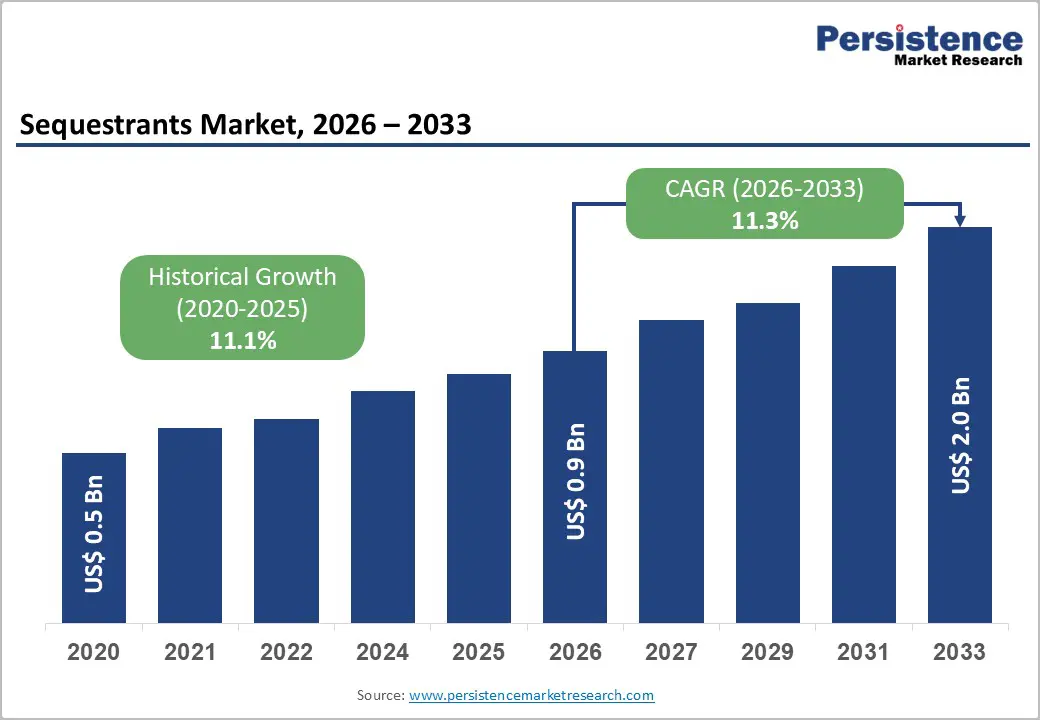
The global sequestrants market size is likely to be valued at US$0.9 billion in 2026 and is expected to reach US$2.0 billion by 2033, growing at a CAGR of 11.3% during the forecast period from 2026 to 2033, driven by the rising use of sequestrants in food and beverage processing, where they play a critical role in preventing metal-catalyzed oxidation, maintaining color and texture, and extending product shelf life amid growing consumption of processed and convenience foods worldwide.
Growing adoption in water treatment applications is driving market expansion, as industries and municipalities increasingly seek effective solutions for metal ion management, scale control, and compliance with stricter environmental and wastewater discharge regulations. The pharmaceutical and cosmetics industries are supporting demand by utilizing sequestrants to enhance formulation stability, improve product performance, and ensure product safety.
Key Industry Highlights:
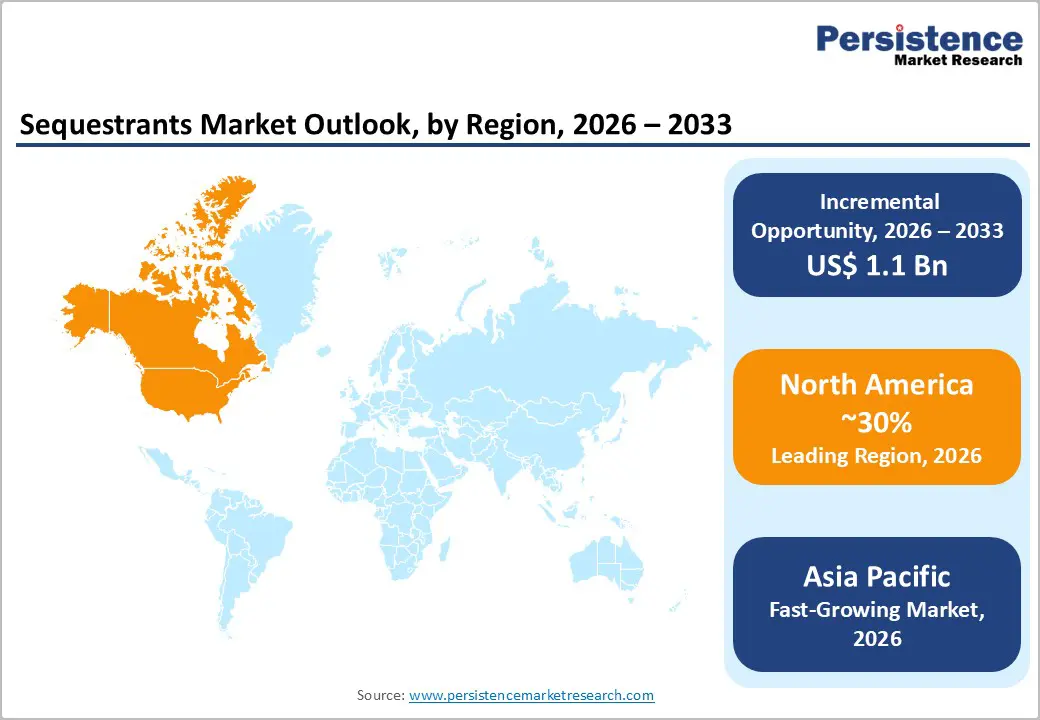
- Leading Region: North America is anticipated to be the leading region, accounting for a market share of 30% in 2026, driven by demand from food, pharmaceuticals, water treatment, and sustainable sequestrant adoption.
- Fastest-growing Region: Asia Pacific is likely to be the fastest-growing region in the sequestrants in 2026, driven by expanding food and beverage production, growing pharmaceutical and personal care sectors, and favorable manufacturing conditions in China, India, and ASEAN markets.
- Leading Product Type: Synthetic sequestrants are projected to represent the leading product type in 2026, accounting for 60% of the revenue share, driven by widespread industrial use, cost-effectiveness, and established applications in food, pharmaceuticals, and water treatment.
- Leading Form Type: Dry forms are projected to represent the leading product type in 2026, accounting for 65% of the revenue share, driven by ease of storage, handling, and widespread use in food, detergent, and industrial applications.
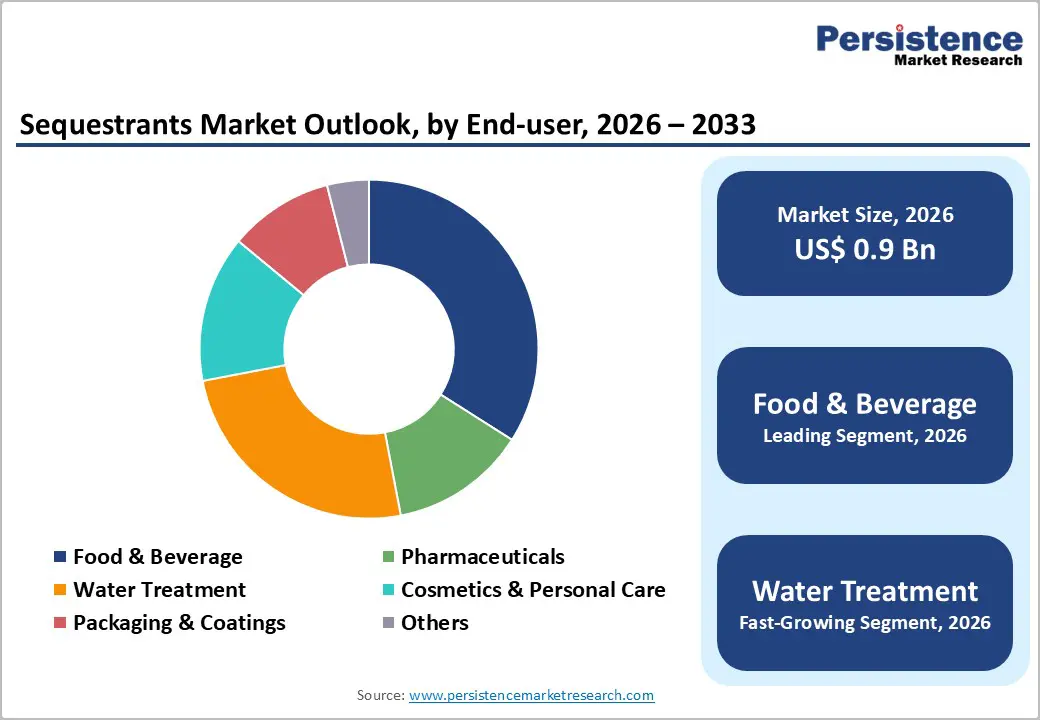
- Leading End-user: The food & beverage segment is anticipated to be the leading end-user segment, accounting for over 45% of the revenue share in 2026, supported by its essential role in product preservation, quality maintenance, and shelf-life extension.
| Key Insights | Details |
|---|---|
|
Sequestrants Market Size (2026E) |
US$0.9 Bn |
|
Market Value Forecast (2033F) |
US$2.0 Bn |
|
Projected Growth (CAGR 2026 to 2033) |
11.3% |
|
Historical Market Growth (CAGR 2020 to 2025) |
11.1% |
Market Factors - Growth, Barriers, and Opportunity Analysis
Rising Demand in Food & Beverage Preservation
Sequestrants are widely used to prevent oxidation, maintain color, and preserve texture in processed foods, baked goods, dairy products, and beverages. With the population increasingly relying on ready-to-eat, frozen, and convenience foods, manufacturers are adopting sequestrants to extend shelf life while ensuring product quality and safety. This trend is particularly strong in regions with high urbanization and busy lifestyles, where consumers prefer foods that are safe, long-lasting, and visually appealing. The growth of the frozen and packaged food sector is creating continuous demand for effective stabilizers, while innovations in multifunctional sequestrants allow manufacturers to enhance both flavor and appearance simultaneously.
Authorities such as the FDA, EFSA, and FSSAI emphasize the use of approved additives to minimize contamination, prevent spoilage, and maintain nutritional quality. Sequestrants, such as citrates, phosphates, and EDTA derivatives, are highly effective in binding metal ions that catalyze degradation reactions. The shift toward clean-label and natural sequestrants in food products is supporting growth, as consumers increasingly prefer ingredients perceived as safe and environmentally friendly. The growing trend of plant-based and fortified food products also supports sequestrant demand, as these formulations require enhanced stability and protection against nutrient degradation during storage and distribution.
Regulatory Hurdles for Synthetic Sequestrants
Synthetic sequestrants such as EDTA, sodium tripolyphosphate, and phosphates are subject to strict guidelines from authorities such as the FDA, EFSA, and FSSAI, which include limits on allowable concentrations and mandatory safety assessments. Compliance with these regulations often results in higher operational costs, extended approval timelines, and additional testing requirements, slowing down new product launches and market expansion. These restrictions also limit the flexibility of manufacturers to innovate with new formulations, particularly in processed foods and beverages. Stricter regulations on effluent discharge and environmental impact in industrial applications constrain the use of certain synthetic sequestrants.
Consumer demand for natural and clean-label ingredients restrains the growth of synthetic sequestrants. Food and beverage manufacturers are increasingly reformulating products to reduce synthetic content, while environmental regulations in industrial and water treatment applications emphasize eco-friendly and biodegradable solutions. These factors are driving a gradual shift toward natural and bio-based sequestrants, which meet safety and sustainability standards while maintaining effectiveness in food preservation, pharmaceutical stabilization, and water treatment processes. The rising popularity of plant-based and fortified foods also boosts the need for natural sequestrants to maintain product quality.
Innovation in Biodegradable Formulations
Traditional synthetic sequestrants, while effective, face increasing scrutiny due to environmental concerns and strict compliance requirements in food, beverage, pharmaceutical, and industrial applications. Biodegradable sequestrants, derived from natural sources such as citrates, gluconates, and phytic acid, offer an environmentally responsible alternative that reduces ecological impact while maintaining functional performance. Manufacturers investing in these innovative solutions can not only comply with stringent regulations but also enhance their brand image by meeting the growing consumer preference for natural and sustainable ingredients.
Biodegradable sequestrants provide opportunities for expansion across multiple end-user sectors. In food and beverages, they help maintain freshness, color, and texture without relying on conventional synthetic additives. In pharmaceuticals and personal care, bio-based sequestrants improve stability and shelf life while appealing to health-conscious consumers. Industrial applications, particularly water treatment, benefit from eco-friendly options that prevent metal-induced scaling and corrosion without harming aquatic ecosystems. This convergence of regulatory compliance, environmental sustainability, and rising consumer demand for clean-label products is driving adoption across regions.
Category-wise Analysis
Product Type Insights
Synthetic sequestrants are expected to lead, accounting for approximately 60% of the total revenue share in 2026, due to their established efficacy, cost-effectiveness, and versatility across multiple industrial and food applications. They are widely used in processed foods, beverages, and pharmaceuticals to prevent oxidation, maintain texture, and stabilize formulations. For example, sodium tripolyphosphate is commonly used in processed meat products to retain moisture, improve tenderness, and extend shelf life. Manufacturers prefer synthetic sequestrants as they offer predictable performance, are easy to standardize in formulations, and are compatible with large-scale industrial production processes.
Natural sequestrants are likely to represent the fastest-growing segment in 2026, driven by rising consumer preference for clean-label and eco-friendly ingredients. These sequestrants, derived from natural sources such as citrates, gluconates, and phytic acid, are increasingly used in food, beverages, and personal care products as safer alternatives to synthetics. For example, citric acid in beverages and confectionery provides effective preservation while enhancing flavor, fulfilling both functional and consumer-driven demands. The growth of natural sequestrants is also influenced by regulatory pressures limiting synthetic additive usage in various regions, compelling manufacturers to reformulate products with natural alternatives.
Form Type Insights
The dry form segment is expected to lead the sequestrants market, accounting for approximately 65% of total revenue in 2026, due to their convenience in storage, handling, and integration in powder-based formulations across food, detergent, and industrial applications. For example, powdered citrates used in bakery mixes stabilize dough, prevent discoloration, and maintain product consistency during processing. Dry sequestrants are preferred for large-scale production because they allow precise dosing, extended shelf life, and ease of transport without requiring special packaging. Manufacturers benefit from reduced handling costs and minimal risk of contamination, making dry forms the standard choice in many traditional and industrial processes.
Liquid forms are likely to represent the fastest-growing segment, due to their superior solubility, ease of mixing, and versatility in integration across food, pharmaceutical, and water treatment processes. For example, liquid sodium gluconate in water treatment provides effective metal ion control, preventing scale formation and corrosion in industrial systems. Liquid sequestrants are favored in applications requiring rapid dispersion, precise dosing, and uniform activity throughout the solution, particularly in beverages, syrups, and liquid pharmaceuticals. The increasing demand for ready-to-drink beverages, liquid nutritional supplements, and automated industrial dosing systems is fueling growth for liquid forms.
End-user Insights
The food & beverage segment is projected to lead the market, capturing around 45% of the total revenue share in 2026, driven by the essential role of sequestrants in preserving color, flavor, texture, and overall quality of processed foods and beverages. For example, EDTA in canned vegetables and soft drinks prevents metal-catalyzed oxidation, extends shelf life, and maintains visual appeal, making it a critical additive in the industry. The segment benefits from growing consumption of convenience, ready-to-eat, and frozen foods, where product stability and long shelf life are the key priorities. High urbanization and busy lifestyles contribute to sustained demand, as consumers increasingly rely on packaged foods that retain freshness over extended periods.
Water treatment is likely to be the fastest-growing end-user in 2026, driven by stringent industrial wastewater regulations, infrastructure expansion, and increasing awareness of water quality management. For example, sodium hexametaphosphate in municipal water treatment plants helps prevent scaling and corrosion, ensuring compliance with environmental and safety standards. Industrial and municipal facilities are adopting sequestrants to control hardness, reduce maintenance costs, and maintain efficient operations. Growth is fueled by increasing industrialization in Asia Pacific and developing regions, where investments in water treatment infrastructure are expanding rapidly.
Regional Insights
North America Sequestrants Market Trends
North America is anticipated to be the leading region, accounting for a market share of 30% in 2026, driven by rising demand from the food & beverage and pharmaceutical industries. Consumers increasingly prefer processed and convenience foods, which require effective sequestrants to maintain color, flavor, texture, and shelf life. The region's strict regulatory standards, governed by bodies such as the FDA, encourage manufacturers to adopt safe and approved sequestrants, ensuring product quality and compliance. Water treatment applications are also a key growth driver, as municipalities and industrial facilities seek efficient solutions to control metal ions, prevent scale, and comply with environmental regulations.
Companies are also focusing on innovation and sustainability to strengthen their market presence. For example, Cargill Inc. has been actively developing bio-based sequestrants for food and beverage applications, providing alternatives to synthetic additives while maintaining functional efficiency. This trend highlights the shift toward environmentally responsible solutions and multifunctional formulations, which are expected to drive long-term growth. The adoption of clean-label and natural sequestrants is gaining traction, reflecting consumer preferences for eco-friendly and health-conscious ingredients, which is shaping product development and marketing strategies in the region.
Europe Sequestrants Market Trends
Europe is likely to be a significant market for sequestrants in 2026, driven by stringent food safety regulations and rising demand for processed and convenience foods across the region. Regulatory bodies such as EFSA enforce strict guidelines on additive usage, ensuring high-quality and safe products, which encourages manufacturers to adopt approved sequestrants for oxidation control, texture preservation, and color maintenance. The market is supported by increasing consumption of ready-to-eat meals, frozen foods, and beverages, where sequestrants play a critical role in extending shelf life and maintaining product stability.
The industrial and water treatment sectors are contributing to market growth. Sequestrants are widely used to control hardness, prevent scaling, and maintain equipment efficiency in water treatment facilities and industrial processes. Companies are focusing on sustainable and multifunctional formulations to meet both regulatory and consumer expectations. For example, Jungbunzlauer has developed citric-acid-based sequestrants for food, beverage, and industrial applications, providing effective performance while aligning with clean-label and eco-friendly trends. The region also sees a growing preference for natural and clean-label sequestrants, reflecting consumer awareness of health, sustainability, and environmental impact, which is driving innovation in bio-based solutions.
Asia Pacific Sequestrants Market Trends
The Asia Pacific region is likely to be the fastest-growing region in the sequestrants market in 2026, driven by expanding food processing, beverage production, pharmaceuticals, and personal care industries across China, India, Southeast Asia, and Australia. Demand for sequestrants that prevent oxidation, maintain product quality, and extend shelf life is rising as disposable incomes increase and consumer lifestyles shift toward convenience foods and premium formulations. Strong manufacturing infrastructure and cost-competitive production in the region also attract local players to increase capacity and service growth in multiple end-use sectors.
Companies operating in the region are actively strengthening their product portfolios to capitalize on these opportunities. For instance, Jungbunzlauer Suisse AG, recognized for its naturally derived citrates and gluconates, supplies biodegradable sequestrants and acidulants for food, beverage, and industrial applications across the Asia Pacific region, supporting clean-label initiatives and regulatory compliance. Its bio-based sequestrants are increasingly used in beverages, dairy products, and processed foods to preserve product quality and extend shelf life. Jungbunzlauer is also partnering with local manufacturers to develop customized solutions tailored to regional taste preferences and regulatory standards.
Competitive Landscape
The global sequestrants market exhibits a moderately fragmented structure, driven by the presence of several multinational chemical companies and specialized regional manufacturers catering to diverse end-use industries such as food & beverage, water treatment, pharmaceuticals, and personal care. While no single company commands overwhelming dominance, established players leverage broad product portfolios, extensive distribution networks, and ongoing R&D investments to secure competitive advantages. Synthetic and natural sequestrants coexist in the market, with increasing emphasis on biodegradable, eco-friendly formulations in response to regulatory pressures and clean-label consumer preferences.
With key leaders including BASF SE, Dow Chemical Company, Cargill Incorporated, Connect Chemicals, and Jungbunzlauer Suisse AG, the competitive landscape is shaped by a mix of giants and strong regional players that serve both commodity and niche segments. These players compete through product innovation, sustainability initiatives, capacity expansion, and strategic collaborations to address industry trends such as natural sequestrants, bio-based alternatives, and regulatory compliance. For example, BASF continues to expand its portfolio with eco-certified and biodegradable chelating agents that align with environmental and clean-label demands, reinforcing its position in food, water treatment, and personal care markets.
Key Industry Developments:
- In April 2025, BASF introduced a new portfolio of natural-based and biodegradable personal care ingredients at in-cosmetics Global 2025 in Amsterdam, reinforcing its commitment to sustainable formulations. The launch featured Verdessence® Maize, a plant-derived biopolymer positioned as a natural alternative to synthetic chelating and stabilizing agents, along with Lamesoft® OP Plus, a biodegradable wax-based opacifier, and Dehyton® PK45 GA/RA, a sustainably sourced betaine surfactant. These innovations reflect the industry’s growing shift toward eco-friendly, bio-based sequestrant and chelating solutions in cosmetics and personal care, aligning with tightening regulatory requirements and increasing consumer demand for clean-label, biodegradable formulations.
Companies Covered in Sequestrants Market
- Connect Chemicals
- Cargill Inc.
- Wang Pharmaceuticals & Chemicals
- CHT
- Ensince
- Primient
- Anmol Chemicals
- Northstar Chemical
- Jungbunzlauer
- Bell Chem
- Prakash Chemicals
- Enartiss
Frequently Asked Questions
The global sequestrants market is projected to reach US$0.9 billion in 2026.
Rising demand for food preservation, water treatment efficiency, and industrial process stability, along with growing regulatory emphasis on product quality and shelf-life enhancement.
The sequestrants market is expected to grow at a CAGR of 11.3% from 2026 to 2033.
Innovation in biodegradable and clean-label formulations, expanding use in water treatment and personal care applications, and growing demand from emerging economies driven by food processing and industrialization.
Connect Chemicals, Cargill Inc., and Wang Pharmaceuticals & Chemicals are the leading players.


