




- Processed Food
- Parboiled Rice Market
Parboiled Rice Market Size, Share, and Growth Forecast, 2026 - 2033
Parboiled Rice Market by Product Type (White Rice, Brown Rice), Application (Household, Food Service, Food Industry, Others), Distribution Channel (Supermarkets/Hypermarkets, Convenience Stores, Online Stores, Others), and Regional Analysis for 2026 - 2033

Parboiled Rice Market Size and Trends Analysis
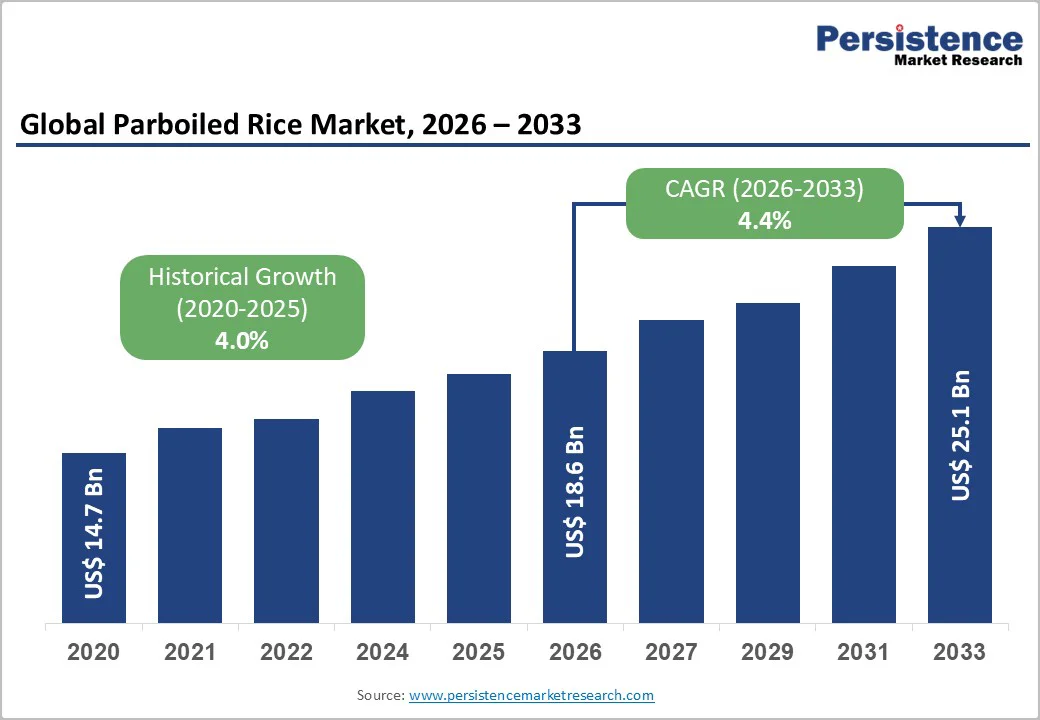
The global parboiled rice market size is likely to be valued at US$18.6 billion in 2026. It is expected to reach US$25.1 billion by 2033, growing at a CAGR of 4.4% from 2026 to 2033, driven by rising nutritional awareness, increasing demand for nutrient-retained staples in household cooking, and advancements in parboiling technologies.
Rising demand for easy-to-digest, fortified grains is driving the adoption of parboiled rice, especially in food service. Innovations in white and brown varieties cater to health-conscious and versatile consumption, with strong growth seen in the Asia Pacific, where the rice is integral to food industry processing.
Key Industry Highlights:
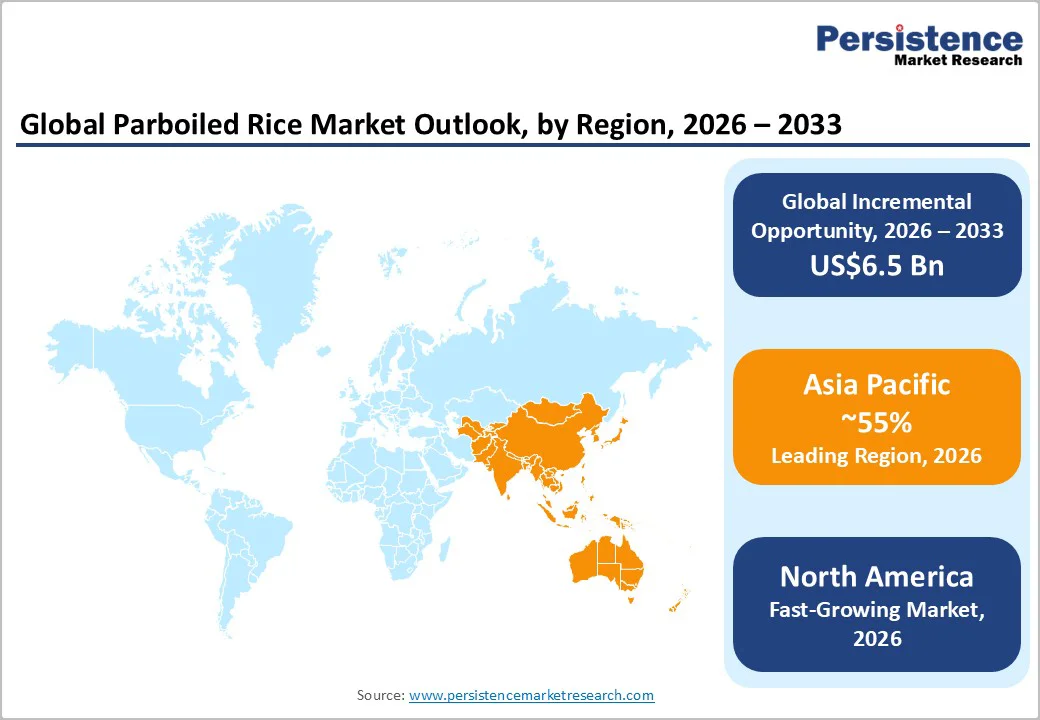
- Leading Region: Asia Pacific, to command a 55% market share in 2026, driven by dominant rice consumption, high prevalence of household staples, and strong agricultural activities in India.
- Fastest-growing Region: North America, fueled by increasing health-conscious consumers, rising awareness of fortified grains, and growing investments in processed foods in the U.S.
- Dominant Product Type: White rice, to hold approximately 70% of the market share in 2026, due to its widespread consumption, affordability, and cultural preference in many regions. It remained the staple choice for daily meals across households, restaurants, and institutions.
- Leading Application: Households are likely to account for over 50% of market revenue as parboiled rice is a daily staple, widely used in home cooking. Its affordability, accessibility, and nutritional benefits drive consistent demand.
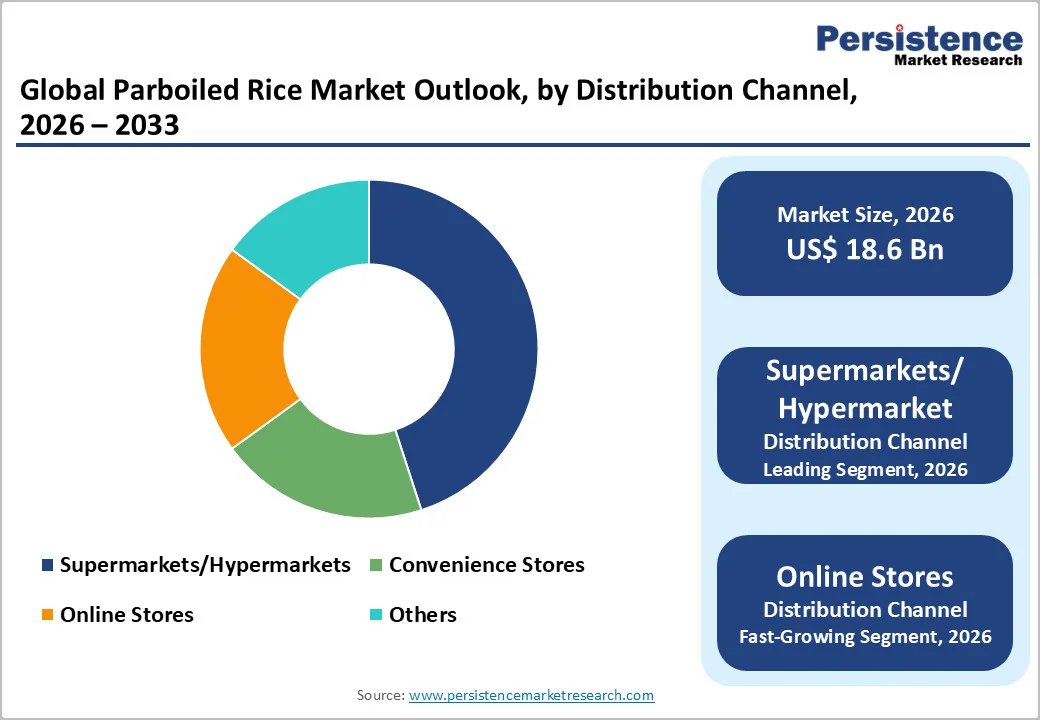
- Leading Distribution Channel: Supermarkets/Hypermarkets, to contribute nearly 45% of market revenue in 2026, due to retail accessibility.
| Key Insights | Details |
|---|---|
|
Parboiled Rice Market Size (2026E) |
US$18.6 Bn |
|
Market Value Forecast (2033F) |
US$25.1 Bn |
|
Projected Growth (CAGR 2026 to 2033) |
4.4% |
|
Historical Market Growth (CAGR 2020 to 2025) |
4.0% |
Market Factors - Growth, Barriers, and Opportunity Analysis
Rising Nutritional Awareness Driving Demand for Parboiled Rice
The rising prevalence of nutritional awareness globally is a primary driver of the parboiled rice market. Modern consumers are increasingly informed about the health benefits of their dietary choices, prioritizing foods that offer enhanced vitamins, minerals, and fiber. Parboiled rice, which retains higher levels of B-complex vitamins, iron, and other nutrients compared to regular white rice, aligns perfectly with these consumer preferences. This awareness is not limited to urban or developed regions; even in developing countries, educational campaigns, health initiatives, and government programs have heightened recognition of the importance of nutrient-rich diets.
The trend has encouraged both retail and foodservice sectors to focus on fortified and value-added parboiled rice products, creating new avenues for market growth. Health-conscious households, schools, hospitals, and institutional buyers increasingly favor parboiled rice for its superior nutritional profile and ability to support balanced diets. The global shift toward wellness-oriented and functional foods has prompted manufacturers to innovate with organic, fortified, and quick-cook varieties that retain nutrients while offering convenience.
High Development and Processing Costs
High development and processing costs remain a major challenge in the parboiled rice market, significantly impacting profitability and limiting participation for small and mid-scale processors. Parboiling requires specialized infrastructure, including advanced soaking tanks, steamers, dryers, and milling equipment, all of which require high capital investment. Modern technologies that improve grain quality, reduce breakage, and enhance nutrient retention further increase equipment and maintenance expenses. Energy consumption during steaming and drying is substantial, especially in regions with high fuel or electricity costs, raising overall operational expenditure.
Labor costs add another layer of complexity, as skilled technicians are required to operate and maintain precision machinery. Meeting global quality, safety, and sustainability standards, such as HACCP, ISO certifications, and water-efficient processing, also requires continuous investment in audits, upgrades, and compliance systems. For companies adopting fortified or quick-cook innovations, R&D expenses for formulation, testing, and technological integration significantly elevate development costs.
Advancements in Fortified and Quick-Cook Parboiled Rice
Advancements in fortified and quick-cook parboiled rice have created significant opportunities for both processors and global suppliers, driven by rising consumer demand for healthier, convenient staple foods. Fortified parboiled rice has gained strong traction as governments, food agencies, and health-focused consumers increasingly prioritize micronutrient enrichment to combat deficiencies.
Modern processing technologies now enable the infusion of essential vitamins, iron, zinc, and folic acid without compromising grain integrity or taste. This has expanded adoption in institutional programs, school meals, and health-oriented retail segments, particularly in developing regions where nutritional gaps are more prevalent.
Quick-cook parboiled rice has emerged as a high-growth category as busy households, working professionals, and urban consumers seek faster meal preparation without sacrificing quality. Innovations in pre-soaking, steam-pressure treatments, and precision drying techniques have significantly reduced cooking time while maintaining the texture and nutritional benefits of parboiled rice. Foodservice operators and ready-meal manufacturers also benefit from these innovations, as rapid-cook formats improve kitchen efficiency and consistency.
Category-wise Analysis
Product Type Insights
White rice is anticipated to dominate the market, accounting for approximately 70% of the share in 2026, driven by its widespread familiarity, quick cooking time, and appealing texture, making it a staple in households globally. Its ease of preparation and versatility in a variety of cuisines further reinforce consumer preference. White parboiled rice, such as products from Udon Rice Co., provides a fluffy, non-sticky texture that enhances taste and presentation. For example, Udon Rice Co.’s parboiled white rice is popular in ready-to-eat meal kits, offering consistent quality and convenience for home cooks and busy consumers.
Brown rice is the fastest-growing segment, driven by increasing health and wellness awareness and rising demand for high-fiber, nutrient-dense grains. Its rich content of vitamins, minerals, and antioxidants, along with benefits for digestion and heart health, appeals to health-conscious consumers. The growing preference for organic and clean-label products further accelerates adoption, particularly in North America and Europe.
Manufacturers are introducing premium, fortified, and specialty brown rice varieties to cater to this demand. For example, Lundberg Family Farms’ organic brown rice offers whole-grain nutrition with superior taste and texture, making it a popular choice in health-focused meal kits and ready-to-eat products.
Application Insights
Household leads the market, holding approximately 50% of the share in 2026, driven by the daily consumption of parboiled rice as a staple food. Its widespread availability, affordability, and ease of cooking make it the preferred choice for regular meals. Growing health awareness and interest in nutrient-rich rice varieties, such as fortified or parboiled options, further reinforce household adoption. For example, India Gate’s parboiled rice is commonly used in households due to its consistent cooking quality, texture, and nutritional profile, making it a regular choice for everyday meals.
Food service is the fastest-growing segment, driven by increased adoption of parboiled rice in restaurants, quick-service chains, and catering operations. Its consistent quality, quick cooking time, and suitability for large-scale meal preparation make it ideal for professional kitchens. Rising dining-out trends, expanding QSR chains, and demand for reliable bulk ingredients further accelerate market growth. Parboiled rice’s superior texture retention, reduced breakage, and fluffy grains ensure high-quality presentation and customer satisfaction. For example, McDonald’s India frequently uses parboiled rice in its menu items to maintain consistent taste and texture across outlets, supporting efficient large-scale cooking.
Distribution Channel Insights
Supermarkets/Hypermarkets are projected to dominate the market, contributing nearly 45% of revenue in 2026, driven by their extensive retail presence and strong promotional strategies. They provide a wide variety of rice brands, competitive pricing, and consistent product availability, making them the preferred choice for bulk and routine grocery shopping. Established supply chains and distribution networks ensure steady stock and accessibility across urban and semi-urban areas, reinforcing their market leadership. For example, Walmart and Carrefour prominently feature parboiled rice brands such as Daawat and India Gate, leveraging in-store promotions and bulk discounts to attract both household and commercial buyers.
Online stores are the fastest-growing segment, driven by greater product availability, competitive pricing, and convenient home delivery, which appeal to busy and tech-savvy consumers. Rising e-commerce adoption, digital payment convenience, and the ability to compare brands and purchase in bulk have accelerated demand. Wider access to imported and specialty parboiled rice varieties through online platforms has further boosted sales, supporting rapid market expansion. For example, Amazon India and BigBasket offer brands such as Daawat and Lal Qilla with home delivery, discounts, and subscription options, enabling consumers to conveniently purchase high-quality parboiled rice without visiting physical stores.
Regional Insights
North America Parboiled Rice Market Trends
North America is likely to be the fastest-growing region in 2026, driven by rising consumer interest in healthier, high-nutrition grain options and the growing demand for convenient meal solutions. Parboiled rice gained popularity because it offers better nutrient retention, improved texture, and faster cooking, aligning well with the region’s shift toward balanced diets and time-saving food products. This trend strengthened as consumers increasingly sought alternatives to traditional white rice with higher fiber and vitamin content.
The market also benefited from the growing multicultural population, including South Asian, African, and Latin American communities, in which parboiled rice is a dietary staple. This boosted retail availability, with supermarkets and online platforms offering a wider range of imported and domestic parboiled rice varieties. Processors in the U.S. and Canada continued to invest in advanced milling technologies, automated processing, and improved parboiling systems to enhance grain quality, reduce breakage, and ensure a consistent supply. Sustainability emerged as a key trend, with companies adopting energy-efficient operations, water-saving equipment, and recyclable packaging to meet corporate ESG goals and consumer expectations.
Europe Parboiled Rice Market Trends
Market growth in Europe is shaped by evolving consumer preferences, rising health awareness, and the growing influence of multicultural cuisines. One major trend has been the increasing shift toward healthier and nutrient-rich rice varieties, with parboiled rice gaining traction due to its higher fiber and vitamin retention compared to traditional white rice. This trend accelerated as consumers sought balanced diets and convenient meal options, particularly within urban populations.
Demand was further driven by the expanding presence of ethnic food cultures, especially South Asian, African, and Middle Eastern communities, which traditionally consume parboiled rice. Supermarkets and retail chains broadened their parboiled rice offerings, including organic, long-grain, and premium imported varieties. European processors are increasingly focused on sustainability, adopting energy-efficient milling technologies, water-saving systems, and eco-friendly packaging solutions to meet stringent EU regulations and rising consumer expectations for responsible sourcing. Traceability, quality certifications, and clean-label positioning also became key differentiators.
Asia Pacific Parboiled Rice Market Trends
Asia Pacific is anticipated to lead, holding approximately 55% of the market share in 2026, driven by rising population and urbanization, and increasing preference for convenient, nutrient-rich staple foods. One of the key trends has been the shift toward fortified and value-added parboiled rice, as consumers become more health-conscious and governments promote nutritional improvement programs. Demand for premium-quality, consistent-grain parboiled rice also grew, supported by expanding middle-class consumption and higher spending on packaged foods.
Technological modernization has been another major trend. Rice processors across India, Thailand, Vietnam, and Bangladesh increasingly adopted advanced parboiling, milling, and drying systems to improve efficiency, reduce breakage, and enhance shelf life. Sustainability also emerged as an influential trend, with companies investing in water-efficient parboiling systems, renewable energy usage, and low-emission processing to meet tightening environmental standards. Export-oriented growth further shaped the market, as the Asia Pacific remained the global hub for parboiled rice supply. Countries strengthened their presence in African and Middle Eastern markets, driven by competitive pricing and large-scale production capabilities.
Competitive Landscape
The global parboiled rice market is highly competitive, characterized by a mix of regional processors and international exporters. In developed regions such as North America and Europe, companies like Buhler AG and Induss Group maintained strong market positions through advanced R&D capabilities, robust distribution networks, and consistent technological upgrades. In the Asia Pacific region, National Rice Company strengthened its presence by offering localized processing solutions tailored to regional consumption patterns and agricultural conditions.
Companies focused heavily on fortified and value-added product innovation, which provided a competitive edge as consumer demand for nutrient-enriched staples increased. Strategic partnerships and acquisitions played a major role in expanding production capacity, enhancing global supply chains, and entering emerging markets with rising rice consumption. The adoption of sustainable processing technologies, including water-efficient parboiling systems and eco-friendly milling practices, intensified competition, as companies prioritized operational efficiency and regulatory compliance.
Key Industry Developments
- In 2023, Olam expanded its rice processing facilities in Nigeria to meet rising demand for parboiled rice in West Africa. This expansion reflects its strategy to strengthen processing capacity and reach in emerging markets.
- In 2024, Riceland launched a new line of organic parboiled rice products to tap growing demand in North America and global markets for healthier and sustainably sourced rice.
Companies Covered in Parboiled Rice Market
- Buhler AG
- Induss Group
- National Rice Company
- Udon Rice Co.
- Riceland International Limited
- American Rice, Inc.
- RISERIA PASINI S.R.L.
- Pramoda Exim Corporation
- Olam Agro India Ltd.
- Dev International
- Sandstone International Co., Ltd.
Frequently Asked Questions
The global parboiled rice market is projected to reach US$18.6 billion in 2026.
The rising prevalence of nutritional awareness and demand for nutrient-retained staples are key drivers.
The parboiled rice market is poised to witness a CAGR of 4.4% from 2026 to 2033.
Advancements in fortified and quick-cook parboiled rice are key opportunities.
Buhler AG, Induss Group, National Rice Company, Olam Agro India Ltd., and Pramoda Exim Corporation are the key players.


