




- Food Ingredients & Additives
- Micellar Casein Market
Micellar Casein Market Size, Share, Growth, and Regional Forecast, 2026 to 2033
Micellar Casein Market by Product Type (Isolate, Concentrate), End-user (Sports Nutrition & Supplements, Functional Foods & Beverages, Infant Nutrition, Clinical Nutrition, Bakery & Confectionery, Dairy Products), Sales Channel (B2B, B2C), and Regional Analysis, 2026 - 2033

Micellar Casein Market Share and Trends Analysis
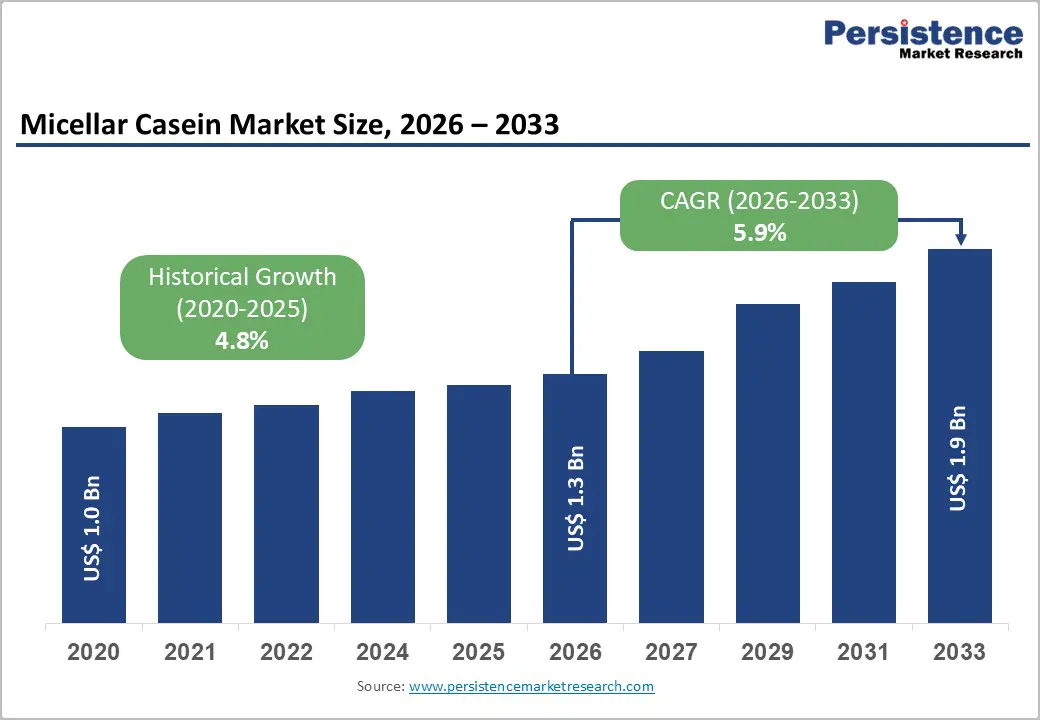
The global micellar casein market size is expected to be valued at US$ 1.3 billion in 2026 and projected to reach US$ 1.9 billion by 2033, growing at a CAGR of 5.9% between 2026 and 2033.
Micellar casein is moving from a niche bodybuilding staple to a strategic recovery and medical nutrition ingredient. Its slow-digesting profile aligns with data-driven training, aging nutrition, and clinical protein timing, making it one of the most defensible protein categories in advanced nutrition.
Key Industry Highlights:
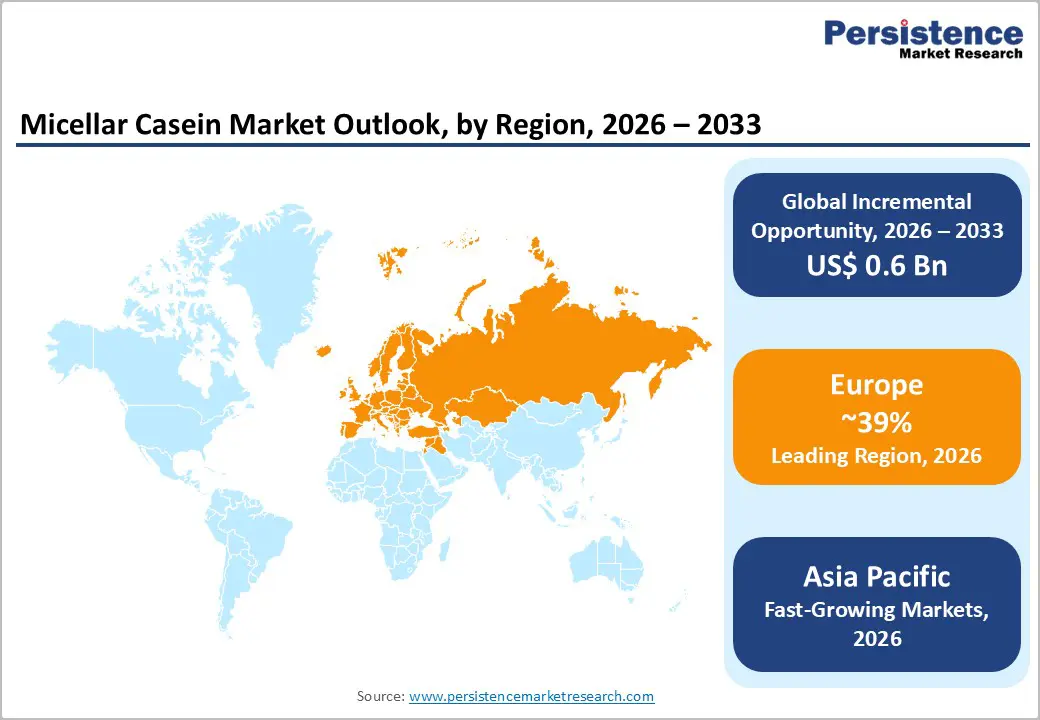
- Leading Region: Europe is likely to account for 39% share, supported by mature sports nutrition ecosystems, strong regulatory frameworks, and high adoption across fitness, clinical, and elderly nutrition applications.
- Fastest-Growing Region: Asia Pacific is projected to grow at a CAGR of ~9.8%, driven by rapidly expanding fitness culture, premium imported protein demand, and rising awareness of structured protein timing across China, Japan, South Korea, and urban India.
- Dominant Product Type Segment: Micellar Casein Isolate, accounting for ~67% of global market share, favored for its high purity, low lactose content, consistent amino acid release, and superior formulation performance across powders, RTD beverages, and medical nutrition.
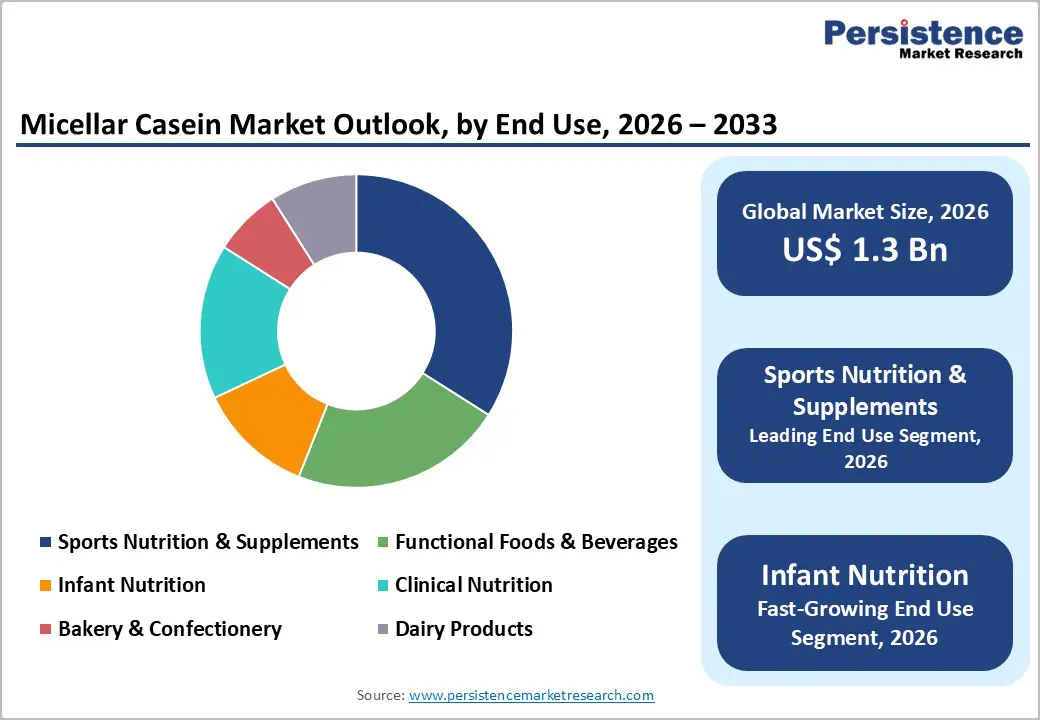
- Leading End-Use Segment: Sports Nutrition & Supplements, contributing ~35% of total demand, anchored by pre-sleep recovery protocols, muscle preservation strategies, and growing emphasis on overnight anabolic support among athletes and serious fitness consumers.
- Growth Indicators: Rising demand for slow-digesting protein to support overnight recovery, sustained nitrogen balance, and injury prevention, reinforced by evidence-based coaching, wearable-driven recovery insights, and advanced nutrition timing strategies.
| Key Insights | Details |
|---|---|
| Global Micellar Casein Market Size (2026E) | US$ 1.3 Bn |
| Market Value Forecast (2033F) | US$ 1.9 Bn |
| Projected Growth (CAGR 2026 to 2033) | 5.9% |
| Historical Market Growth (CAGR 2020 to 2025) | 4.8% |
Market Dynamics
Driver - Growing demand for slow-digesting protein among fitness enthusiasts and athletes
Nighttime recovery has become a performance obsession among modern athletes, pushing slow digesting proteins into daily routines. Micellar casein releases amino acids gradually, supporting muscle repair during extended fasting periods such as sleep. Fitness enthusiasts increasingly value sustained nitrogen balance over rapid spikes, aligning perfectly with micellar casein’s digestion profile. This shift reflects training programs emphasizing recovery quality, injury prevention, and lean mass preservation rather than short term intensity alone.
Demand strengthens further as endurance sports, bodybuilding, and functional fitness converge around evidence driven nutrition timing. Coaches recommend pre sleep protein strategies to extend anabolic windows, boosting routine micellar casein usage.
Convenient powders, neutral flavors, and clean formulations support adoption among serious trainers. As wearable data highlights overnight recovery metrics, slow digesting protein continues gaining relevance as a strategic nutrition tool within competitive and recreational performance focused communities worldwide today.
Restraints - Lactose intolerance and dairy allergies restricting consumer base
Digestive sensitivity remains a persistent barrier limiting broader adoption of micellar casein across global nutrition markets. Lactose intolerance and dairy protein allergies exclude a sizeable consumer segment from traditional casein based products.
Even trace lactose levels can trigger discomfort, discouraging trial among health focused individuals seeking gentler protein alternatives. This physiological constraint narrows addressable demand despite rising interest in high quality protein supplementation.
The restraint intensifies as plant based diets gain visibility and consumers actively self-screen dairy ingredients. Athletes with mild intolerance often shift toward blended or plant proteins to avoid digestive disruption.
Manufacturers face added formulation complexity when attempting lactose reduction without compromising functionality. Clear labeling requirements further highlight allergen presence, reinforcing consumer caution. As awareness of digestive health grows, lactose intolerance remains a structural limitation for micellar casein market expansion.
Opportunity - Product innovation in flavor profiles and ready-to-drink formats
Flavor fatigue is quietly reshaping protein consumption habits, opening space for innovation in micellar casein products. Consumers now expect indulgent taste experiences alongside functional benefits, pushing brands to rethink traditional neutral powders. New flavor systems inspired by desserts, coffee, and seasonal profiles make slow digesting proteins more enjoyable and habit forming. This evolution encourages repeat consumption beyond strictly performance driven users.
Ready to drink formats further unlock growth by removing preparation friction from daily routines. Shelf stable casein shakes support nighttime and on the go recovery use cases. Startups leverage small batch flavor experimentation, while established brands invest in texture smoothing technologies. These innovations enhance mouthfeel without heavy additives. As convenience and taste drive compliance, flavored RTD micellar casein presents a strong commercialization pathway globally.
Category-wise Analysis
By Product Type Insights
Micellar casein isolates nearly accounts for 67% share as of 2025, reflecting its superior purity and functional performance. High protein concentration with minimal lactose supports efficient digestion control and predictable amino acid release. Manufacturers favor isolates for premium sports and medical nutrition due to consistent quality and formulation reliability. This dominance is reinforced by strong acceptance among professional athletes and clinical nutrition users.
Isolates also offer versatility across powders, RTD beverages, and fortified foods without compromising texture. Their clean sensory profile simplifies flavor development and reduces aftertaste issues. Supply consistency and standardized processing further strengthen adoption among global brands. While concentrates remain relevant for cost sensitive segments, isolates continue leading through performance credibility, formulation flexibility, and alignment with advanced nutrition positioning strategies.
By End-user Insights
Nutrition & Supplements hold approx. 35% market share as of 2025, anchored by structured performance nutrition routines. Micellar casein fits naturally into pre sleep, recovery, and muscle preservation protocols followed by athletes and gym focused consumers. Its slow digestion profile complements fast acting proteins, strengthening its role within stacked supplementation strategies. This functional relevance drives repeat purchases within sports nutrition channels.
Supplement brands actively educate consumers on protein timing, elevating awareness around overnight muscle support. Subscription models and specialty retail reinforce consistent usage among serious trainees. Product formats tailored for athletes, including bedtime shakes and protein blends, further accelerate uptake. As performance nutrition evolves toward recovery optimization, sports supplements remain the strongest demand center for micellar casein globally.
Region-wise Insights
Europe Micellar Casein Market Trends
Europe holds approximately. 39% market share in the global Micellar Casein Market, supported by mature sports nutrition cultures. The UK shows strong demand for clean label protein powders aligned with gym lifestyles. Germany emphasizes quality certifications and protein purity, reinforcing isolate consumption. France integrates micellar casein into clinical and elderly nutrition, while Spain and Italy focus on fitness driven lifestyle adoption.
Innovation across Europe centers on digestibility, flavor refinement, and sustainable dairy sourcing. Brands increasingly highlight local milk origin and transparent processing. E commerce and specialty nutrition retailers drive accessibility across urban markets. Regulatory clarity supports standardized protein claims, strengthening consumer trust. Europe’s balance of performance nutrition, medical applications, and quality assurance continues to anchor its leadership in micellar casein consumption.
Asia Pacific Micellar Casein Market Trends
The Asia Pacific micellar casein market is expected to achieve a CAGR of 9.8%, driven by evolving fitness culture. China shows rising demand for premium imported protein powders linked to gym and bodybuilding trends. Japan focuses on precision nutrition, favoring high-purity micellar casein for aging and recovery support. South Korea integrates casein into beauty, wellness, and body recomposition routines.
India represents an emerging growth pocket as organized fitness expands across urban centers. Consumers increasingly adopt structured protein timing influenced by digital coaching platforms. Regional growth is supported by cross-border e-commerce and influencer-led education. Manufacturers tailor flavors and pack sizes to local preferences. Asia Pacific’s combination of aspiration-driven fitness and nutrition awareness positions it as a high-momentum market.
Competitive Landscape
The global micellar casein market is moderately consolidated, with established dairy ingredient leaders shaping supply. Leading companies invest in clean label sourcing, traceable milk supply, and internationally recognized quality certifications. Sustainability initiatives focus on responsible dairy farming and energy-efficient processing. Product innovation targets smoother textures, improved solubility, and indulgent flavor profiles.
Competition increasingly extends into the B2C space through branded sports nutrition lines and direct-to-consumer channels. Consumer education around protein timing and recovery benefits plays a central role in differentiation. Government regulations on labeling and allergen disclosure influence formulation strategies. Brands aligning performance science with transparency and taste continue strengthening competitive positioning globally.
Key Developments:
- In June 2025, Arla Foods Ingredients and MasterSense entered into a new distribution agreement for the Chilean market, strengthening Arla’s regional presence and improving local access to its specialized nutrition and functional dairy ingredient portfolio.
- In April 2025, Arla Foods Ingredients expanded its Lacprodan MicelPure portfolio with the launch of a new micellar casein isolate (MCI) ingredient, specifically developed to meet the growing demand for high-quality medical nutrition solutions, offering slow-digesting protein functionality, high purity, and suitability for clinical and specialized dietary applications.
- In September 2024, Israeli startup DairyX Foods unveiled a breakthrough precision fermentation technology that enables casein proteins to self-assemble into micelles, replicating the functional structure of dairy casein and opening new possibilities for next-generation animal-free cheese and dairy alternatives.
Companies Covered in Micellar Casein Market
- Arla Foods Ingredients Group P/S
- Nestlé S.A.
- Danone
- FrieslandCampina
- Fonterra Co-operative Group
- Saputo Inc.
- Glanbia plc
- Lactalis Group
- AMCO Proteins
- Others
Frequently Asked Questions
The global micellar casein market is projected to be valued at US$ 1.3 Bn in 2026.
Growing demand for slow-digesting protein among fitness enthusiasts and athletes is a key driver for the global micellar casein market.
The global micellar casein market is poised to witness a CAGR of 5.9% between 2026 and 2033.
Product innovation in flavor profiles and ready-to-drink formats is a key opportunity.
Major players in the global Micellar Casein market include Arla Foods Ingredients Group P/S, Danone, FrieslandCampina, Fonterra Co-operative Group, Saputo Inc., Glanbia plc, Lactalis Group, and others.


