




- Specialty & Fine Chemicals
- Iodopropynyl Butylcarbamate Market
Iodopropynyl Butylcarbamate Market Size, Share, and Growth Forecast, 2025 - 2032
Iodopropynyl Butylcarbamate Market By Product Type (Technical Grade, Cosmetic Grade), Application (Personal Care Products, Household Cleaning Products, Others), End-use, and Regional Analysis for 2025 - 2032

Iodopropynyl Butylcarbamate Market Size and Trends Analysis
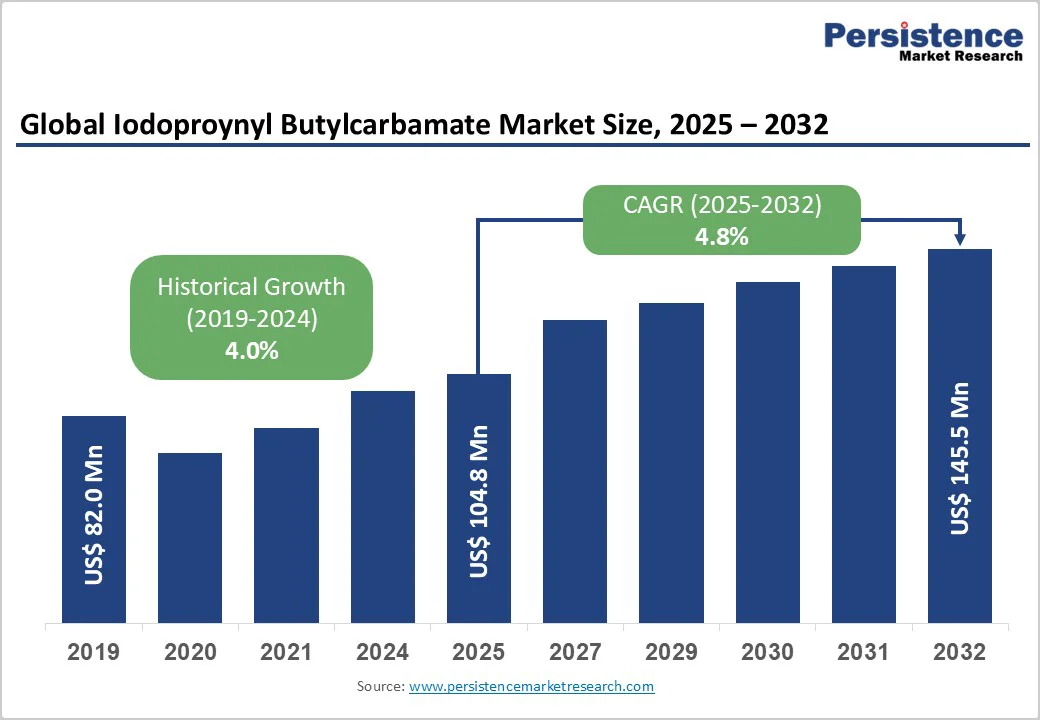
The global iodopropynyl butylcarbamate market size is likely to be valued US$104.8 Million in 2025, expected to US$145.5 Million by 2032, growing at a CAGR of 4.8% during the forecast period from 2025 to 2032.
The iodopropynyl butylcarbamate market is experiencing robust growth driven by rising concerns about microbial contamination, increasing demand for effective preservatives, and advancements in formulation technologies.
The market is further propelled by innovations in cosmetic and technical grades, catering to preferences for safe and stable options. The growing acceptance of iodopropynyl butylcarbamate as a reliable preservative, particularly in cosmetics, is a key driver of growth.
Key Industry Highlights:
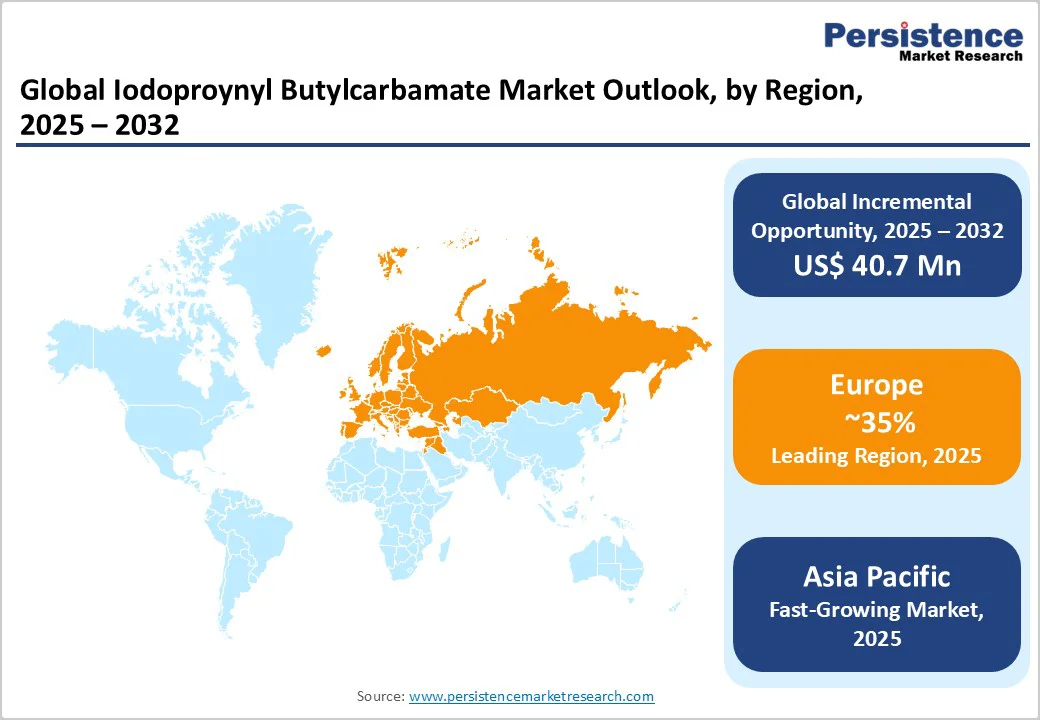
- Leading Region: Europe, commanding a 35% market share in 2025, driven by stringent cosmetic regulations, high prevalence of personal care products, and strong R&D activities in Germany.
- Fastest-growing Region: Asia Pacific, fueled by the expanding cosmetics industry, rising awareness of preservatives, and growing investments in household products in countries such as China and India.
- Dominant Product Type: Cosmetic Grade, holding approximately 55% of the market share, due to its safety in skin contact applications.
- Leading Application: Personal Care Products, accounting for over 45% of market revenue, driven by antifungal needs.
- Leading End-use: Cosmetics and Toiletries, contributing nearly 50% of market revenue, due to shelf-life extension.
- Key Market Driver: Rising demand for effective antimicrobial preservation in cosmetics and personal care drives IPBC adoption.
- Market Opportunity: Advancements in eco-friendly and low-dose preservative technologies open new avenues for sustainable market expansion.
| Key Insights | Details |
|---|---|
| Iodopropynyl Butylcarbomate Market Size (2025E) | US$104.8 Mn |
| Market Value Forecast (2032F) | US$145.5 Mn |
| Projected Growth (CAGR 2025 to 2032) | 4.8% |
| Historical Market Growth (CAGR 2019 to 2024) | 4.0% |
Market Factors - Growth, Barriers, and Opportunity Analysis
Rising Prevalence of Microbial Contamination and Demand for Effective Preservatives
The increasing prevalence of microbial contamination globally is a primary driver of the iodopropynyl butylcarbamate market. Increasing product complexity, longer shelf-life expectations, and warmer climatic conditions have heightened the risk of microbial growth, which can compromise product safety, texture, and performance.
As consumers become more conscious of hygiene and quality, the need for reliable antimicrobial agents that prevent bacterial and fungal contamination has grown significantly. IPBC has emerged as a preferred solution due to its broad-spectrum efficacy, stability, and compatibility with diverse formulations. It helps maintain product integrity, especially in moisture-rich applications such as creams, shampoos, and wipes, where contamination risk is highest.
Manufacturers are prioritizing preservative systems that combine high performance with consumer safety, ensuring compliance with global cosmetic and hygiene standards. The continued rise in personal care usage, coupled with stringent quality expectations, underscores the importance of advanced, safe, and efficient preservatives to protect products and enhance user trust across both daily-use and industrial applications.
High Regulatory Scrutiny and Safety Concerns
The high regulatory scrutiny and safety concerns associated with iodopropynyl butylcarbamate pose a significant restraint on market growth.
Regulatory agencies such as the U.S. FDA, the European Chemicals Agency (ECHA), and the Environmental Protection Agency (EPA) have established strict guidelines regarding preservative concentration, permissible use levels, and product labeling to ensure consumer safety. IPBC, though highly effective as an antimicrobial agent, faces limitations in certain leave-on products due to potential skin sensitization risks at higher concentrations.
This has prompted manufacturers to focus on reformulating products using lower doses and safer combinations of preservatives. Growing consumer awareness about ingredient safety, clean-label products, and potential toxicity concerns further intensifies the need for compliance and transparency.
Companies are investing heavily in toxicological testing, regulatory documentation, and innovation to meet evolving global standards. While stringent regulations create barriers for some players, they also encourage the development of advanced, low-irritation, and eco-friendly preservation solutions, ensuring both product safety and market credibility in the long term.
Advancements in Low-Dose and Combination Preservatives
Advancements in low-dose and combination preservatives present significant growth opportunities for the iodopropynyl butylcarbamate market. These innovations focus on maintaining strong antimicrobial efficacy while reducing active ingredient concentrations, thereby minimizing skin irritation and meeting stringent regulatory and consumer safety standards.
Low-dose formulations are increasingly favored for their ability to deliver high performance with minimal environmental impact and improved product compatibility. Combination preservative systems blend multiple actives, such as iodopropynyl butylcarbamate (IPBC) with other mild agents, to provide broad-spectrum protection against bacteria, fungi, and yeast.
This synergistic approach enhances stability, extends product shelf life, and allows formulators to reduce overall preservative load without compromising safety or effectiveness. The rise of “clean beauty” and eco-friendly product trends further accelerates the shift toward optimized preservation technologies.
Manufacturers are investing in research to develop innovative blends that balance efficacy, transparency, and sustainability, making low-dose and combination systems the preferred choice for next-generation formulations in cosmetics, personal care, and household care applications.
Category-wise Analysis
Product Type Insights
Cosmetic Grade dominates the market, account for 55% of the share in 2025. Its dominance is driven by regulatory approval, safety profile, and versatility, making it preferred for personal care. Cosmetic grades, such as those from Lonza, provide low irritation, ensuring compatibility. Its compliance and stability make it preferred for manufacturers.
Technical Grade is the fastest-growing segment, driven by industrial robustness and increasing adoption in cleaners. Technical grades offer high potency, appealing for non-skin uses. Focus on household innovation accelerates adoption in North America and Asia Pacific.
Application Insights
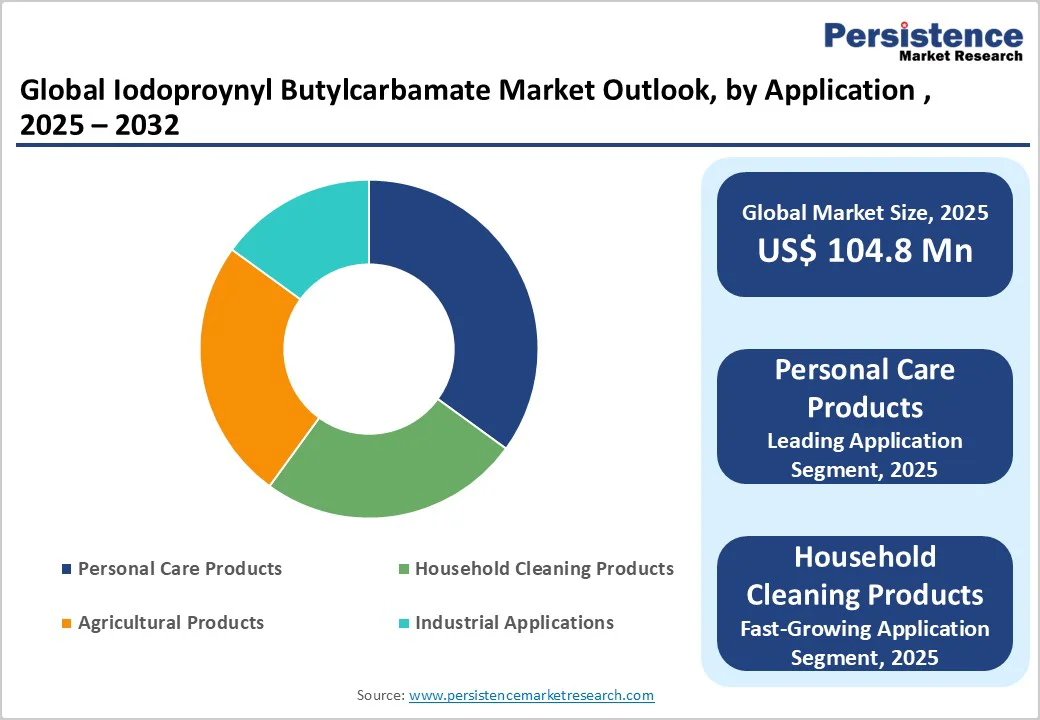
Personal Care Products leads the market, holding approximately 45% of the share in 2025. Their leadership stems from extensive use in shampoos, lotions, and skincare formulations that require effective preservation. Increasing consumer focus on hygiene, product safety, and extended shelf life continues to drive IPBC demand across the personal care segment.
Household Cleaning Products is the fastest-growing segment, propelled by rising demand for effective disinfection and hygiene solutions. Its incorporation in wipes, sprays, and surface cleaners offers long-lasting antimicrobial protection and formulation stability. Growing consumer awareness of hygiene and convenience continues to accelerate IPBC adoption across household cleaning applications.
End-use Insights
Cosmetics and Toiletries dominate the market, contributing nearly 50% of revenue in 2025. Their dominance is driven by extensive use in creams, lotions, and personal care formulations requiring long shelf life and microbial protection. The preservative’s effectiveness and safety make it a preferred choice for maintaining product stability in beauty applications.
Food and Beverage are the fastest-growing segment, driven by rising demand for clean-label and safe preservative solutions. Its strong antifungal and antimicrobial properties help extend product shelf life while meeting stringent regulatory standards. Growing consumer preference for natural, long-lasting products further accelerates market adoption in this sector.
Regional Insights
Europe Iodopropynyl Butylcarbamate Market Trends
Europe commands 35% share in 2025, supported by stringent cosmetic regulations and continuous research efforts. The region’s leadership is driven by countries such as Germany, France, and Italy, which are at the forefront of innovation in preservative technologies and microbial control solutions.
The European Union’s Cosmetics Regulation promotes the use of advanced, safe, and compliant preservation systems, encouraging companies such as Akema Fine Chemicals to develop synergistic and low-irritation IPBC-based blends.
Europe’s well-established beauty and personal care market, particularly in Western Europe, further sustains demand for effective antimicrobial preservatives that ensure product stability and consumer safety. Additionally, the region’s growing preference for clean-label and sustainable formulations is pushing manufacturers to adopt eco-friendly production methods and reformulate existing products with safer biocides.
The combined emphasis on regulatory compliance, product safety, and environmental responsibility continues to strengthen Europe’s position, ensuring steady and sustainable growth of the IPBC market across both cosmetic and industrial applications.
North America Iodopropynyl Butylcarbamate Market Trends
North America is projected to account for nearly 28% of the global iodopropynyl butylcarbamate market in 2025, driven by the strong presence of well-established cosmetics and personal care industries in the United States.
The region benefits from advanced R&D infrastructure and strict regulatory frameworks that promote innovation and ensure product safety. Leading companies such as Troy Corporation continue to develop high-performance, cosmetic-grade preservatives that comply with FDA and EPA guidelines.
Growing consumer interest in skincare, hygiene, and beauty products fuels the demand for IPBC, while its expanding use in household cleaners and industrial formulations supports broader market growth. In addition, robust supply chains and rising investments in sustainable preservation technologies enhance North America’s competitive edge.
The U.K. market is also progressing steadily, guided by regulations that emphasize safety and product quality. Increasing focus on low-dose, high-efficacy formulations and cleaner ingredient profiles is encouraging the adoption of safer, multifunctional biocides.
Asia Pacific Iodopropynyl Butylcarbamate Market Trends
Asia Pacific is the fastest-growing market for iodopropynyl butylcarbamate, fueled by the expanding personal care and hygiene sectors in emerging economies such as China and India.
The region’s rapid urbanization, rising disposable incomes, and growing awareness of skincare and hygiene have led to increased demand for effective preservatives and antifungal agents. In China, the market is advancing quickly, supported by manufacturers such as Haihang Industry that are investing in cost-efficient production of various IPBC grades to meet domestic and export demand.
India’s flourishing cosmetics and homecare industries, combined with its humid climate, further drive the use of IPBC in protecting formulations from microbial contamination. The growing presence of local brands, supported by government initiatives promoting “Made in Asia” manufacturing, also strengthens market expansion. Additionally, the adoption of technical-grade IPBC in paints, coatings, and household cleaners creates new growth avenues.
Competitive Landscape
The global iodopropynyl butylcarbamate market is highly competitive, driven by a balanced mix of established specialty chemical manufacturers and regional players. In North America and Europe, major companies such as Lonza and Troy Corporation hold strong market positions through advanced R&D capabilities, extensive distribution networks, and expertise in regulatory compliance.
Their focus on developing safer, low-irritation, and eco-friendly biocide formulations aligns with growing consumer demand for sustainable personal care and industrial preservation solutions.
In the Asia Pacific region, Dalian Tianwei Chemical is gaining traction by offering cost-effective, localized formulations and adapting quickly to regional market needs. The market dynamics are shaped by increasing usage of IPBC in cosmetics, paints, and wood preservation applications due to its high efficacy against fungi and bacteria.
Strategic collaborations, mergers, and acquisitions are common as companies seek to expand portfolios and global reach. Continuous innovation toward stable, broad-spectrum, and low-toxicity preservatives is expected to remain a key differentiator in sustaining competitiveness and meeting evolving regulatory and consumer safety standards.
Key Developments
- In March 2024, Lonza announced new low-dose cosmetic grade, aimed at sensitive skin compliance.
- In January 2024, Ashland specialty chemicalss partnered with Asian firm for household preservative blends.
Companies Covered in Iodopropynyl Butylcarbamate Market
- Dalian Tianwei Chemical
- Haihang Industry
- Akema Fine chemicals
- Ashland specialty chemicals
- Beijing Sunpu Biochemical and Technology
- Lonza
- Troy corporation
- Others
Frequently Asked Questions
The global iodopropynyl butylcarbamate market is projected to reach US$104.8 Million in 2025.
The rising prevalence of microbial contamination and demand for effective preservatives are key drivers.
The market is poised to witness a CAGR of 4.8% from 2025 to 2032.
Advancements in low-dose and combination preservatives are key opportunities.
Dalian Tianwei Chemical, Lonza, Troy corporation, Ashland specialty chemicalss, and Akema Fine chemicals are key players.


