




- Medical Devices
- Intra-Operative Positioning System Market
Intra-Operative Positioning System Market Size, Share, Growth, and Regional Forecast, 2026 to 2033
Intra-Operative Positioning System Market by Product (Imaging-based positioning systems, Non-imaging positioning systems, Software, Accessories), by Technology (Optical tracking, Electromagnetic tracking, Robotic-assisted systems), by Application, by End User, and Regional Analysis from 2026 to 2033

Intra-Operative Positioning System Market Size and Trend Analysis
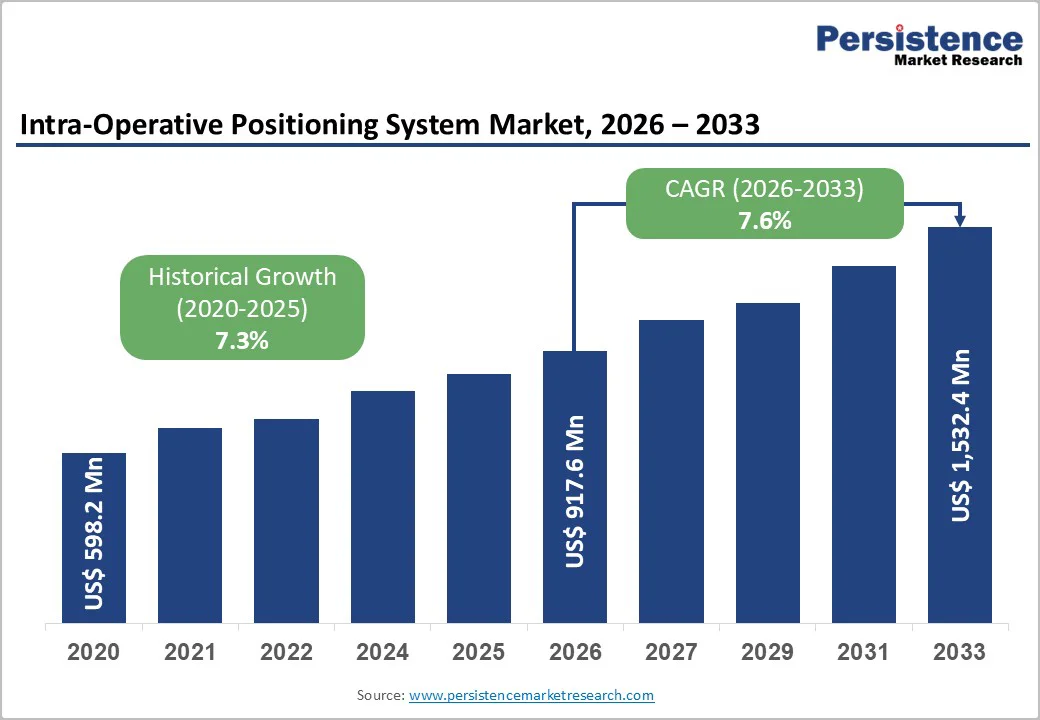
The global intra-operative positioning system market is estimated to grow from US$917.6 million in 2026 to US$1,532.4 million by 2033. The market is projected to record a CAGR of 7.6% during the forecast period from 2026 to 2033. The intra-operative positioning system industry focuses on technologies that help surgeons accurately position patients and surgical instruments during procedures.
These systems improve surgical precision, reduce operating time, and lower the risk of complications. Growing adoption of minimally invasive surgeries, increasing demand for image-guided procedures, and rising surgical volumes are key growth factors. Advancements in optical, electromagnetic, and robotic-assisted positioning technologies are further enhancing clinical outcomes. Hospitals remain the primary end users due to high procedure volumes and investment capacity. Emerging economies are witnessing faster adoption as healthcare infrastructure improves and awareness of advanced surgical navigation systems increases.
Key Industry Highlights
- Growing demand for precise, image-guided surgeries is driving the adoption of advanced intra-operative positioning systems worldwide.
- Increasing preference for minimally invasive procedures is boosting the use of real-time positioning and navigation technologies in operating rooms.
- Technological advancements in optical, electromagnetic, and robotic systems significantly improve surgical accuracy and clinical outcomes.
- Hospitals dominate end-user demand due to high surgical volumes and greater investments in advanced operating room infrastructure.
- Orthopedic and neurosurgical applications are major revenue-generating segments due to their complex procedural requirements.
| Global Market Attributes | Key Insights |
|---|---|
| Intra-Operative Positioning System Market Size (2026E) | US$917.6 Mn |
| Market Value Forecast (2033F) | US$1,532.4 Mn |
| Projected Growth (CAGR 2026 to 2033) | 7.6% |
| Historical Market Growth (CAGR 2020 to 2024) | 7.3% |
Market Dynamics
Driver – Advancements in Robotic-assisted Surgical Systems
Advancements in robotic-assisted surgical systems are transforming the landscape of modern surgery, with real-time intra-operative positioning emerging as a critical factor in enhancing procedural accuracy. These systems combine robotics, high-precision instruments, and advanced imaging technologies to guide surgeons with exceptional precision, reducing the risk of human error and improving patient outcomes. Real-time positioning enables continuous three-dimensional tracking of surgical instruments, ensuring that movements align with preoperative plans and minimizing unintended tissue damage. Robotic platforms now integrate with optical, electromagnetic, and sensor-based tracking systems, providing dynamic feedback and enabling surgeons to make instantaneous adjustments during complex procedures. The integration of artificial intelligence and machine learning further refines instrument control, predicting optimal trajectories and identifying potential complications before they arise. These technological advancements are particularly significant in orthopedic, neurosurgical, and minimally invasive procedures, where millimeter-level precision can dramatically impact recovery and long-term outcomes.
Additionally, the enhanced accuracy of robotic-assisted systems shortens operating times, reduces post-operative complications, and lowers overall healthcare costs. Hospitals and surgical centers are increasingly investing in these advanced systems, recognizing their ability to improve surgical efficiency and patient satisfaction. As research and development continue, next-generation robotic-assisted surgical platforms are expected to offer even greater automation, intuitive controls, and seamless integration with intra-operative positioning systems, driving broader adoption across global healthcare markets.
Restraints – High Maintenance and Calibration Costs
One of the significant challenges hindering widespread adoption of intra-operative positioning systems is the high cost of maintenance and regular calibration. These systems rely on highly sensitive sensors, cameras, robotic arms, and software algorithms to provide precise patient positioning and surgical guidance. Over time, even minor misalignments or software glitches can compromise surgical accuracy, potentially leading to complications or extended operation times. To prevent such issues, hospitals must schedule frequent system maintenance, including hardware checks, sensor recalibration, software updates, and, in some cases, component replacements. Each of these activities requires specialized service personnel, which adds to the operational costs.
Moreover, many advanced positioning systems involve proprietary software, meaning hospitals often depend on the manufacturer for updates and technical support. This reliance can lead to long service cycles and additional expenses. In cost-sensitive regions or smaller hospitals, these recurring costs may outweigh the perceived benefits of the system, making administrators hesitant to invest. High maintenance demands can also cause temporary system downtime, affecting surgical schedules and hospital efficiency.
Additionally, as technology evolves rapidly, older systems may require more frequent calibrations to remain compatible with new surgical protocols or imaging devices, further escalating costs. Consequently, maintenance and calibration expenses remain a persistent barrier, slowing adoption rates and limiting the expansion of intra-operative positioning systems in markets where budget constraints are a critical concern.
Opportunity – Cloud-Based Data Analytics for Intra-Operative Positioning Systems
Cloud-Based Data Analytics for Intra-Operative Positioning Systems is emerging as a transformative opportunity in modern surgical care. By connecting positioning systems to secure cloud platforms, hospitals and surgical centers can collect, store, and analyze massive amounts of intra-operative data in real time. This data includes patient positioning metrics, surgical instrument movements, imaging overlays, and procedure duration. Advanced analytics and AI algorithms can then process this information to identify patterns, predict potential complications, and provide actionable insights to improve surgical precision. Surgeons can review performance metrics, compare outcomes across procedures, and refine techniques to improve patient outcomes.
Cloud connectivity also allows remote monitoring and consultation, enabling expert guidance in real time for complex surgeries or in facilities with limited specialist availability. Moreover, aggregated anonymized data can support large-scale research, benchmarking, andthe development of best practices. Integration with hospital information systems and electronic medical records ensures seamless workflow, while advanced cybersecurity measures maintain data privacy and compliance. Overall, cloud-based analytics enhances surgical efficiency, reduces errors, enables predictive planning, and supports continuous improvement, making it a high-growth opportunity in the intra-operative positioning system market.
Category-wise Analysis
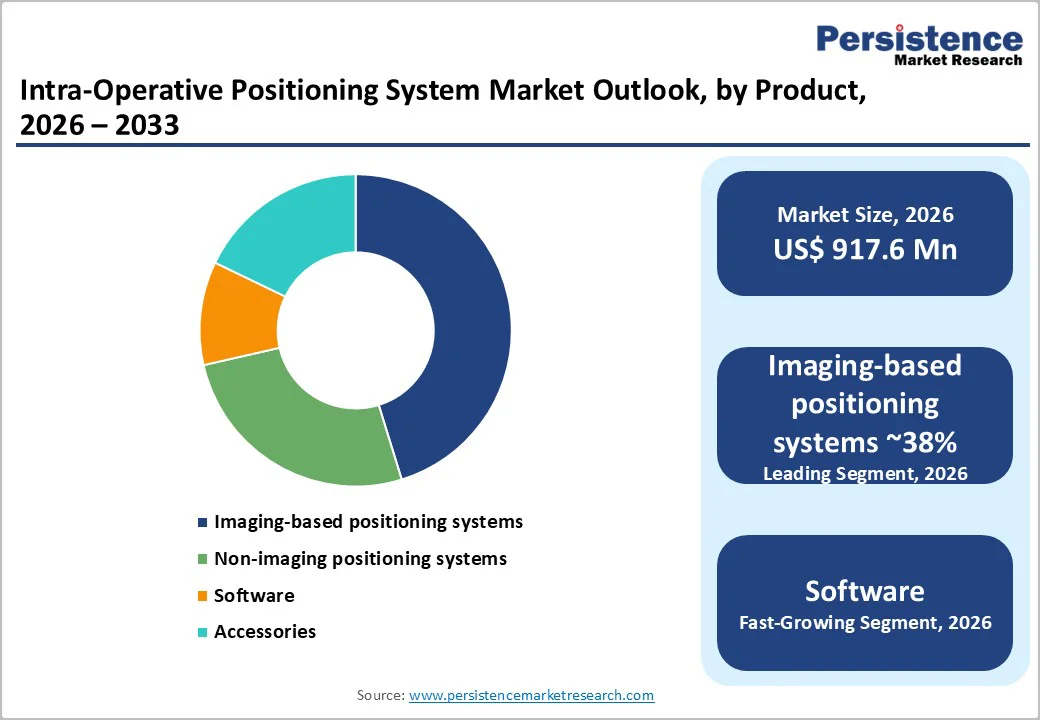
By Product, Imaging-based Positioning Systems Segment is leading in the Market
The dominance of imaging-based positioning systems in the intra-operative positioning system market stems from their critical role in ensuring surgical precision and patient safety. These systems provide real-time visualization of anatomical structures, allowing surgeons to accurately guide instruments during complex procedures such as neurosurgery, orthopedics, and cardiovascular interventions. Unlike non-imaging systems or simple accessories, imaging-based platforms integrate advanced modalities such as optical tracking, electromagnetic sensors, and high-resolution 3D imaging, enabling dynamic monitoring of patient positioning throughout surgery. This high-value functionality directly translates into improved clinical outcomes, reduced operative times, and minimized risk of complications, making them indispensable in modern operating rooms.
Moreover, the growing adoption of minimally invasive procedures further elevates the demand for imaging-based solutions, as surgeons require precise navigation in confined anatomical spaces. Hospitals and specialized surgical centers are willing to invest in these systems despite higher costs due to the tangible benefits of enhanced surgical accuracy, workflow efficiency, and potential for reduced postoperative recovery times. Software and accessories, while important, primarily serve as supportive components, relying on the imaging systems as the core technology that drives procedural success and justifies investment, thereby explaining the segment’s leading market share.
By Application, Neurosurgery Segment Leads the Market
Neurosurgery leads the intra-operative positioning system market because it demands unparalleled precision and accuracy during procedures. Brain and spinal surgeries involve critical structures where even minor deviations can result in severe complications, neurological deficits, or life-threatening outcomes. Imaging-based and navigation-enabled positioning systems provide real-time, three-dimensional visualization of patient anatomy, allowing surgeons to guide instruments with sub-millimeter accuracy. This capability significantly reduces operative risks, shortens surgery duration, and enhances patient recovery, making these systems indispensable in neurosurgical suites.
Additionally, the rising prevalence of neurological disorders such as brain tumors, spinal deformities, and cerebrovascular conditions fuels demand for advanced positioning solutions. The adoption of minimally invasive neurosurgical techniques further intensifies the need for precise navigation, as smaller incisions and confined operative spaces leave little room for error. Advanced technologies such as augmented-reality overlays, robotic-assisted guidance, and AI-driven predictive analytics are increasingly integrated into neurosurgery, enhancing the effectiveness of intraoperative positioning systems.
While orthopedic, ENT, cardiovascular, and general surgeries also utilize these systems, the complexity and criticality of neurosurgical procedures justify higher investments in state-of-the-art positioning technologies. Hospitals and specialized surgical centers prioritize neurosurgery applications for their potential to improve outcomes, reduce complications, and maximize clinical efficiency, which is why neurosurgery consistently commands the largest market share in the intra-operative positioning system landscape.
Region-wise Insights
North America Intra-Operative Positioning System Trends
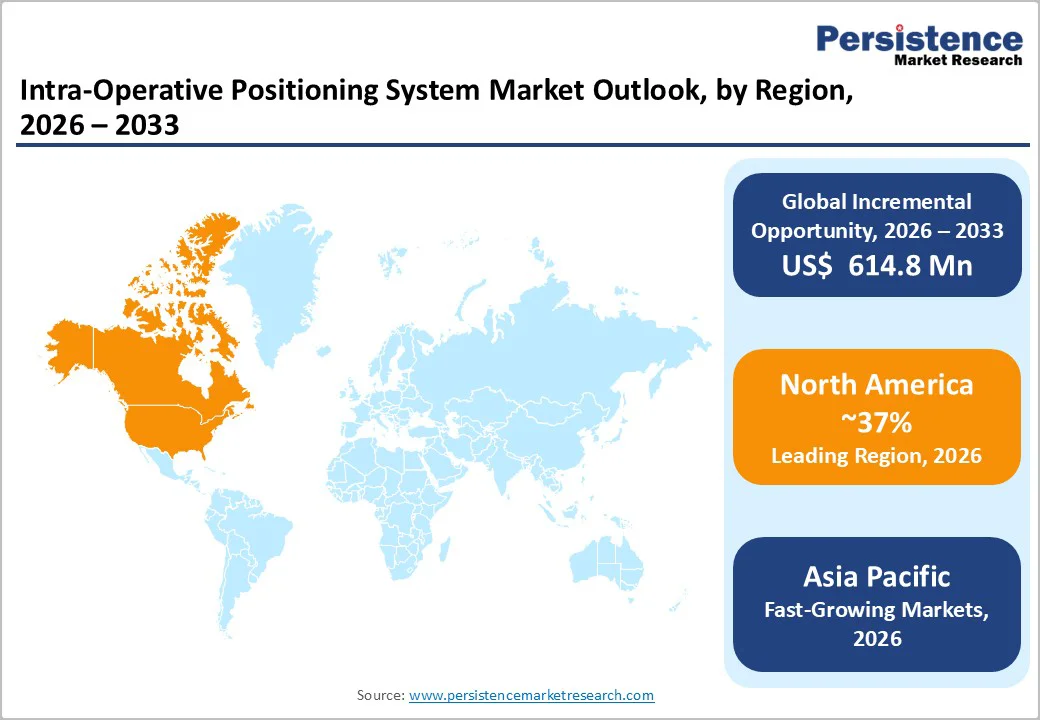
North America leads the intra-operative positioning system market due to a combination of advanced healthcare infrastructure, high adoption of cutting-edge surgical technologies, and strong investments in hospital modernization. The region’s hospitals and specialty surgical centers prioritize precision, efficiency, and patient safety, driving demand for imaging-based positioning systems, navigation platforms, and robotic-assisted solutions. Surgeons increasingly rely on these systems for neurosurgery, orthopedics, and minimally invasive procedures, where real-time visualization and accurate instrument guidance are critical.
Technological innovation is a major trend in North America. Integration of artificial intelligence, augmented reality, and cloud-based analytics into positioning systems enhances surgical planning, predictive outcomes, and workflow efficiency. Additionally, ongoing research collaborations between medical device companies and healthcare institutions accelerate the development of next-generation intra-operative solutions tailored to complex procedures.
Regulatory support, reimbursement policies, and growing awareness of the benefits of precision surgery further strengthen market growth. The U.S., in particular, dominates due to high procedure volumes, extensive hospital networks, and early adoption of new technologies. Overall, North America remains the benchmark for intra-operative positioning system innovation and utilization, combining technological sophistication, clinical expertise, and robust healthcare infrastructure to maintain its position as the leading region globally.
Asia Pacific Intra-Operative Positioning System Market Trends
Asia Pacific is emerging as a high-growth region in the intraoperative positioning system market due to rapidly expanding healthcare infrastructure, rising surgical volumes, and increasing adoption of advanced surgical technologies. Countries such as China, India, Japan, and South Korea are witnessing significant investments in modern hospitals, specialty surgical centers, and hybrid operating rooms, creating strong demand for imaging-based and navigation-enabled positioning systems. The growing prevalence of neurological, orthopedic, and cardiovascular disorders further fuels the need for precise intra-operative guidance systems to improve surgical outcomes.
Technological adoption is accelerating in the region, with hospitals implementing optical tracking, robotic-assisted navigation, and minimally invasive surgical solutions. Rising awareness among surgeons and patients about the benefits of image-guided procedures, such as reduced operative time, improved accuracy, and faster recovery, is driving market expansion. Additionally, the growth of medical tourism in countries like India and Thailand is driving demand for state-of-the-art surgical technologies.
Affordability initiatives, government healthcare programs, and partnerships between global medical device manufacturers and local hospitals are enhancing accessibility to these systems. Overall, Asia Pacific is the fastest-growing market, driven by infrastructure development, rising clinical awareness, and technological adoption, establishing itself as a key emerging region in intra-operative positioning systems.
Market Competitive Landscape
The competitive landscape of the intra-operative positioning system market is characterized by intense innovation, strategic collaborations, and rapid technology adoption. Key players focus on developing advanced imaging-based, robotic-assisted, and navigation-integrated solutions to enhance surgical precision and workflow efficiency. Companies compete through product differentiation, including real-time visualization, AI-driven analytics, and modular system designs. Mergers, acquisitions, and partnerships with hospitals and research institutions strengthen market presence and accelerate product development.
Key Industry Developments:
- In March 2025, Centerline Biomedical, Inc. (“Centerline”), received US Food and Drug Administration (FDA) 510(k) clearance for expanded indications of its Intra-Operative Positioning System (IOPS). This announcement followed the recent 510(k) clearance of the IOPS Fiducial Tracking Pad, a second-generation, lower-profile device that was useful in broader applications of the IOPS platform.
Companies Covered in Intra-Operative Positioning System Market
- Medtronic
- Stryker Corporation
- Brainlab AG
- GE Healthcare
- Siemens Healthineers
- Zimmer Biomet Holdings
- DePuy Synthes (Johnson & Johnson)
- B. Braun Melsungen AG
- Karl Storz SE & Co. KG
- Smith & Nephew plc
- Philips Healthcare
- Olympus Corporation
- Fiagon AG Medical Technologies
- Scopis GmbH
- Synaptive Medical Inc.
- Others


