




- Food Ingredients & Additives
- Guava Puree Market
Guava Puree Market Size, Share, Growth, and Regional Forecast, 2026 - 2033
Guava Puree Market by Variety (Tropical Pink, Tropical White), Application(Infant Food, Beverages, Sauces & Dressings, Ice cream & Yogurt, and Others), Nature (Organic, Conventional), and Regional Analysis, 2026 - 2033

Guava Puree Market Share and Trends Analysis
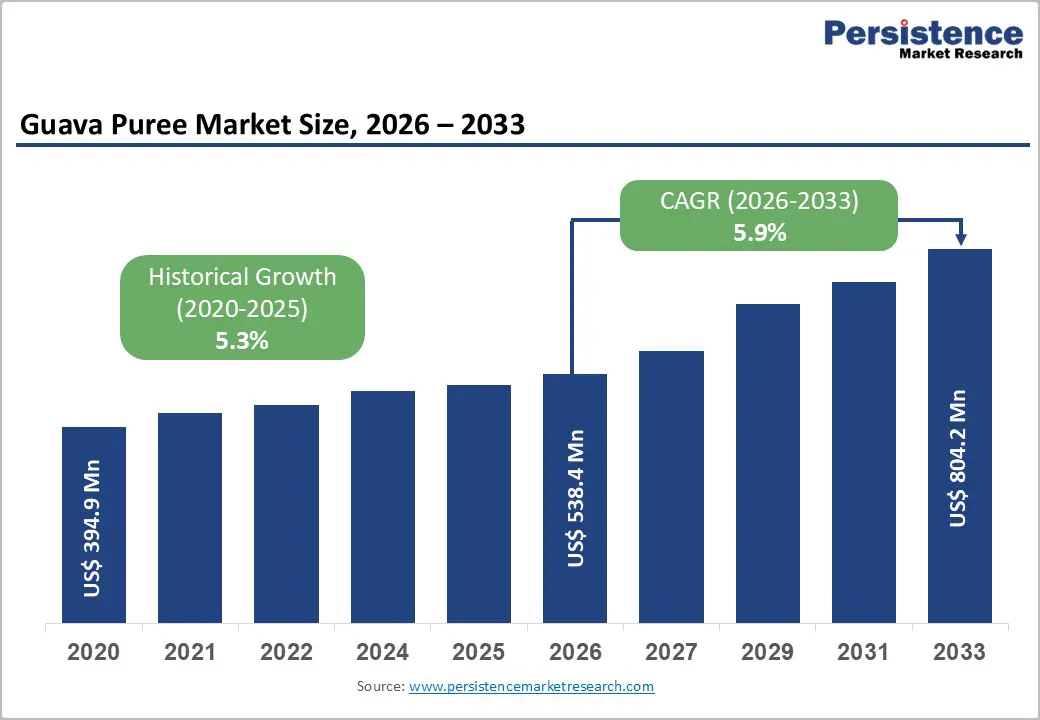
The global Guava Puree market size is expected to be valued at US$ 492.4 million in 2026 and projected to reach US$ 735.6 million by 2033, growing at a CAGR of 5.9% between 2026 and 2033.
Guava puree is steadily transitioning from a regional fruit ingredient into a globally relevant formulation component, powered by clean-label demand, functional nutrition trends, and beverage innovation. Its versatility across infant foods, drinks, and wellness formats positions it as a flavor with both emotional familiarity and nutritional credibility, making it increasingly attractive to global food and beverage players.
Key Industry Highlights:
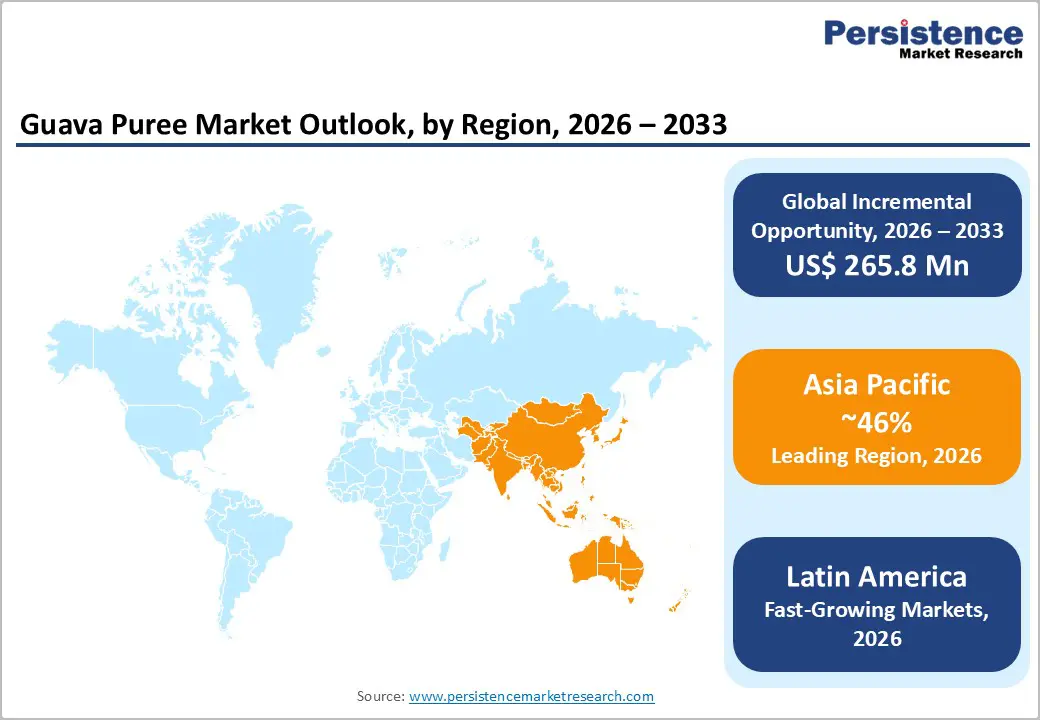
- Leading Region: Asia Pacific, supported by abundant guava production in India, China, Thailand, and the Philippines, along with strong integration of guava puree across beverages, infant foods, desserts, and traditional formulations.
- Fastest-Growing Region: Latin America, driven by expanding beverage applications in Brazil, export-oriented processing in Mexico, and premium dessert and dairy-blend demand emerging in Argentina.
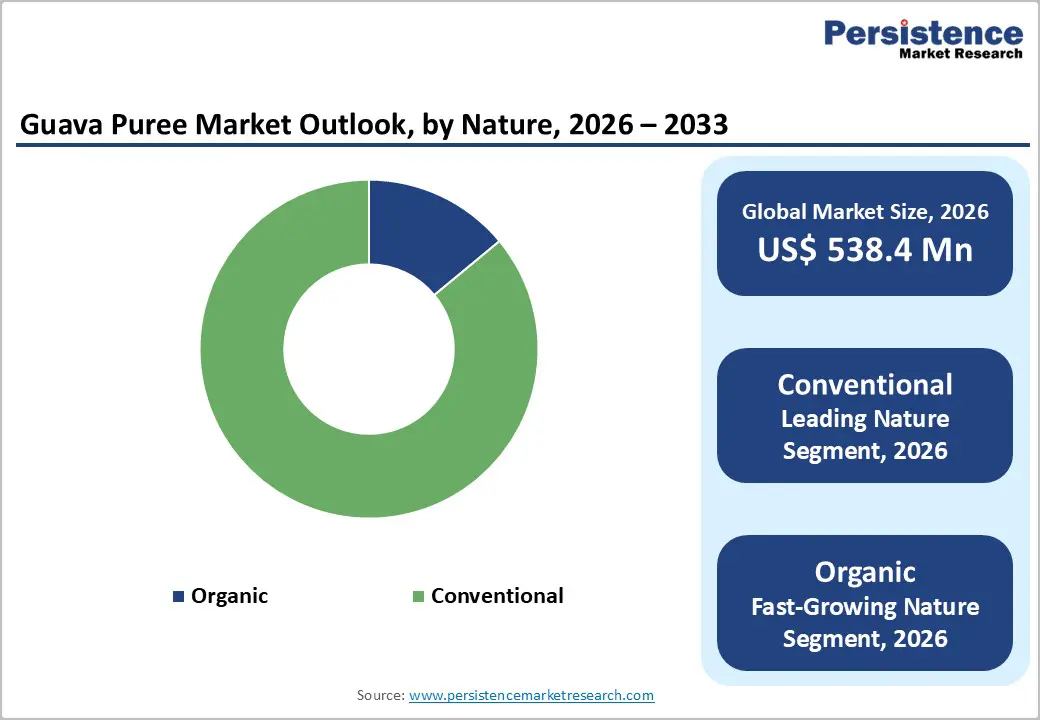
- Fastest-Growing Nature Segment: Organic Guava Puree, propelled by certification-led purchasing, infant nutrition adoption, residue-sensitive export markets, and sustainability-focused sourcing strategies.
- Market Drivers: Rising use of guava flavor in infant and children’s nutrition, supported by natural sweetness, digestive suitability, clean-label positioning, and parental preference for recognizable fruit ingredients.
- Opportunities: Expanding guava puree use in sports nutrition, functional beverages, smoothies, and wellness formats targeting athletes and health-conscious consumers seeking natural energy and immunity support.
- Key Developments: In June 2025, the European Union approved Taiwan’s guava exports across all member states, reopening a high-value market. In May 2025, Diageo launched a limited-edition guava-infused Smirnoff vodka in the U.S., signaling premium flavor experimentation momentum.
| Key Insights | Details |
|---|---|
|
Global Guava Puree Market Size (2026E) |
US$ 492.4 Mn |
|
Market Value Forecast (2033F) |
US$ 735.6 Mn |
|
Projected Growth (CAGR 2026 to 2033) |
5.9% |
|
Historical Market Growth (CAGR 2020 to 2025) |
5.3% |
Market Dynamics
Driver - The Growing Use of Guava Flavor in Infant Nutrition and Products for Children
A gentle sweetness with nutritional credibility is quietly reshaping infant food formulations, and guava flavor fits that role exceptionally well. Guava puree offers natural vitamin C, dietary fiber, and mild acidity that aligns with early-stage palate development. Its smooth texture supports easy digestion, making it suitable for purees, toddler snacks, and blended fruit meals designed for sensitive consumers. Parents increasingly favor fruit-based ingredients with recognizable origins, pushing manufacturers to adopt guava as a familiar tropical alternative to apples or bananas.
Product developers value guava puree for its ability to enhance flavor without added sugars or artificial enhancers. Its vibrant aroma improves acceptance among children transitioning to solid foods. Clean-label positioning further strengthens its appeal in pediatric nutrition, encouraging wider adoption across baby cereals, squeezable fruit pouches, and fortified weaning products across global markets.
Restraints - Limited Shelf Life to Restrict the Manufacturer's Desire for Revenue Generation
Freshness defines guava puree’s value, yet it simultaneously creates a commercial challenge for manufacturers. Guava’s high natural sugar and moisture content accelerate microbial activity, requiring strict cold-chain management and rapid processing. Even under aseptic conditions, maintaining consistent quality over extended storage periods remains complex, increasing inventory risk for producers targeting distant export markets.
Short shelf life influences production planning, discouraging aggressive capacity expansion and long-term contracts. Manufacturers face higher costs linked to refrigerated storage, faster turnover requirements, and potential product losses during transportation delays. These constraints reduce pricing flexibility and limit margin optimization. Smaller processors struggle most, as they lack advanced preservation technologies. The perishability factor forces companies to prioritize regional distribution, ultimately restricting scale-driven revenue growth within the global guava puree market.
Opportunity - Targeting Athletes and Health-Conscious Consumers Expands Guava Puree Market
Performance nutrition is evolving toward natural energy sources, opening a compelling pathway for guava puree adoption. Athletes increasingly prefer fruit-based carbohydrates that deliver quick energy, hydration support, and micronutrients. Guava puree offers natural sugars, potassium, and antioxidants that align with endurance recovery and daily fitness routines. Its tropical flavor profile enhances acceptance in smoothies, energy gels, and functional beverages.
Health-conscious consumers further amplify this opportunity through demand for minimally processed foods. Guava puree fits clean-label expectations while supporting immune health and digestive wellness. Startups leverage this positioning to develop protein shakes, pre-workout blends, and wellness shots infused with guava. Established players benefit from cross-category expansion, positioning guava puree as a functional ingredient bridging sports nutrition and everyday health consumption globally.
Category-wise Analysis
By Nature Insights
Organic guava puree is expected to grow at a CAGR of 7.9% during the forecast period as consumer priorities shift toward traceability and ingredient purity. Organic farming practices reduce pesticide exposure, resonating strongly with parents, wellness-focused buyers, and premium food brands. Guava’s natural resilience to pests further supports organic cultivation without compromising yield quality.
Manufacturers increasingly integrate organic guava puree into baby foods, premium beverages, and plant-based desserts to meet certification-driven purchasing behavior. Retailers favor organic labels for margin differentiation, while exporters target markets with strict residue regulations. Sustainability messaging tied to organic guava sourcing strengthens brand credibility. As supply chains mature and certification processes streamline, organic guava puree transitions from niche positioning into a commercially scalable growth driver.
By End-user Insights
Beverages hold approx. 39% market share as of 2025, reflecting guava puree’s strong alignment with drinkable formats. Its tropical sweetness, vibrant color, and blend compatibility make it ideal for juices, smoothies, and functional drinks. Beverage brands value guava for delivering flavor intensity without artificial additives, supporting clean-label reformulations.
In May 2024, McDonald's introduced a new Passionfruit Orange Guava Real Fruit Smoothie in Canada, combining real guava purée with passionfruit and orange flavors. This plant-based smoothie caters to growing demand for vegan-friendly and dairy-free beverages. Such launches highlight Guava’s versatility across quick-service and retail beverage platforms. Rising interest in hydration, immunity, and fruit-forward flavors continues to reinforce beverages as the dominant end-use channel globally.
Regional Insights
Asia Pacific Guava Puree Market Trends and Insights
Asia Pacific is the most significant shareholder in the global market and is expected to grow at a CAGR of 6.4% during the forecast period. Fresh guava fruits are widely available and produced in large quantities due to the region's tropical climate, which is perfect for guava farming. Leading guava-producing nations include Thailand, the Philippines, China, and India; in fact, India accounts for a sizable share of the world's guava production. Because of the region's plentiful supply of raw materials, guava puree can be produced consistently and affordably, establishing it as a center for guava processing operations.
A robust local and regional food and beverage industry in the Asia Pacific is one key factor driving the guava puree market growth. To accommodate a range of consumer preferences, these businesses are progressively adding guava puree to a wide range of items, from smoothies and juices to desserts and infant foods. In India, guavas are particularly valuable due to the surge in production and consumption of various guava products. The popularity of red Malaysian guavas is also on the rise as they find their way into sauces, baked goods, syrups, jams, jellies, ice cream, and candies.
In China, leading companies are incorporating guava in their beverages and foods to offer innovative food products. For example, McDonald’s Singapore team launched its Hello Kitty meal on 25 January 2024, featuring the Prosperity Burger, Prosperity Twister Fries, Chicken Drumlets, Pineapple Pie, and Pink Guava McFizz. These products are boosting industry expansion in various Asia Pacific countries.
Latin America Guava Puree Market Trends and Insights
Latin America is expected to reach a CAGR of 6.9% during the forecast period as guava puree gains momentum across beverages, infant foods, and clean-label snacks. Mexico remains the regional anchor, benefiting from abundant guava cultivation, proximity to North American buyers, and rising domestic demand for fruit-based drinks. Manufacturers are investing in aseptic processing and frozen formats to extend shelf stability while preserving fresh flavor, supporting export-oriented growth strategies.
Brazil and Argentina are shaping differentiated demand patterns driven by health positioning and local sourcing. Brazil’s beverage and dairy-blend segments are incorporating guava puree into smoothies, yogurts, and functional drinks aimed at urban consumers. In Argentina, artisanal desserts, sauces, and premium ice cream are stimulating niche demand. Across the region, sustainability-linked farming practices, improved cold-chain logistics, and government-backed export facilitation are strengthening competitiveness and regional value addition for long-term market resilience growth.
Competitive Landscape
The global guava puree market exhibits a moderately fragmented structure, with regional processors coexisting alongside vertically integrated fruit specialists. Leading companies focus on securing raw material access through contract farming and backward integration to stabilize supply and quality. Clean-label sourcing, organic certifications, and food safety compliance remain central competitive levers.
Product innovation centers on aseptic processing, cold-pressed techniques, and customized Brix formulations for beverage and infant food clients. Sustainability initiatives include waste valorization and water-efficient processing. Companies invest in consumer education around fruit provenance and nutritional benefits. Government regulations related to food safety, pesticide residues, and export standards influence processing upgrades. Strategic partnerships with beverage brands and infant nutrition companies continue to shape competitive positioning across global markets.
Key Developments:
- In November 2025, The Dakshina Kannada District Cooperative Milk Producers’ Societies’ Union Ltd. (DKMUL) will launch two new products, Nandini Seeds Delight and Guava Chilli Lassi.
- In June 2025, the European Union approved Taiwan’s application to export mangoes and guavas across all 27 member states, signaling strengthened phytosanitary compliance and reopening a high-value market following earlier pest-related trade restrictions.
- In May 2025, Diageo expanded its Smirnoff portfolio in the U.S. with a limited-edition guava-infused flavored vodka, reflecting rising consumer interest in tropical fruit profiles and premiumized flavor experimentation within the spirits category.
Companies Covered in Guava Puree Market
- Kiril Mischeff
- Godawari Farms
- Grünewald Fruchtsaft GmbH
- Ariza B.V
- Shimla Hills Offerings Pvt. Ltd
- La Fruitière du Val Evel
- Zain Natural Agro India Pvt Ltd
- Taj Agro International
- ABC Fruits
- Natural Foods & Facials
- Paiyur Group
- Spectrum Fruits, Inc
- Others
Frequently Asked Questions
The global guava puree market is projected to be valued at US$ 492.4 Mn in 2026.
The rise in awareness of tropical flavors and exotic fruits in the culinary and beverage sectors is surging the demand is driving demand for the guava puree market.
The global guava puree market is poised to witness a CAGR of 5.9% between 2026 and 2033.
The increasing popularity of exotic fruits in non-native regions presents significant opportunities for guava puree export.
Major players in the Global Guava Puree market include Grünewald Fruchtsaft GmbH, Kiril Mischeff, Ariza B.V, Shimla Hills Offerings Pvt. Ltd, La Fruitière du Val Evel, Zain Natural Agro India Pvt Ltd, and other.


