




- Pharmaceuticals
- Crow’s Feet Market
Crow’s Feet Market Size, Share, Growth, and Regional Forecast, 2026 to 2033
Crow’s Feet Market by Treatment Type (Topical creams, Botulinum toxin (Botox), Chemical peels, Dermal fillers, Others), by End-user (Hospitals & Clinics, Aesthetic Centers / Spas, Homecare / OTC Users), and Regional Analysis from 2026 to 2033

Crow’s Feet Market Share and Trends Analysis
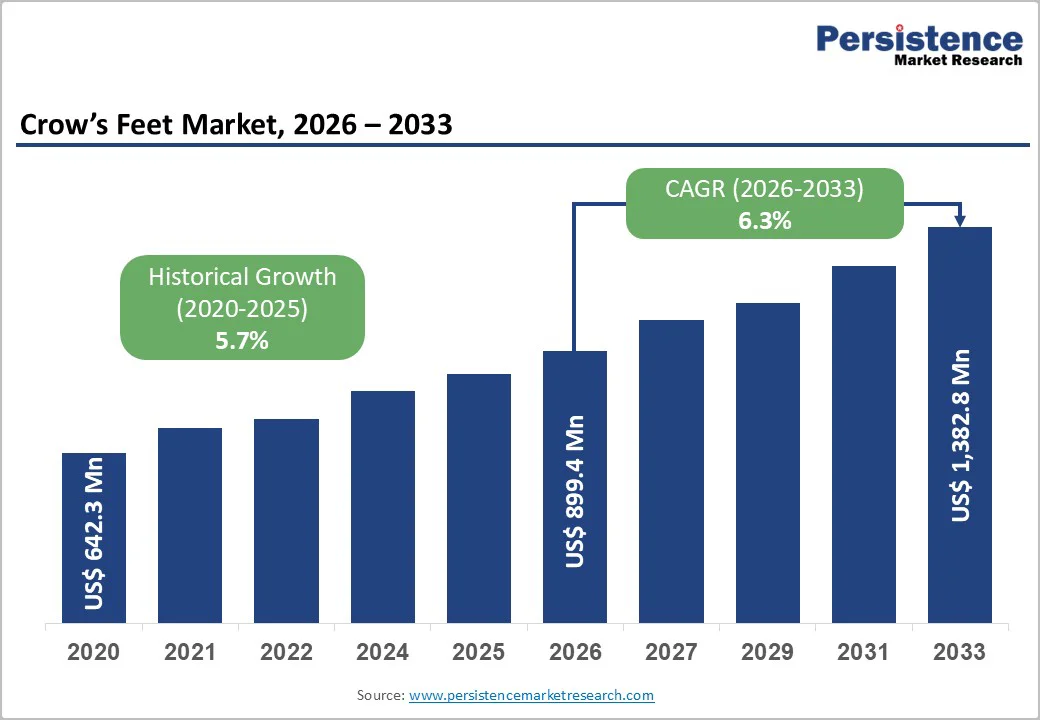
The global crow’s feet market size is estimated to grow from US$899.4 million in 2026 to US$1,382.8 million by 2033. The market is projected to record a CAGR of 6.3% during the forecast period from 2026 to 2033.
The market focuses on solutions to reduce fine lines and wrinkles around the eyes, driven by rising aesthetic awareness and an aging population. Key treatments include botulinum toxin injections, dermal fillers, laser and light-based therapies, chemical peels, and topical anti-aging products. Minimally invasive procedures dominate due to faster recovery and visible results, while combination therapies are emerging rapidly.
Key Industry Highlights:
- The crow’s feet treatment market is expanding due to rising aesthetic awareness, an aging population, and increased disposable income.
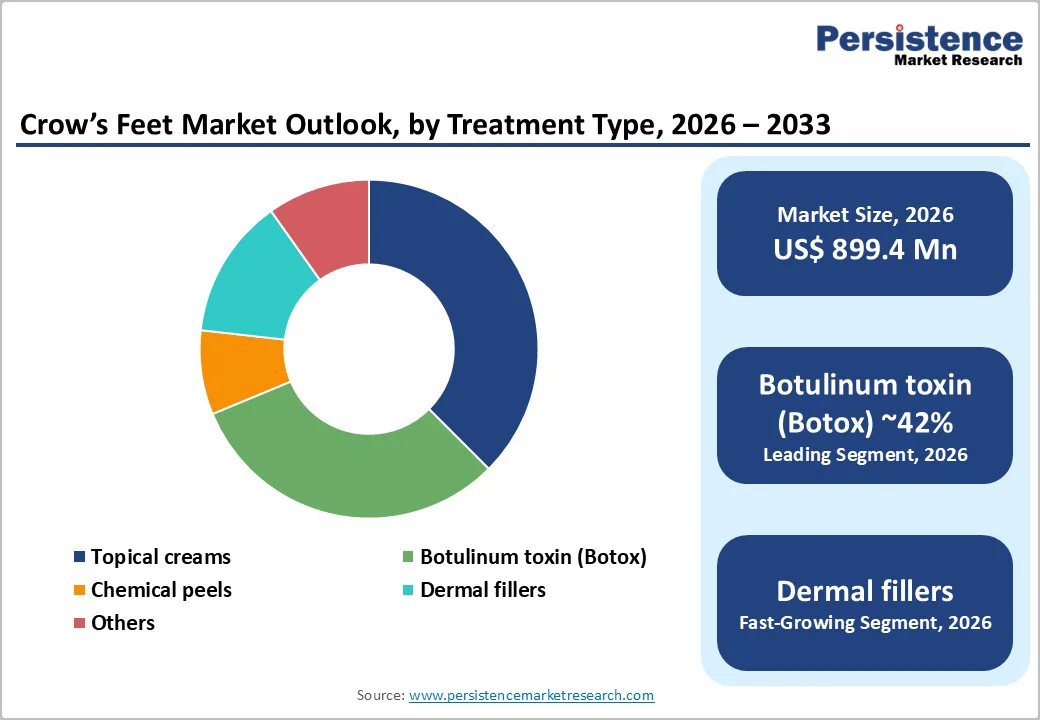
- Botulinum toxin injections dominate the market, offering quick, visible results with minimal downtime. Their popularity stems from high efficacy in reducing periocular wrinkles, strong clinician adoption, and broad global availability.
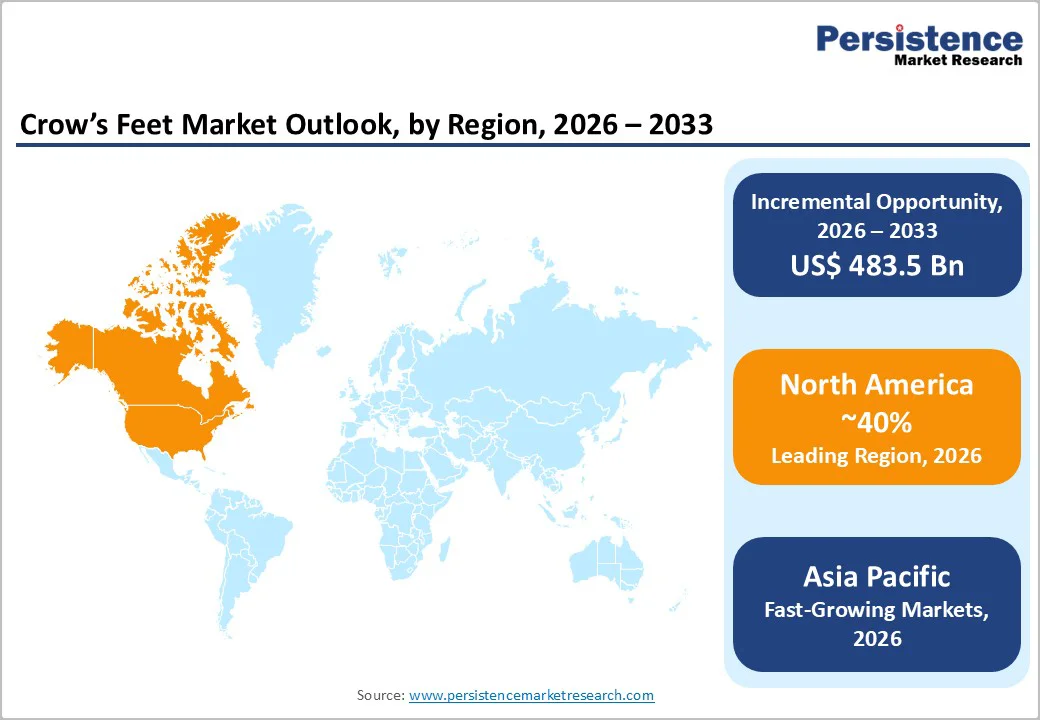
- North America leads in market share due to established aesthetic clinics and high Botox penetration. Asia Pacific is experiencing the fastest growth, driven by rising disposable income, urbanization, and increasing beauty-conscious population.
- Hospitals and dermatology clinics are the leading end-users, providing professional treatments with safety assurance.
- Leading Treatment Type: Botulinum toxin (Botox) dominates the market due to its high efficacy, minimal downtime, widespread clinical adoption, and strong consumer preference for non-surgical wrinkle reduction.
| Key Insights | Details |
|---|---|
| Crow’s Feet Market Size (2026E) | US$899.4 Mn |
| Market Value Forecast (2033F) | US$1,382.8 Mn |
| Projected Growth (CAGR 2026 to 2033) | 6.3% |
| Historical Market Growth (CAGR 2020 to 2025) | 5.7% |
Market Dynamics
Driver - Growth of Preventive Aesthetics in Younger Group
The rise of preventive aesthetics is becoming a major driver of the Crow’s Feet Treatment Market, especially among individuals aged 20-35 years. Younger consumers are increasingly aware that facial expression lines and micro-wrinkles eventually deepen, and therefore prefer early interventions to delay wrinkle formation rather than corrective procedures later. Preventive Botox, mild laser treatments, under-eye fillers, and medical-grade topical actives are being adopted even before visible wrinkles appear. This shift also stems from workplace competition, social media appearance consciousness, and digital exposure through video-based interactions such as online meetings and content creation.
Dermatologists are now recommending low-dose neuromodulation as a proactive approach, which provides subtle effects, prevents repeated muscle contraction, and delays wrinkle onset. This improves patient confidence, creates recurring treatment cycles, and increases long-term revenue for clinics. Preventive aesthetics is further strengthened by accessible subscription-based aesthetic programs, annual maintenance packages, and loyalty-based treatment bundles. As younger individuals continue prioritizing long-term skin health and aging delay, preventive aesthetics is expected to transition from a trend to a mainstream standard, significantly transforming future demand patterns in the crow’s feet treatment market.
Restraints - High Dependency on Skilled Injectors
High dependency on skilled injectors remains a critical restraint in the Crow’s Feet Treatment Market, particularly for botulinum toxin procedures. The area around the eyes is anatomically sensitive, and precise injection depth, dose, and location are essential to achieve a natural look. When performed by inexperienced practitioners, treatments may cause eyelid drooping, muscle weakness, or unnatural stiffness, leading to patient dissatisfaction and safety concerns. This reliance on highly trained dermatologists and cosmetic surgeons restricts treatment adoption in emerging markets where certified injectors are scarce.
Additionally, new clinicians often lack experience in assessing facial muscle dynamics, which further increases risks of asymmetry or frozen expressions. Patients often seek reputed specialists, resulting in long waiting periods and higher consultation fees. These factors collectively increase cost, elongate decision-making time, and discourage repeat treatments. Therefore, despite strong awareness and availability of Botox-based solutions, limited procedural expertise significantly affects adoption rates and market scalability in less developed aesthetic care regions.
Opportunity - Advanced Technologies and Emphasis on Regenerative Medicine
Combination therapy subscription plans offer a compelling commercial opportunity in the Crow’s Feet Treatment Market by shifting customers from one-time cosmetic treatment to recurring, predictable revenue cycles. Clinics can design yearly subscription models that combine Botox injections, laser resurfacing sessions, mild chemical peels, and dermatologist evaluations, ensuring continuous wrinkle maintenance rather than reactive treatment. This model encourages customers to view aesthetic care as a long-term wellness commitment instead of occasional cosmetic enhancement. Subscription bundles can include flexible session scheduling, discounted add-ons, loyalty rewards, and priority appointments, which significantly improve patient retention.
Clinics can use digital apps to track treatment history, follow-up reminders, and pre-appointment assessments, increasing engagement and compliance. Further differentiation can be achieved by offering tier-based plans for example, basic, premium, and advanced packages tailored to wrinkle depth, age group, and skin sensitivity. This results in improved customer satisfaction, higher average revenue per patient, and predictable treatment volumes. As rising aesthetic awareness grows, recurring subscription-based treatment plans can reshape pricing psychology, making advanced wrinkle management more affordable and consistent over time.
Category-wise Analysis
By Treatment Type Insights
Botulinum toxin (Botox) accounts for the highest share in the treatment type segment because it offers quick, visible, and highly predictable wrinkle reduction outcomes with minimal downtime. The procedure directly targets muscle activity responsible for crow’s feet, delivering smoother skin within days and results that typically last three to six months. Its strong clinical evidence, FDA approvals, and long-standing physician confidence further strengthen market dominance. Botox is widely available across dermatology clinics, med-spas, and premium aesthetic centers, making access convenient for consumers. Additionally, repeat procedures create consistent demand, unlike peels or topical creams that offer limited benefits for deeper peri-ocular wrinkles.
Compared to dermal fillers or energy-based devices, Botox treatments are faster, require fewer sessions, and are generally less expensive upfront, encouraging first-time users to adopt it. Marketing awareness, celebrity endorsements, and positive user outcomes have positioned Botox as the "gold standard" for crow’s feet reduction, sustaining its high market share.
By End-user Insights
Hospitals and clinics account for the highest market share in crow’s feet treatment because most procedures, especially minimally invasive ones like botulinum toxin injections and dermal fillers, require skilled specialists and regulatory oversight. Consumers prefer these settings due to the assurance of safety, sterile environments, and trained dermatologists who can customize treatment based on age, wrinkle depth, and skin type. Clinics also provide access to advanced devices such as fractional CO2 lasers and radiofrequency systems, which are typically unavailable in spas or home settings. Their ability to combine multiple modalities, such as Botox with peels or lasers, results in more effective and customized outcomes, increasing patient satisfaction and repeat visits.
Moreover, hospitals and specialized dermatology clinics maintain structured follow-up programs, treatment documentation, and dedicated skin assessments, which enhance treatment continuity. Most high-value procedures occur in these settings, leading to stronger revenue generation. As aesthetic awareness grows, clinics continue to expand service portfolios, making them the preferred and dominant treatment destination for crow’s feet management.
Region-wise Insights
North America Crow’s Feet Trends
North America leads the crow’s feet treatment market due to high aesthetic awareness, strong purchasing power, and the widespread presence of certified dermatology clinics. Consumers in the region actively prefer minimally invasive treatments such as Botox and dermal fillers, driven by a strong culture of cosmetic enhancement and quick recovery procedures. The U.S. remains the key contributor, holding the largest market share because of high adoption rates of neuromodulators, early access to FDA-approved innovations, and the presence of leading brands such as Allergan (Botox) and Galderma. The region also shows strong demand for combination therapies, including toxin injections paired with fractional lasers.
Growth is additionally supported by increasing male participation, rising professional-grade med-spa chains, and subscription-based treatment packages. Social media influence, lifestyle-driven aesthetic preferences, and annual spending on anti-aging procedures continue to shape consumer behavior. Overall, North America sets product launch standards, pricing models, and treatment trends, reinforcing its leadership in the crow’s feet treatment space.
Asia Pacific Crow’s Feet Market Trends
Asia-Pacific is rapidly emerging as a high-growth region in the crow’s feet treatment market driven by rising disposable income, growing beauty consciousness, and expanding urban working populations. Consumers are increasingly shifting from basic skincare to professional anti-aging procedures, especially Botox and light-based therapies. Countries such as China, India, South Korea, and Japan are witnessing strong growth due to a rising network of dermatology clinics and medical spas. South Korea’s leadership in cosmetic innovation and affordability attracts domestic as well as medical-tourism demand. Meanwhile, India and Southeast Asian markets are benefiting from aggressive clinic expansion and promotional pricing. Increasing social media influence, younger-age preventive usage, and awareness of non-surgical treatments continue to strengthen regional market performance.
Competitive Landscape
The global crow’s feet treatment market is highly competitive, driven by innovations in injectables, fillers, and energy-based aesthetic devices. Companies compete through product efficacy, treatment duration, safety profiles, and pricing strategies. The growing popularity of combination therapies and minimally invasive procedures intensifies competition. Clinics and device providers focus on improving patient experience, offering subscription-based packages, and leveraging digital marketing for customer engagement. Differentiation is achieved through advanced treatment technologies, faster recovery times, and personalized care.
Key Industry Developments:
- In July 2025, Estée Lauder launched its latest eye innovation, Advanced Night Repair Eye Lift + Sculpt. Inspired by the multi-dimensional approach used by dermatologists, this potent, clinically tested formula lifted, sculpted, and volumized to redefine the appearance of the eye area.
Companies Covered in Crow’s Feet Market
- AbbVie (Allergan Aesthetics)
- Galderma S.A.
- Ipsen
- Medytox Inc.
- Revance Therapeutics
- Hugel
- Croma‑Pharma
- Cutera Inc.
- Lumenis
- Alma Lasers Ltd.
- Syneron Medical Ltd. (Candela)
- Cynosure
- Solta Medical
- Hologic, Inc.
- Others
Frequently Asked Questions
The global crow’s feet market is projected to be valued at US$899.4 Mn in 2026.
The increasing prevalence of fine lines and wrinkles among older adults is fueling demand.
The global crow’s feet market is poised to witness a CAGR of 6.3% between 2026 and 2033.
Skincare and topical solutions targeting younger consumers for early wrinkle management.
AbbVie (Allergan Aesthetics), Galderma S.A., Ipsen, Medytox Inc., and others.


